The Best Guitar Tone Isn’t Always the Prettiest
A good sound engineer is worth their weight in gold. So much about the sound of a touring band comes down to the final live mix; the balancing of elements, the shaping of EQ curves to make everything gel and cohere into a beautiful sounding ensemble. As you no doubt know, it’s not as simple as just getting volume levels in order! It’s a fine art that needs great ears, a sense of space, sensitivity to the overall sound, and a lot more besides.
This is why I was excited to chat to Dave Dupuis about it.
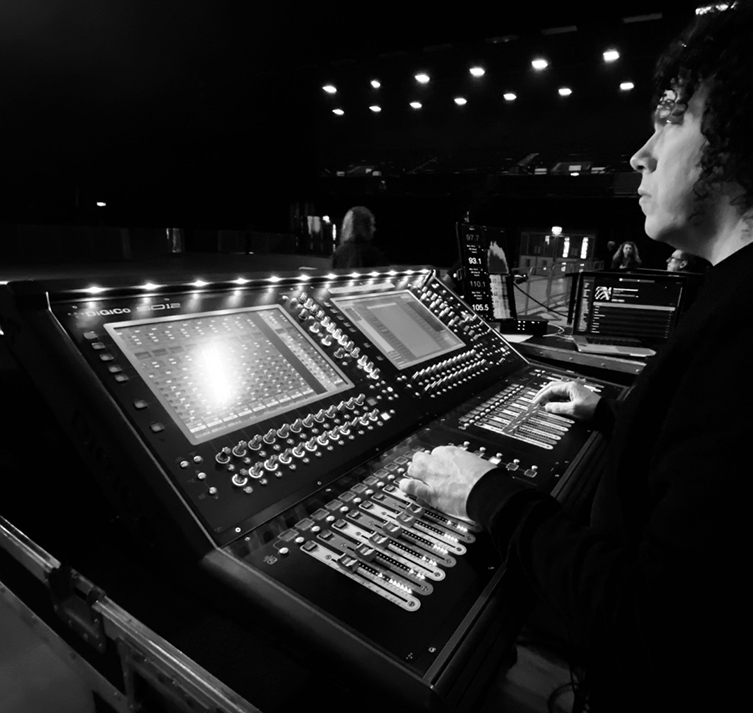
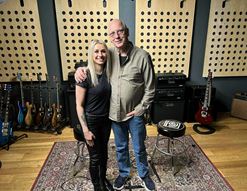
(Pic: Eva Ettegard)
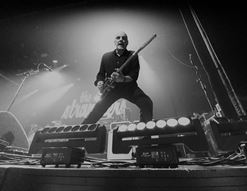
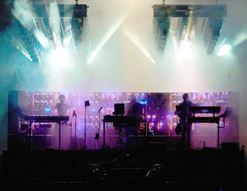
Touring front-of-house engineer, musician and producer David Dupuis has spent years balancing the worlds of live sound and creative music-making. Having worked with artists ranging from club stages to arena tours, he approaches mixing from the perspective of someone who has also spent plenty of time on stage himself. His long list of clients include Spiritualized, DIIV, Swervedriver, Bauhaus/Pete Murphy, Jenny Lewis and the artist who brought him to my attention: Gary Numan. Dave has live-engineered for Numan for well over a decade, harnessing those pioneering synth sounds and darkly futuristic songs to enormous effect in a live situation, year after year.
Live sound is something of a dark art for many of us musicians, and I’ve often wondered what the reality of the job is. Knowing Dave a tiny bit from our professional lives over the years - and greatly respecting his abilities - I reached out to him to see if he’d be interested in speaking to me about it all.
Happily, he was up to the task, so in between touring with Numan and preparing to relocate himself from Los Angeles to the UK, we managed to have an email correspondence about guitar tone, stage volume, modelers and the art of making a live band sound powerful in the room.
Dave Dupuis Interview
GG: You are a musician as well as a sound technician. Do you think it helps your sound engineering to have been on both sides of the stage?
DD: Absolutely. It’s a massive advantage. If you’ve actually been on stage fighting a weird monitor mix, or trying to hear the vocal while guitar amps are blowing your hair back, you understand what the band is dealing with. That empathy matters.
I play in loud bands myself, so I know the psychology of it too. The band needs to feel powerful and inspired on stage, but the sound still has to translate out front. That balance is the job. Sometimes the solution is technical. Sometimes it’s just telling the band, “Don’t worry, I’ve got you out front.” Once they trust that, everyone relaxes and the show usually gets better immediately.
When the band knows the engineer understands their world, it stops feeling like a battle. It becomes a collaboration.
GG: I presume you were a musician first. What brought you into sound engineering?
DD: Yeah - musician first, for sure. I started on saxophone when I was seven and played through school. Guitar came later at university when my roommate and I started a band. We were skateboarders, and honestly learning guitar felt like learning tricks - fall down, get obsessed, get back up, repeat. The competitive skateboard mindset definitely pushed us both to learn fast.
In those early bands I was the guy with the 4-track and a couple cheap microphones documenting everything. Tapes and tapes of rehearsals and riffs I thought were cool. I loved the idea of capturing moments - jams, weird sounds, little song ideas - and turning them into something permanent. That naturally led to recording and producing other bands, which is something I still enjoy doing whenever I’m not on tour. I’m always interested in meeting artists who want to experiment with sound and see where a track can go.
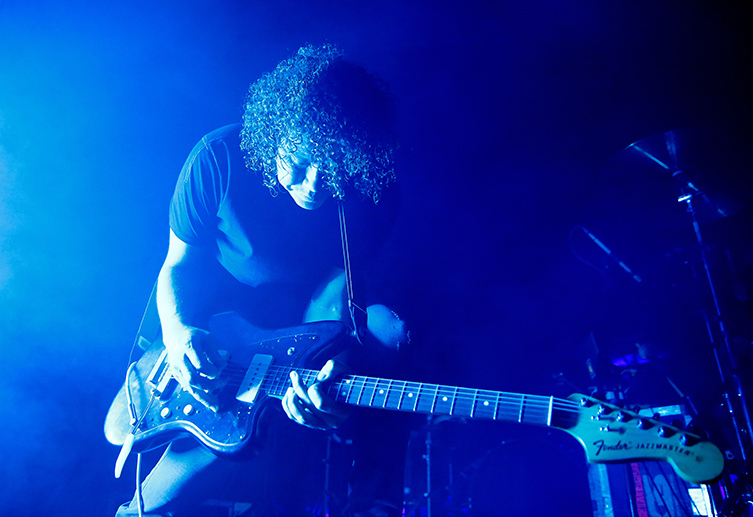
(Pic: Eric Draper)
Years later when I was living in Oakland, California I had a small project studio in my apartment. One of the bands I was working with signed to Sub Pop and needed someone to do live sound. I wasn’t even sure I wanted to do it, but once I tried it I was hooked.
Live sound is immediate. No undo button. You’re shaping and managing sonic energy in real time. Solving problems on the fly. When you’re working with people whose music you like AND they are actually nice people it can be a lot of fun.
When you have that combination the soundboard really does feel like playing an instrument - a very powerful one. These days I split my time between touring work, making my own music, writing and producing projects and building new creative collaborations as I settle into the UK music community.
GG: As an active musician and producer, how does that influence the way you approach the world of live sound?
DD: Massively. When you spend time writing or producing music you start thinking in terms of arrangements, dynamics and emotion rather than just individual sounds. When I’m mixing a band live I’m not just thinking about EQ or volume - I’m thinking about what the song is trying to do.
Where should it breathe? Where should it hit hard? Where should it open up?
Being a musician also helps with empathy. You understand how vulnerable it can feel to be on stage, especially when something sounds off. So part of the job is making the artist feel confident that what they’re putting out there is landing the way they intended.
At the end of the day live sound isn’t just technical - it’s musical.
GG: Do you produce or record artists when you’re not touring?
DD: Yes, absolutely. These days I’m mostly producing my own music when I’m off the road. Touring keeps life pretty busy, and creatively my head is often full of my own sonic ideas and textures that need to come alive.
That said, I’ve always loved the collaborative side of making records. In my experience those projects usually happen pretty naturally - you meet someone, there’s a shared musical curiosity, and suddenly you’re making something together.
I’m always open to that kind of creative exchange. Those are often the most exciting projects because they come from mutual inspiration rather than planning.
I’m really looking forward to doing more of that once I’m settled in the UK and connecting with new artists there.
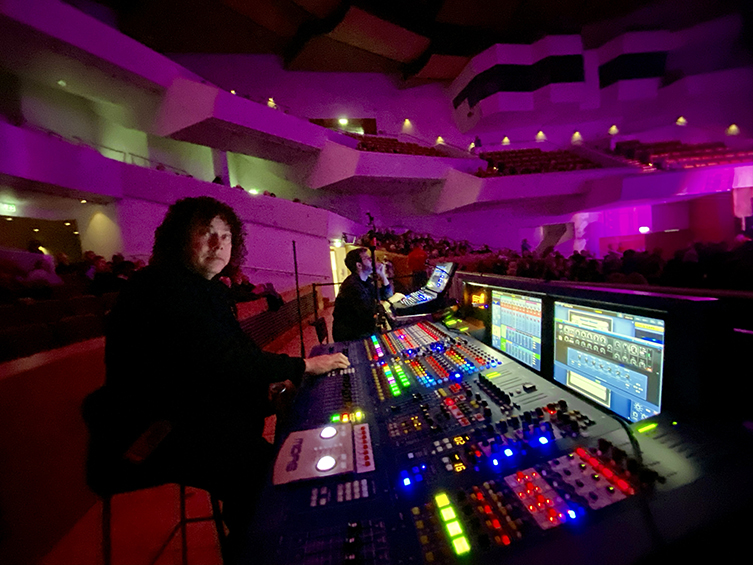 (Pic: Eva Ettegard)
GG: Was it difficult breaking into the world of live sound?
DD: I got pretty lucky. The first band I really toured with, after working in a few small clubs, took off quickly. Within about nine months we went from small clubs to supporting Snow Patrol in arenas. That kind of trajectory forces you to learn fast. I definitely made plenty of mistakes early on, but I already had a decent handle on frequencies from years of dialing problems out of small club systems. When you can quickly identify the frequencies causing issues - whether on a channel or the main left/right mix - you’re already ahead of the game.
Learn your frequencies.
Touring is basically the best classroom there is. Every room is different, every PA behaves differently, and every venue gives you a new set of problems to solve.
When I started out the gear was all over the place too - a mish mash of sometimes half-broken analog gear and the early generations of digital desks. It was fun, and often frustrating. But the biggest thing in live sound, or honestly any job on tour, is just being cool and staying humble with people. If you’re open to learning, most engineers are happy to share what they know. After enough shows those little lessons turn into instincts.
GG: What can guitarists do before they even arrive at the venue to make a sound engineer’s life easier?
DD: Know your parts so well that the gig can survive whatever technical curveballs the night throws at you. Live shows are unpredictable. If your performance depends entirely on a perfect monitor mix, you’re going to struggle sooner or later.
After that, stage volume discipline is the big one - especially for guitarists. Loud amps are amazing. Standing in front of one and feeling that raw power is a thrill like no other. But excessive stage volume is one of the fastest ways to send a potentially great front-of-house mix straight into the toilet - in small venues and big ones.
I love the big wall-of-sound thing myself, but the trick is letting the FOH engineer use the PA and your amps together to build that wall. When the whole system is working together - PA, amps, subs - the sound becomes way bigger than just blasting from the guitar cab on stage.
A simple trick that helps a lot: if you’re using a combo amp, lift it off the floor and aim it toward your ears instead of your legs. Suddenly you can hear yourself clearly without turning it up to stadium levels.
If the stage volume is under control, the FOH engineer can make the band sound twice as big out front.
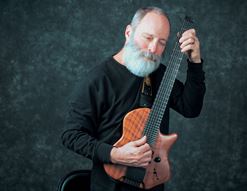
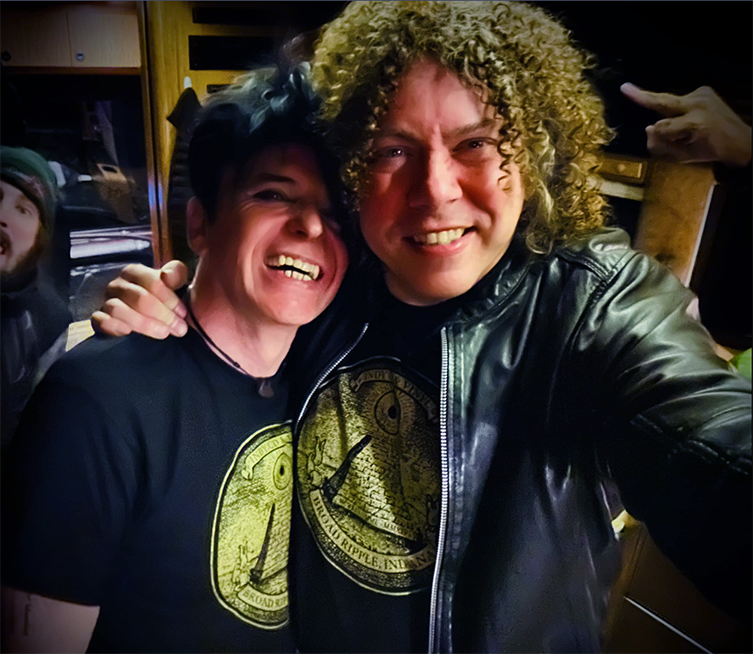 (Pic: Dave Dupuis)
GG: Is stage volume a different thing these days compared with, say 15 years ago?
DD: Stage volume is always a thing. The difference now is we’ve got more tools to manage it - amp modelers, in-ear systems, better PAs - especially on smaller stages where things can get out of control fast.
The basic principle I always work from, whether I’m playing in the band or mixing it, is that the band should sound balanced on stage before the PA even comes into play. The PA is there to reinforce and enhance what’s already happening, not fix something that’s completely out of whack.
That still applies in mid-sized venues - say a couple thousand capacity. Once you get into arenas it changes a bit because the distance between players and sound sources becomes so large that the PA really takes over.
Half stacks still rule though. Full stacks too. Standing in front of a wall of speakers as tall as you and feeling the tone you’re playing wash over you is one of the great joys of rock and roll.
But that much power has to be controlled. Even a 2×12 combo can overpower a small room if it’s pointed straight at the crowd.
One of the best things musicians can do during soundcheck is step off the stage and listen from the audience perspective. You’ll immediately hear whether the balance makes sense.
Great live sound usually starts with great stage awareness.
GG: Have digital guitar modelers made your job easier or harder?
DD: Overall - much easier. And they keep getting better. At home they’re not always perfect. If you’re playing loud shoegaze or feedback-heavy guitar music like I do, sometimes it’s harder to get that natural amp feedback thing happening. But tone-wise and effects-wise they’re incredibly good now.
When I’m working on my own music or producing demos for other artists, modelers are incredibly useful for getting ideas and vibe down quickly.
Live, they’ve become a really useful tool. Technologies like modelers and in-ear monitoring give artists the ability to sound huge without having to crank amps to painful levels. I was pretty skeptical at first. I love real amps. But after touring with bands that were using modelers and mixing them live, I realized they can sound fantastic when they’re dialed in properly.
From a FOH perspective they solve a lot of classic problems - stage bleed, volume management, and consistency from venue to venue. Modern modelers can deliver inspiring tones while making the engineer’s job much easier. That’s a win for everyone.
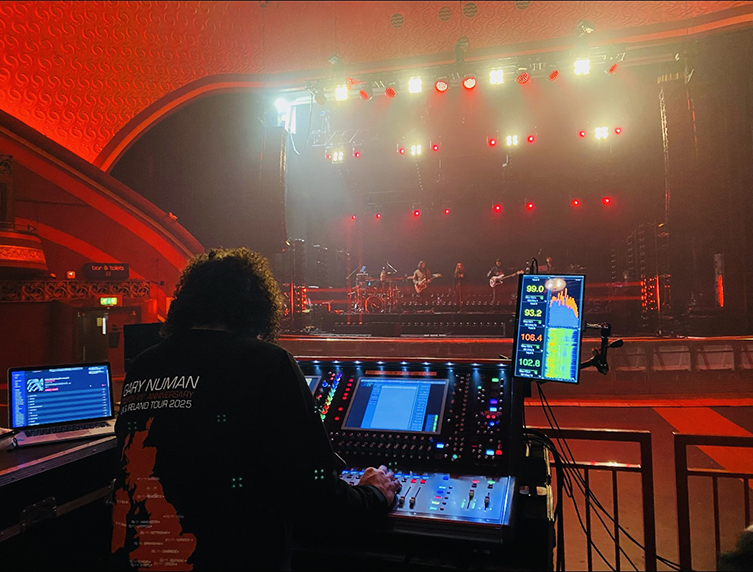 (Pic: Eva Ettegard)
GG: Do you have a hierarchy in terms of which sound elements are first priority for a live mix?
DD: Yeah - 99.9% of the time the vocal is the priority. At soundcheck I usually start with the vocal mic. I bring up the gain and volume, then slowly push the level until the mic just starts to ring. I find the frequency causing it, cut it, and push it again.
The goal is simple - when the band gets loud during the big moments of the set, I know I can push the vocal and it will stay up front and stable. For most types of music, if the audience can hear the vocal clearly, the whole show instantly feels better.
GG: What frequency carving techniques do you routinely use on instruments for creating space in a mix?
DD: In a live setting - especially if time is tight - one of the first things I’ll do is start high passing channels that don’t really need deep low end. That means rolling off the low frequencies so instruments like kick and bass have that space to themselves. Most digital desks now have sweepable high pass filters, so you can slowly move that cutoff upward until the instrument still sounds natural but isn’t cluttering up the mix. Cleaning up the low end makes a massive difference.
Beyond that it’s mostly about using your ears and creating space where things naturally fit together. Cutting EQ is usually more effective than boosting.
GG: For guitars, a tone that works on record may not work well live, right?
DD: Yeah, that’s absolutely true. A record and a live show are two very different environments. The tones that work for one don’t always work for the other.
Sometimes that means cutting frequencies you love on record or boosting others so the guitar sits properly in the mix. The best live guitar tones aren’t always the prettiest by themselves - they’re the ones that fit the band.
GG: What’s the most unusual set up you’ve had to deal with?
DD: In my own bands I’m always bringing in unusual things - noisemakers, drills, little engines, whistles, samplers. From a front-of-house perspective though, the orchestra tour I did with Gary Numan in 2018 was probably the most complex.
We had around 60 inputs once everything was counted, and balancing a full orchestra with a loud rock band takes a lot of careful prioritizing. But when everything locked together it sounded incredible.
GG: What essential gear should every sound tech have?
DD: Honestly - knowledge of frequencies. If you understand where things live in the frequency spectrum you can walk up to almost any desk and make it work. Your ears and that knowledge are the most important tools you’ve got.
GG: You’ve a vast resume of clients. Are people skills just as important as technical skills?
DD: Absolutely. When you’re mixing a show there’s no ownership of the gig - it’s their show. Your job is to support the artist technically and emotionally. Good touring crews are built on trust, not just good sound.
GG: What can musicians do to stay on the right side of the sound tech?
DD: Be respectful, be nice, and be clear about what you’re going for. Communication goes a long way. At the end of the day everyone in the room wants the same thing - for the band to sound great.
GG: You’ve worked internationally and are now relocating to the UK. What excites you about the music scene there?
DD: One thing I’ve always noticed playing and mixing shows in the UK is how open crowds are to the experience of live music. The UK has always had an incredible history of artists pushing sound in interesting directions - from post-punk and electronic music through to shoegaze and modern alternative scenes.
That combination of adventurous musicians and passionate audiences makes it a really inspiring place to work. I’m excited to connect with artists there and see what new projects come out of that.
GG: Finally, what one question have you been asked a million times that you’d like to address right here?
DD: “Are you related to Weird Al Yankovic?”
No.
Same hair. Different family. Sadly.
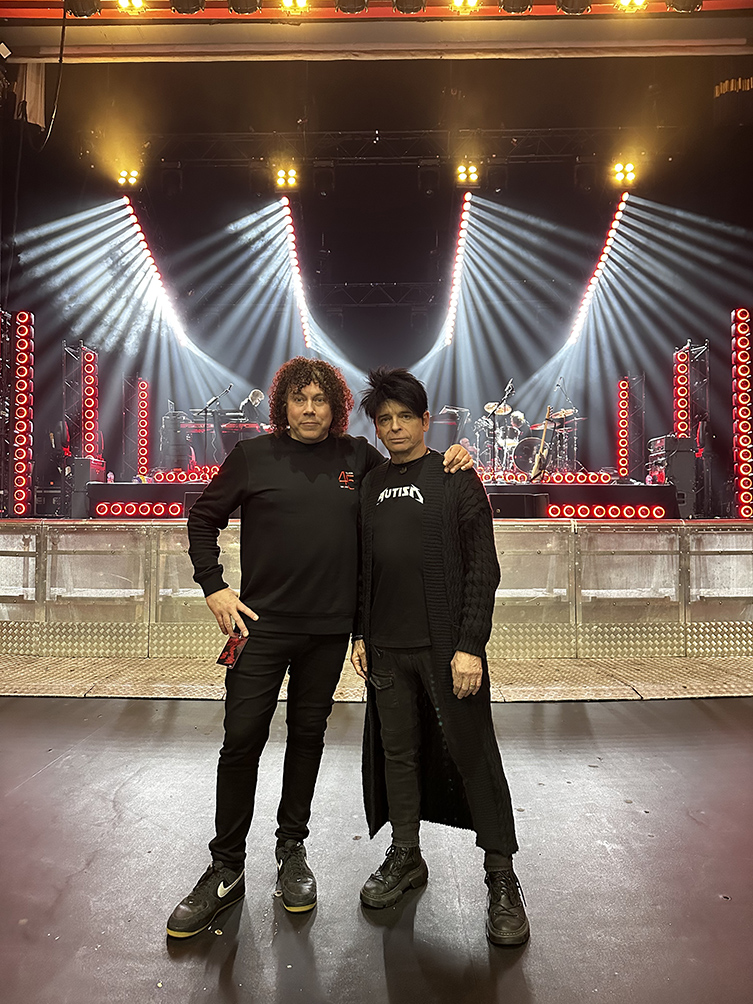
(Pic: Dave Dupuis)
Dave managed to fit that in during a busy North American tour with Gary Numan, so to have included such a huge amount of useful knowledge and advice is doubly as impressive, not to mention generous. There’s a lot of great stuff in there for sound engineers, and for musicians who want to understand a little more about how they themselves fit into the overall picture of live sound. Be good to the engineer, because he has your best interests at heart!
I’d like to thank Dave for letting me reach out, and for giving up time that he didn’t really have in order to get this all back to me. Above and beyond!
Gary is playing a few select shows in the UK this year, so make sure you keep your eyes peeled for those dates. And consider sharing this interview with your sound engineer friends: no matter how good they may be, there’s always something new and fresh to learn!
Thanks for reading, and click the links below for more related content!