Dark, neon-lit dystopian streets…car chases and gunfire…huge synth riffs and beats thumping through the city…it can mean only one thing: Carpenter Brut is back!
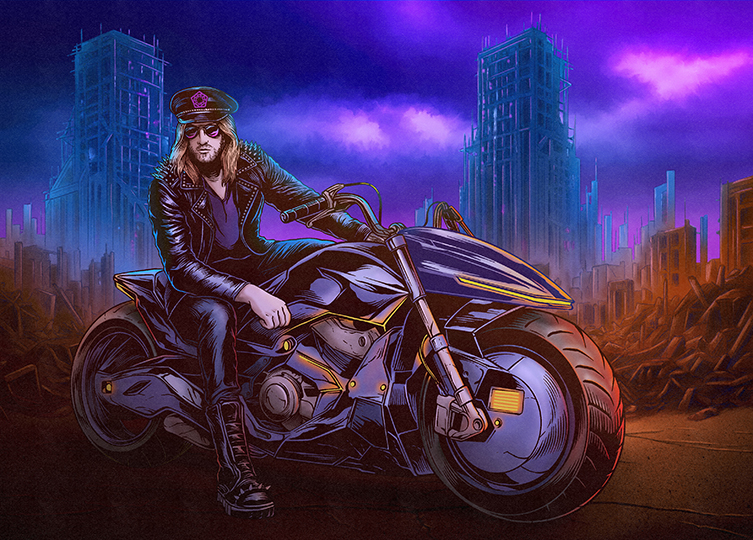
February 27th sees the release of Leather Temple, the third and final part of Carpenter Brut’s gleefully preposterous Leather Trilogy. As the cinematic narrative draws to a close, the retro synth lines will be going harder than ever, to a multifaceted and relentless set of rhythms. This is party music for larger-than-life characters, and there’s no stopping the energy and 80 movies references!
For those who’ve been keeping up with Carpenter Brut, this is the culmination of years’ worth of music. For those new to the sound, you’ll quickly become immersed in the rich alternate reality and banging music that forms the Leather Trilogy’s unique universe.
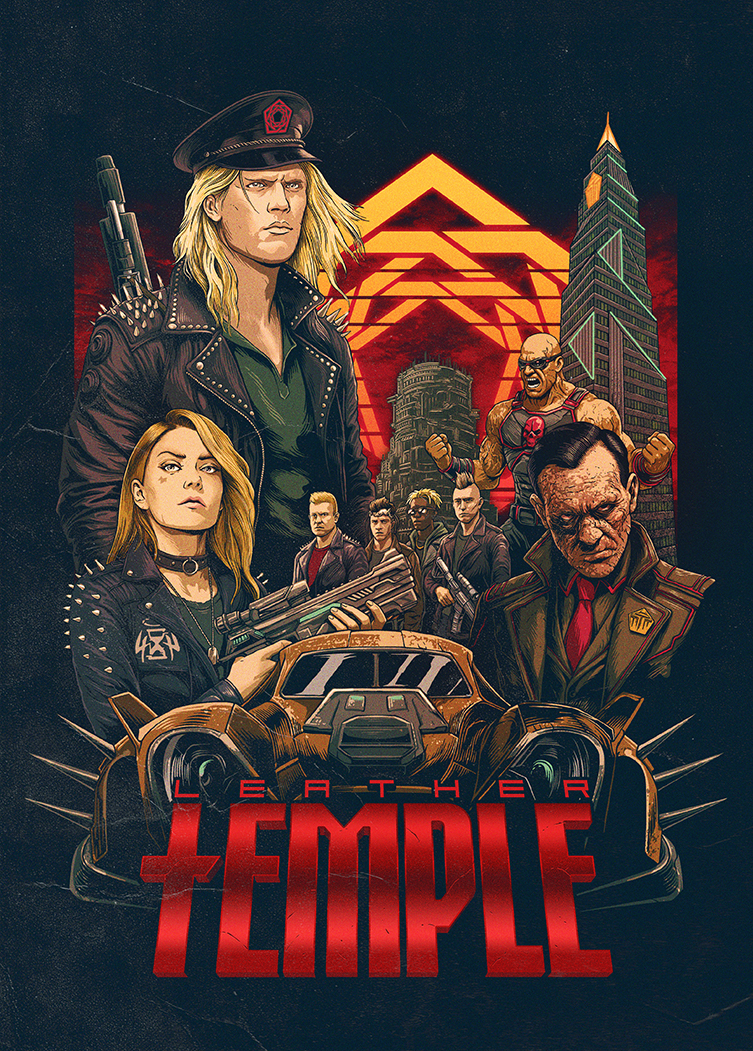
As a fan of synths, John Carpenter movies and music that has a narrative, I just had to know more. Carpenter Brut - who also goes by the name of Franck Hueso - was happy to chat to a fellow synth and movie nerd, so turn up your speakers and dive into this exclusive interview!
Carpenter Brut: The Leather Temple INterview
guitarguitar: Leather Temple is the third part of a narrative story. Does writing music to a fictional narrative story structure allow you the freedom to speak more truths about today’s society by hiding them within such a story?
Carpenter Brut: I write music for people who want to have fun, dance, or even drive a bit too fast (I’m not encouraging it). Do people still need artists to point out what’s wrong with the world? Carpenter Brut is entertainment.
gg: The Narrative is set in 2077 (a reference to the Cyberpunk game?) and is populated with characters such as Lita Connor and Bret Halford. Are these direct references to Lita Ford, Rob Halford, Bret Michaels and The Terminator’s Sarah Connor? If so, is this to help create a universe for the trilogy to exist in? By using well-known names and their cultural associations?
CB: Yeah, it’s a reference to Cyberpunk 2077, and it works out nicely because I’ll be 100 years old in 2077, so it’s a nice little nod. As for the characters, they’re film and music references: artists I love, and characters from movies that stuck with me. I like references in general with Carpenter Brut. It’s basically a way to pack everything that blew my mind when I was younger into one project, and leave a trace of that youth somewhere.
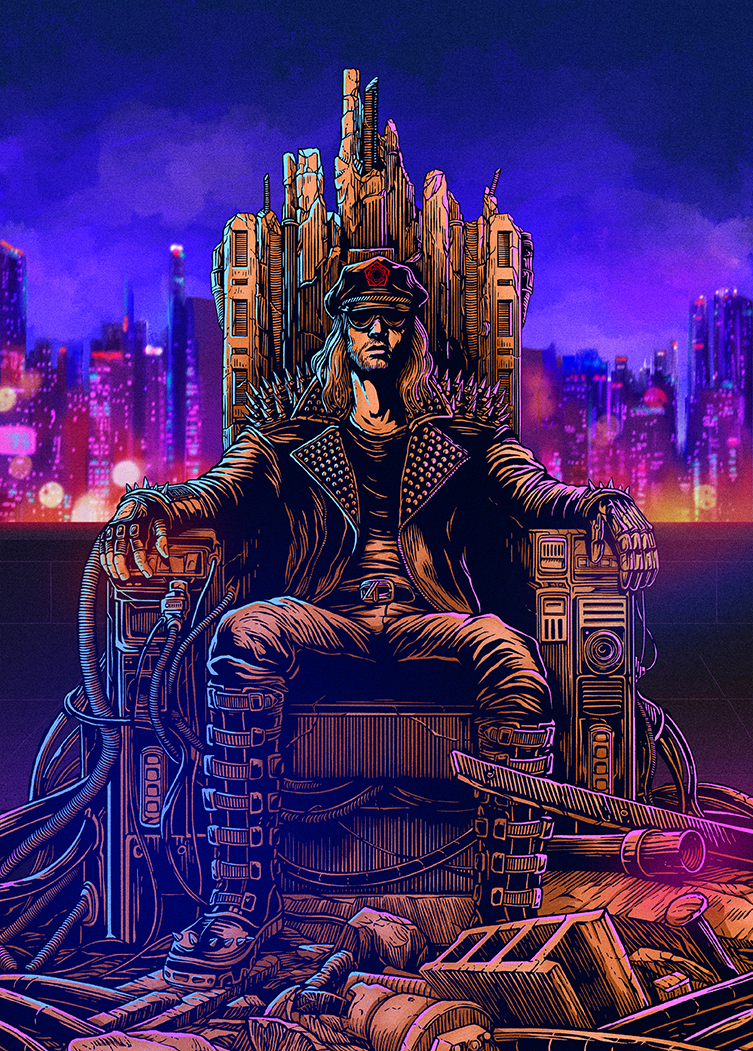
gg: Do you tend to form a story idea first, and then compose the music around that narrative?
CB: Usually it starts with something very stupid and very concrete, like a synth preset I’ve never used. I mess around, build a few things around it, and very quickly the track tells me what it wants to be. What am I scoring here? A car chase? The villain’s entrance? Something sad, like a character dying? Once I have that, I get the tempo, the musical vocabulary, the overall direction, and then I hunt for the melody.
gg: When writing music and putting a track together, do you have a particular process? For example, do you always begin with, say, the drums? Or perhaps a synth motif or chord progression?
CB: It depends on my mood. For a while I always started with a drum beat, because it drives the track and it’s easier to find riffs when the rhythm is already there. For me it’s super basic: a simple Kick / Snare beat. But it’s enough to build on. And sometimes I start with a specific synth sound instead. I’ve bought way too many VSTs just to use the same four, haha, so sometimes I force myself: I open a different one, scroll through presets, and see what it triggers.
So yeah, no fixed method. I also always start from a blank session, no template. I just keep one or two drum kits ready so I don’t waste time.
gg: Do your songs go through various permutations before you consider them finished? Is that ever a difficult process, given how richly detailed each composition is?
CB: Yeah, almost always. It’s very rare that a track just comes out easily. It’s constant back and forth: melodies, tempo changes, arrangement, everything. I can feel when I’m close, but something doesn’t lock in, so I try a lot of things, but I don’t just throw ideas away.
For example, the track Leather Temple was completely different at first, but I knew I had the sound. The instruments were right, the vibe was right, but the song wasn’t there. After about three months I basically scrapped almost everything and wrote something much simpler, and that quickly became Leather Temple. So the “song” was fast, but all the research and production before that took more than four months. And I know I struggle to keep things simple. It’s never enough for me, so I stack layers. The good part is: people can discover little details over repeated listens.
gg: Do you use a combination of hardware synths and plugins?
CB: For a while I had hardware synths like a Prophet-6, OB-6, Pro 2, which I used live as well, plus a Minimoog Model D, really fun gear. But honestly, with my workflow, I never fully clicked with hardware. I grew up working with plugins, and that’s still how I move fastest. For Leather Temple I packed the hardware into flight cases and went fully in the box: Ableton Live, Arturia synths, Native Instruments, Phase Plant by Kilohearts. Then mostly Ableton plugs, plus Universal Audio and Softube stuff. I also use a Softube Console 1 and a Native Instruments Kontrol S61. Pretty standard setup, haha. Nothing crazy, I’m not a gear hunter.
But I do know what I want next: a Buchla Easel. That thing looks insane.
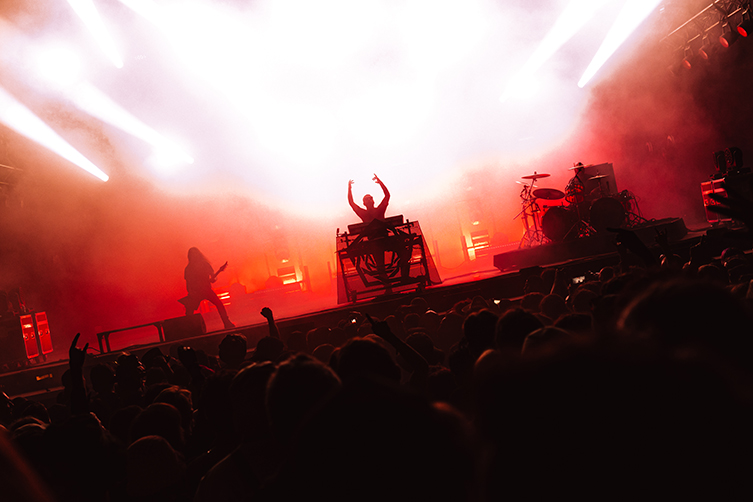
gg: In your opinion, are hardware synthesizers more inspiring/easy to write songs on than soft synths?
CB: Not for me right now. Ask me again when I’ve got the Buchla, because that’s exactly why I want it: to explore and find ideas differently. But it always depends on how you write music. John Williams writes his scores on a piano. Hans Zimmer looks like he needs a spaceship. Me, I’ve always started tracks with plugins.
gg: The Desert Island question: you’re stranded and can only take one synthesizer with you (electricity will be mysteriously supplied to your desert island!): which one synthesizer could you not live without?
CB: First thing: I’m taking my computer, since there’s electricity, hehe. But if we’re talking one hardware synth, I don’t have a huge amount of experience with them, but I’d take my Minimoog Model D. I really love that one. And the laptop is mainly so I don’t get bored after two days, hehe.
gg: Analogue vs digital synths: do you have a preference? Does that debate even mean anything any more?
CB: I’ve always thought those debates were pointless, so even more in 2026. People should just do what they want. What is this obsession with forcing everyone to think the same way? And why would I care what “sounds better” between real analog and an emulation? Is the track good or not?
Honestly, only people with too much time argue about that. So no, I don’t have a preference. There’s great stuff on both sides. And just because I work 99% with plugins doesn’t mean I wouldn’t love to mix a record on an SSL one day. For the fun, for the experience, and because analog vs digital can give a different color. That doesn’t mean it’s always better, or always worse. So use whatever you want and have fun. Don’t listen to people. Except me when I tell you that.
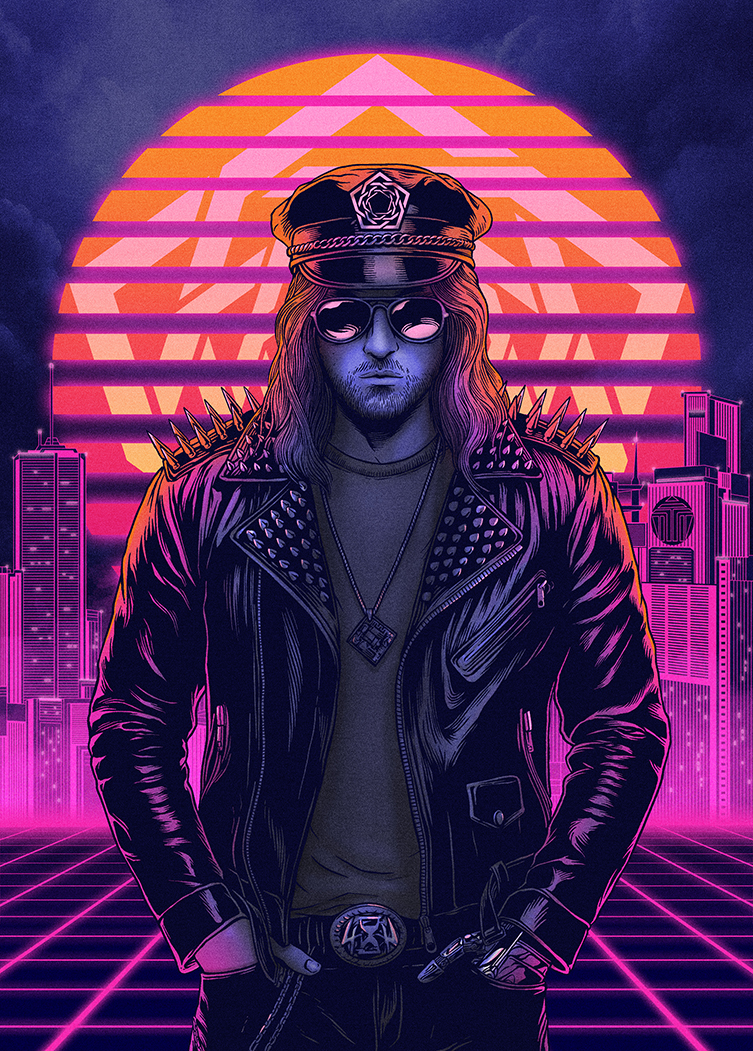
gg: Your music sounds like it was written to be performed live in front of an audience. Is that a consideration for you when you sit down to compose music?
CB: For this album, yes. At the beginning of Carpenter Brut I didn’t want to tour, so the tracks were meant for home listening, parties, or clubs (haha), not for a stage. Then I started playing shows, and now touring is a big part of my life, so I don’t write with the same mindset anymore. Even on the previous albums there were always tracks made for the stage.
On Leather Temple, it’s all made for the stage, from the intro to the last track. I told myself: if I ever stop touring after this album, because I don’t even like touring that much, then I want to finish with a punch to the back of the neck, haha. That’s why the tracks are simple, fast, effective, not too fancy.
gg: Does your live gear setup differ from your studio equipment?
CB: On stage, since 2025, I use two Arturia AstroLab keyboards. Since most of my sounds come from Analog Lab, I can get them back easily live. Before that I used my Prophet-6 and OB-6or Pro 2. But one point for digital: analog machines are fragile, and when something breaks,it becomes a nightmare. With the AstroLab it’s simpler. I have the equivalent in my computer session: Analog Lab, same presets, same order as the AstroLab.
So if there’s a problem, we plug in a MIDI keyboard and run the sounds from the computer. It’s just safer, and I’m calmer. Even though AstroLab is new and still has bugs, the Arturia guys are great with me, so I don’t feel abandoned if something goes wrong. And I’m going to add a Push Standalone to trigger some samples during the show, which I didn’t do before. A lot of people criticized that machine, but I like it. And it lets me work on tour without pulling out the laptop, just to find ideas with the plugins. Sometimes that’s all you need to spark something.

gg: Your music has a strong association with movie soundtracks. Do you have any favourite movie scores that you return to again and again for inspiration and enjoyment?
CB: John Williams in general is always Gold. I like some Hans Zimmer stuff too, especially Time, that one is an absolute banger. I also love the scores for Sleepy Hollow, Face/Off, Gladiator. Those are old references, from back when I wasn’t composing music. Now I have a harder time keeping up with new stuff, especially because there isn’t much in cinema that really interests me, so I pay less attention.
And I feel like studios are so obsessed with forcing a certain style on big scores that everything ends up sounding the same. So yeah, I’m old, I prefer the stuff from my era, it sounds more authentic to my ears. Back then everything still felt like it had to be invented. Films were ambitious, they told real stories, they kept inventing new effects, and it must have pushed composers too. Now everything is produced on an assembly line for profitability, and most people are fine with it. Good for them, I’ll pass. (Even though there are exceptions, yeah, we know.)
gg: Do you have plans to turn your ‘Leather’ trilogy into an actual movie?
CB: Hahaha. Who would pay to see this story on the big screen? What studio would drop 50 million on that? None. Like I said, cinema now is about making money, not making people dream. People are zombified with garbage and they ask for more. It’s great!! Why change that?
gg: Your band name is partly a reference to director/composer John Carpenter. What’s your favourite John Carpenter movie?
CB: The Thing. Perfect. Of course it flopped when it came out because thanks to E.T. everyone wanted friendly aliens. And even though I love Spielberg, I’ve watched The Thing way more, haha. Anyway Carpenter is one of my favorites, maybe my favorite, because he was always inventive, while the studios, with their legendary “good taste”, never really wanted to hear about him. He’s a rebel in Hollywood, and he’s probably the last one.
I think there’s something of the kindred spirit there, in those final comments about John Carpenter and his rebellious spirit. And he’s not wrong about The Thing!
Carpenter Brut’s new album Leather Temple is released on February 27th on his own label, No Quarter Prod. He’ll be touring in the States this Spring with HEALTH, and hopefully over here soon!
For everything on this, head to the official Carpenter Brut website. My thanks to Franck for his time (and great answers!) and to David Sullivan.
All artwork and photos courtesy of Carpenter Brut/Førtifem.
For more EXCLUSIVE guitarguitar interviews, please click the links below!