Do you like your ambient music to still be engaging and emotional? Are you fond of layered, effected guitars that deal in atmosphere and texture as well as melody? Do you like music that just haunts you after you hear it?
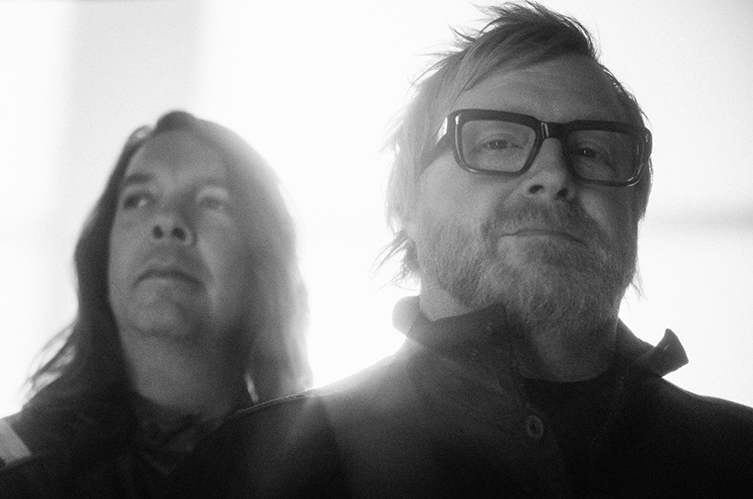
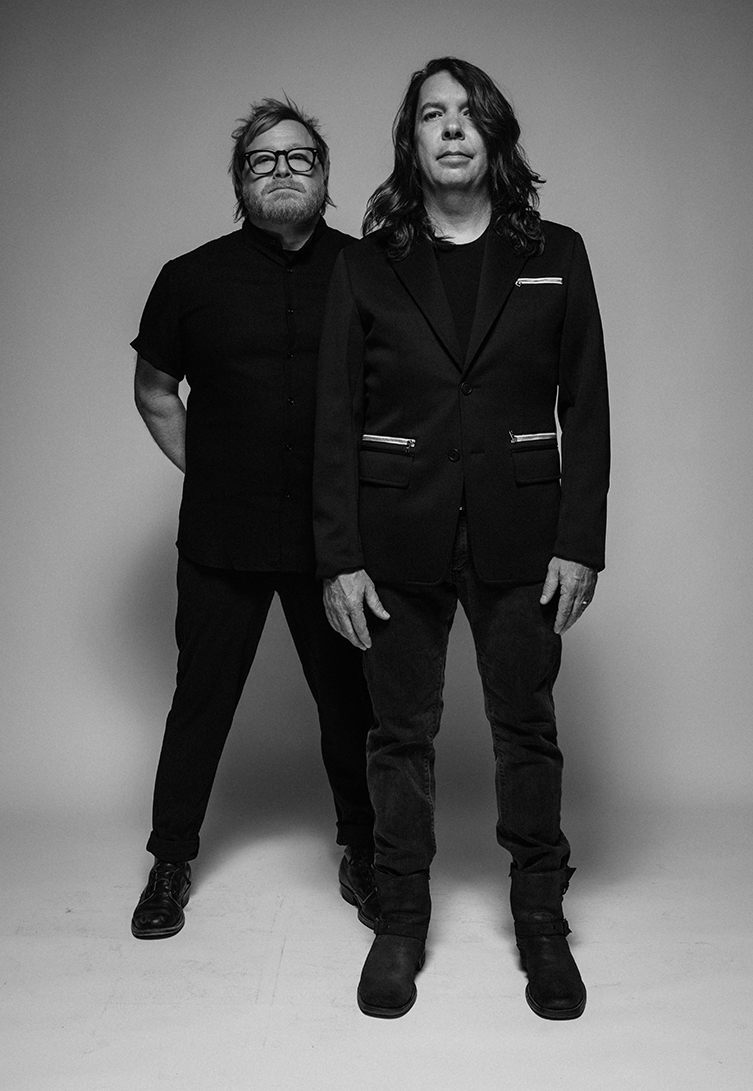
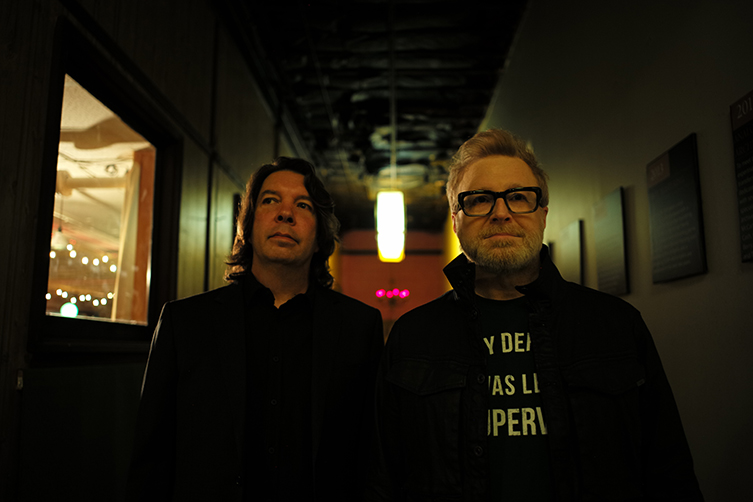
If so, then I expect you’ve heard Hammock before. And if you haven’t, then you may just have found a new favourite band. Operating out of Nashville since 2003, Hammock is the work of musicians Marc Byrd and Andrew Thompson, both previously from Common Children. Hammock have, through 14 albums, developed a synesthetic world that evokes memories, feelings and a sense of atmosphere like almost no other band. They are invariably described as ‘ambient post rock’, which is simultaneously as appropriate as any other tag and as misleading as them all.
This month sees the release of The Second Coming Was a Moonrise, their latest long-player and an excellent jumping-on point for new listeners. A beautiful record that doesn't need to scream its brilliance when it can just subtly win you over, it’s the perfect accompaniment for life’s more introspective moments.
I recently caught up with Marc and Andrew via email to talk about their approach to sounds, guitar parts, and the all-pervasive heart at the centre of it all.
Hammock Interview
Guitarguitar: Like all Hammock albums, The Second Coming Was a Moonrise is filled with absolutely beautiful sounds and textures. Without being reductive to the process, do you tend to begin writing a piece with a guitar and some ambient effects?
Andrew Thompson: Probably mostly on guitar, but it really depends on the piece, some are started on guitar, others on piano, keys or whatever else happens to be inspirational.
Marc Byrd: For me, it’s almost always the guitar—which includes baritone, octave guitar, acoustic, etc. There’s almost always pedals involved but sometimes we’ll turn them all off just to start fresh. Other times, we’ll try the Daniel Lanois studio trick and leave a sound up left over from the last thing we worked on. Try a different guitar in a different tuning and see what happens.
GG: I get a sense of a sort of narrative when I listen to the new record, from track to track. Is that something you are cognisant of when you put together the track running order?
AT: Absolutely. Figuring out the running order for each record is key in making each release function as a whole. We both grew up on vinyl, cassettes & then CDs and the importance of sequencing has been deeply ingrained. We will spend weeks, sometimes months finessing different sequences, until the project makes sense as a singular entity, not just a collection of songs. Sadly, a lot of that work and forethought is lost due to how music is listened to in the age of steaming.
MB: There is definitely a common theme running through the album. The title of the record, (the Second Coming Was a Moonrise) is taken from an experience I had in my youth. I was with a friend one night, we were tripping on acid. There was a light behind the hills that kept getting brighter. Both of us raised strict fundamentalists, we became convinced it was the second coming of Christ. My friend got on his knees and began to panic and pray. I noticed there was a solid sliver of light rising above the hills and realized it was just the moon rising. Throughout the album, there’s an emphasis on how our individual perceptions can cause us to be in a dysfunctional relationship with reality. I think it’s human nature that most of us don’t see things the way they are, instead, we see things the way WE are.
GG: I also get a real sense of nostalgia from certain moments on the record. Is connecting to your pasts - or an implied past - a part of your musical goals? Or maybe finding a place between memories and ‘newness’?
MB: I would love for this album to feel like sitting on the roof of a car, when being young was serious and one night was like the end of the world. Music has the power to bring the past into the present… to remind us of our youth, before we let life make us cynical.
AT: Our connection and relationship to the past has definitely become more poignant as we’ve gotten older. I think that comes through in the music regardless of what we do.
GG: Are you familiar with the term ‘hauntology’? I feel like there’s a strong draw towards that sense in much of what Hammock does. Am I getting close?
MB: You are close. I mean, our fourth album was called Chasing After Shadows…Living With the Ghosts. We’ve always emphasized how the past can feel like a haunting of the present. That’s the meaning of trauma. Is our fear and disappointment in the future dependent upon how we cling to or idealize the past? Probably. I think we can exaggerate our fear of the future due to unresolved issues left over from the past. Especially if the past was painful. I also think we can miss the joy of the present moment and lose hope for the future if we pretend like the past was better than it actually was. Once again, we’re dealing with HOW we see, not WHAT we see.
AT: That is probably true to some extent, things being as crazy as they are now in the U.S. We’re definitely very aware of where we are at this point in history and how easily we could lose the freedoms that we all once took for granted. It really does boggle the mind at times… But we can’t let that paralyze us, instead it should motivate us to be intentional about being part of the solution.
GG: As guitarists, you are both awfully good at exercising restraint in your playing! Not an easy task! Do you find it easy to actually play too many notes, or add too many layers?
AT: We’ve never really had a problem with playing too many notes, but most definitely with too many layers. We do go through a pretty extensive editing process and try to make a concerted effort to peel things back as needed. We always want to stay connected to the emotional center of each piece. The editing process and/or carving of frequencies can go on for months, sometimes years depending on each individual song.
MB: We’ve never been known for playing too many notes. There have been many times we’ve gone from an eight or ten note phrase to a four note phrase. Respect for space is a good thing. In the past, maybe we’ve added too many layers. I think our album Departure Songs has moments where that can be the case. But for a lot of our fans, that album is their favorite. Having said that, we’ve been doing this for a long time, it’s not like we’re unaware of the mid range build up and/or frequency overloads. It’s always been about emotional impact rather than traditional rules of recording.
GG: On the subject of building layers and textures, is part of that process trying out lots of variations and testing potential parts? Or do the initial performances and layers tend to be what remains in the final pieces?
AT: That really depends on the song itself. Some come out pretty close to the final early on, others are refined over time until we find the right emotional reaction.
MB: In a lot of our songs there’s an anchor guitar and most of the time we keep the performance even if there’s some imperfections. It’s when we begin adding the melodic phrases and different layers that we go on a quest for finding the right parts, hopefully without sounding like we’re overthinking or underthinking.
GG: You make ambient-adjacent music that has substance, depth and emotion. How do you avoid the sort of ‘wallpaper music’ vibe that can affect lots of ambient-facing instrumental music? How do you manage to keep your music engaging and emotive?
AT: To begin with, we try to make the music engaging for us. Some pieces work, others don’t. Other pieces just need time and some additional attention in order to come to fruition. We have a huge archive of unreleased material.
MB: We don’t want to make “lifestyle music”. Music doesn’t need to serve a utilitarian purpose in order to justify itself. Some of the ambient music out there thrives on being associated with certain playlists in order to explain its reason for existing. “Music for Relaxation or Music for Study or Music for Focus.” That’s like the object label next to a painting being the reason the painter paints.
GG: Would either of you say that there can be emotional qualities in pedals? We don’t tend to talk about that as guitarists, but so much of your wonderful sound is made with such devices. Can one delay pedal impart a colour of emotion that others can’t, for example?
AT: The original Line 6 DL4 has been used on every Hammock record from the beginning. The newer reissues don’t quite sound the same to us for some reason.
MB: Yes. The original Line 6 DL4 combined with… wait for it, Boss RV3. I spent almost two days dialing in the DL4 swell sound before we even made our first album. But it really only works correctly with the RV3. Which is a stereo/mono pedal… not true stereo. That sound has been on every Hammock album. When we go back to that sound, we lose track of time.
GG: What are your favourite guitars for writing with? What makes those particular instruments so useful to you? And do those guitars require specific pedals and amps to get you where you need to go?
AT: The Schecter Octave guitar and Ultracure are standards. Neptune baritone. A couple of Fender Jazzmasters. Two different strats (Marc has a Frankenstein Strat he’s had since he was eighteen), Bilt 12 string, Gibson J-45 and Marc’s hollow body Herb Ellis Gibson. An obscene amount of different amp and pedal combos…
MB: I borrowed an old Ampeg Reverberocket R50H 50w from a friend when I was nineteen. I kept it for a year but had to give it back. A few months ago I bought one from Eastside Music Supply in Nashville. It sounds just like the one I borrowed all those years ago, accordion input and all. You will hear it on our next album.
"I would love for this album to feel like sitting on the roof of a car, when being young was serious and one night was like the end of the world."
GG: Your live gear is presumably different, or at least slimmed down from your studio picks. What gets the most use at gigs, gear-wise?
AT: We’ve done very limited live shows, the gear tends to be pretty close to what we use in the studio, minus the DAW & associated plugins.
MB: A Vox and a Marshall for Andrew and a Vox and a Fender for me. Our pedal board configurations vary depending on the set list.
GG: Do you have any thoughts on the notion that vintage gear has some sort of inherent ‘mojo’, for lack of a better term? I imagine a place like Nashville must be full of temptation in that regard?
AT: We do have a fair amount of vintage gear, but that’s mostly because we’re quite vintage ourselves. A lot of the vintage gear we own was newish when we bought it. Nashville is most definitely a temptation in that regard, which is a nice problem to have I suppose.
MB: We are in no way gear snobs, we just know what we like and what we’re used to. But that newish Fender Jack White Pano Verb Dual-speaker combo is an amazing amplifier. The next album will definitely have that amp combined with the old Ampeg Reverberocket R50H 50w.
GG: When tracking, do more guitars make for a richer sonic experience (i.e swapping out guitars for different ones track by track)? Have you found a particularly good blend?
AT: We’re always mixing and matching different guitars to achieve different tones and textures. The Baritone and the Ultracure work particularly well together. The Bilt 12-string combines well with almost everything.
MB: A warmer guitar like the Herb Ellis on one side along with the Ultracure or Strat capoed an octave up on the other side is a really nice combo when it comes to recording chimey, Johnny Marr style guitar parts.
GG: Finally, what is the secret to achieving the perfect expressive ambient guitar sound? I feel like I hear synths on here too, though that could be settings on pedals. Do you incorporate keys? If so, what do you use?
AT: That depends on the sound we’re going for. It varies from song to song and varies within the songs themselves. But it’s almost always lots of guitars, with a sprinkling of synths/keys. However, we probably have more keys/synths on this release than in the past. We used some old mono Moogs as well as some plugins — too many to mention. What sets this album apart from our past work, is that we decided to hire Matthew Doty from the band Deserta to add some synths to almost every song on this record. We love what he came up with, sonically and melodically.
MB: We use the Moog Subsequent 37 and I still use the Akai MPK49 as a controller to deal with the plugins we use. We happen to still really enjoy Omnisphere and Keyscape. For this album, we worked at a studio in Nashville called Skinny Elephant. We had access to a lot of vintage synths, etc. Unfortunately I can't remember all of them, due to being in the moment and trying to capture inspiration.
‘Being in the moment and trying to capture inspiration’. That’s really what it’s all about, isn’t it? Hammock’s music majors on restraint and evocation, and this new release is just the thing for late summer evenings. Make sure you don’t miss out! Check out The Second Coming Was a Moonrise now, wherever you get your music. Head over to the Hammock website for music, merch and more.



![LAURA COX: Trouble is Coming! [Interview]](https://images.guitarguitar.co.uk/cdn/small/160/753_gg_lauracox_thumbnail.jpg?quality=80&w=247)
![Kai Hansen Talks Giants, Monsters and 40 Years of Helloween! [Interview]](https://images.guitarguitar.co.uk/cdn/small/160/753_gg_helloween25_thumbnail.jpg?quality=80&w=247)
![Nita Strauss UNLEASHES Her Secrets! [Guitar Tips]](https://images.guitarguitar.co.uk/cdn/small/160/news_753_Nita-Strauss-UNLEASHES-Her-Secrets_Thumb.jpg?quality=80&w=247)