Evocative. Dreamy. Lynchian. Magically languid. Languidly magic.
Those are a few of the terms that rise to one’s mind when listening to Widowspeak, the NYC -based indie rock/dream pop duo. Comprised of vocalist/guitarist Molly Hamilton and guitarist Robert Earl Thomas, Widowspeak have been a mainstay on the New York alternative scene for 16 years now, turning in 7 albums of dark daydreams, and shadowing that space and pace are both necessary and rewarding elements of any creative endeavour.
Roses, their newest album, was recorded in a studio in the remote Greek island of Hydra, a world away from their old rehearsal space at Monster Island Basement, the legendary (and now sadly turned into a Trader Joe’s) subterranean venue/arts space in Brooklyn.
Robert took time out from organising this year’s tour to chat to me via email about sourcing a Fender Rhodes on a tiny island, about holding down day jobs during lean months, and about how tone really is ‘all in the fingers’.
Guitarguitar: Your new record Roses was recorded on a small Greek island. How much of the material was already written prior to arriving in Greece? And how much did the Greek surroundings inspire the recording?
Robert Earl Thomas: Basically, all the material was written prior to arriving in Greece. That said, many of the arrangements and guitar solos were improvised on the spot. For the last couple records we’ve opted to capture the spontaneity of the live band playing together in sort of an exploratory format. We hit record and do a couple takes and call it done when we play something that feels right. Later on we add some overdubs, or maybe not. The Greek surroundings were inspiring in that everyone was in a calm, undistracted state of mind. We wanted to go somewhere beautiful and removed from everyday life. In that respect you can’t beat a Greek island during off-season.
gg: Also, why Greece in the first place? And why Hydra, where there are no motorised vehicles allowed?
RET: Greece because Molly and I have been somewhat obsessed with the Mediterranean for the last couple of years. After a previous tour we spent some time in Athens and wanted to come back and get out on the Aegean. We knew we wanted to do a destination recording, but other than that we were pretty open to anything. Previously we had come across this studio on Hydra, so we reached out on a whim and from there everything just sort of fell into place. The island is an amazing place. The town is built into the slope of a hill with winding medieval streets and buildings toppling onto one another. It’s easy to understand why Leonard Cohen loved it so much. There are no cars, so donkeys carry everything up from the waterfront. The studio sourced a Fender Rhodes for us and it too made its way up to the live room on the back of a donkey. As did our suitcases and guitars, and somebody’s new refrigerator. The experience was even better because we were there in the off-season, meaning we were almost alone on the island. As I understand it, Hydra is a tourist hot spot during the summer, which can be chaotic and probably distracting from a productivity standpoint.
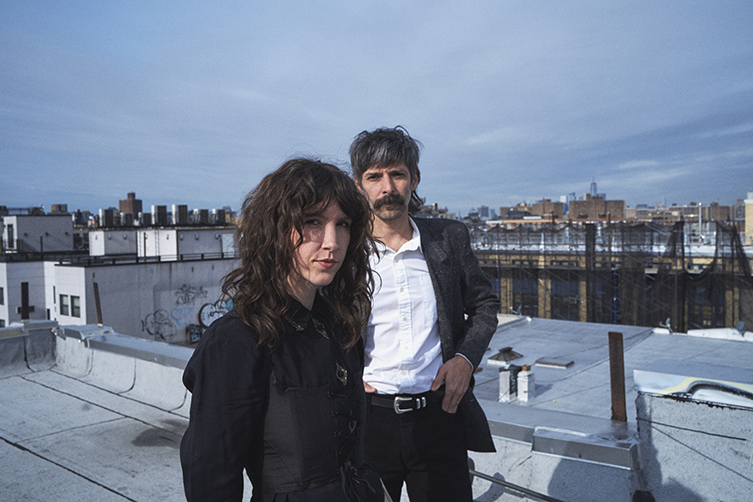
Photo: MIchael Stasiak)
gg: From initial demo to finished song, is there an equal democratic process to the writing? You both play guitar, so do you bounce off of each others’ ideas?
RET: I think it’s more of a divide and conquer strategy, or maybe a game of hot potato. Molly will come up with a basic song, chords and melody, then I will build a demo off of that. Occasionally I make an entire demo on my own and Molly will come up with a top-line. We then use the demo as a jumping off point for the live band in the studio and just see where it goes. Molly often does play strummy rhythm guitar when we track, but I play most of the guitars on any given song.
gg: As a married couple, does that change the dynamic or focus when it comes to subject matter or lyrical themes?
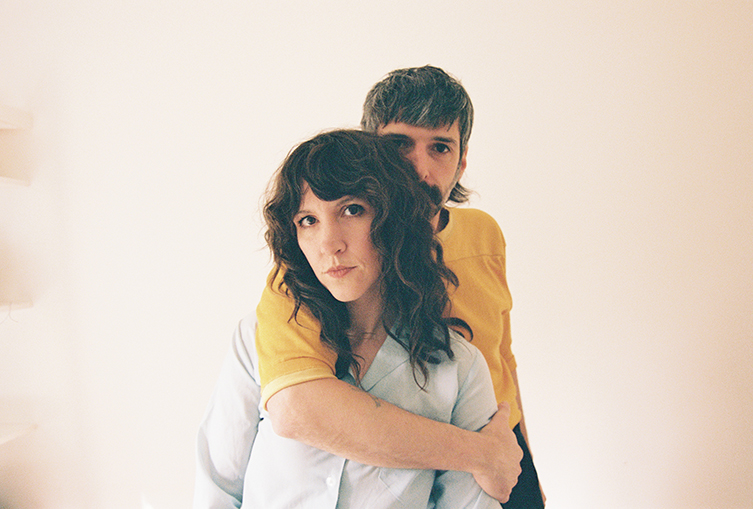
RET: I don’t think so. Maybe in as much as Molly is a married person and that affects her authorial perspective. But in general the fact that we’re married is a fact that exists outside the band. If anything, the biggest effect our marriage has exerted on the band is simply the ability to keep the project going. There’s not a lot of money in indie music and sustaining a couple has been easier than two individuals. But that’s incidental, not planned haha.
gg: As someone from the UK, I hear a lot of American mythology in your music, from Laurel Canyon to David Lynch. Even the instrument choices and palette of sounds seem steeped in different eras of American art and culture. Am I on the right path in terms of influences?
RET: Yes. We are, at the heart of it, an American rock band working in that milieu and lineage. Country, blues, folk, all of it is baked into our listening and playing habits. We know it’s there and foster it to some degree, but we don’t really try to exert too much control over our creative tendencies, the influences just sort of flow through us.
(Pic: Alexia Viscius)
gg: You are based in New York City. What is the scene there currently like? And is it difficult to make a dent in such a significant and saturated ‘music city’?
RET: The scene in New York is pretty healthy for guitar music these days, there’s been sort of a bloom of power-pop bands which, while not directly related to Widowspeak, is exciting. After the aughts rock kind of took a hit, but it’s bouncing back strong. We’re lucky in that we’re already established.
I think it’s easy to get a band together and going in NYC, but quite hard to rise above the fray. I play in other bands as do many of my friends and it is a struggle to make a dent. Venues have closed, practice spaces are expensive, and there’s like a million bands trying to book a show on any given night.
gg: I love the ‘wonky notes’ in the middle of the No Driver guitar solo! I can really hear a passionate performance there. Which guitarists do you draw inspiration from?
RET: I suppose those wonky notes are somewhat indebted to Neil Young. I don’t really think about his guitar playing too much these days, but he definitely is the blueprint for wrenching expressive noise from the instrument.
In the same vein, I have a lifelong love for Keith Richards’ sloppiness. Maybe somewhat ironically many of my favorite guitar players are a little more precise and surgical, James Cropper for instance. I’ve also taken to jazz a lot lately, players like Grant Green and Kenny Burrell, especially when they’re on more soul or blues-oriented sessions. Jimmy Smith and Lou Donaldson records for instance. That’s more about tone and an elevated blues kind of phrasing.
gg: So, guitar gear! I’m guessing that I hear a Telecaster? What do you both use? Is this the same gear you take out on the road?
RET: I am not a gear head. I want to say “tone is in the fingers,” which I believe to be wholly true, but mostly it’s a general impatience I have with curating gear choices. I will play whatever’s around the studio and, in most cases, I prefer to plug straight into the amp. Most of the guitar parts on Roses are my slightly modded 90’s Rickenbacker 620 (rewired so it’s more like Gibson) and a random Stratocaster that was at the studio. Both played through a big silverface Fender combo.
Molly did play a telecaster, but that shows up more in the strummy background parts. I honestly don’t remember the overdrive pedal I used, but some of the fuzzed-out overdubs are courtesy of my 2000’s Big Muff.
Live I play the Ric through a Blues Jr (I like amps you can dial in a little grit at low volumes) and my pedalboard leans heavily on a Memory Boy that I use both for delay and as a gain boost. I’ve also gotten a lot of mileage out of a Boss Rv-6 reverb, specifically the shimmer setting I use to create a kind of wall of sound during crescendo moments. Molly plays a 90s Telecaster through a reissue ‘65 Deluxe Reverb.
gg: You are touring a lot this year. Do you find it difficult to fit that into your lives and jobs? And do you find touring to be an effective way of building an audience?
RET: It’s more that we have built our lives in a way that accommodates touring. I’m a carpenter and Molly is a waitress, and these are jobs we can leave and come back to as needed. It’s definitely challenging. There’s very little money in touring, and with such a crowded market, it’s increasingly less the case that touring is effective in building an audience.
That said, I think that we are a strong live band, dynamic and spontaneous, and this has helped us in the long run. Plus, we have great fans who continue to support us through the years. Now, we’re going to take our baby out on tour, which will add a whole new dimension to the endeavour. TBD on how that will go!
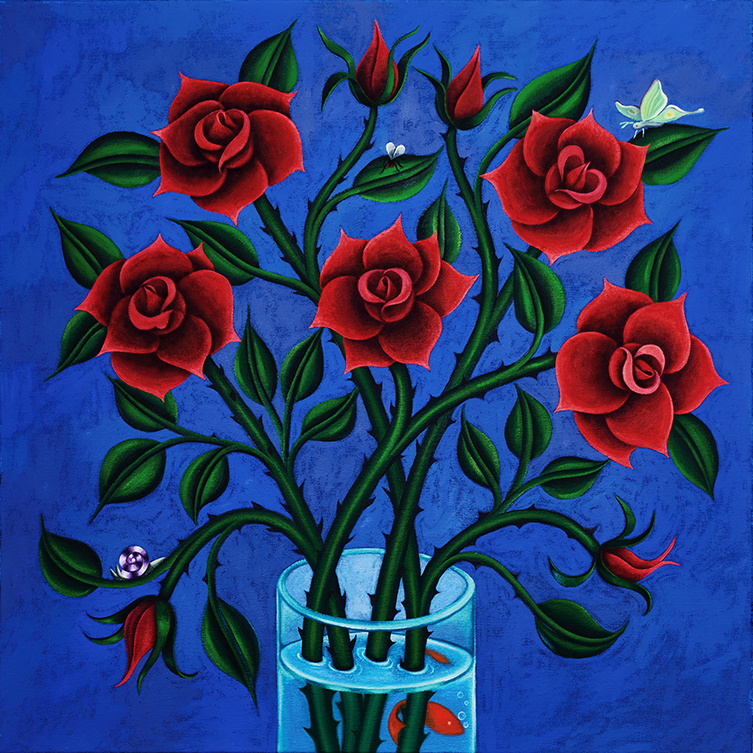
I bet it goes great! In the meantime, Roses is available wherever you source your music, and it’s well worth a hazy summer evening listen or two. Catch the band on tour this year, and head over to the Widowspeak website for tourdates, merch and more.
Read More
-
THE STRANGLERS: Baz Warne on His New Autobiography and Having Jimmy Page as a Fan!
-
From HOLE to SMASHING PUMPKINS: MELISSA AUF DER MAUR!
-
GARY NUMAN’s Sound Engineer EXCLUSIVE Q&A with Dave Dupuis
-
DEVIN TOWNSEND: From METAL to OPERA with The MOTH!
-
HAMMOCK on Texture, Restraint and Ways of Seeing Truths

![LAURA COX: Trouble is Coming! [Interview]](https://images.guitarguitar.co.uk/cdn/small/160/753_gg_lauracox_thumbnail.jpg?quality=80&w=247)
![Kai Hansen Talks Giants, Monsters and 40 Years of Helloween! [Interview]](https://images.guitarguitar.co.uk/cdn/small/160/753_gg_helloween25_thumbnail.jpg?quality=80&w=247)
![Nita Strauss UNLEASHES Her Secrets! [Guitar Tips]](https://images.guitarguitar.co.uk/cdn/small/160/news_753_Nita-Strauss-UNLEASHES-Her-Secrets_Thumb.jpg?quality=80&w=247)