If I asked you to guess which ultra-talented, semi-operatic prog metal star was going to release a full-on musical complete with choirs and a symphony orchestra, you would actually probably get the answer with your first guess.
That’s because there just aren’t many people out there who are up to the task in the first place, and many less who can see it through to completion. But if there’s one thing I’ve learned from over ten years of conversations with Canadian prog metal legend Devin Townsend, it’s that there is no idea too monumental for his enduringly grand vision. In fact, it’s almost disappointing when he isn’t trying to scale the proverbial musical Everest, and his latest release The Moth could certainly be discussed in those terms.
The Moth is 24 tracks of epic existential operatic, symphonic, and (occasionally) heavy music. A story about human experience, about behavioural patterns, and about transformation. At times, it’s an overpowering experience of orchestra and voice; sometimes it’s like a sci-fi film score, and other times it feels almost off-Broadway.
There’s a lot to chew on, basically.
That’s why I wanted to chat to Devin to get the inside perspective! Over the years, we’ve enjoyed a number of conversations about his career, stretching right back to the days of the Devin Townsend Project and the Deconstruction/Ghost double album, so there’s a lot of history there. After a couple of weeks of listening to The Moth, I caught up with him online and chatted for half an hour. Presented below is our conversation, which takes in Andrew Lloyd Webber, the need for metal musicals, and spending ten years to learn the language of orchestration. I hope you enjoy!
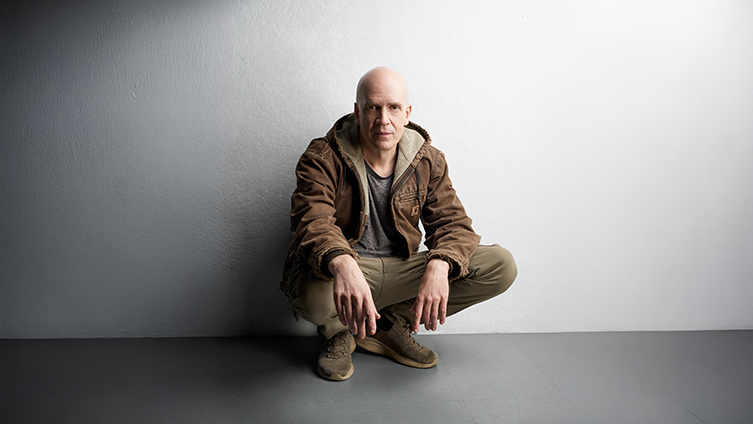
(Photo: Tom Hawkins)
Devin Townsend Interview
Guitarguitar: Hey Dev: The Moth! I've been listening to that all weekend, what an incredible achievement, well done.
Devin Townsend: Thanks, man, it was a pain in the ass! I think, as we've been doing this for so long, you know, you and I have talked a lot, right? And it's like, over the years, I find that when you're younger and you're working on a project, it's like everything gets hardwired to the completion of it based on it being like you're on some sort of mission, you know? Like: this is my life's work, and in absence of this project, my life will not exist. But as you get older, what I find with my creative processes, ideas will come into my consciousness, like you're fishing for them somehow.
And my first thought with this was like: oh fuck, this is gonna be a pain in the ass. And I think that's when The Moth first came into my frame of mind. It was like the Cliff Notes of it. I was like, ‘oh, it's gonna be enormous, oh, it's gonna be expensive, oh, it's gonna have the orchestra, it's gonna have the choir, it's gonna be about, um, you know, a revelatory experience of transition from one phase of life to the other, and that's gonna require a lot of work!’
And so, you see these sort of indicators on the horizon of what these projects will be. And your role - at least my role, I think, as an artist - is just like: okay, so we articulate that. And you do it to the best of your ability, because the ideas, in my estimation, are coming from a place other than myself. You know, I mean, as an artist, you're just extrapolating it from the air, and as such, there's a certain amount of reverence that needs to be had for it. So, as soon as these ideas start taking shape as being as big as they are, my first thought is just like, ‘alright, buckle up!’ You know? More so than, yay! (laughs)
GG: Haha, yeah okay, fair enough. But, I mean, it is a huge record! It's symphonic, it's orchestral, but that isn't a completely different wheelhouse from what we've had from you in the past. A lot of your productions have been grandiose and…
DT: Yes.
GG: Hugely layered in orchestral anyway, and so… I mean, this is a two-point question. So the first question for this, for me, is… going back to your autobiography (titled Only Half There) way back in the day, you mentioned your early love of musical theatre. Is this you stepping into your Andrew Lloyd Webber and The Phantom of the Opera side? And kind of just fully grabbing hold of that side of things?
DT: To a degree, yeah. I think it started in that place. But I also would say that my appreciation for that style of music has certainly shifted over the years. I find a lot of it a little, um, emotionally precious now. Like, when I listen back to Phantom of the Opera, or Jesus Christ Superstar, or any of these, they're such broad strokes of emotion that those musical theatre type of presentations represent, that sometimes they're just… it's, a bit much, right? (laughs)
So, what I tried to do with The Moth is draw from that, because I always had on my bucket list that I was going to do a project that would draw from that. But as I started getting into the realities of it, the more I started veering towards, you know, a combination of that and what I typically do, I guess.
GG: Mm-hmm, And with the fact that you have been sort of halfway in this musical universe already, from record to record. Some are bigger than others in terms of that scope, but is The Moth kind of like an ultimate expression of a certain side of that musical kaleidoscope?
DT: Yeah, yeah, a certain side, exactly, not just full stop, but a certain side. What I tend to do with expressions like that is, when I have the opportunity to articulate a certain side of myself in a complete form, I'll jump on the opportunity, right? Whether or not that's using a gospel choir in Epicloud, or, or doing a country-style thing with Casualties of Cool, or doing the ambient stuff with Deep Peace.
It's like, when I get a sense of what the nature of a project is, I have this kind of compulsion to take it to its nth degree, and some of those expressions are easier to get through than others, just because the scope of them aren't as large. But with The Moth, again, when the impetus for this project started revealing itself to me, among the fears that I had - or the trepidations at least - were that I'm going to have to go full in on this in order for it to be what that particular expression seems to want, you know?
I saw an interview with an artist the other day, and he had an interesting point about how the creative process functions. It's like, in the beginning, it's ephemeral, because you get these sort of emotional senses of what you want something to be. And then there's the brass tacks of articulating it. In that moment, you understand what it is intrinsically without having to verbalize it, right? It's just: this is right and this is wrong, and this is left and this is right.
"The music of The Moth is the byproduct of the process. For me, the process is really the only thing that I'm concerned about because that's where the growth comes."
But then once it's done, and you have a press cycle, you have to remember what it was that was the point of it in the beginning. (laughs) And it's almost like you have to reverse-engineer the process, it's like you go all the way, and then once it's done, and you can release it, then you have to analyze it. And I think that a lot of the analysis that I have found myself doing with The Moth is, like, I'm guessing.
GG: Okay.
DT: You know, when people are saying ‘what was the impetus for this, what's your reason for doing it’? I think with a project of this scale, you can be forgiven for thinking that if somebody like myself has spearheaded it, that clearly we have an objective, or, like, there's some sort of mission, or there's some sort of story we're trying to impart.
But it's really about intuition. I'm just following these creative catalysts in the ways that seem appropriate. My interest in certain aspects of it is what guides that process, right? So, by the end, I know what it's supposed to feel like, I know what's right and wrong, but there's no agenda for it, I guess.
The Ten Year Process
GG: Okay, that makes a lot of sense. I'll come back to the subject of intuition a bit later, if I may. But yes, The Moth as a project has been in your creative space one way or another for a very, very long time, and I wonder. It's not so much a question as much as I'm just kind of curious: how your initial vision compared to the finished piece of work, and even perhaps from recording last year in the Netherlands when you did the live recording, have things changed in those kinds of regards?
DT: Yeah, I mean, time will shift it all, you know? If it was another year until it was released, it would be different again, and I think you have to balance the original feelings that you're trying to capture, which comes in those first moments of creative compulsion, like, a decade ago. You know, when I first had the idea, it's like: oh, it's called The Moth; oh, it's this grand scale; it's dark, it's complicated, it's… the first three quarters of it have to be over the top so that the ending can underline how futile it was. Like, all these, like, sort of big, Cliff notes are my benchmarks moving forward.
So even though it's 10 years later, in the beginning, did I have an idea of what it was gonna sound like? Yes and no, I knew what the aesthetic was, but there were no specific notes, there were no specific melodies. Well, there's a couple, you know, I had a couple of the songs sketched out back then, but more of just, like, a placeholder for what it was meant to be.
And then as the project began to evolve, the realities of incorporating hundreds of people into the productions, and all the different opinions, and the stories, and the performers, and the performances, and the logistical challenges and the time constraints. For example, the reason why we did that show in Groningen last year, prior to the music being finished, was because we had an opportunity to track the orchestra and choir. So there's all these things that are unpredictable that come along with the process, and frankly, yeah, they change it the whole way. The reason why it stays, in my mind, as it was in those first moments, is because those big Cliff notes remain. It's something like: yes, it's dark and complicated. What does that define itself as, um, sonically? I mean, you can't define anything with it. That could be anything, right? So, when I go into a project like this, I use identifiers like that, and then just stick to that. Is it dark? Is it complicated? You know what I mean?
GG: Sure.
DT: And then, the note choices, what the songs are… the reason it took 10 years for this is just the logistical challenges. I just had to figure out how to actually do this, man, you know?
GG: Yeah, of course! and I wonder about…the genesis of each piece of music, within all of that. I know you as a guy who sits down with a guitar mostly to begin a song. I mean, I know there are other ways into it with Ableton or whatever else, Pro Tools, but given how huge this is and how, increasingly, the guitar's, like, a minimal factor in it compared to the orchestra and the voices and everything. Are you still, in essence, when you're writing the skeletons of the songs, are you just still sitting down with the guitar and coming out with chords and melodies?
DT: The guitar is always around, but I think, you know, it's been one of these sort of points of contention between me and some… even colleagues and musician friends of mine, where they're just like: “your voice needs to be more of a feature, the guitar needs to be more of a feature”, and I'm just like, dude, all these things are tools. They're just…if a part needs a voice, then I have a voice. If the part needs a guitar, I have a guitar. If it… you know what I mean? There's no identifier that needs to be adhered to when it comes to the quantity, or the volume, or any of that.
I got asked the other day if I think of myself primarily as a guitar player, and I mean, I don't think of myself as any of these things. I don't think of myself as a singer, I don't think of myself as a guitar player, I just…I play guitar, and I sing. But they're a means to an end, and as I've said repeatedly over the years, the end result of that process is of really no significance. Like, the music of The Moth and the album of The Moth is, like, the byproduct of the process. And for me, the process is really the only thing that I'm concerned about because that's where the growth comes.
By working through, for example, with The Moth, the logistical challenges of hundreds of people, and conflict resolution between people who have disparate emotional reactions to the material, you know what I mean? Like, you have one person that really likes it, one other person really doesn't, and then you have to sort of be an arbitrator between all these people, and all those kinds of skill sets that are developed as a result of having to do that. Like, ‘I can't finish this project unless I incorporate these skills’ became the whole purpose of The Moth. Just like the skill sets that were developed during Empath or Strapping or whatever, yielded progress into the next phase of it.
So at the end of it, yeah, there's an album, yeah, there's shows, yeah, there's maybe a film, maybe there's a comic book, whatever, but that's not the goal. The goal is the learning and the progress that happens from being thrust into scenarios that you don't understand, right?
Intuition & Learning
GG: Yeah, absolutely! And you answered one of my following questions about what skill sets that you picked up this time, so that's handy, haha! But what I was really getting at there was, I suppose, if somebody like Howard Shore or John Williams is going to create a score, they'll sit down at a piano and they will, you know, sketch out the basic bones of whatever the melody is, on the piano. They'll go: ‘well, that part is actually going to be a string section, and this is going to be the horns’. And I'm thinking, you go to the blank canvas, you need to go to the orchestra with something, so I'm like, how are you actually getting there from nothing? How does that song from The Moth come to exist compared to maybe something that would be on a Devin Townsend rock record?
DT: I don't know. It just kind of… it just kind of shows up. I just fuck around, and eventually there's music, you know? For real. And I don't mean to make that sound more romantic than it is, or make it sound flippant, I just…for many years, I have structured my days and my workflow, like on the computer, around a sort of certain set of parameters that essentially include me not thinking about what I'm writing, ever. So I wake up, and everything is kind of - in this studio, at least - ergonomically set up. Everything's within my reach: there's the guitar, there's the bass, here's the synth, you know what. And I have a template that allows everything to sort of speak to everything else, so if I'm plugged in the guitar, the guitar is sent to all the DIs, and everything, so I don't need to think about, okay, well, I'll plug in this amp, or I'll plug in this…whatever. The microphone is always right here, you know?
For automation, everything is set up with macros on Stream Deck, so it's super efficient. When I wake up in the morning, if I'm fortunate enough -and it usually happens on the weekend - to have time that doesn't include interviews and emails and all these sorts of things, I just write, dude, I just sit down and write. I don't even think about it. I don't think about what I'm writing, I don't listen to it after. Since The Moth has been finished, I've probably written about 100 things, and I don't know what they are. Like, I don't remember any of them, I just wake up and write. Then when it's time to put a project together.
"Before I could even start soliciting people for the job, I had to at least be able to speak enough of the language so that I didn't just appear like I was a total mouth breather, right?"
People potentially may notice that there tends to be a lot of themes in the work that I do, like, whether or not there's a story. It's less that I'm trying to make, like, a rock opera. It's just that if I have a story, it provides me almost like a coloring book of emotional dynamics that I just need to fill in.
GG: I know what you mean.
DT: So, you know, with The Moth, with the people that were helping with the story and all that, we looked through and decided on, like, the hero's journey as the story arc, because it's really simple. It's really basic, and as a result, I'm like: okay, so what happens here? What's that feel like? Okay, then what happens? And then what happens? And then where does it go? And then I can just go through that surplus of riffs that I write in the morning that I typically don't even remember what I've written. But I'll label them. I'll be like: heavy, quiet, you know, whatever. Orchestral, ambient…And then I'm like, okay, so in this part of the story, we need something heavy. Okay, heavy, heavy, heavy. And I'll go through, and I'm like, oh, that's a cool idea. And then I'll start working on that. And then before you know it, there's a song. It gets written, is it guitar, is it keyboard, is it vocal, is it in my head? It's kind of all of them, depending on…how you wake up that day, right?
GG: Yeah, so the instrument that you go to in order to capture the moment isn't necessarily…of consequence, you just need a vehicle to, to put notes into a computer.
DT: And the vehicle is just going to be circumstantial. Like, really, it's going to be, you know, my parents or my kid or my partner or whatever, you know what I mean? Work, money. It's like all the ‘life things’ is the vehicle. And then, um…how that gets articulated into some sort of emotional component is just purely depending on what direction we're facing when we wake up that morning, I guess.
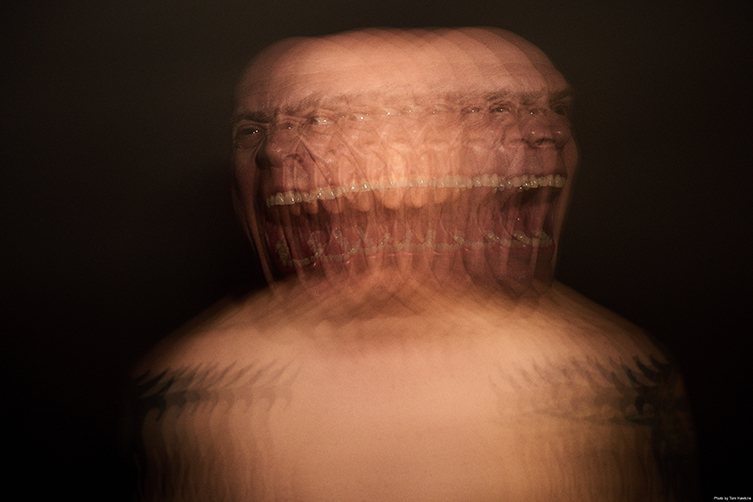
(Photo: Tom Hawkins)
GG: Sure, I totally get you. Now, let me go back to the idea of intuition, because a lot of what we're talking about is this intuitive, artistic, creative response, but I'm thinking from the idea with the initial idea on the computer to what somebody like me hearing this fully orchestrated piece of finished work…
DT: Yeah, yeah.
GG: I mean, did you have to look into or study things like orchestration to understand and be able to articulate things like: ‘if I want this sound, it needs to be the brass section’?
DT: Yeah, man, that's why it took me 10 years! That took me 10 years, man. It was like…just having to learn how to walk again after I was running was really difficult, right? Because I never really had a formal musical training. I have rudimentary vocabulary when it comes to explaining myself and, you know, musical languages and all that, but it's rudimentary, man. Like, I mean, so much of what I do is, like.
I just feel it out until it feels right, and that's it. And through that, you're gonna stumble on certain things, you know, like, theoretically, but really, it's without theory, so…the past 10 years was just like: I had to figure out the ranges in which each one of these instruments existed, what it can and can't do. I had to find orchestrators, I had to find people who could help me translate my MIDI and my guitar and my vocal in Pro Tools into, like, a written score.
And that process took time, because before I could even start soliciting people for the job, I had to at least be able to speak enough of the language so that I just didn't appear like, you know, I was a total mouth breather, right?
GG: Hahaha, totally.
DT: Even by the end of it, I'm not convinced that I didn't appear as such, because the way that I explain myself musically makes a ton of sense to me, but it's all based on sort of a cross-collateralisation of emotions, so you know, a sound is a color and a shape, and a feeling. So I'm like: A is red, and triangular; and C is blue and square, and, you know, G is dark green.
So it's like, having to articulate that to a group of learned musicians just makes you look like you're, you know, from the shallow end of the gene pool, right? (laughs) And so, essentially, over the last ten years, I had to try and find translators, as well as learning. So I had to learn it in enough of a way that I could speak to the translator, and then find a translator that was fluent enough with the way that I think about music, which is more rooted in, like, synesthesia. And then also be able to have the vocabulary to say, ‘oh, what he means is this’.
So, I found several people that were able and willing to do that for me, like Tom, who worked with the choir, and (Mike) Keneally, who worked in the band, and then Joseph, who worked with the orchestra. So all these people, I was able to say: this is what I mean, and they were at first like, ‘what the fuck are you talking about?’ I remember being like, ‘Oh, this part, it's like, picture a pink butterfly that progressively, slowly lands on leaves, and the leaves are a different color each time’. (laughs)
And it wasn't until I met Keneally, actually, where he was like, right, okay, and then he was able to say, what he's saying is a ritardando that happens in here, and then the flutes do this. After a while of me being like, ‘yeah, what he said!’, I was able to be like, oh, okay, now I actually know what we're talking about, and then we can start putting that forward. But really, in order to articulate this, and the reason it took so long years, and consequently why the next one will take less time is because I just had to learn from scratch.
Learning how to navigate the logistics of something that frankly hasn't really a template.There wasn't really something I could draw from, to the extent that the music was presented. I mean, there's always the rock opera thing that you can take from: the Jesus Christ Superstar, Operation Mindcrime sort of thing, but…there was a lot of things about The Moth that I just kind of feel hadn't been done before, and as a result of that, trying to figure out methods from scratch that required a lot of people, a lot of scratching of a lot of heads, right?
The Moth
GG:Yes, I hear you. It’s a whole new language to express something you know inherently in other ways. Well, the next one, it's gonna be that much easier now! Now, you did, of course, perform The Moth in the Netherlands last year, therefore, proving that it can be done as a live show. I'm wondering, do you have any plans to maybe either tour this, or indeed, do a Broadway show?
DT: I mean… this is what I keep saying. It's like…I'm aware of how fucked up things are in the world right now, you know? And how complicated it is for people. And I'm not convinced that this particular vision of music is something that's going to appeal to a huge demographic at this particular time in history (laughs).
However, we have a story, we have all the things lined up so that in the event that all of a sudden society's just like: You know, this hyper-complicated heavy metal fucking opera is what we all want to hear right now! Then yes, we can absolutely do it. But the costs
for it are exorbitant. So, until such time that people are like, oh my god, the world's not gonna continue unless you guys do The Moth again, um, then yeah man, I'm sure everybody else has got enough to do, right? But I'm here for it. If people want it! It's ready.
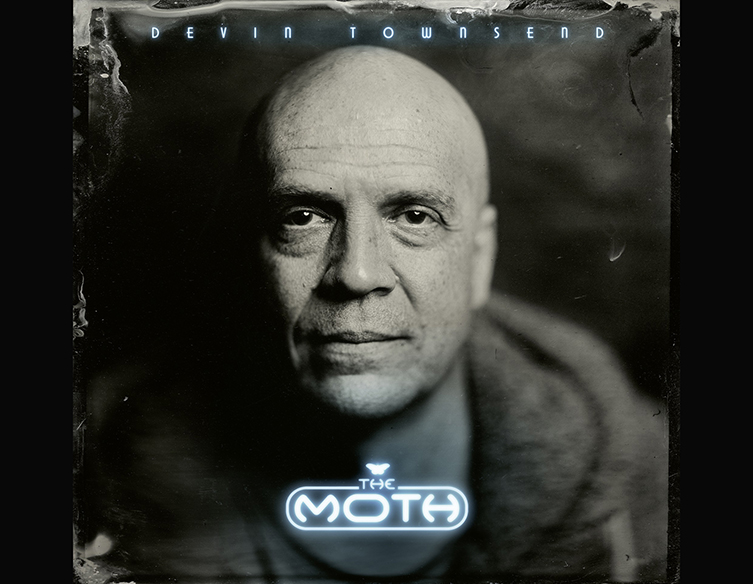
GG: It might just be the thing this planet needs most! I think I've just got enough time for one more question, if that's cool with you, Dev?
DT: Always.
GG: Cool, man, thank you. So, I was just thinking of a lot of our past conversations. I remember you've said more than once that a given piece of work - like an album we might be talking about - is almost like a direct response to what came before it.
You work through an album’s process, and by the end you're kind of so done with it that this informs what comes after it, almost by opposition. So, now that you've done this gigantic metal opera, I'm wondering: is there a response coming? Is the next project shaping itself in your mind?
DT: Yeah, we've got a few things coming, but also, there's this kind of grace period that needs to be afforded once you've released or completed something that required so much from you, where you just feel like, fuck it all, you know what I mean? And, um…I'm just almost through that one. (laughs)
And I think I sort of see-saw between two things. I see-saw between these huge kinds of Marvel Universe character-driven abstract expressions, to just wanting to make floaty ambient music that sounds like a cat asleep on a keyboard, right? (laughs) I'm at that stage in my life and in my career where, as opposed to speaking too soon, I just tell people that I'm recovering from this process, and probably in a couple of months, I'll have a more accurate view of where I've landed.
GG: Yeah, I think you’ve deserved a little break!
DT: Yeah, well, I mean, breaks, as I'm sure is the case with all of us, don't really come. It's like, you get a break from touring, but then your life is just like: okay, so you're off the road now? Okay, by the way, family problems! And you're just like, ‘Oh, fuck!’ And then you go for, like, 2 years, and at the end you're like, okay, we got that kind of under wraps? Okay, cool. Anyway, here's touring again!
So I'm kind of in that zone right now, where… where it's less like I'm taking a break, and more just shifting my focus from one set of problems to another, and then we'll see…We'll put that there for a minute, we'll go deal with this fucking shit show, you know what I mean? (laughs)
GG: I do! Well, at least enjoy your birthday tomorrow Dev!
DT: Oh, yeah, man. I'm gonna spend the whole day chucking myself around the toilet, yelling my own name out, man!
I bet he did, as well! It’s always great fun speaking to Devin, and as usual, he’s able to mix his deadpan humour while addressing life’s deeper issues. There’s never a dull moment, and that rings true of The Moth as well.
I know and you know to expect ‘epic’ from Devin, but this goes bigger in both directions, and is one of those singular works of art that will stay around in your psyche for a long spell. Well, that’s what great art does, and The Moth deserves to be heard by a large audience. On May 29th, after ten years in the making, you’ll be able to hear The Moth for yourself. Head across the the official Devin Townsend website for your pre-orders, and catch him on all the usual socials!