When it comes to guitars and the wider world of guitar culture, you do hear a lot of wild and unusual claims making their way to the surface in conversations and online forums. Well, I have at any rate, from my years talking to customers to my more recent years chatting to top players. Lots of people say and think a great many things relating to guitars, and it’s often taken as gospel truth without question.
Now, we are all allowed our opinions and viewpoints, so I’m not going to get on any high horse today, but I do feel like some balance and clarity could be helpful in some areas. I feel like it’s time to visit some of these thoughts and opinions, and apply a generous helping of the old ‘Occam’s Razor’ to them, as well as using actual facts and experience. I’ll look at a list of the things I’ve heard over the years, and apply cold, honest logic to them to see how they fare away from the glamor of guitar shop passion and opinion.
Will some of these guitar myths prove themselves to be real after all? I guess you’ll find out if you come with me on this exciting journey! Each chapter heading will be a so-called guitar myth, and the paragraph below each heading will be my exploration of it. I have no ‘skin in the game’ apart from a desire to be honest and upfront with you. Join me!
Myth: Locking Tuners Provide Better Tuning Stability
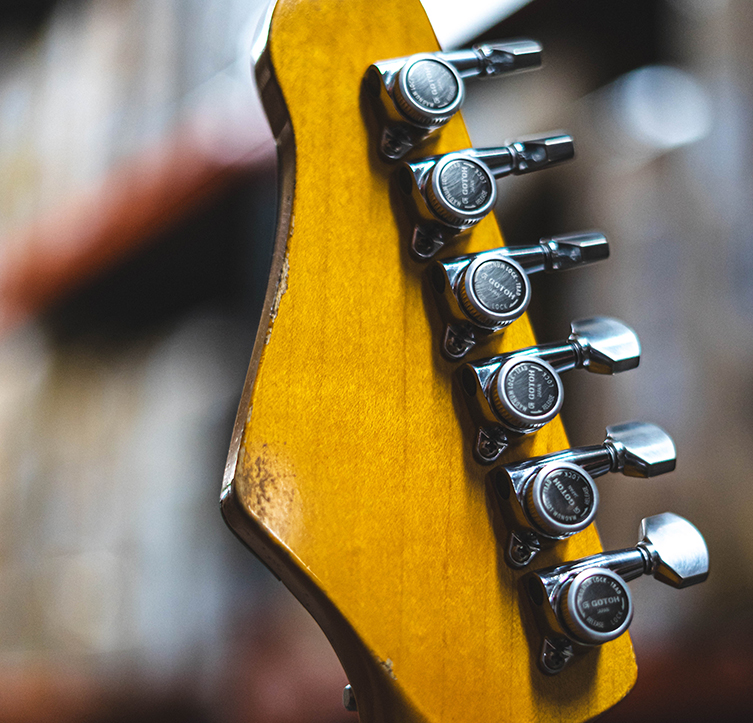
The idea that locking tuners improve tuning stability has always sat strangely with me. When was that ever the point of a locking tuner? Locking tuners are - and always have been - designed to let you restring more quickly and neatly, with less string length wrapped around the post of the tuner. This is what they do, and they perform these tasks well.
What about tuning stability though?
Well there’s a strong argument for locking tuners stopping the strings from slipping and sliding around the posts since they are pinned down by the tuners and wrapped around the post less. It's an indirect but nonetheless supremely effective way to remove one more obstacle (badly wrapped string ends that slip around the post) from your tuning bliss.
Myth or Reality?
I’m going with REALITY on this one. Whilst locking tuners weren't directly designed to hold better tuning stability, their design inherently does that anyway by creating a neat and tangle-free direct line for the travel of the string. Definitely worth having!
Myth: Bone Nuts are Best
Bone is the best material for a nut. Is it? Bone nuts are certainly harder-wearing than cheap nylon nuts, and much better for string movement without snags, but that’s not the whole story. Bone nuts are also pretty inconsistent, which of course is true of all naturally-derived products. Bone nuts were the best material a hundred years ago, but that’s no reason to still think that way when we have good alternatives today.
I’d argue that Graphtech Tusq nuts are at least equal to genuine bone in terms of tone & performance, and they are a lot more consistent in terms of quality expectations. Each one is as good as the last, and they all perform at least equally to the best bone nut, in my experience.
Myth or Reality?
It’s a point of view, not a fact. A well cut bone nut is great, but no greater than a well-cut Tusq nut, and both are far preferable to nylon nuts. Bone is inconsistent, so it’s less reliable than Tusq and similar equivalents. Is bone the best, then? I'd say no, that's a MYTH!
Myth: Heavy String Gauge = Better Tone
Okay, this is an enduring one. It’s usually when folk learn that Stevie Ray Vaughan used monstrously thick strings (well, 13-60 gauge in Eb tuning) that they begin to evangelise about the virtues in using telegraph wires for guitar strings. The notion is that you can’t really have a great SRV-like tone without suffering the huge strings.
Funnily enough, these same people usually also love the equally excellent guitar sounds of Billy Gibbons, and yet fail to acknowledge his desperately wimpy use of GAUGE 7 STRINGS!!!! That’s a guy with one of the most universally loved guitar sounds ever, let’s be clear.
The same is true of Brian May, Steve Hackett and BB King, who all managed to create world-class guitar sounds with gauge 8 strings. Could it be that string gauge actually doesn’t contribute much to tone at all? And that it’s all about what you prefer working with?
Myth or Reality?
Complete myth, for the reasons stated above. Excellent guitar sounds come from strings of all gauges. You will doubtless have a string gauge that is ideal for you, and that has nothing to do with this bizarre myth.
Yes, you may notice a tiiiiiiiny difference in sound. It’s not objectively better or worse though, is it?
Myth: Tone’s All in the Fingers
How often have you heard this one? Tone’s all in the fingers. It’s usually in the context of ‘a great guitarist can make any equipment setup sound good’ (true), and ‘no matter what guitar they play, they always sound like them’ (also true), so is this actually not a myth?
Mmmmmmm no. I think terms are being conflated here. One’s ‘fingers’ (in reality, your entire physical self as you play, along with your sense of timing and control etc) dictate the ‘performance’ of a piece of music, and that includes feel, drama and things like that.
But sound? No, not really. Your equipment creates the sound. If you have Hank Marvin’s guitar and amp set up (50s Strat, Vox AC30, echo pedal), and you play Master of Puppets on it, you’re going to quickly understand how much the EMG-equipped ESP guitar and MESA/Boogie amp creates that huge crunchy high gain sound. It’s not your fingers!
Myth or Reality?
Myyyyyyth. These people are talking about a player’s ability and their talent, taste and timing. They aren’t talking about ‘tone’ or sound at all. They are different subjects that get confused in conversation. So no, tone is by no means ‘all in the fingers’. Your beautiful individuality is expressed through your fingers, but that’s a completely different thing.
Myth: A guitar’s finish colour can make a difference to the sound.
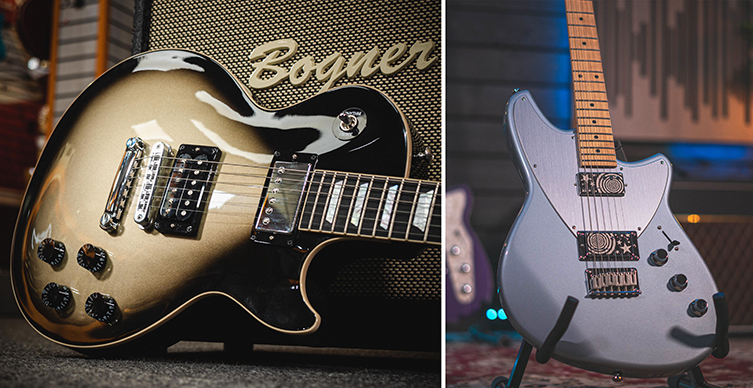
I’ve heard this one being reported by Tool’s Adam Jones about his favourite Silverburst finish, and by Billy Corgan about the white pigment of his Reverend signature guitar. The idea is that the colour pigments in a guitar’s paint have a direct affect on the sound of a guitar. Not an emotional sort of ‘inspirational’ difference, mind you, but a quantifiable, measurable, qualitative difference to the overall sound of THAT guitar versus one like it. Based only on the colour being different.
It sounds bonkers from the off, but let me balance that slightly. Let’s think about thick finishes versus thin finishes. Thin skin finishing allows for more movement through the wood when a string is plucked, and that can be perceived as enabling a better - or at least different - sound. But that’s more a question of lacquer coats than of the coloured paint that goes on first, right? Thick polyurethane finishes certainly don’t promote much resonance form a wooden guitar body, but again, that’s not what’s being stated. Still, maybe the pigment in Billy’s white Reverend is a little thinner than that of his other signature models in different colours. Maybe that thinness translates to an overall thinner finish, after the lacquer goes on.
It still feels iffy to me.
As for Jones’ Silverburst, it’s maybe not the paint that’s the real variable here. Jones stated that “I believe that particular metallic paint does something to the tone or the resonance or the polarity somehow”. One one hand, he’s had far more day-to-day experience of this than me, because I don’t own such a guitar. On the other hand, Silverburst paint used on late 70s Gibsons contains chromed aluminium flecks, with no real magnetic pull at all. Modern stuff is even less of a force in that regard, since it uses chromed polyester! So, the ‘metal’ part of the paint isn’t strong enough to do anything to the electrical signal.
So I’m thinking maybe the maple necks of those guitars (Gibson normally use mahogany necks but didn’t on those Norlin-era LPs) are supplying the extra weight and top end that Jones may be experiencing?
Myth or Reality?
I feel like this is mostly a myth, and that the artist is putting their subjective feelings into the guitar, BUT I’m also open to the notion that these two excellent players and tone masters not only have more experience of their own guitars than I do, but have also been able to compare them to other guitars. It feels like a myth to me, but I’m holding space for there to be a little bit of truth, too. The jury’s out!
Myth: Pickups Make a Big Difference to Your Sound
People say that swapping out stock pickups in a cheap guitar for good quality replacements makes a significant difference to the sound and performance of your guitar. It’s often suggested that this is the quickest and most cost-effective way to improve the sound of your guitar, because the pickups are the direct link between the guitar strings and the signal that goes to the amp.
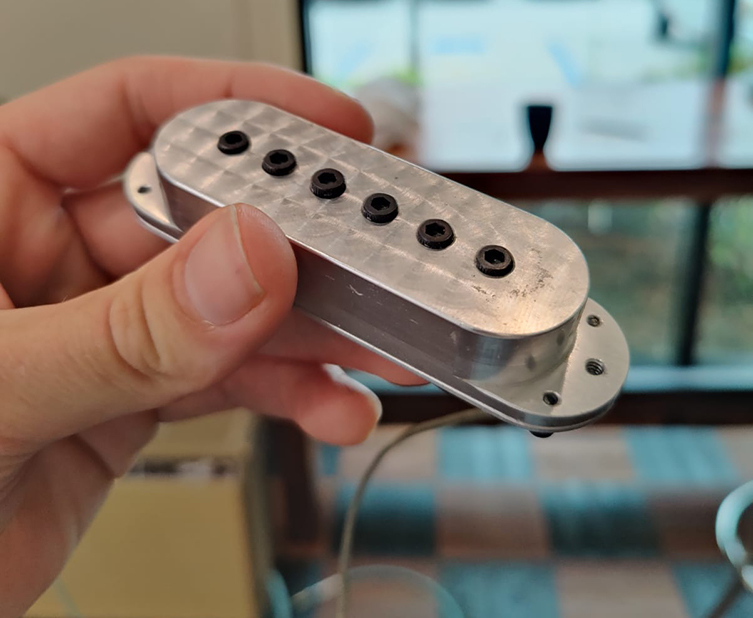
Third party pickups are often handmade and expensive, and emphasise elements such as magnet type, magnet strength, DC resistance and the amount of copper winds that surround the central bobbin or magnet. There are tons of pickup makers out there, and endless permutations of vintage, vintage-hot, hot and outrageously hot sounding pickups on the market.
But do they make a big difference to your overall sound?
Myth or Reality?
Yes, they do. This is no myth. The reality is that pickups are one of the most significant elements in the sound of any electric guitar. Now, that doesn’t mean that expensive pickups are always better than cheap ones - so don’t conflate the terms - but all pickups certainly play a large part on the creation of tone.
I’ll not name any brands here for the sake of allowing for personal taste, but I’ve been able to directly A/B a fairly wide number of pickups over the years, and can attest from the viewpoint of direct experience that similar pickups from different manufacturers can sound quite dramatically different. ‘Good’ and ‘bad’ are subjective terms of course, but there’s really no doubt that you can do a lot to change your sound by selecting the right replacement pickup
Myth: Stainless Steel Frets are Always Better
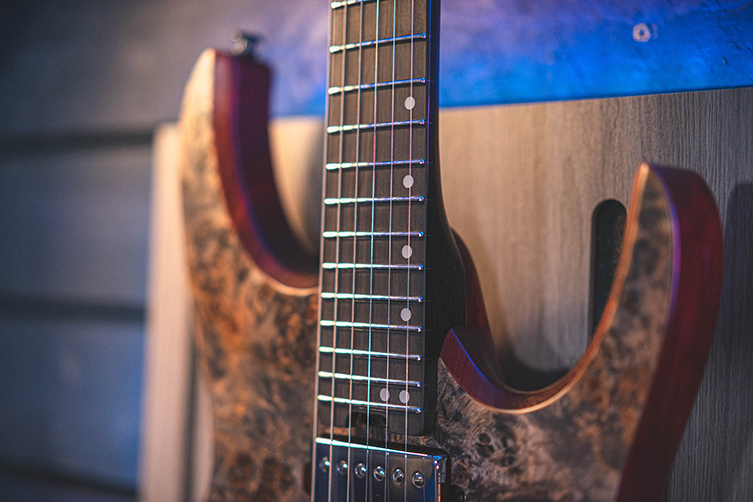
Stainless steel frets are always talked in terms of their longevity, about the decades of use your get without needing a refret. This is true for high end guitars with expensive stainless steel frets, but it’s also true that not all stainless steel is of the same grade. Some stainless steel frets have been showing signs of wear long before their reported long lifespans are up.
Also, they are much more difficult for luthiers to work with, which may be neither here nor there for you if they last for decades as they should!
Lastly, many players report to hearing extra brightness in their sound. Stainless steel frets are often a significant expense, and though prices seem to be coming down for them as features on guitars, it’s as I’ve already stated: not all stainless steel is the same, and cheaper variants can wear out more quickly than expected.
Myth or Reality?
It’s the ‘always’ definite article in that statement that’s the mythical part here. Good stainless steel frets are well worth it if you invest in the best stuff, and happen to enjoy a slightly brighter sound.
Myth: Cables Make a Difference to Your Sound
When people say that cables don’t make a difference to your tone, they tend to be thinking along the lines of improvement. A good cable doesn’t make you sound better, so goes the argument.
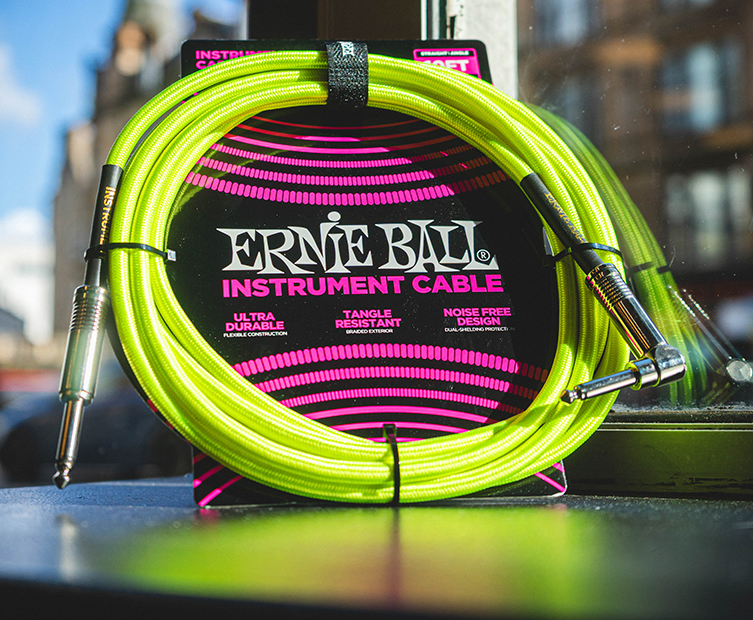
True enough! A good cable cannot add anything extra to your sound. That’s because what a good cable does is to stop you from losing tone. Good shielding stops you losing top end, and well-insulated cable minimises the loss of gain.
Longer cabling will always result in a bit of a loss of signal strength, but the idea is to keep as much signal as possible, and for that task, better quality cables do make a difference!
Myth or Reality?
Reality! Cables matter significantly, so invest in the best quality cables you can afford, and buy the correct length for you - not 5m longer than you need! You’ll retain more of your signal, and some brightness and harmonic content too.
Myth: Plectrums Don’t Make a Huge Difference
Some players put no thought into the subject of guitar picks. The settle on whatever they have access to and then forget about it altogether, dropping into a habit of just bing the same ones over and over. How much of a difference can guitar plectrums even make?
Well, grab yourself a 0.60mm orange Tortex and a Dunlop Jazz III. Play the exact same riff or lick with both picks. You felt a huge difference, right? Of course you did: one is over twice as heavy as the other! And it’s a different material. But you also heard a pretty obvious difference too, didn’t you? The Tortex was trebly, percussive and ‘clicky’, where the Jazz III was warm, round and quite compressed sounding.
There’s your difference.
Myth or Reality?
Plectrums make an immediate and significant difference to how you play and how you sound. Experiment with a few, have opinions on how they feel and sound, and realise that the humble guitar pick is the quickest and cheapest way to change up your sound that exists. So, it’s a myth to believe that they don’t make a huge difference.
Myth: Learning Music Theory Robs Your Playing of ‘Soul’
Lots of self-taught players believe that learning too much formal music theory - or indeed any at all - will homogenise their playing and rob that original spark that makes what they do so soulful and full of passion.
Myth or Reality: Myth
The guitar must be the only instrument that allows people to get away with this bizarre position. It’s an admirable thing to be self-taught, but why not continue the learning and find new ways to express yourself?
Unlike what Homer Simpson was famously afraid of, learning new things won’t push the old stuff out of your brain. Knowledge enriches and deepens the experience, and expands your vocabulary as a musician. You’ll lose nothing. You want to be able to completely articulate yourself when you speak, don’t you? So, why would it be any different when you speak through an instrument?
Granted, there are a lot of bland, soulless technique-based guitar shredders out there who are superficially impressive but fail to move you emotionally. Don’t use them as an excuse to remain ignorant of music theory: it doesn’t have to be like that at all! You don’t have to be like them.
There’s always something to learn and incorporate into your unique voice: music theory just allows you to actually understand what is happening. Self-taught players can learn this stuff just like classically trained players. It’s all out there, so I declare this a myth!
Myth: Guitar Country of Manufacture Indicates Quality
This one goes back to the 1960s, when you had American guitars that were classics (and remain so) and then B-list guitar brands like Teisco and Silvertone from Japan and other countries that looked funky but also played kinda funky and were very much cheap consolation prizes.
Then, as the decades progressed, other countries became known for building affordable guitars, and a hierarchy was born. Suddenly, Japan were making better Fenders then America, and there were Korean and Chinese guitars to assess. So it went.
Most of us have grown up witnessing this, and there has always been a focus on the US being the best, followed by Japan, then South Korea, followed by Indonesia and China. Those are the main countries, and there’s an understanding in place when someone speaks of ‘Japanese build quality’, as if there’s such a thing as countrywide quality levels!
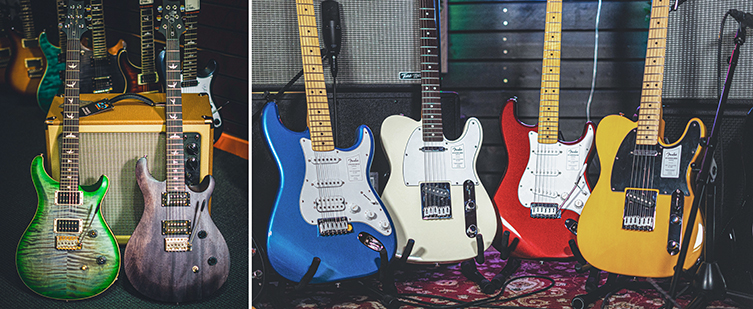
Anyway, in 2026, we’re at the point where excellent quality guitars are being made in all corners of the earth. Prices still vary widely, but that’s more to do with labour costs and instrument ranges being made to specific price points than to actual inherent quality.
Myth or Reality?
Speaking plainly, it’s a myth. Every country has very capable builders who make excellent guitars. I could end my point there, but it’s worth understanding that the market supports many levels of ‘product’ that are reflected in price.
For example, Fender USA make Stratocasters that sell for around £1800 (American Pro II) and £2900 (Ultra Luxe Vintage), from the same premises, made by the same team. The dearer one isn’t marketed as being ‘better’ as much as it has specific features that cost more. The point is, the ‘quality’ is understood to be the same: it’s other factors that influence the price.
Therefore, good guitars are made all over the world. Chinese guitars can now cost more to buy than American guitars (the Epiphone Adam Jones LP Custom is £50 dearer than a Gibson USA SG Standard, for example), so I’d say that this blows that old myth out of the water.
Ancient Mythology
So, how has that been for you? Did you agree with the mythbusting that has happened today? Do you have a different view on some of these subjects? I’d be interested to know. Lots of strange factors in the guitar world are actually pretty easy to justify, but some are hangovers from the past, when things were done very differently.
I hope I’ve cleared up some of the craziness today, with a level head and a sense of fun. Not all of these myths were busted in the end, after all, and that’s as interesting as anything else.
I’ll update this article in the future when enough new myths come to light, but until then, stick to the facts, keep your own counsel and enjoy guitar playing!