Have you dipped a toe into the world of amp modelling yet? Maybe you’ve been a fan for a few generations of technology now, and still want to learn more? Or perhaps you’re a skeptic, but you keep seeing guitarists using them live?
However you’ve come to this article, I welcome you and hope you enjoy your time here. I’ve been onboard with digital effects for a very long time, but I’ve also never fully given up on either stomp boxes or valve amps. I use a bit of everything, and I believe that puts me in a good position to talk to you on the subject today.
Moreover, working for guitarguitar, I’ve had my hands on most of the units that are around, at least to some degree. I’ve heard them, I’ve played through them, I’ve edited them and I’ve suffered frustrations with them. Today, I’ll use all of that to guide you towards the right amp modeller for you!
Are you with me?
How I’m Approaching This
What I’m not going to do today is compare a £200 modeller with a £2000 one. I think we can agree that in paying ten times as much money, you’re obviously buying yourself a more expansive and professional experience. Whilst cheaper units sound MUCH better than they once did, it’s still a badly-matched prizefight if ever there was one.
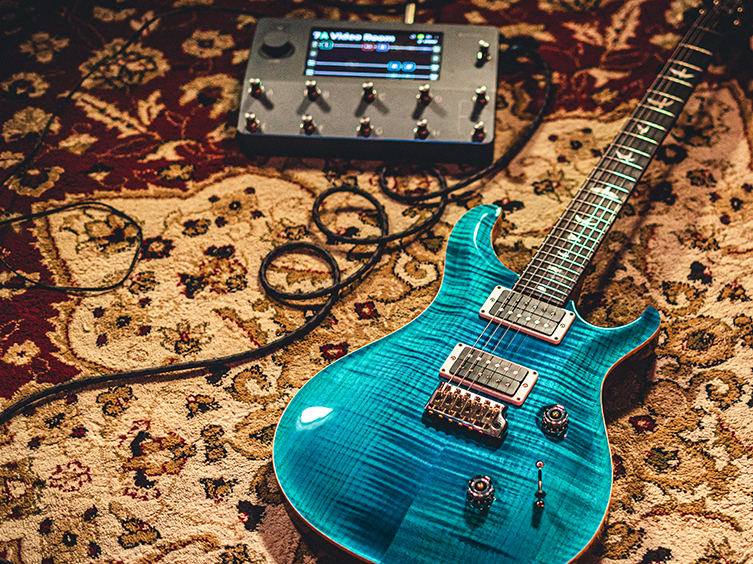
So, I’m going to keep things fair by comparing like for like. I’ll look at the the top priced ‘big ones’ together (Helix Stadium, Quad Cortex etc), then the more budget modellers (NUX, BOSS, Mooer and so on) and finally some of the stompbox modellers that are mostly amp modellers only: in other words, the ones designed to work with other physical pedals and form part of an ampless pedal board. Those are the three main delineations as I see them.
In this way, I can hopefully explain what makes these all different, and in doing so, make it plain which are more useful to you. There will be modellers that fall outside these parameters, and there will be modellers that I don’t have space to cover, but I believe I’ll be able to steer you close to what you need.
The Big Modellers
I’ll start our journey today where most of us begin looking: at the big hitters. The main players in this world are the Line 6 Helix series, the Neural DSP Quad Cortex (and its Mini variety), the Fender Tone Master Pro and the Kemper Profiler.
From the top I’ll make it clear that I’ve only ever briefly used a few Fractal models, and whilst I could research them and bluff it, pretending I’ve had more experience with them than I really have, the whole point of this exercise is to base my findings on my own first-hand experience. Because of this, I’m not going to include anything from Fractal today.
The rest though? These are the main ranges that are sold through dealers throughout the world, and the units you are most probably considering. Outliers in this category include the likes of the Headrush units, which offer a similar experience.
So, these units are the type that completely create your sound. You plug your guitar in and the unit gives you amp, cabinet, pedals and the rest. With these, you tend to go directly into a PA system or a full range flat response (FRFR) cabinet, whose job is to supply you with a real life speaker without any colouration. You CAN use these modellers with amplifiers, but it kind of begs the question: why use these at all, when half of their purpose is to do the job of the amp?
Anyway, the big-hitters all have pros and cons, so here’s my subjective take on them, based on real-world usage…
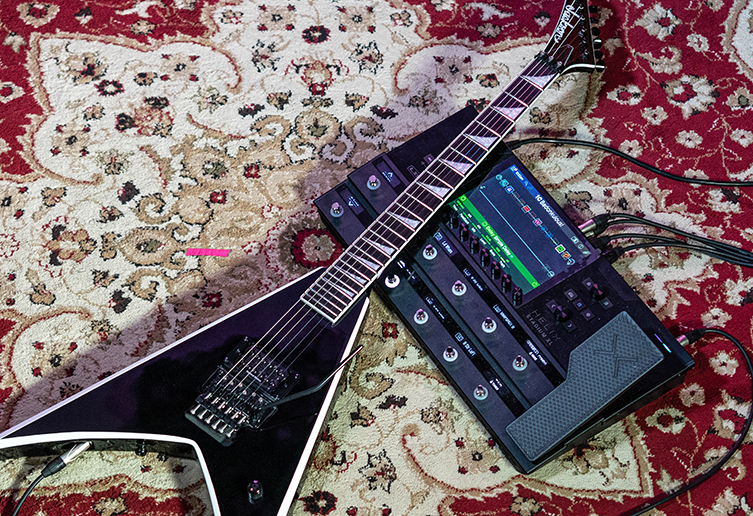
Line 6 Helix Stadium/XL at a Glance
Features
- Goes well beyond the functions of other modellers, with scope for controlling lighting rigs, automated fx switching and honestly loads of impressive things that make it more than a modelling device.
- New generation Agora amp modelling is extremely impressive sounding.
- Huge processing power.
- Choc full of amp sims and effects, with endless more via the online community.
- Road-worthy chassis is supremely solid.
- Large touchscreen.
- Reasonably easy to understand and edit.
- Pro musicians with road crew won’t mind the admittedly extra weight of the device.
- Lots to learn, but pretty ‘doable’ in terms of a learning curve.
Who is the Helix Stadium For?
I see this as being the ultimate creative tool for the musician who wants to orchestrate everything. Top-class sounds are a given, but the Stadium allows you to set up lighting cues alongside patch changes and more in this vein, so theatrical shows will find this a god-send.
Players already enmeshed within the Helix world will simply see this as a new, excellent step in the series' evolution.
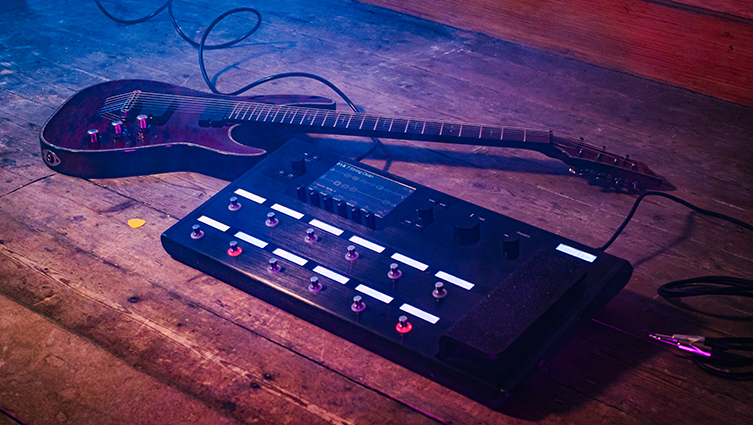
Helix Floor at a Glance
Features
- Wide range of exceptional amp and pedal sounds, with thousands available free to download from other users.
- Huge user activity opens the sounds up further with shared patches etc.
- Extremely generous inputs and output section.
- Tough metal construction for a life on the road.
- Scribble strips and a large LCD screen make edits and on-the-fly changes very visible.
- Loads of footswitches, which are touch-sensitive for multiple functions.
- ‘Snapshots’ mode allows you to alter parts of your sound without having to load in a new patch and having your sound momentarily drop out.
- Large chassis allows space for footswitches to sit comfortably apart.
- Quick to learn in terms of basic operation, with depth aplenty for those who seek it.
Who is the Helix Floor For?
The Helix Floor is a few years old now, but the constant firmware updates from Line 6 has meant it has kept up with the times remarkably well. This is the top-level expression of the Helix for players who don’t need the extra ‘production-aimed’ features of the Helix Stadium.
Gigging pros on the world’s biggest stages use the Helix Floor, so any guitarist looking for a hugely versatile unit that sounds great will win with the Helix Floor.
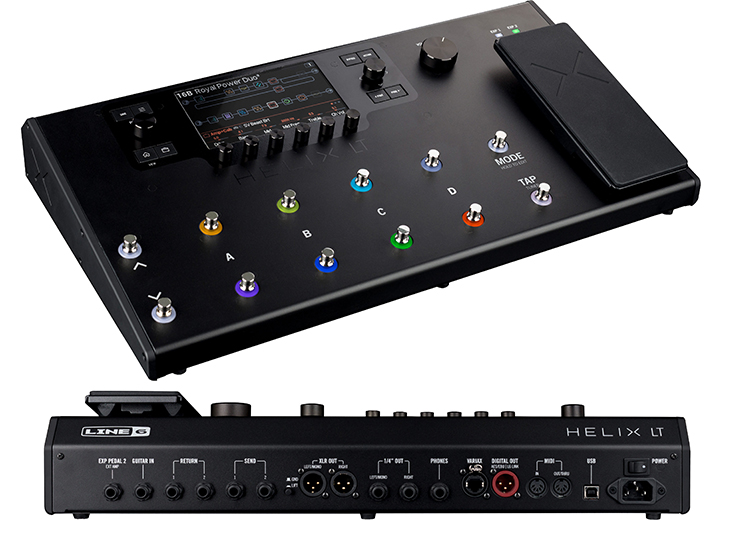
Line 6 Helix LT at a Glance
Features
- Sounds as good as the Helix Floor due to identical processing. Sound-wise, it’s the same thing.
- Sensible ‘cutbacks’ include less I/O and no scribble strips, neither of which will be overly missed by most players.
- All-metal construction feels roadworthy.
- Large number of footswitches and built-in expression pedal offer a lot of convenience.
- No touchscreen, but a sensible and intuitive user interface makes that more than acceptable.
- Less ins and outs than the Helix Floor, though in reality it remains very comprehensive!
Who is the Line 6 Helix LT For?
In practical reality, I think most guitarists will not miss the majority of features that have been removed from the Helix Floor in order to make the Helix LT. You still get the exact same sounds and processing, it’s still a hugely durable metal chassis with touch-sensitive footswitches, and you still get all of the online access to user patches and updates.
I feel like this is actually a bit of a ‘best case scenario’ for the majority of guitarists out there, and given the reduction in price compared to the Helix Floor, a pretty excellent investment!
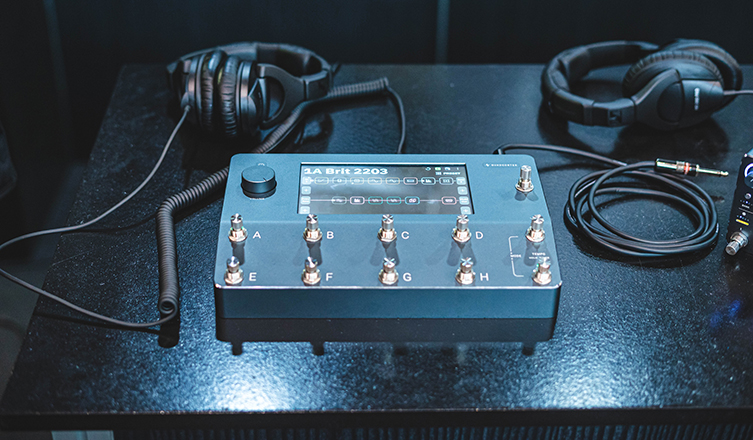
Neural DSP Quad Cortex at a Glance
Features
- Exceptional sounds.
- Neural Capture function lets you model your own amps and pedals with spooky accuracy.
- Very compact: even this ‘full fat’ model can go in a small bag, or fit on a pedal board.
- Compatibility with Neural DSP plugins (only a few just now, but it’s ongoing) mean you can use the sounds from your laptop & recordings live.
- Large touchscreen allows very fast editing, once you learn the UI.
- Get tones via wifi from your phone, straight into the unit.
Who is the Quad Cortex For?
The QC is possibly the best sounding modeller on the market. Players who require less real time control (the unit’s footprint is smaller than the Helix etc and therefore has slightly less in terms of switching and expression control) will appreciate how much sonic power is available in such a small-ish unit.
Also, the ability to capture amp sounds (and use other people’s captures) is the thing that may swing it for guitarists who already own some lovely amps.
Neural DSP Quad Cortex Mini at a Glance
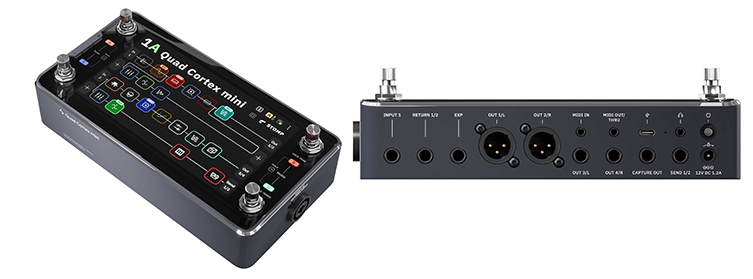
Features
- Same processing power as full-fat QC model, therefore the same great sounds.
- Significantly smaller than the QC, the Mini is as portable as anything this powerful can reasonably be.
- Impressive ins & outs, given the size. Some ¼” connections on the QC are 3.5mm connections on here, but that’s acceptable, given the size!
- Large touchscreen dominates the unit.
Who is the Quad Cortex Mini For?
Truly, this unit is for any guitarist who wants to be able to enjoy a roomful of exquisite amp and effects, all from a small unit that’s about half the size of a shoe box.
The small size means that certain functionality is compromised, but then the whole purpose is portability, and in that regard, this is quite an exceptional unit.
Basically, every guitarist out there will enjoy this greatly. Cheaper modellers exist, but they don’t sounds like this one, nor are they built as ruggedly. It’s a pro piece of gear.
Kemper Profiler MkI and II at a Glance
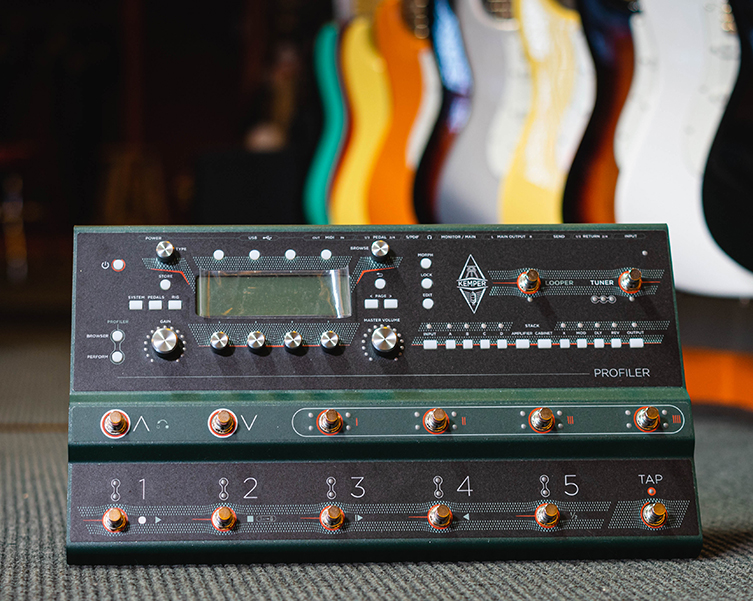
Features
- Pioneering (for the time) Profiling ability (capture the sound and characteristics of a real-life amp if you physically have one to hand) which is still an impressive and wonderful thing. MKII profiles are more realistic than ever, which is saying something.
- Available as a desktop ‘lunchbox’ unit, a rack and a floor unit, so there’s something for everyone.
- Literally thousands of profiles available from other users, so limitless sounds!
- Familiar controls can get everyone started easily enough, with more depth unlocked with a little learning.
Who is the Kemper For?
The Kemper is one that lots of studio owners like. This makes sense - particularly in the lunchbox and rack forms - because they offer an interface that is appropriate for the recording studio, and the units allow a warehouse-full of genuinely realistic amplifier models to be made available quickly and easily.
So, for labour-saving great sounds, the Kemper is a popular choice.
Fender Tone Master Pro at a Glance
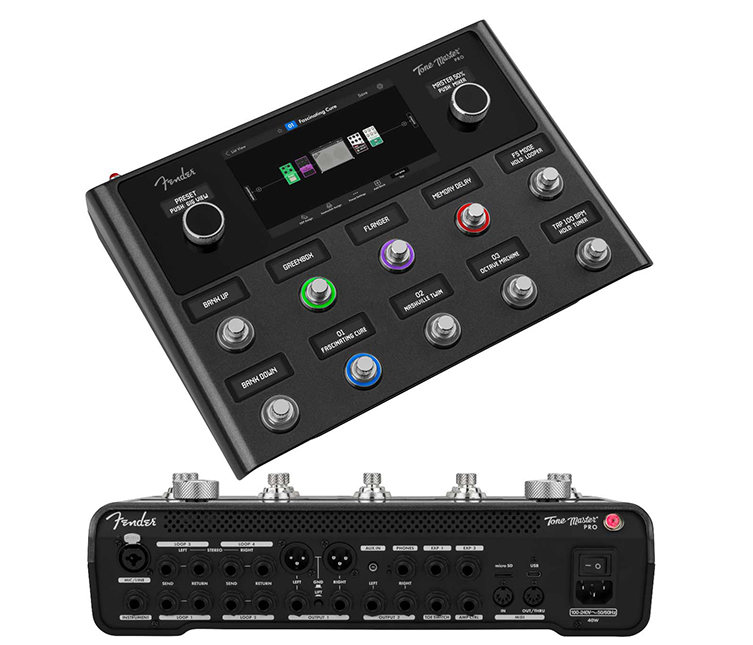
Features
- Particularly good if you are more inclined toward Fender amps to begin with: their Tone Master models are very impressive.
- Reasonably easy user interface means you’ll get going quickly.
- Officially licensed 5150 sound, which is important for hard-rockers.
- Good physical layout, with touchscreen and scribble strips.
- Road-worthy metal chassis, with good switches and scribble strips
- Nice details, such as the amp-style red ‘jewel’ bulb that lights up upon power-on.
Who is the Fender Tone Master Pro For?
Fender amp fans who want very good sounding models of historic Fender amps will love this.
Players who are more ‘plug and play’ and less ‘get the labcoat out’ will appreciate how direct the interface is.
There’s no amp capture/profiling technology on here, but Fender have arguably given you most of everything you’d reasonably need, so guitarists who are fairly Fender-focussed will get a lot from this.
The Fire/Triangle Analogy
So, those are some key pros and cons for each of the big modelling units, as I see them. In life, a triangle analogy often pops up to explain things, and it’s maybe a handy tool to use here. For example: a fire needs heat, fuel and oxygen in order to burn, right? Remove one of those elements - one point of the triangle - and the fire won’t exist.
Another one is that saying about ‘good, cheap and fast’, when somebody is making something for you: you can have two of these things, but not all three, so it kind of goes like this: good, cheap things take ages to make, and fast cheap things are never actually good once you get them. Good, fast things are expensive.
You see where I’m going?
So it is here, with digital modellers. There is a triangle involved here, and the three points of that triangle are these: features, physicality and price. I haven’t included ‘sound’ because they all sound good enough, frankly. Yes, I’d say that some do sound better at certain sounds than others, but that’s a matter of taste, really. It’s a fact that every modeller in this article is good sounding.
Some are designed to give you more ‘hands-on’ (feet-on?) control, where others are designed to be portable; your needs will determine which of those things is better,but you often can’t have both.
Apply this somewhat iffy triangular analogy to your own preferences and circumstances, and it’ll level the playing field for you a bit. We all like the new shiny things, but step back and consider your actual needs, versus what is offered. If you need all of the features, then maybe it’ll be heavy and expensive. If you need it cheaper, then I expect you’ll miss out on some features. So on, so forth.
Okay, now to the mid-priced and affordable stuff!
Mid-Priced & Affordable Modellers
The whole notion of only paying a couple of hundred quid and getting a pro-sounding, giggable amp modelling unit is quite a wild thought, really. Horrible sounding, cheap effects processors are now thankfully a thing of the past, and that’s mostly because technology has galloped on at a rate of knots. As technology improves, the previous top-end stuff becomes no longer top-end and is therefore much cheaper for companies to buy and use in their more-affordable products.
The other element that has brought us such bountiful choices in the affordable market is that of competition. There is so much of it, and so every company strives to offer as much as they can in their products, if they want to be the ones getting your hard-earned pounds. Competition always means a good deal for the customer.
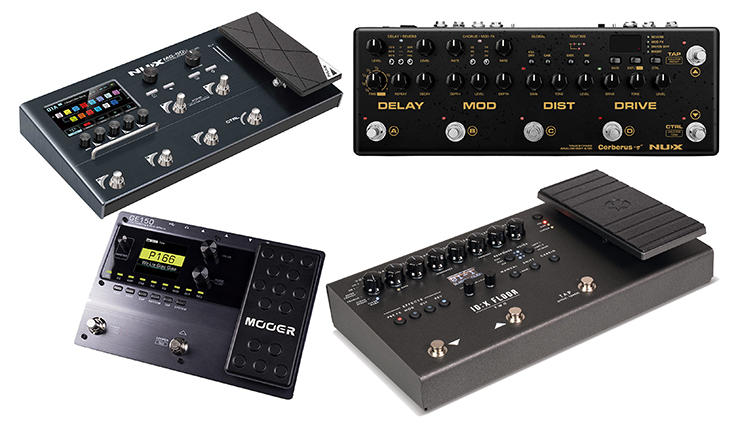
But cheaper units obviously have to cut corners somewhere, don’t they? So, how does this manifest in cheaper modellers? It’s in these physical areas, mostly:
- Smaller chassis
- Less footswitches
- Often no expression pedal. If there is one, it’s going to be small.
- Footswitches will perform double or triple duties in terms of functions
- Chassis may be made from plastic, rather than metal.
- Smaller screens, unlikely to be touchscreens.
- Less connectivity, FX loops and so on.
- Less physical controls means more menu diving, and often less parameter choices for effects.
So yes, none of the cutbacks are necessarily anything to do with how the modellers actually sound. Whilst you won’t get cutting edge technology in these processors, you will get the tech that was cutting edge a generation or so ago, and it's’ not as if they won’t sound comparably close, is it? Digital modelling has been a legitimate choice for well over 10 years, so let’s get real about that. The cheaper pedals will sound good enough to most audiences. You might not get the editing depth of something like a Quad Cortex, but for an 8th of the cost, you’ll be able to go onstage and sound really good.
So which budget modellers am I even talking about?
Some of these are worth your perusal…
Recommended Affordable and Mid-Priced Modellers
- MOOER GE150 - basic but useful and very portable.
- BOSS GX-1 - insane price for such quality. Chuck this in your gig bag for a backup at least.
- Blackstar ID:X Floor Two - old school, ditching the idea of a big screen etc, nicely hands-on and sounds very good for the price.
- NUX Cerberus - a handy ‘fly rig’ amp sim that is like a bunch of stompboxes. Go for the NUX Trident if you need more footswitches to aim your boot at.
- NUX MG-50Li - a seriously impressive unit that offers real-deal amp profiling in addition to the usual features. At this price?!! Anyone complaining about the lack of a touchscreen needs to rethink their affairs. This could be the best budget option on the market right now.
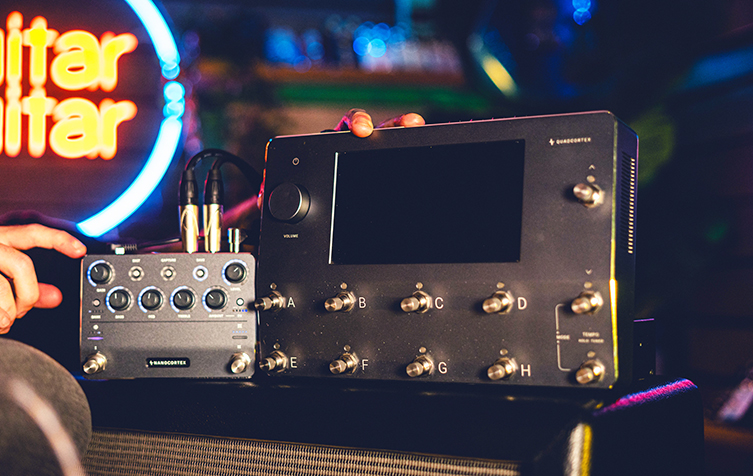
- Neural DSP Nano Cortex - great sounds at a good price. Not a comprehensive device at all, but an excellent backup for those who already own a Quad Cortex.
- Hotone Ampero II - the most expensive modeller in this section, and it is still coming in at under £500. Ampero units have always sounded much better than the cost might indicate, so it’s between this and the NUX MG-50Li in my opinion.
Stomp-Box Modellers
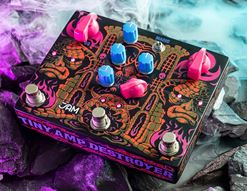
My last style of modeller is the ‘single’ stompbox amp modeller. I put ‘single’ in quotes because there are loads of sounds involved and normally at least two footswitches, but you know what I mean! These are designed to offer you realistic amp and cabinet sounds, and you use them instead of a physical amp. Everything else is as normal: you use other stompboxes and effects processors etc.
Who are these for? I think they are for people who are used to regular rigs (amps and pedals), but either can’t take an amp due to space issues, or fancy trying out different amp tones. Also, many players who DO use amps still have one of these devices, either for extra/different tones, or as a handy backup for a temperamental amplifier.
Recommended Stompbox Modellers
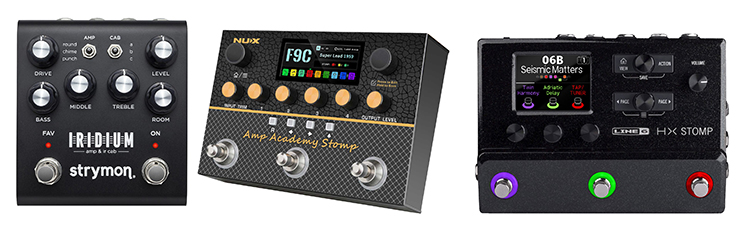
- NUX Amp Academy: NUX (pronounced ‘new-ex’ in case you were wondering…): compact but with a colour screen and some serious DSP, this is yet another NUX product that impressed me recently. I am not sponsored by NUX, okay?
- Strymon Iridium: Strymon are like the champagne of effects, so it will come as no surprise to you that their amp sim pedal is awesome. Simple too: Fender, Vox and Marshall, with a peppering of useful controls. Blissful.
- Line 6 HX Stomp: this is far more than just an amp modeller, but it's a similar size and it does have loads of brilliant amp models, so why not include it? Full-on Helix-level sounds and scores of FX in a tiny three-button enclosure.
Which is Right For you?
Okay, we’re reaching the end now. I’ve laid out a lot of stuff here, and even still, you and I both know that this is only a taster menu of what’s out there. Thankfully, I’ve been tasting for years now, to extend the metaphor, and so I feel I can point you in a fairly close direction to the meal that will taste the best for you and your needs.
Now, I WILL recommend specific units now, but I do it with the caveat that you ultimately have to make up your own mind about what you need. Right now, I’ll talk about potential scenarios and then recommend what I think is the best choice or choices. Have a look and see what you think!
Do-everything pro rig, money’s no object: Line 6 Helix Stadium XL
Do nearly everything pro rig, money is an object: Line 6 Helix LT
Main rig, do loads on a tight budget: NUX MG-50Li
Backup to a main rig: Line 6 HX Stomp, NUX Cerberus
Best sounding, nothing else matters: Neural DSP Quad Cortex
Best Sounding, most portable: Neural DSP Quad Cortex Mini
Most creative potential: Any of the Helix range
Best at profiling/capturing amp sounds: Neural DSP Quad Cortex, Kemper Profiler MKII
Good sounds, no menu-diving, affordable price: Blackstar ID:X Floor Two
Fly rig for gigs abroad: NUX Cerberus, Line 6 HX Stomp
In a Nutshell
But let me get down to brass tacks here, okay? These are my personal opinions.
If you can afford it, I don’t think you’ll regret buying a Neural DSP Quad Cortex. If you need it to be more comprehensive, then you should buy the Line 6 Helix Stadium XL and learn it inside out. If that’s more than you can afford, then the Line 6 Helix LT is exceptional. If money's tight, have a look at the afforable options I outlined above, because those are, in my opinion, the best ones out there just now.
That’s my simple take for you. In a nutshell, that’s my advice to you.
I could go on. Hopefully there’s enough info here for you to navigate past the units that simply don’t apply to your situation, and towards the ones that could offer good solutions. I don’t believe any one company has the ultimate answer here, and I also haven’t recommended anything that I don't think fits a particular bill.
Guitar amp and effect modelling has become something that we are all familiar with nowadays, and the sheer number of units out there means that there should be something available for everyone. Hopefully my experience - which is extensive but by no means 100% all-encompassing - will prove useful to you.
I use this stuff out in the field, and I could sit and talk with you for hours about why I use what I use, but that’s beside the point. This is about what YOU need! I hope this has helped you get closer to that, and remember: we’re here to help when you need us, so get in touch online or in any of our stores and we’ll happily help.
After all, it’s an excuse to plug in and make noise!
Good luck.
Read More
-
Ultimate Hard Rock Workout Music! (Updated January 2026)
-
15 GUITARS from Your Favourite FILMS, TV & Videogames! (Updated March 2026)
-
The Complete GUIDE to FUZZ Pedals
-
Neural DSP Quad Cortex MINI: First Look!
-
The FLANGER: 5 Best Flanger Pedals and the Players Who Use Them
-
Building a Guitar Pedalboard for METAL