How familiar are you with Taylor acoustic guitars? Most of us know at least a few of the models, and have probably had a strum on them too, right? I’m sure you’ll agree that they are lovely guitars, with a distinctively modern aesthetic. Mostly, anyway!
Well, today’s article aims to dig a little deeper. I’ve played and sold Taylor guitars for many years, as well as researched and written about them on numerous occasions. I’ve chatted to the company CEO Andy Powers and spent time with a lot of their people, so I feel like I have a good, first-person insight into the brand.
What I aim to do for you today is give an in-depth overview of Taylor’s USA-made instruments. In truth, that’s most of their line, so whilst this is a deep dive, it’s not into any particular model as much as it’s an assessment of their overall practices, preferences and decisions. I’ll look at their innovations, I’ll consider what those innovations actually mean to the player, and I’ll hopefully give some context to where maybe you might fit into the brand.
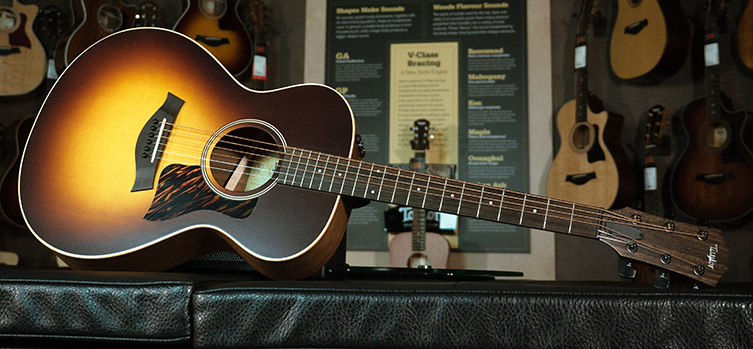
I’m using a few Taylor models as reference points, and you can read more specifically about the 800 series in my In-Depth Review of the Taylor 800 Series.
Shall we?
Taylor’s Engineering Focus and Building Innovation
I believe it’s fair for me to say that Taylor’s focus has always been more on the engineering side of things than the decorative. That’s not to say that they don’t pay a lot of time and dedication to aesthetics, though: they do, and I consider that later in the article. But I do always get the impression that the emphasis has always been on the engineering and building side of things.
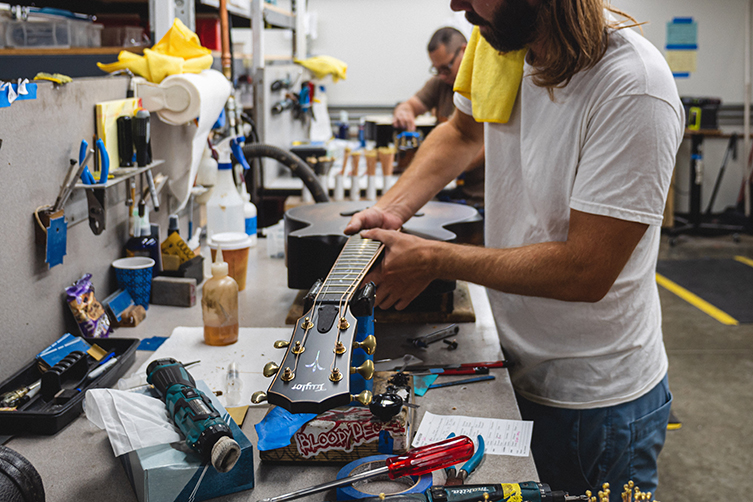
This manifests in a number of innovative ideas that have been borne out to fruition over the years. These innovations often tie in to the notion of build style, so I’ll address selected highlights here. For a closer look at this subject, though, please have a look at my blog Why Taylor are the Future of Acoustic Guitars.
But here are some thoughts as I peruse the range today…
Neck Joints
One of the main elements that Bob Taylor focussed on was the neck joint. This is where a lot of acoustic energy transfers to the resonant, open body. The closer the fit, the better the transfer and thus the more lively and sustaining your notes will be. Initial Taylor necks were made using a bolted mortise & tenon joint. This was already an innovation, since a typical mortise and tenon joint (a carved ‘peg’ called a tenon forms part of the neck, and fits into a carved space called a ‘mortise’, presumably because it’s a bit like a grave?) utilised hot hide glue to join the pieces together. This seems not to have been the case with Taylor from the off, as they used a metal bolt instead of glue to hold everything together.
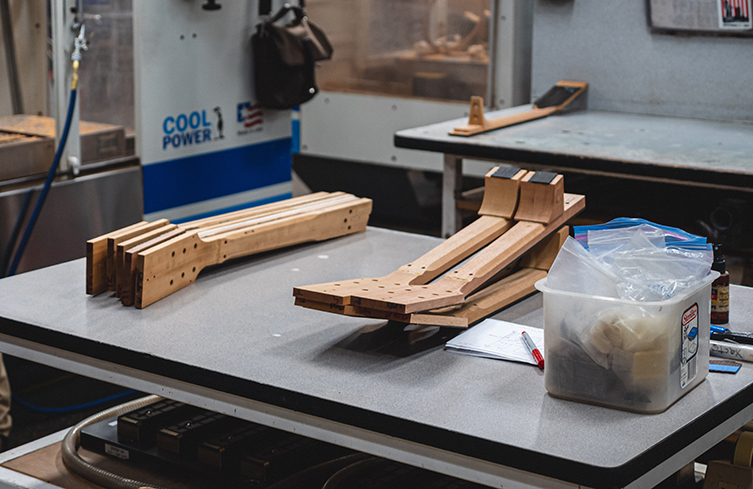
That was until 1999, when Bob released the NT neck. This version still used no glue, but did away with the tenon too, using the metal bolt to bring two flat ends together. Computer CNC machines were used to make sure the wood was cut to perfection, ensuring a super-tight fit that could be easily adjusted and repaired. Taylor players will no doubt be familiar with this, and may even have made some easy adjustments themselves?

Fast forward to recently and Andy Powers has unveiled a new neck joining system again. This is the Action Control Neck, and goes back to using a long tenon to allow for more wood-on-wood coupling. This system also allows the player to alter the action of the guitar very easily, via a special tool that goes into the join.
I’ve had my hands on this and it works predictably well. The main sell is the adjustability, which lets you swap string gauges without a major setup. Good news, but I also feel that it's handy for those small three-yearly tweaks to compensate for environmental changes, too.
This is all academic, of course, until you need to tweak something. As mentioned, I’ve had a go with the Action Control Neck, but otherwise, it’s not something I can hugely report back on here, apart from confirming that many Taylor owners I speak to get enthusiastic when they chat about the NT necks they’ve had for twenty years, so I’ll take that onboard!
The Grand Auditorium Shape
This is a fairly major innovation. When you think of a Taylor acoustic, I expect your brain will go directly to the Grand Auditorium shape, right? Taylor’s original design is also their most popular one, and that makes a lot of sense to me. The 314ce, the 814ce and anything ending in a '14' will be this shape.
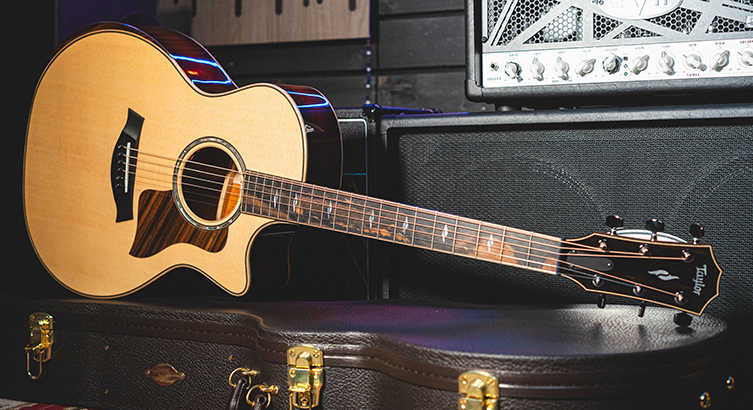
Playing a few from different price points (hit up my blog Taylor Series Explained for a thorough overview on what the model numbers all mean!), what I hear them all having in common is that signature blend of brightness and body. The GA shape itself is a little smaller than a dreadnought, and offers a sound that maybe dodges a little of that guitar’s midrange strength, but the GA projects well as a strummer or as a picker, so there’s no surprise to my ears why so many people choose this over other shapes.
It’s also perhaps more manageable size-wise for some players, tucking as it does more neatly under the arm. Since its introduction in 1994, the Grand Auditorium body shape has been a popular and influential piece of guitar design, and I see its fingerprints in a lot of other guitar models. It would be my personal choice for sure, as much as I love the huge sound of a jumbo: I just think the smaller physical size matched with decent volume and low end is a hard combination to beat, especially if your living space is tight.
Taylor Design & Visual Identity
There are a number of areas I want to touch on with Taylor. I’m actually going to skip the historic back story altogether today, but if you want some early context, please click through to my Brief History of Taylor guitars article. Here, I want to look at the brand’s overall visual identity and aesthetic.
Generally speaking, I’d venture that Taylor are a relatively conservative company in terms of their designs. There are innovations aplenty (see further down) and these often dictate visual approaches - bevelled armrests and off-centered soundholes are innovations first and visuals second, I’d say - but in terms of lines drawn out of a page, Taylor don’t tend to go too crazy.
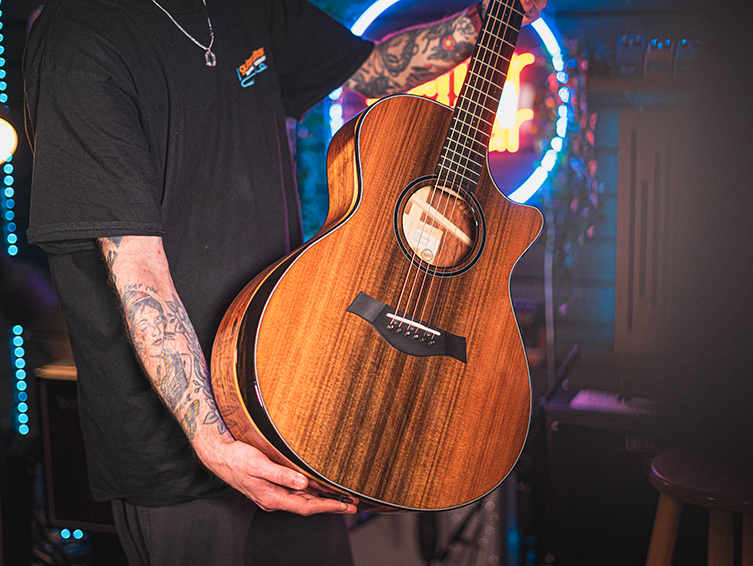
Theirs is a clean and tidy aesthetic, informed (to my eyes, at any rate) by a minimalistic take on Art Nouveau for decorative work, though not realised to the same level of complexity as you’d find on other top-end acoustics.This seems to be a deliberate ‘House style’ rather than any deficit of skill, because it’s quite obvious how masterfully realised each Taylor guitar is, especially the 500 series and upwards. I also see some Victorian references in some of the inlay work, particularly that of the 600 and 800 series Taylors. Again, these are modern minimalist takes on such designs, rather than specific recreations.
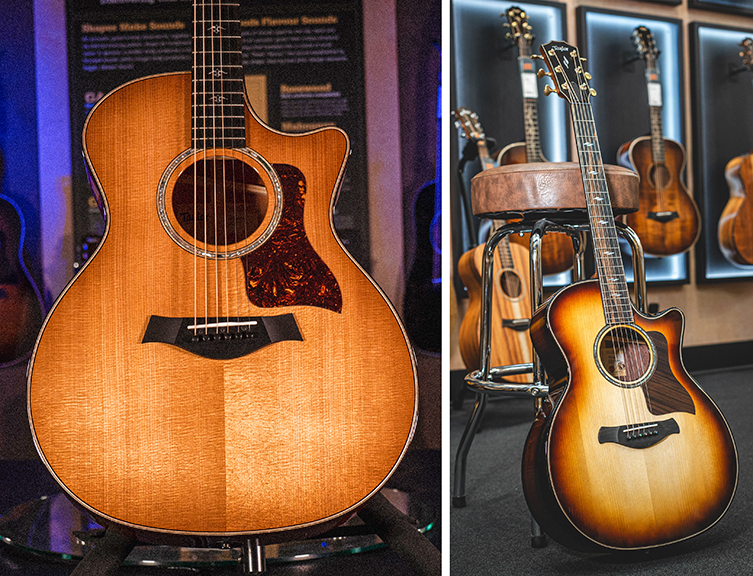
Andy Powers, the master luthier brought into the company in 2011 and now Taylor’s CEO, has his own agenda when it comes to visuals. There’s a bit of noise made about his love of surf culture and how that manifests in his work, but I personally see that coming through more in his Powers Electric guitar side-project than anything Taylor-based.
His other reported love is old heritage acoustic instruments such as mandolins and old archtops. This, I can clearly see, most specifically in the new-ish Gold Label line of guitars. The Gold Label certainly leans slightly (and it is slightly) into the Pre War era, with etched pickguard decorations and angled cuts along the headstock top.
So, to summarise: the more I look at Taylor guitars, the older their design influences become. Now, Gold Label?
Taylor Gold Label
My first thought when unboxing the first Taylor Gold Label guitar (in front of Andy Powers and on video, so no pressure) was that it was still pretty ‘Taylor like’, looks-wise at least. The vibe of the Gold Label is to offer an older, more heritage, ‘Pre War’ aesthetic and sound. Not replicas, not reissues, but modern guitars with a hint of that old, brilliantly dried-out, strident sound.
They definitely sound more like old ‘heritage’ acoustics than most Taylors, and if I don’t name names, I could use the word ‘Kalamazoo’ to fit the bill here. Like most brands who want century-old tone without hanging around for a hundred years, Taylor use torrefaction to speed up that wood-drying process. I’m sure you know about torrefaction, so I won’t explain it to you again, but what I can say is that the process works: I’ve been a lucky man and had my hands on several antique acoustic guitars. The torrefaction on new guitars helps in a major way to get them ringing and sounding out like ancient pieces of timber, so trust me on this one: the Gold Labels sound convincingly antiquated.
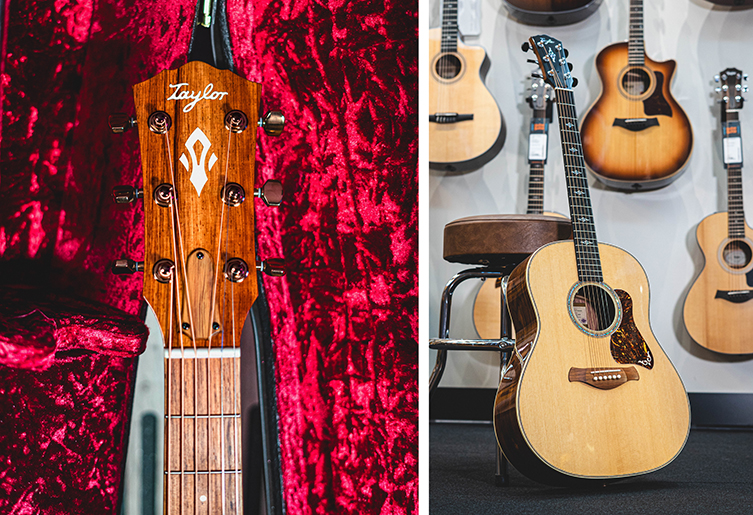
In addition, the Gold Label’s altered visual language is actually just pretty subtle: the little nods to a fictional yesteryear (Taylor didn’t exist before the 70s, of course) are nicely done, with retro logos and small pickguard decorations.
The range is slowly increasing in size, and it’ll be interesting to see how it develops. Will the guitars move into a more deliberately ‘retro’ place? Keep ‘em peeled, and in the meantime, compare a Gold Label guitar to a similarly priced Taylor from their established range and see how they compare for you. I personally really enjoy them, with the feeling that the old-worlde anachronisms could actually be pushed a good deal further.
What Sets Taylor USA Apart?
What do Taylor do,then, that other guitar builders don’t? What is intrinsic to them, that makes them stick out as being relevant and worthy of your time? I’ve covered a lot of these themes in different articles, so I’ll link a good dose of them at the bottom for you to dive into, but here are a few pertinent points that haven’t yet made their way into this article:
- The Expression System instantly made you sound good plugged in, and necessitated every other acoustic company to up their pickup game in order to compete.
- Their radical use of ‘streaky ebony’ changed attitudes about the way timbers looked and about what was acceptable to use in guitar-building.
- Their co-owning of an ebony mill in Africa literally put their money where their mouth was, and normalised conversations about timber acquisition and reforestation.
- They have a signature look and sound, neither of which feels borrowed from another company.
- The V-Class bracing not only made a difference to the guitar’s sound, but it actually improved intonation, which is something I didn’t believe until I investigated for myself.
- They are constantly reworking and improving their existing offerings. Take for example the new Taylor Next Generation, whihc is a complete refresh of many lines. Read more in my article: Taylor Next Generation Guitars In-Depth Review & First Impression.
Taylor USA
I’ve written a lot about Taylor guitars over these last few years, and so there are plenty of specific blogs. This article’s aim is to assess the overall offerings of Taylor USA, and to provide a central point by which you can access a lot of my other writings on Taylor guitars. So, here’s my thoughts…
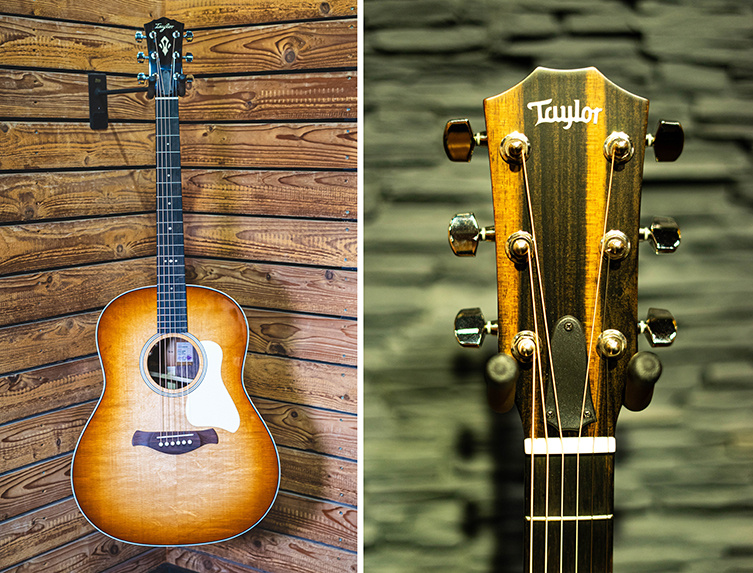
Taylor are a fairly subtle brand in terms of visuals: their guitars are beautiful without doubt, but they are understated rather than ostentatious, even when they turn the bling up
No matter what they do, there is a signature Taylor sound, which is bright and precise.
That signature sound, however, isn’t available in equal amounts on every guitar. The more you pay, the more detail and richness you hear, though the top tier ranges are arguably about trimmings and visuals, like all brands.
Taylor are a modern guitar brand in nearly every way, even when they are leaning towards the past.
Taylor innovations are player-focused: the slim necks, the neck joins, the V-Class bracing, the Expression system: all are there to improve your experience. And this is what has indeed happened.
They are only now, in the last couple of years, looking back on their own past (Legacy series guitars) and that of historical guitar building in general (Gold Label). Until now, they’ve been firmly forward-footed, and I believe that is still their main attraction.
Taylor’s precision in terms of their builds and the resulting sound, is as much of an acquired taste as any other.
What do Taylor USA guitars mean to you? Their Mexican-made guitars are equally impressive on their own terms (the GS Mini was and is an absolute slam dunk/home run/whatever other sports analogy you like), but today’s focus was on the San Diego-made guitars, so that’s why we’ve not heard from those 100 and 200 series models.
I believe we guitar players are all creatures of not only habit, but association. This is partly why the heritage brands will always hold a certain amount of sway over our decisions: and I don’t know if that’s something we can truly sidestep, not completely.
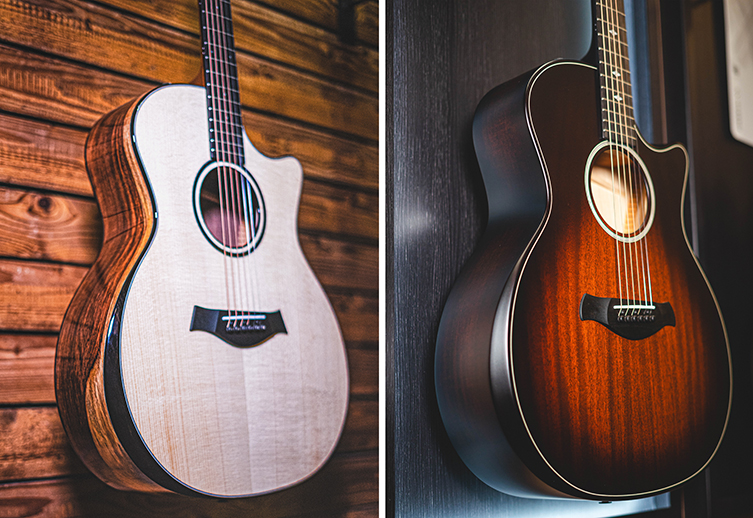
But, Taylor have long since established themselves and made a huge impact in the world of guitars. Their American output is quietly revolutionary in terms of design, engineering, results and experiences. I see excellently built guitars that are made for players who appreciate: appreciate sound, appreciate feel, appreciate resonance and appreciate response.
Taylor USA guitars are for musicians, basically. Does that sound like you?
Click to View our Entire Range of Taylor USA Guitars