Do you love Taylor guitars? Well, of course you do: what’s not to love? Attractive looking acoustic guitars that are built with precision, sing like songbirds and feel super-comfy, Taylor certainly make their instruments easy to admire. But how did they get to this point in time, as one of the world’s biggest and best-loved acoustic guitar brands?
That’s the rhetorical question on my fingertips today as I endeavour to guide you on a short and lively trip through the history of Taylor guitars. You’ll hear about how they started, how they developed, and about some of their many innovations along the way. Whether you’re a Taylor owner or a Taylor admirer, I trust you’ll find something to enjoy in this brief history of Taylor guitars!
Start at the Start
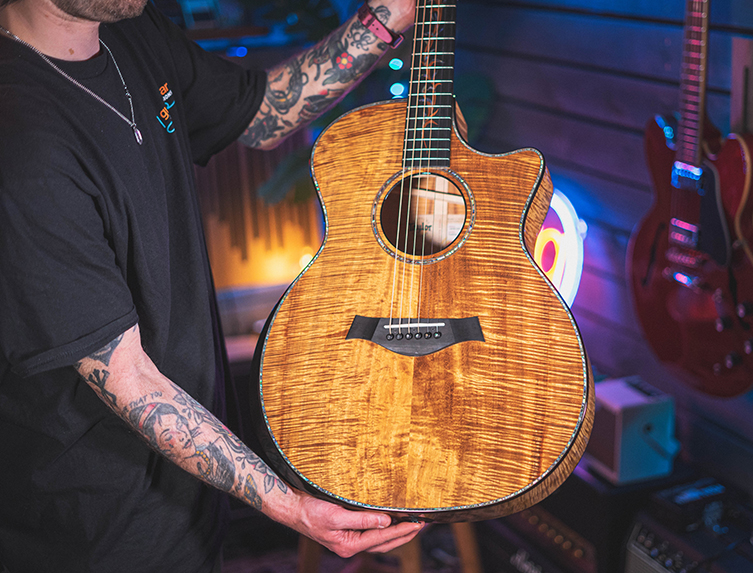
Okay then, I’ll at least begin this tale chronologically. Set your time machine to 1974, and aim it at San Francisco, because that’s where I’m taking you right now. Two absurdly young men decide to buy the guitar store where they work as luthiers, and begin building their own instruments. The place was called ‘American Dream’ and the dreamers were nineteen year old Bob Taylor and twenty one year old Kurt Listug. Listug talked his old man into lending him ten grand to buy the place from the owner, and his dad agreed upon the stipulation that Kurt bring the shop’s best luthier with him.
That would be Bob Taylor.
Initially, the group named their new business the Westland Music Company, but when the time came to stamp a brand on the headstocks of their newly built guitars, they found the name a little unwieldy. Reasoning that ‘Taylor’ sounded more generically American than ‘Listug’, Bob ended up with his surname on the top of every guitar that was built. This was 1976, two years after American Dream had been sold to the young men.
Bob was an ideas man, and was keen to bring the acoustic guitar forward from where it had lain somewhat dormant since the late 40s. Modern designs and materials quickly became trademarks for early Taylor guitars, and this would only develop further in the future.
With Listug being a better businessman and organiser, Bob Taylor took point on the development and building of the guitars themselves.
Early Taylor guitars were created in an idyllic, semi-hippyish co-creational way, with very few staff and lots of man hours put into each build. This translated into excellent guitars, which eventually sold well, though not without some early money worries for the young dreamers. Still, success beckoned, and the brand grew from strength to strength.
Lemongrove Days
Have you heard people talking about ‘Lemongrove’ Taylors? Do they get all worked up about how special they are? People do like to do that with things that seem rare and in the past. In reality, Taylor seem to be one of the few guitar brands who don’t really have a best ‘pre’ time, whether that’s ‘pre’ some location change or personnel upheaval. Since the guitars they make are based on practicalities and constant updates, they have consistently been good.
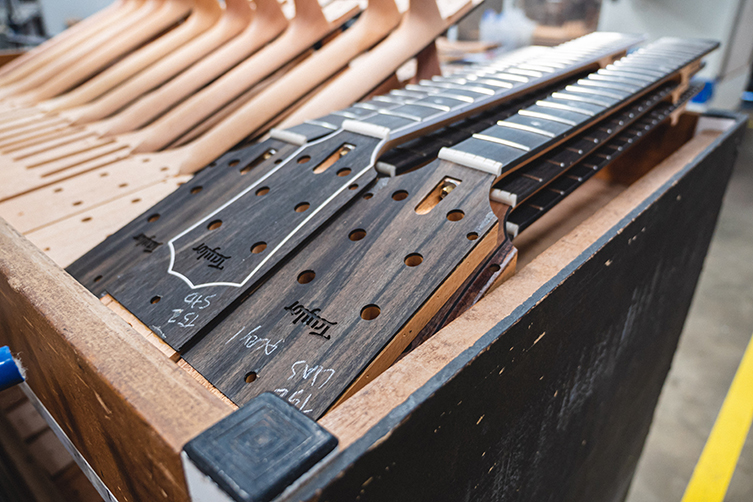
But maybe that’s unfair. Fans like to champion certain things and make them special, and so it is with Lemongrove Taylors. All that the ‘Lemongrove’ thing means is any Taylor made from 1974 (or 1976 if it has to say Taylor on the headstock) until 1987, when the company moved away from Lemon Grove (there you go), a city in California, to El Cajon. We’re talking about less than 8 miles here. That’s it! The guitars will be somewhat different to today’s Taylors, but that’s more to do with the constant learning and innovating that goes into the designs.
Larry Breedlove
You know the brand Breedlove guitars? Did you know there was a connection to Taylor? I didn’t, but that’s all part of the fun of doing research for blogs! Larry Breedlove joined Taylor in 1983 and became one of the most significant voices in how Taylor guitars looked and played. He left Taylor in 1990 to start his own enterprise, and even though Breedlove guitars are still made in Bend, Oregon (filming location for Twin Peaks, trivia fans), Larry himself hit the road in ‘94. To go where? Back to Taylor!
El Cajon and the NT Neck
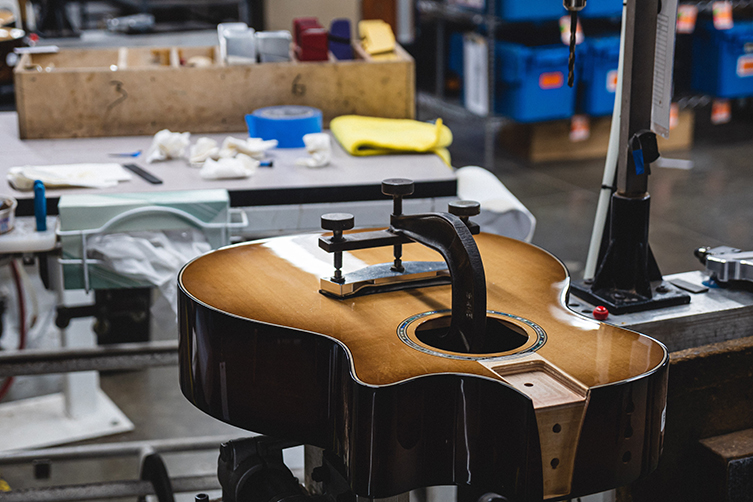
The 90s were a time of innovation for Taylor. They were one of the first major guitar makers to fully utilise the potential of CNC (Computer Numerical Control) machines for the sawing of tops and necks. This allowed more precision and better consistency from guitar to guitar. The larger premises at El Cajon allowed for more staff, more machines and more space to build, so the company’s output expanded.
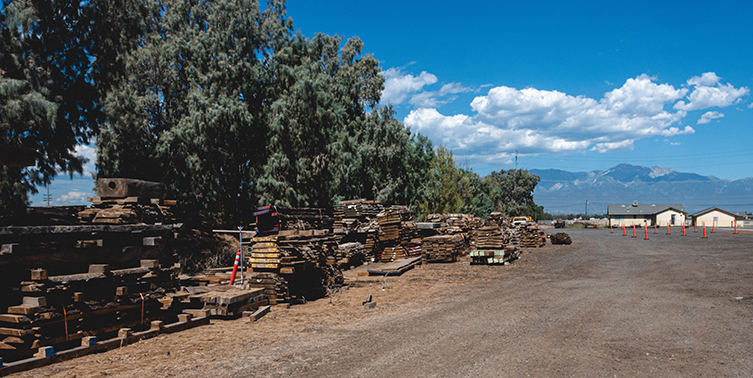
Towards the end of the 90s, Bob Taylor brought the NT neck to Taylor. NT stands for New Technology, and the NT neck was basically an extremely precise, extremely tight bolt-on joint instead of a traditional glued neck. Us guitarists are a conservative bunch, and players needed a little convincing, but once the benefits of the NT neck were demonstrated - and those benefits included easy adjustments, repairs and resets - then there wasn’t much of an argument to be had.
The Shipping Pallet Guitar
Bob Taylor’s endlessly inquiring mind must make it hard for that guy to get to sleep at night, but his busy brain does find expression in some interesting ways. In 1995, such an idea manifested about the true creator of tone. Was it entirely the timber? Or would anything sound great if it was built to the exacting standard of a top-end Taylor?
The test was carried out using wood from a bunch of shipping pallets. The body and neck came from oak pallets (are all shipping pallets made from oak?) that lay around the workshop’s warehouse. The top was a non-specified piece of “2x4” timber, and the rest was down to the design and luthiery skills of Bob.
So, how did it turn out? I should say ‘they’, because in the end, 25 of them were made. Have a little look at this video I found, and see what you think!
The Expression System
A big innovation was the Expression System (ES for short), the company’s own update on a traditional acoustic guitar pickup. Prior to this, acoustic players had mics (annoyingly inconsistent), piezo transducers (which sounded ‘quacky’ and still do) or some arcane combination of both.
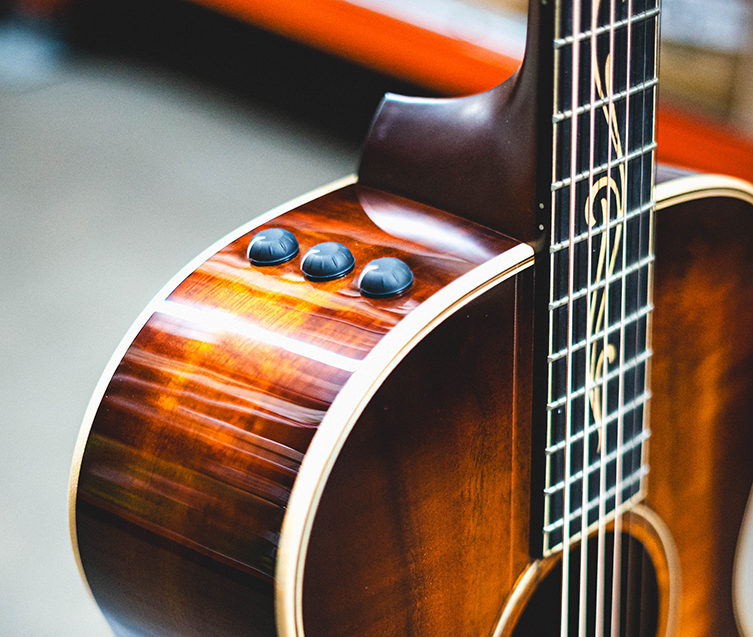
The ES setup used a number of contact mics placed on the underside of the body and bridge, and blended those together to deliver a sound that actually reflected what was happening inside the guitar body. It was a revelation, and it has been much copied since.
A series of three discreet control knobs made an elegant alternative to the large battery boxes that other brands sunk into the sides of their guitars.
Mexico
In 2007, Taylor began building certain guitars and parts in a new premises for them in Tecate, Mexico. Things are different now in 2026, but back twenty years ago, the different economy there allowed guitars to be created to a high standard for lower prices, and so Taylor’s most affordable ranges began to emerge from Mexico. The 100 and 200 series are built there today, alongside the Baby models, the GS Mini and the Academy series. Taylor’s hard cases also come from the Tecate facility.
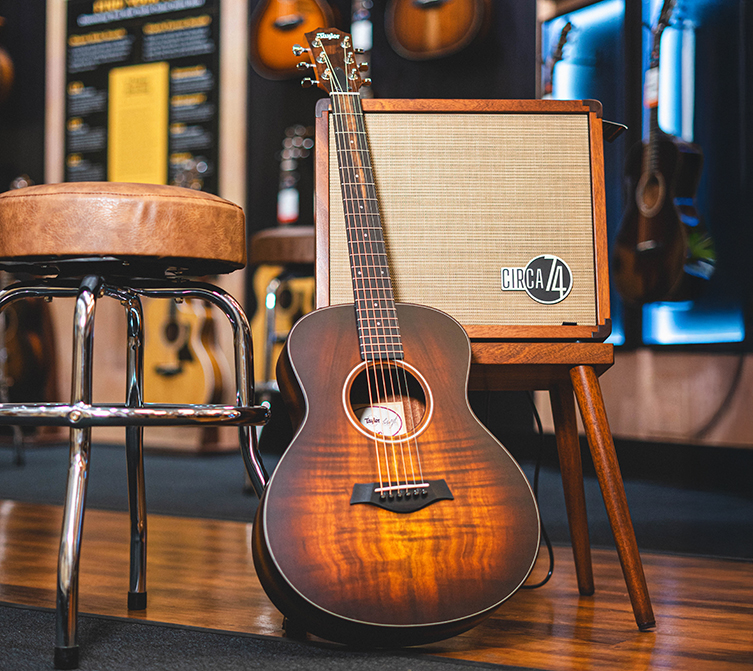
The GS Mini
The Taylor GS Mini has proven to be a genuine gamechanger in the guitar industry. A simple idea done well, the GS Mini proved more popular than ever Taylor expected, and it continues to be a huge seller, some 16 years after it was initially released.
So what is it?
It’s a somewhat shrunken, redesigned version of Taylor's own Grand Symphony guitar shape, designed to be easy to play and very portable. Here’s what Bob Taylor himself had to say about it:
“I decided to make a mini-guitar that’s shaped like an actual guitar, that’s easy to build, that has all the quality features someone would want on any guitar — good materials, a great neck, a really good fret job, a big sound for its size. In other words, something that wouldn’t be a toy.”
The GS Mini is certainly a great choice for a beginner, but it has proven to be a big hit for experienced players, too. Whether they want something portable for slinging into the car on trips, or they just like the intimate and slinky feel given by the small body and short scale neck, it’s a guitar that people just want to play.
I include the GS Mini in today’s Talyor history, because the impact of that guitar is greater than the model itself. As somebody who has worked in the industry prior to its release, I saw for myself the seismic charge that ran through the guitar world in the months and years after the release of the GS Mini. Brand after brand fell over themselves to deliver a similarly small acoustic guitar that wasn’t an afterthought or a novelty. Many accomplished it, though nobody bettered Bob Taylor’s design, nor eclipsed their sales. In many ways, the Taylor GS Mini is a legitimate modern classic.
Andy Powers
Surf nut and gifted guitar builder Andy Powers caught the eye of Bob Taylor, who was impressed with his luthiery skills used in building custom guitars and ukuleles. Taylor hired him in 2011 with a long term view to having Powers eventually take the reins of the company. After injecting a whole host of new ideas and developments into Taylor - including some significant rethinks of entire series of guitars - he was made the company CEO, President and Chief Guitar Designer. He has held these roles since 2022, and still continues to put in time at the bench, sanding and planing.
V-Class Bracing
One of Powers’ successes was to redraw the inner bracing of certain guitar models. V-Class bracing was the first of several bracing revisions, and centered around the idea of changing the entire layout and shape of the braces to resemble a large V. Traditional bracing arranges the braces in an X shape. The V-Class bracing is larger, and makes more use out of the guitar’s top, enhancing sustain and tone as well as - interestingly - intonation.
Taylor don’t exclusively use V-Class bracing because Powers has continued to experiment with other forms of bracing, but V-Class bracing is definitely a new chapter in acoustic guitar building.
Commitment to Sustainability
Sustainability affects all guitar makers, from the trees to the transportation. It’s important to look after the future, and it’s something that Taylor guitars recognised early on. Programs like their Urban Wood Recycling Project sought to reclaim perfectly good wood (often ash) that was growing in unused municipal places such as car parks, and incorporate those timbers into specially-built guitars.
Their biggest step in the direction of sustainability, though, was definitely their purchasing of an ebony sawmill business in Cameroon, Africa. The Crelicam premises is located in a town called Yaoundé, and employs local people to source wood, cut it and manage it: running the entire business for Taylor, and securing sustainable ebony for long-term use.
They’ve even championed the use of streaky ebony - timber with veins of caramel colouring running through it - in order to not waste great resources merely on account of colour. This has actually sparked a rethink within the guitar industry about what is and what isn’t acceptable when it comes to the quirks of Mother Nature, and we are now celebrating woods that look unique more than we used to. Good news for everybody, really, and a much-needed turn of the tide.
That’s just two examples of Taylor’s dedication to building sustainability into their business.
Recent Innovations: Action Control, Claria, and the Next Generation
The last couple of years have seen quite a turnover of new ideas from Taylor. I suppose this is to be expected, given previous form, but it’s still impressive to recount!
On a trip to their Netherlands base last year, I was shown an ingenious development in the guitar necks. Dubbed the Action Control Neck, the new feature allows action/string height changes to be made in seconds, without taking the strings off! The Action Control Neck also utilises a longer tenon and neck point to ensure more timber-on-timber coupling, leading to more tone.
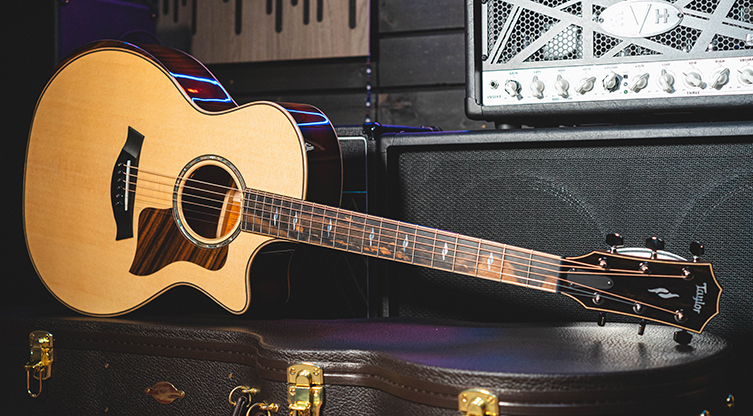
Recently, the brand unveiled their new Taylor Next Generation line of guitars, a major refresh for 2026. In addition to the Action Control Neck I just mentioned, all Next Generation Taylors have scalloped V-Class bracing, which allows the top more movement, resulting in extra low end response in addition (not replacing) the prized clarity and detail that’s a Taylor trademark.
Lastly, the Next Gen guitars all include a brand new pickup update. Replacing the ES2 system is the new Claria pickup system, which actually does away with the body sensors in favour of a redeveloped undersaddle piezo transducer and a new preamp. It sounds like a backwards move, but the results speak for themselves: this is on a par form the expression system, and is much simpler to work with. Also, the controls are not mounted within the soundhole, making for a cleaner look.
The Taylor Next Generation series is currently being released model by model, so keep an eye on our site for up-to-the-minute news of new guitars!
Taylor Today
In 2021, Taylor became an employee-owned company. Every staff member is now a co-owner of the business, which instills a sense of not only purpose but confidence in everyone on the team. There are around 750 employees working for Taylor across the world, including the US, Mexico, Cameroon and Amsterdam.
The brand has introduced the Gold Label series of guitars, which is maybe the first time Taylor have even slightly looked backwards towards the golden era ‘pre-War’ acoustic guitars of the 1930s. Generally, Taylor are not a nostalgic company, but I suppose this goes back beyond their own beginnings in 1974.
Indeed, their forward momentum is one of the defining characteristics of the brand, who have made a name for themselves by doing precisely the opposite of other heritage acoustic brands: they continue to challenge accepted ways of designing and building, and this leads to innovations such as the Expression system, the NT neck joint, the V-Class bracing and the GS Mini, which changed the acoustic guitar market forever.
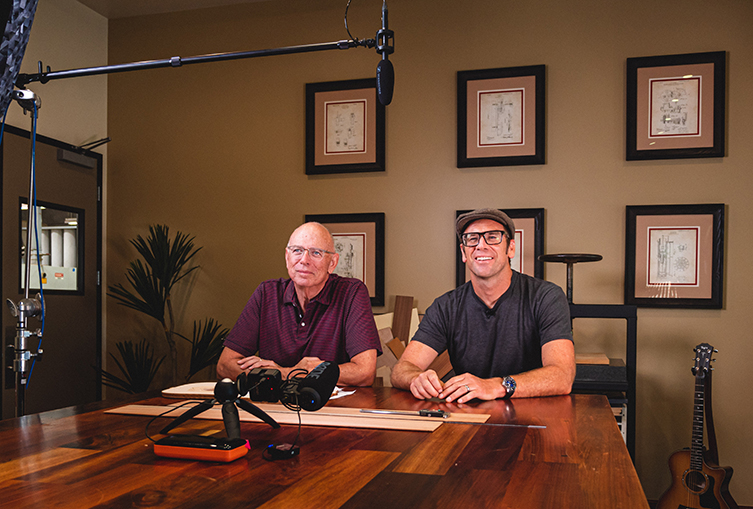
So, it’s been just over 50 years for Taylor guitars, and they look to be as future-forward and hungry for innovation as ever. That all translates to better guitars for you and me, and a dedication to improve on the past. The future’s looking good, and guitarguitar have enjoyed a very close relationship with Taylor since our very beginning so there is no place in the UK that’s better to buy your next Taylor guitar than with us. Our expert staff are all fully trained on Taylor’s range, and we have a passion for their guitars. Visit us when you are shopping for your next Taylor guitar, and we’ll introduce you to your forever companion.
Click to View our Taylor Guitars
Read More
-
Taylor Series Explained - Which Model is Right for Me? (updated for Oct 2026)
-
Taylor Custom Guitars
-
Best Taylor Guitars Under £1000
-
Top-End Taylor Acoustic Guitars
-
Taylor Acoustic Guitars for Gigging Professionals
-
Taylor Next Generation Guitars In-Depth Review & First Impression
-
Why Taylor are the Future of Acoustic Guitars