ESP Guitars are one of the real success stories of post-Golden Age guitar making. They are one of only a handful of modern-ish guitar companies who have managed to not only make a dent in the overall guitar world, but who have actually dominated their area of hard rock and metal, to the point that ESP are effectively the world’s number one metal guitar brand.
Today, I’ll look a little into the company's backstory, including their origin, development and their rise to the top of the guitar summit alongside other legendary names such as Fender, Gibson, Jackson and the rest of them.
If you’re a fan of ESP, or just of contemporary metal in general, then this is a story you’ll love!
Tokyo, 1975
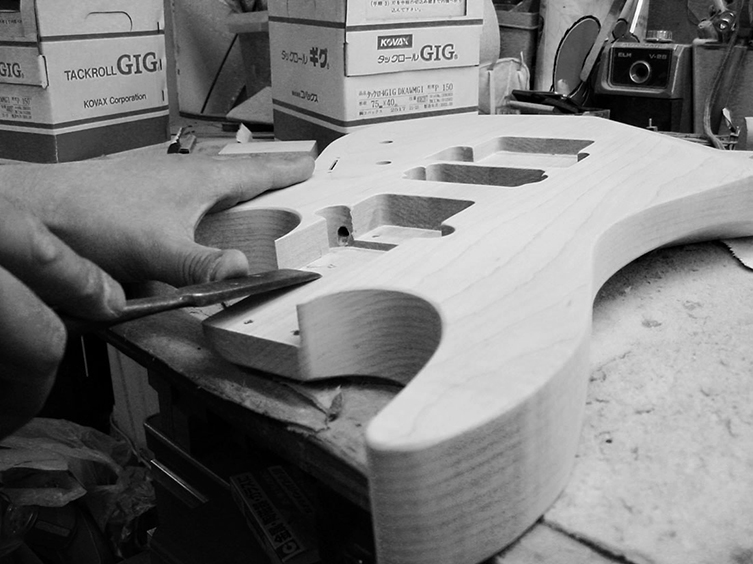
The ESP story begins in Tokyo, Japan in 1975. Entrepreneur and music fan Hisatake Shibuya started up a shop called Electronic Sound Products, specialising in custom made guitar parts and replacements. Not long after, the shop began creating and selling guitars under the brand names ESP and Navigator Guitars. These guitars were all made in one ESP-owned factory premises, to rigorous levels of quality. They were a small-run, boutique custom shop who didn’t build in high numbers, but built with exceptional quality.
What made a difference in the early years was ESP’s wide variety of custom options, which wasn’t something that many companies offered back then. Also, their willingness and ability to create custom graphic finishes helped set them apart from other, more conservative boutique brands. People took notice in the Tokyo guitar scene and with foreign musicians on tour. Word began to spread.
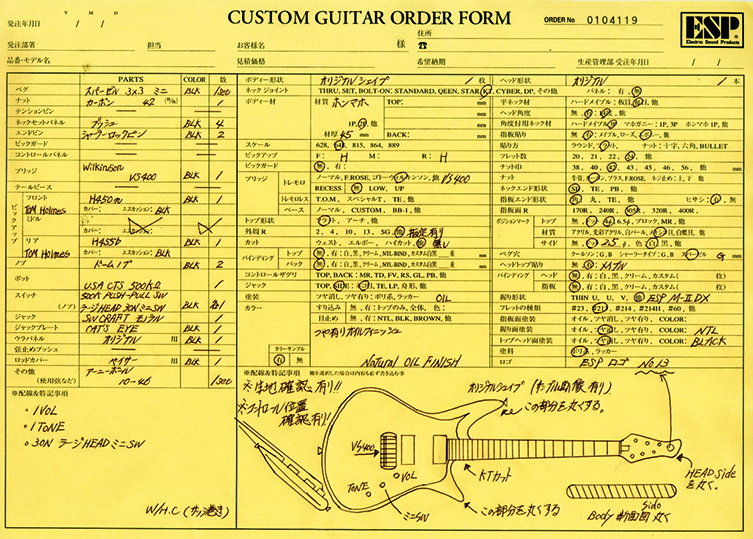
(A Custom order for a customer in the 80s, picture from ESP)
New York 1980s
By the early 80s, Shibuya knew that he’d need to get a foothold in America in order to really push things. Hard rock was really happening in both Los Angeles and New York, and any guitar brand who wanted to count had to be present over there.
ESP, then, opened a small premises in New York City. 1983 or 84, (sources differ here). This was the humble but spirited beginning of US business, which was in fact less than 6 people working from an apartment office. Space wasn’t a premium, but custom options were, and ESP started to develop a reputation for being able to build more outlandish requests, including graphic finishes, custom inlays and non-standard electronic or hardware requests. The guitars themselves were still being built in Japan only, but their presence in America helped attract customers and artists from the NYC rock scene and beyond.
Dokken’s George Lynch became the first brand endorser around this time. During a visit to Tokyo with his band, he came across the original Electronic Sound Products shop and was highly impressed by what he found. A series of increasingly wild looking superstrat models followed, as distinctive as the player himself.
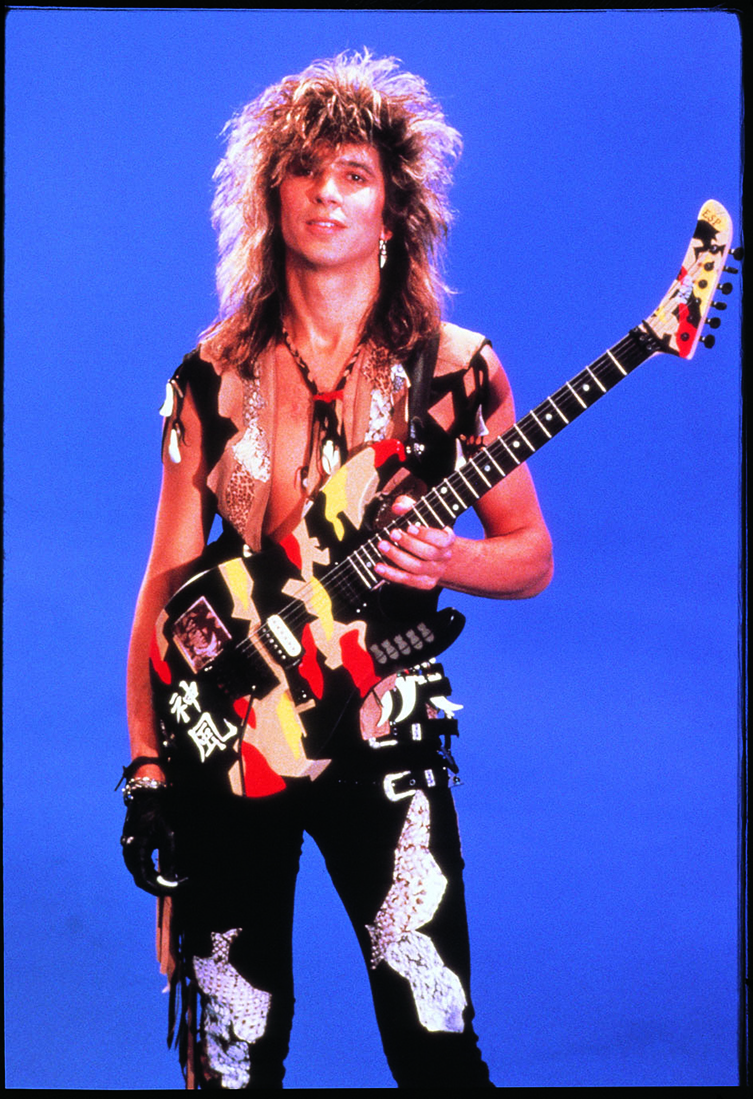
(Dokken's George Lynch, pic courtesy of ESP)
Back in New York, In 1987, Shibuya hired Matt Masciandaro via an open job offer. Masciandaro was an experienced tour manager who’d worked with the likes of Motorhead and Aerosmith, and was looking for something a little different. He joined the small NYC team and was eventually put in charge of the US side of things. “Sometimes you don’t know what you don’t know”, Matt has said about stepping up, but he was directly responsible for a number of artists joining the company as endorsees, thanks to his previous life on tour. He understood guitars from a touring perspective, and from a stage perspective: two incredibly important points of view that were not necessarily part of the conversation for guitar brands or indeed luthiers back then.
ESP guitars had to stand up to the rigours of the road. They had to perform as expected, night after night, without adding extra problems to either the musicians playing them or the crew looking after them. Plus, they had to look awesome on stage. ESP guitars aced it on all fronts.
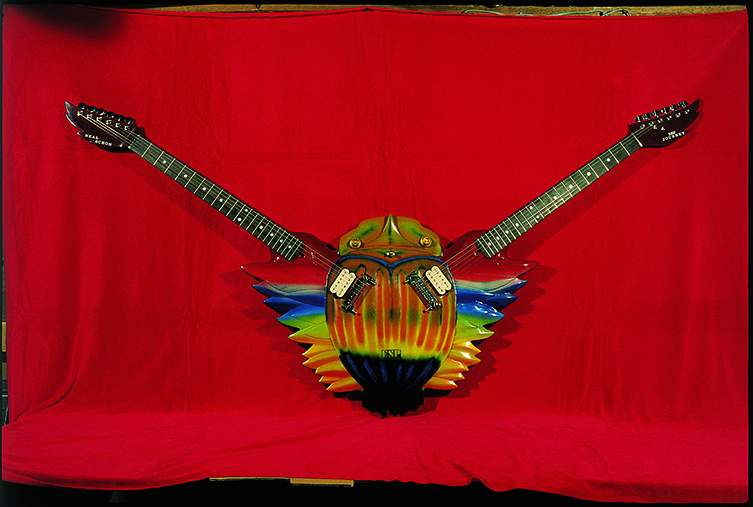
(Custom ESP guitar built for Journey's Neal Schon. Pic courtesy of ESP)
48th Street Custom Guitars
In 1989, ESP moved their American operation across to what is the now-legendary 48th Street Custom Guitars premises. Located in the famous Music Row area of Manhattan, the custom instruments produced here (often under the 48th Street Custom name) are now regarded as rare, highly valuable classics which are sought after by collectors. Together with a few other builders (Sadowsky immediately springs to mind, as does John Suhr from his Pensa Suhr days), ESP/48th Street Custom created a real ‘golden era’ for NYC guitar building, and lots of people don’t even realise how central ESP were to this scene!
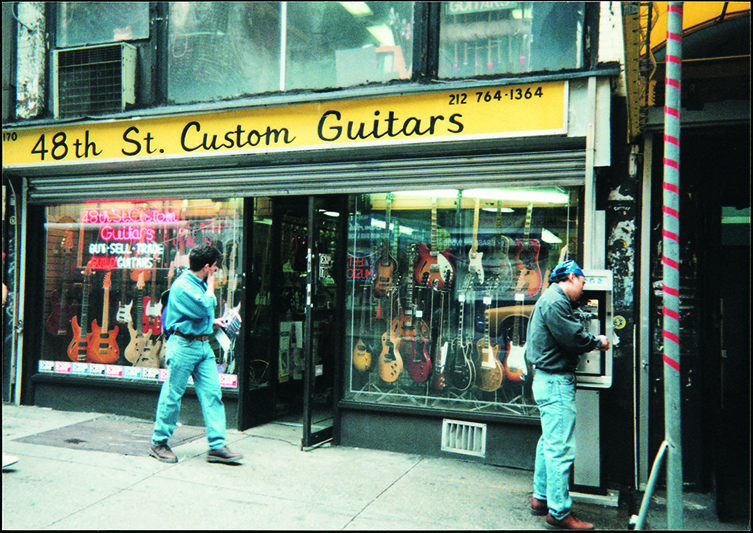
(The famous 48th Street NYC premises in the 80s. Pic courtesy of ESP)
ESP Standard Series
By this point, ESP had begun to offer high quality Japanese-made production instruments - under the name ESP Standard - in addition to their custom guitars. This is when models such as the Horizon and the Mirage started showing up, as the brand were keen to have their own identity away from quality copies of classic guitars.
They immediately took off, and in fact many of those early guitar designs are still in production today. The name of the range changed from ESP Standard to E-II in 2014, because the company seem to want to reserve the ESP logo on headstocks that are only custom shop instruments. E-II makes it easier to tell the difference at a glance.
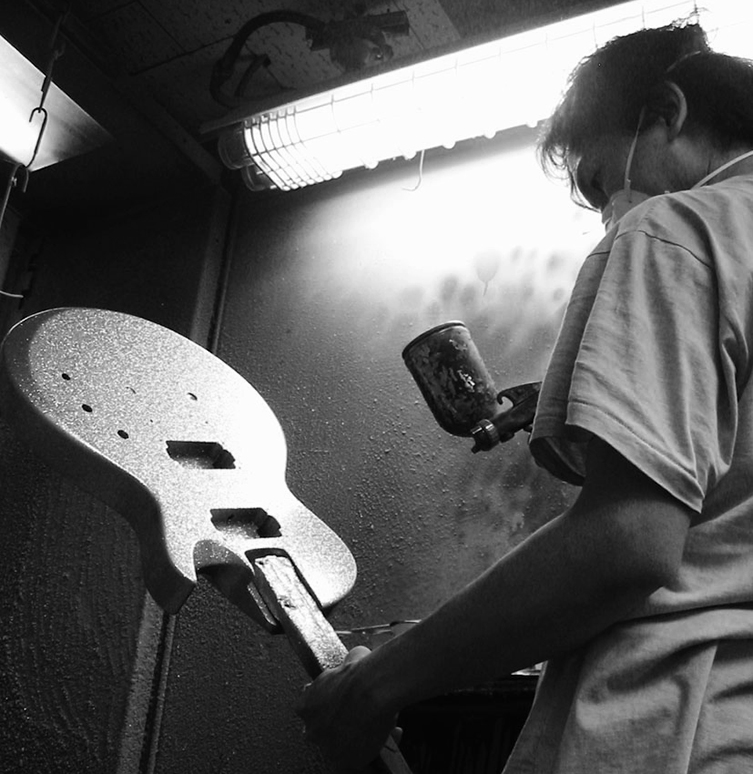
(Pic courtesy of ESP)
Metallica
Undoubtedly, no one put ESP guitars on the map more than Metallica. Kirk Hammett got onboard before James Hetfield, but both guitarists were almost exclusively toting ESP custom guitars by the end of the 80s. This was crucial in making ESP a global proposition rather than an impressive niche operation. It’s a very telling fact that both musicians have continued to work with the brand ever since, which is now over 35 years.
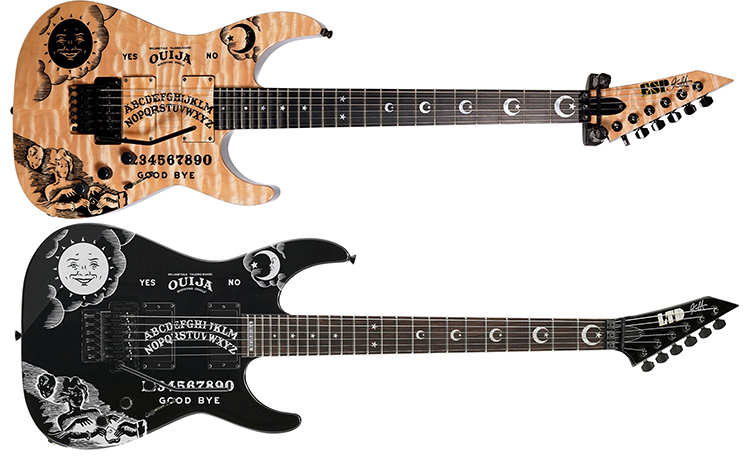
Metallica are of course synonymous with great guitar playing, but it goes deeper than that: think of Kirk’s famous ‘Ouja’ and ‘Frankenstein’ graphic finish guitars, or James’ Iron Cross and Snakebyte models, and you’re talking about some of the most iconic instruments in modern guitar music. These are all ESP masterpieces.
Hammett, when asked decades later about why he continually went to ESP for his guitars, talked about how they sounded incredible, they were dependable, and also about how his original models from 1987 still sounded as good today as they did then.
The Key
Perhaps that’s the key to the brand’s longevity. Whilst the myriad of custom options certainly attracted players to check out the brand, it was the reliability and the meeting of high expectations for performance and sound that ultimately kept guitarists coming back to ESP for more instruments.
This is an important point, because it applies outside the sphere of artist signature situations too. The ESP Custom Shops in Tokyo and North Hollywood do not have special tiers for their luthiers, nor for the fame of their customers. As Masciandaro himself says: “The same hands that build a guitar for an artist, build a guitar for the consumer.” When you buy top-tier ESP guitars, you really are getting the best of the best.
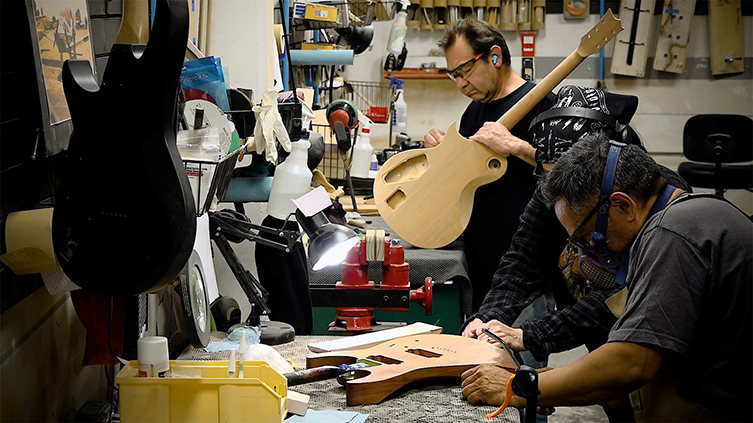
(ESP Hollywood Custom Shop at work. Pic courtesy of ESP)
Anyway, back to the timeline!
ESP in the 90s
As the 90s progressed, hard rock titans like Metallica and Slayer continued to put ESP firmly on the global map as a guitar force to be reckoned with. Lots of other bands followed their lead, including Rammstein, Testament, Sepultura and others.
In Japan, several sub-ranges of instruments were put into production: ESP Grassroots, which were Korean-made beginner guitars for the Japanese market only, and Edwards. Edwards were slightly more in the way of ‘lawsuit’ guitars, stylistically. They stuck much closer to the silhouettes and lines of historic classic instruments, to the point where some models ran into legal issues! Edwards guitars are also a Japan-only range, though you do find some making their way across into western markets. These are Chinese-made instruments that are set up in Japan, and sit just below ESP Standard (nowadays E-II) in the company’s product line.
ESP owner Hisatake Shibuya bought the Guitar Institute of Technology (referred to as ‘git’) in Hollywood in 1994, renaming it The Musician’s Institute. A music college that brings students in front of industry professionals, the MI is still a significant place for west coast musos to learn their trade, make connections and get started in the music industry.
LTD
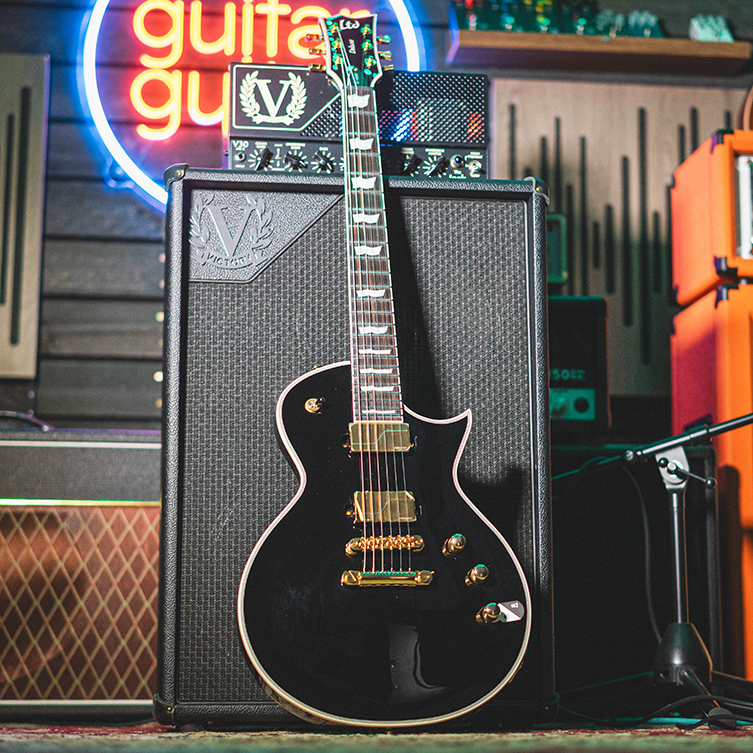
Two years after that in 1996, ESP made a bold move and introduced a new international brand of production line guitars. LTD guitars was the first time ESP made anything outside of their own factories. This opened up the brand to several new tiers of customer, who until that point could only admire expensive ESP instruments from afar. Now, they were able to own one for themselves. The affordability of LTD guitars was contingent on the quality levels remaining high, particularly as many artist models also became LTD guitars.
Today, LTD guitars are by far the bigger selling range, thanks to their competitive prices and comprehensive offerings, many of which mirror the designs of ‘full fat’ ESP guitars. Pro players tour with LTD guitars constantly, which is fair testament to their robust and reliable operation.
ESP Today
Hisatake Shibuya passed away in September 2024, at the age of 87. Matt Masciandaro is still the President of ESP, and most of the world’s top metal bands still swear by the brand.
Nowadays, the ESP Standard range is called the E-II range, and are built in Japan. The ESP USA brand makes hand-crafted instruments in a Hollywood facility not far from the company’s HQ. Demand outpaces supply for them, which is a good problem for them to have!
ESP Original are the Tokyo-made custom shop masterpieces, the best of the best.
Whichever ESP or LTD guitar you go for, you’ll be joining the ranks of some of the most significant musicians and builders in the world. It’s your turn to step up and enjoy some of the best, hardest-rocking guitars in the world.