Are you looking to dip your toe into the world of synthesizers? Have you perhaps had some experience with plugins or apps, and now want to see what the score is with hardware synths?
Well, it’s a good time to be a synthhead, let me tell you. I’ve been into synthesizers for over 20 years now, and the market for affordable synths has never been as exciting asit is now. Interestingly, a few of the units I’ll be showing you today have been around for a while now, proving that the good stuff sticks around, and has longevity built into it.
For today’s jaunt, I’ve chosen an arbitrary cutoff of £500 for my price ceiling. I think it will be helpful to understand what that sort of money gets you (and for less than that amount too), because you definitely don’t have to spend a huge chunk of cash in order to sound fresh, interesting and amazing. That’s good news, right?
Lots of different synth types feature today, from reproductions of classic analog models to portable machines that deliver some pretty futuristic concepts. There’s a case to be made for them all, so I suppose the real question here is: which should you buy first?
I’m half-joking, but please have a look at what I consider to be some of the best synthesizers around right now for under £500.
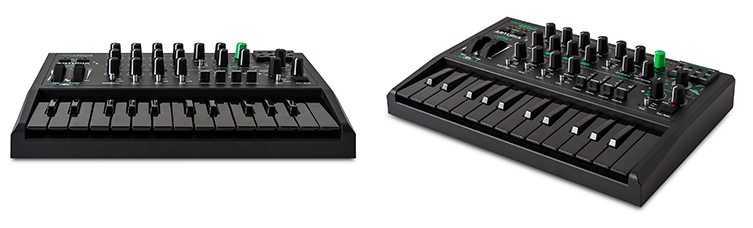
Arturia MicroBrute UFO Analog Monosynth
The cornerstone of any respectable synth collection is a good analog monosynth. It’s the instrument that teaches beginners the fundamentals of synthesis, and it's the go-to for pros to create a full palette of textures, rhythms, leads and effects.
Happily, I can report that such fundamentals are not outwith today’s price cap. French powerhouses Arturia have become dominant on the hardware scene during the last 15 years, and as such, you’ll be seeing a few of their instruments in today’s list.
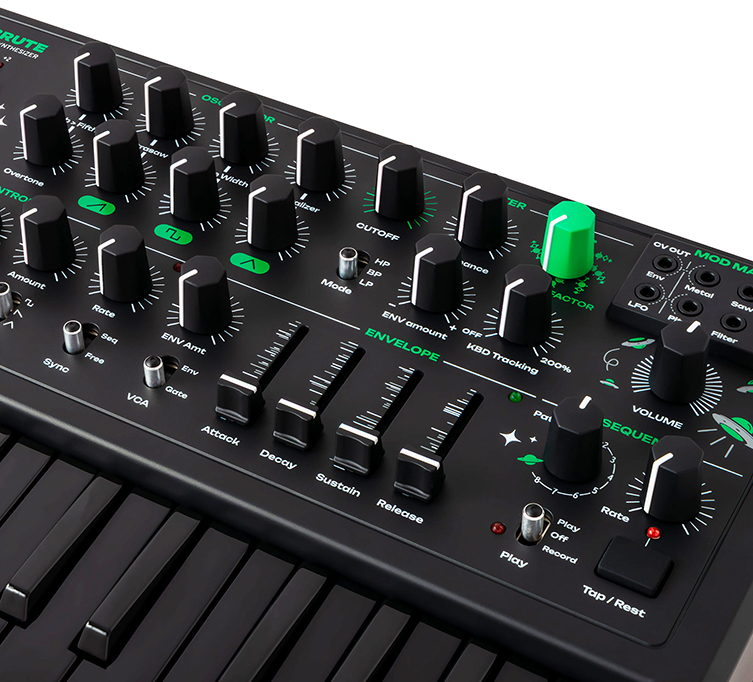
This first one is a cracker. The Microbrute is a fully analog monosynth (one note at a time, which is very normal with analog synths), with a super powerful sound that belies its teeny size. The keys are small - as you’d expect with any keyboard that has ‘Micro’ in the title - but there’s a generous helping of control knobs for a very hands-on editing approach.
The Arturia Microbrute UFO is a wonderful balance of old-school synthing, modern power upgrades (onboard distortion, a hefty filter, great ins & outs) and open-ended useability. The ability to patch in other devices and sequence them all via onboard hardware make this a potential nerve centre for your early synth operations. Impressive stuff, particularly for such a reasonable outlay.
It’s very hard to find fault here, particularly in its retrotastic black and green ‘UFO’ garb. The age of disclosure is upon us, and it sounds superb.
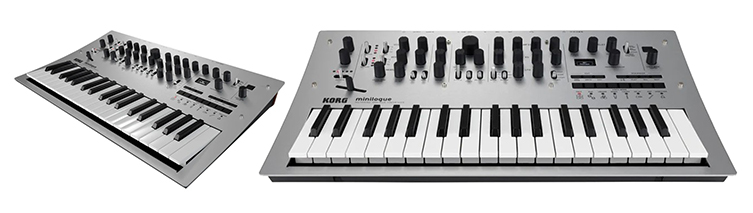
Korg Minilogue
Now, this is class. Brushed metal enclosure, plenty of hands-on control and minimal menu diving: this is a good start for the Korg Minilogue! What we have here is a polysynth that meets you on your terms. Most functions have a dedicated onboard control knob, switch or slider, and you get 4 notes of polyphony, which actually goes further than you might imagine.
This is a great synth for players who are looking to cover lots of classic sounds, rather than pioneering noise-makers on a mission to rewrite the fabric of time. It’s not that sort of synth, in my opinion: it’s much more for keys players who want plenty of instantly good sounding synth tones, lots of control and a good, rich sound at a great price. It’s sturdy, it’s highly portable, and it delivers a fantastic selection of analog polysynth sounds easily. It’s very playable and very enjoyable: in other words, classic Korg.
Yamaha Reface Range
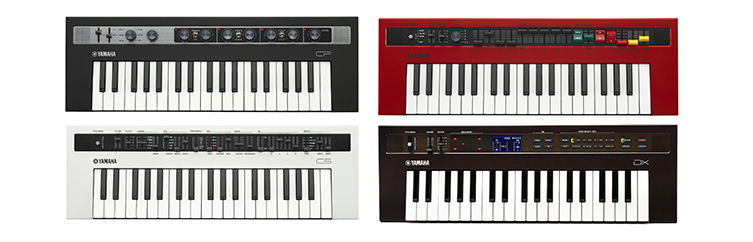
Is it a cheat to have four different synths for a single choice here? I suppose it’s my blog and I say we’re okay, so let’s go! So, Yamaha Reface. The concept here is pretty cool: Yamaha have taken four of the keyboard areas they’ve dominated throughout history, and dedicated a mini synth to each of those areas, developing each with custom sounds, processing and even controls to fit each context. For example, there are drawbars on the organ model, and big old-school rotaries on the electric piano. Each model intends to evoke the vibe and spirit of the original models, though I’d hasten to add that these aren’t full-on reissues of any particular model.
The four digital synths collectively cover a lot of ground, too. Here’s how each looks:
- Reface CP: classic electric piano sounds that convince.
- Reface CS: a nod towards the famous CS analog synths, though I’ll spare you the disappointment and say up front that this will not get you Vangelis-worthy CS-80 ‘brass’ tones. It sounds ace on its own terms, but manage your expectations first!
- Reface YC: classic organ sounds, complete with mini drawbars! And a rotary speaker effect!
- Reface DX: based on the DX-7 and related synths. This is a proper 4-operator FM synth, by the way, not a sample-based unit!
Choose the one that resonates closest to your taste, or go hog wild and buy the set! What I find so great about these is the endless inspiration: these are simple to operate, with some very satisfying control parameters, and the sounds you get are excellent. They run on batteries and have built-in speakers, so you can literally carry one in your backpack absolutely anywhere and have a cool, fun synth to play with, with no additional equipment required.
My pick? It’s got to be the Reface DX. Come on, it has proper frequency modulation synthesis happening! Very cool attention to detail there. You can make a good stab at pretty much all 80s pop songs and popular fantasy movie soundtracks with this one little synth.
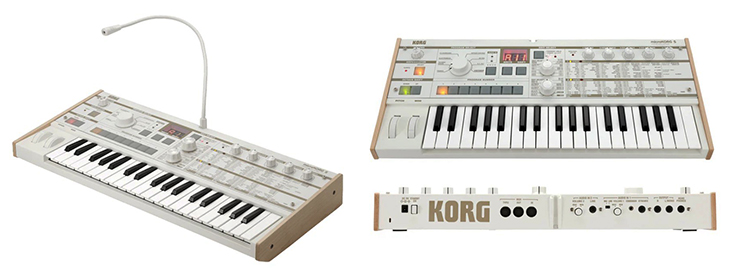
Korg Microkorg S
Talking about portable synths with built in speakers, Korg’s update on their own world-conquering Microkorg is a worthy successor. The fact is, you can still buy the iconic original with its little gooseneck microphone (for sounding like a Cylon from Battlestar Galactica), but the addition of a decent built-in 2.1 speaker system makes this the more useful purchase in my opinion.
Inspiration strikes anywhere, and whilst the Microkorg S isn’t as small as the Yamaha Refaces we just looked at, it does offer perhaps more in terms of sounds, scope and control. The presets have been refreshed, there is extra functionality (the ’Favourite’ mode is something that would be welcome on every hardware synth!) and yes, you still get the gooseneck mic! If you aren’t sure which direction to take your synth dreams, then this is as good a choice as any, and is sure to satisfy for quite a while.
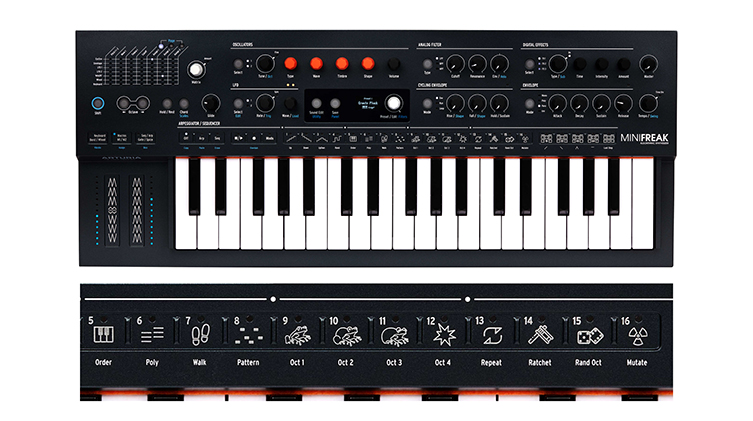
Arturia Minifreak
At this affordable end of the price slider, many of the synths will be smaller in form. As I’m sure you know though, physical size in this realm does not equate to sonic size. Arturia deliver the goods again with a potent noisemaker that offers up potential that I personally haven’t seen anywhere else on hardware at this price. Hail the Minifreak!
What am I talking about? Well, it’s the multiple ‘modules’ (for want of a better word) that the signal path travels through, and how controllable it all is. It’s polyphonic for one thing, a good start in my book! The waveforms are digital and can be virtual analog, FM or additive. Then we have analog filters, digital effects and a sequencer/arpeggiator that uses pictures of cartoon frogs to determine how mental the pattern is. There’s control for randomisation, there’s (assignable) aftertouch on the keys and there is also a completely virtual version of the synth included, for throwing into your laptop.
How much more fun do you even want?
Korg MS20 Mini
Every synth nut will tell you that the Korg MS20 is a stone cold classic. It’s one of those synths with endless mileage to be had by coaxing out incredible tones with tiny tweaks of the controls. It’s an essential piece of kit for many electronic genres, so it’s a great thing that Korg reissued it a number of years ago in a mini form!
The Korg MS-20 Mini is not tiny by any stretch of the imagination: it’s roughly 86% of the original size, and so the keys are smaller and the patch cabling uses mini jacks rather than ¼”, but that stuff doesn’t affect what’s important: the sound.
Well, the sound, the tweakability and the potential available from the patchbay. That’s all here in as accurate a replication as is possible. It’s got USB too, and the smaller form factor makes it easier to fit into your home studio. It’s faithful, it’s fun and it’s a timeless piece of sound making kit. Basically, it’s a ‘never regret’ purchase.

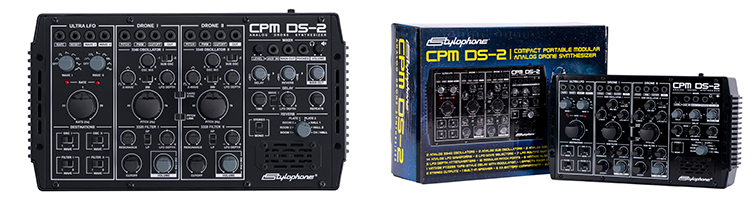
Stylophone CPM DS-2 Drone
I really love this little box! This is the kind of thing you go to for 5 minutes of noisy fun, and then find yourself incorporating what you get into songs. It’s so inspiring, but what is the CPM DS-2?
Well, firstly, what it isn’t is a Stylophone! What I mean is, the little instrument that David Bowie used on Space Oddity: this isn’t it. It’s the same company, but they are venturing into new areas, and this synth is a great example of it.
CPM stands for Compact Portable Modular, and this device is basically a noise generator that can produce all manner of drones, textures, pulses, drum sounds and even some demented space-horror monster shrieks straight from John Carpenter’s The Thing.
Out of the box, it’s not something you play chords and melodies on, but you can always connect a controller keyboard if you want to go down that route. And why not? There are so many ways to use this cool battery-powered noise generating device (not least putting it into a Eurorack setup), and it even has a built-in reverb, plus a built-in speaker so you can add spooky future atmospherics wherever you find yourself.
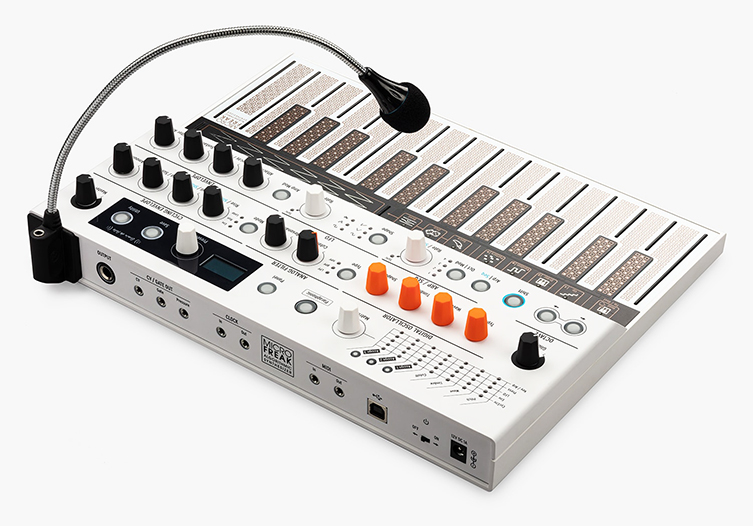
Arturia Microfreak Vocoder Version
Okay, if you need something to add some proper chaos to your music, I recommend spending an enlightening hour with this little hotcake. The Arturia Microfreak Vocoder Edition is a full-on synth (with 21 oscillator modes) with added vocoder trippiness. This is not an afterthought: it’s a 16 band vocoder, complete with obligatory gooseneck mic, and there’s even harmonies available! It’s unpredictable, thanks to the randomiser that we saw earlier on the Minifreak, and yes, there’s a sequencer onboard too. 320 presets of varying levels of crazy? Check.
Great news for existing owners of the non-vocoder Microfreak synth: you can update your firmware and get the vocoder engine! Woo!
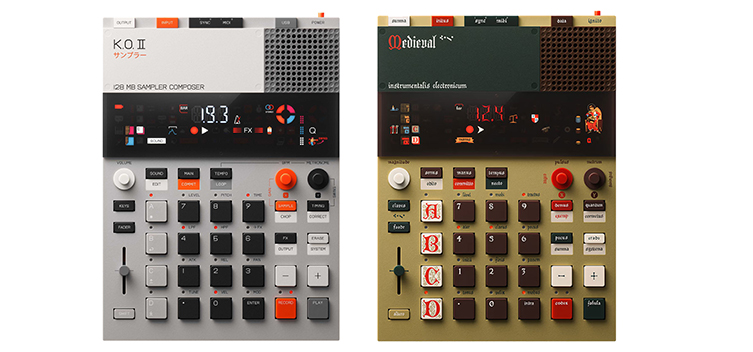
Teenage Engineering EP-133 K.O. II
You want this already, just for how amazing it looks, don’t you? Now, is this really a synthesizer? It’s a fair question, and if we’re being strict then no, it’s a sampler. Okay. I admit it, but look at it this way: it’s a polyphonic sound machine that contains a sequencer and allows sounds to be played via pads, and there are effects. So, it’s kind of a synthesizer that uses samples instead of waveforms. Does that get me out of jail, here?
I hope so, because I think this device deserves to be known about. Sampling is currently something of an underutilised artform, with many electronic producers avoiding anything that isn’t directly available ‘in the box’, which is a boring concept.
The Teenage Engineering EP-133 is a creative sketchpad basically, with a built in mic for capturing sounds anywhere you happen to be. Record a sound, chop it up, resample it, add effects, sequence it in a pattern with other samples, and trigger them live or incorporate them into your larger projects back at the studio.
It’s not a synth per se, but it's coming in well under our draconian price limit and it’s creatively exciting for anybody interested in synths, so I hope you accept its inclusion here!
And if you liked the sound of that but have altogether doomier/more D&D tastes in life, then make sure you check out the Teenage Engineering EP-1320 Medieval Sample Composer. This is a real thing, okay? And it’s ace! This one is filled with all manner of fantasy-flecked sounds including chanting monks, medieval percussion, stringed strums (of lutes and so on), bagpipes, flutes and even a hurdy-gurdy sound!
It does more, but let’s face it: you’re either completely sold already, or you are flat-out not interested. A medieval beat machine? What’s not to like!
The Power is in Your Hands
Are you surprised by how much synth you can get for your money these days? There is, of course, a whole other side of the market where Nord, Sequential, Moog and Access all live, but it’s becoming increasingly clear that you can make a huge dent in the synth world without the synth world taking its corresponding dent from your bank account. Hopefully this blog has proven just how much inspiring and eminently usable equipment is available at this affordable end of the market, with less in the way of compromises and more in the way of sonic opportunities awaiting you instead.
One surprise for me was that Roland currently have no synthesizers available for less than £500, hence their lack of inclusion in today’s blog. I feel like this is a bit of a shame for them, given that they are genuine synth pioneers, but I had to choose a price cut off somewhere, and brands such as Arturia and Korg are making it pretty clear that excellent synths can be had for under that price.
So: dive in, try a few and see what resonates with your imagination, your workflow and your wallet. There’s definitely something out there for you!
Click to View our Synthesizers