When it comes to electric guitars, there is easily one decade that outshines the rest. The 1950s was the Golden Era, the time that saw the introduction of not only the mass-marketed electric guitar itself but many of the most beloved and enduring guitar models. This was the decade of the Fender Teleaster, Stratocaster and Gibson Les Paul after all, not to mention the ES-335, Flying V, Explorer, Jazzmaster and more!
In guitar culture, reissuing classic guitars is a very normal thing these days. Whilst, say, a Strat can be had in numerous contemporary versions with cutting edge pickups, compound radius fingerboards and all the rest, there is a consistently large demand for Strats just as they were in the 50s. People don’t always want what Fender may consider to be ‘improvements’ or revisions: they want a time-capsule into a more romantic era, with a guitar that bears all of the appropriate hallmarks of that era.
That’s what today’s blog is about. I’ve already written about such guitars from the 1980s, so please check out my Guitar Reissues: The 1980s blog for more on those. Stick with me here to learn more about which 1950s-era guitars have been reissued over the years, and in particular, which are available to you today.
Why Do People Want 1950s Reissue Guitars?
Why do people even want to play guitars based on 70 year old designs anyway? It’s a good question, and one worth answering before I go further today.
The way I see it, there are a few specific reasons for people loving electric guitars from the 50s:
- This was the beginning of it all: these guitar designs were the originals; the progenitors. People appreciate them in the same way that they love old classic cars.
- The idiosyncrasies that make these guitars ‘50s reissues’ are actually very enjoyable: it’s a fallacy to say that all guitarists want their instruments to be ‘cutting edge’, and in fact maybe prefer the less overtly ‘performance’ aspect of these older designs.
- There is a tenuous but palpable link to the music made in a particular era and the instruments from then, or indeed afterwards. People want to get close to historic guitars for the sake of a shared experience.
- Simple hero worship: for example, the British Invasion guitarists all played ‘59 Les Paul Standards, so finding a similar reissue gets the fan closer to the thing they admire.
- Subjectively, most of us agree that these old 50s guitars sound superb, and recreating those instruments in new models is a way to capture that sound in an affordable way.
Those are some of the reasons as I see them. A shorter way to explain it might be that the designers in the 50s - Leo Fender, Ted McCarty and the rest of them - all achieved an unusually high level of success with their designs, and they’ve all stood the test of time remarkably well, like a well cut suit. They just don’t age!
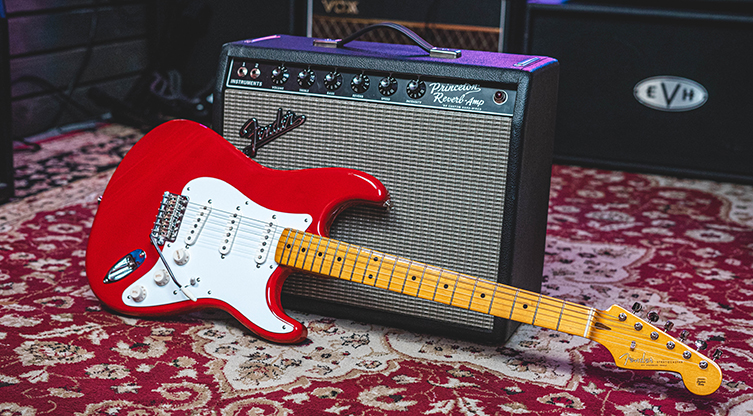
Fender 50s Reissues
Fender are possibly the most famous guitar brand in the world, and also the company who really kicked-off the notion of vintage guitar reissues. Given that most of their iconic output was from the 1950s, you can correctly assume that they have lots of 50s-influenced guitar lines available. There’s actually more in their offerings than I have scope to cover in this blog, so let me be selective and show you the newest and most relevant Fender 50s reissues…
Fender Vintera III
Released literally at the time of writing this blog, Fender have just issued their third iteration of their popular Mexican-made Vintera range. ‘Vintera’ is their term for ‘vintage era’ and that pretty much sums up the vibe here: a top-end Mexican Fender guitar that offers lots of relatively authentic vintage specs, looks and sounds, without having to pay USA prices.
Within this range, you get period-correct colours (though all guitars have poly finishes, not nitrocellulose), the right sort of decals and fun details like string mutes on the 60s Jaguar, which of course falls outside our date range today! Still, the attention to detail is impressive and convincing for the price point.
The Vintera III range covers more than just the 50s, but since that’s our focus today, I’ll talk about which 50s-inspired models are included.
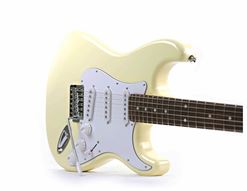
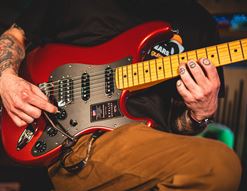
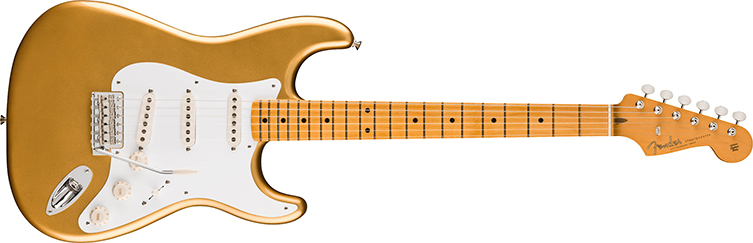
Fender Vintera III Late 50s Strat: you get a ‘D’ shaped neck (the transition from V necks to C shapes) with a maple 7.25” radius fingerboard, period-correct pickups that chime with beautifully low-wound clarity, and an Alder body. Finishes include 3 tone Sunburst (not two-tone!), Dakota Red and Aztec Gold.
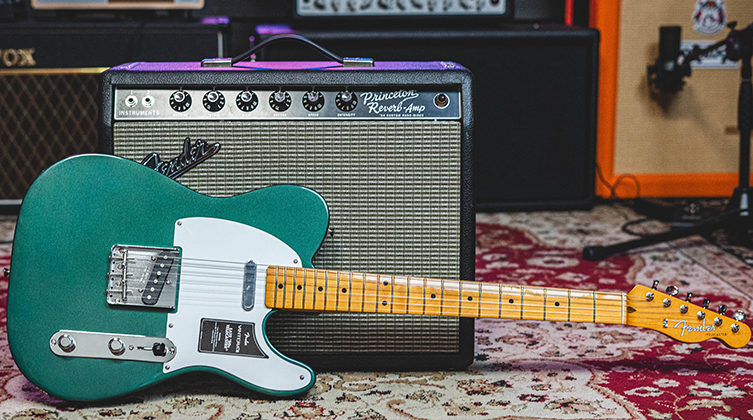
Fender Vintera III Late 50s Tele: It’s an ash or alder body here depending on finish choices, which include Sherwood Green, Dakota Red and Blonde. All options have a white pickguard (no blackguard vibe this time) and there’s a late 50s V-neck. The bridge has bent-steel saddles.
Fender American Vintage II
The next range up from Fender includes a substantial price hike due to its USA origin. The Fender American Vintage II Series is a step up in terms of authenticity, from their nitrocellulose finishes to their frankly superb Pure Vintage pickups. These are all made in Corona, California, and if your purse strings allow it, you’ll be getting some wonderful vintage guitar action with these. Here’s how the 50s models show up…
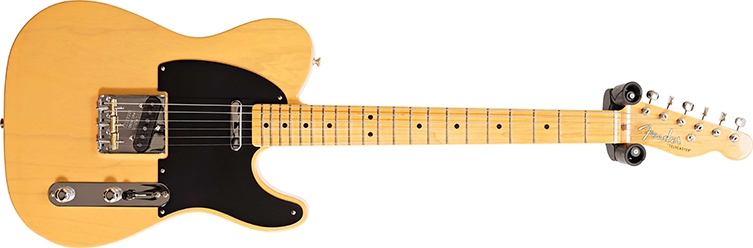
Fender American Vintage II ‘51 Telecaster: Yes, Fender are going for 1951 as their zero point for the Tele, which is actually historically true. These great instruments have ash bodies, large U shaped necks, bridges with 3 brass saddles and cracking ‘51 Pure Vintage pickups.
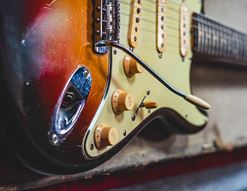
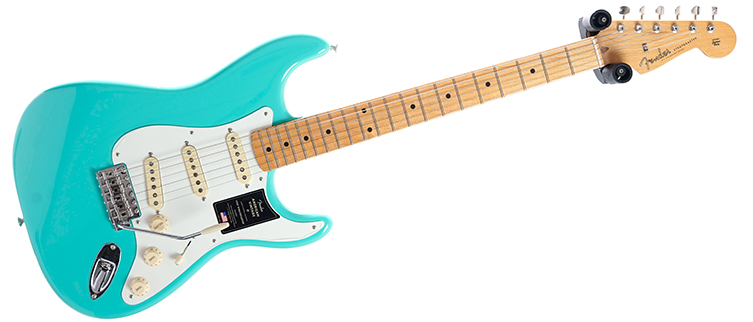
Fender American Vintage II ‘57 Stratocaster: Fender bring the expected V-neck and rounded 7.25” fingerboard radius to the one-piece neck here, and indulge us slightly with a historically inaccurate (though far preferred) 5-way selector switch. You get bent steel saddles on the 6-point tremolo and some extremely cool finishes such as Seafoam Green.
Fender Custom Shop
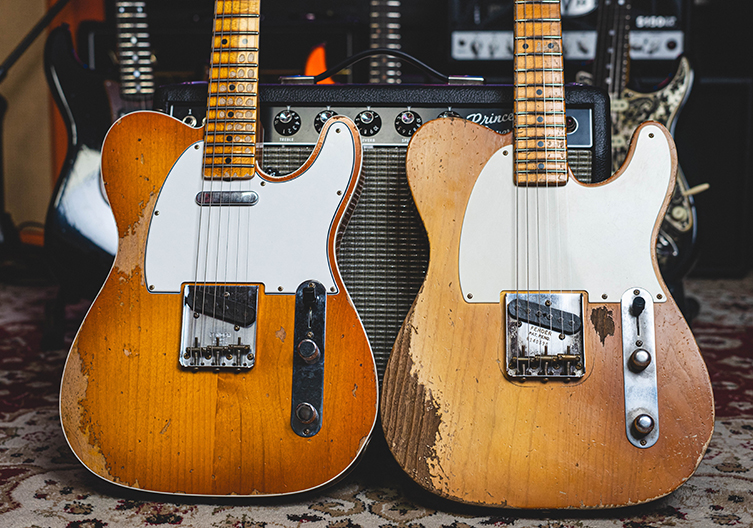
By its very nature, Fender’s Custom Shop is somewhat anachronistic in terms of historical accuracy. The idea is that you can have your Fenders the way you want them, so it’s not unusual to see guitars that mostly stick to, say, a 1957 Stratocaster also having a flatter radius fingerboard, or maybe a passive mid boost control. Customisation and having extra options is the whole point, really!
For those reasons, I’d direct you towards the Fender CS by all means, but with the understanding that they are all about mixing up specs and styles in order to create vintage-inspired guitars for modern players.
Squier Reissues
Squier are a serious brand these days. You see touring bands using them all the time, and the simple reason for that is that they are very good instruments for a very good price! In fact, on the subject of vintage reissues, it’s a curious fact that many of the Squier Classic Vibe guitars are more vintage-accurate than some ‘full-fat’ Fender models!
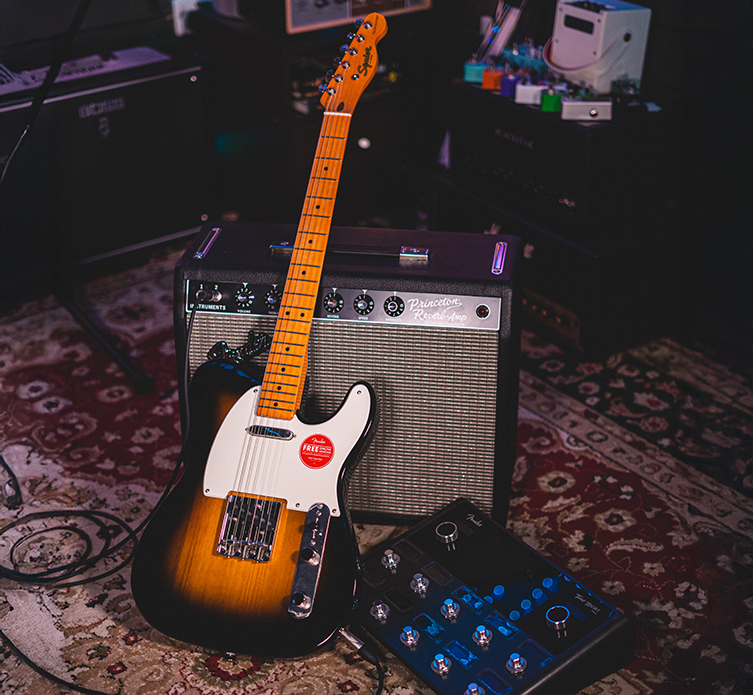
In the context of 1950s reissues, you’ll see that the Classic Vibe 50s Tele is made with a pine body (a very early prototype choice for Leo Fender) and that bridge has three barrel saddles. There’s proper alnico pickups to deliver that distinct Tele twang, and all in, I can’t see anybody being disappointed with this.
Strat fans get their fun too, with a Classic Vibe 50s Stratocaster that is available in an absolutely bang-on shade of Fiesta Red, which even the most discerning Hank fans will approve of! For the price, there are certain things you can’t expect - an obvious one being nitrocellulose finishes - but for the important stuff, namely the looks, the sound and the feel, these Squier reissues are excellent.
Gibson 50s Guitars
Like Fender, most of Gibson’s most heralded guitar designs were born in the 1950s. As well as the Les Paul (and its Custom, Junior and Special variants), there’s the ES series and the Modernist guitars, otherwise known as the Explorer and the Flying V.
Gibson currently divides their non Custom Shop instruments into two worlds: the Original Collection and the Modern Collection. Since I’m talking about 50s reissues today, we'll focus on the Original Collection. The SG didn’t exist until the 60s so we’ll not be seeing that today, but there’s plenty of other models!
So, in order to keep things concise, I’ll briefly look at the main reissues, and see what separates them from each other.
Fifties Les Pauls
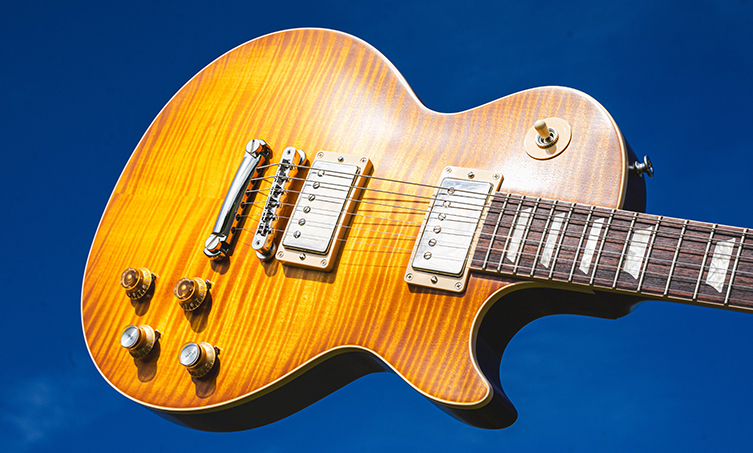
The Les Paul was released in 1952, and occasionally you’ll see specific reissues of it with the gold top, trapeze tailpiece and P90s. Mostly though, 50s Les Paul reissues are concerned with the Sunburst Les Paul Standards of 1958 to 1960. In particular, the 1959 model is held as the most prized. Why? Scarcity, famous name association and the somewhat subjective opinion that they have the best neck carves. I happen to agree with this - a ‘59 neck is chunky in all the right way without being too much - but it’s a personal thing.
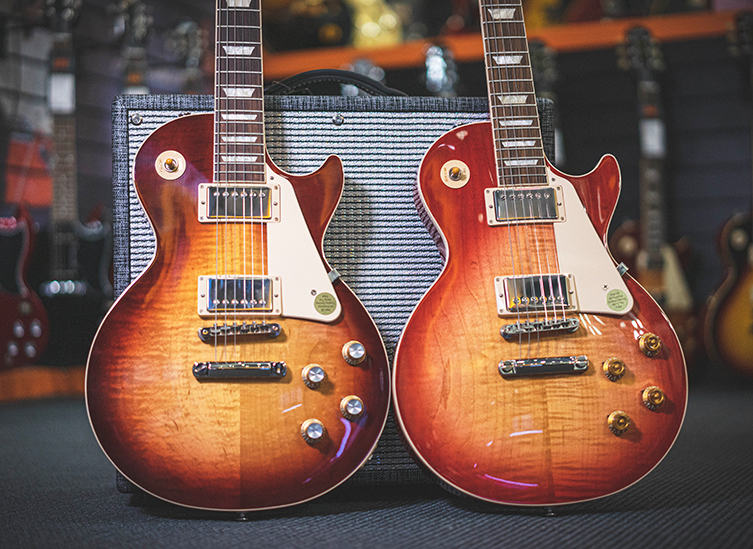
What’s not up for debate is how popular reissues are. From the standard Gibson USA catalog, you can have a 50s or a 60s Les Paul, with the 50s model coming in appropriate bursts and also gold. You can even have a P90 model, though it’s not a strict 52 model due to the tune-o-matic bridge.
The 50s Les Paul Standard looks the part, feels good (the neck carve is an approximation between a 58 and 59 profile) and uses a set of PAF-inspired Burstbuckers to deliver a set of warm tones that are close to those hallowed late 50s units.
The Gibson Custom Shop allows you to zero in on the precise year that you prefer: you can have a 1957 Goldtop, a 59 Sunburst Standard (in endless permutations of that finish), and even 1957 and 58 Les Paul Juniors, all aged to differing levels by Gibson’s Murphy Lab team.
Other 50s Gibson Guitars
As mentioned, most of Gibson’s most celebrated guitar designs are from the 50s. Many of them are available today as reissues, with only a small number (the ES175 and ES295 being sadly absent as of April 2026) not available as a direct reissue.
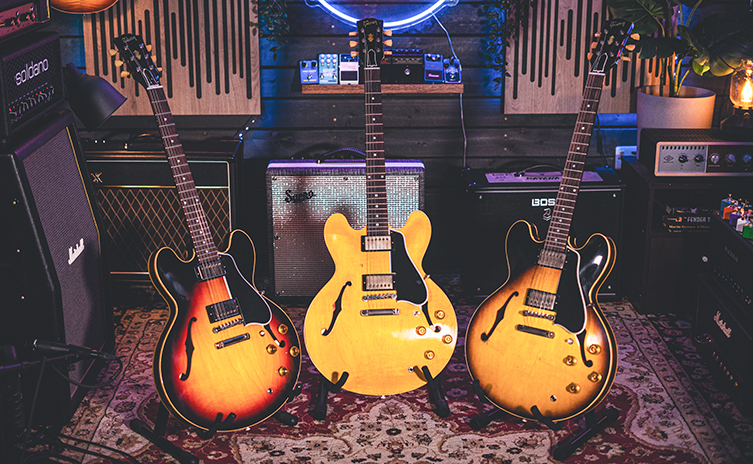
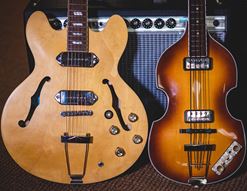
50s ES models: the most famous is the ES-335, as fans can have theirs as a late 50s model with the ‘mickey mouse ears’ if they so wish! Again, Custom Shop models get specific with years: you can choose from 1959, 1961 and 1964 (not 50s guitars, obviously!), each with their own versions of the famous cherry or natural finish, and ‘sharper’ cutaways on the later years.
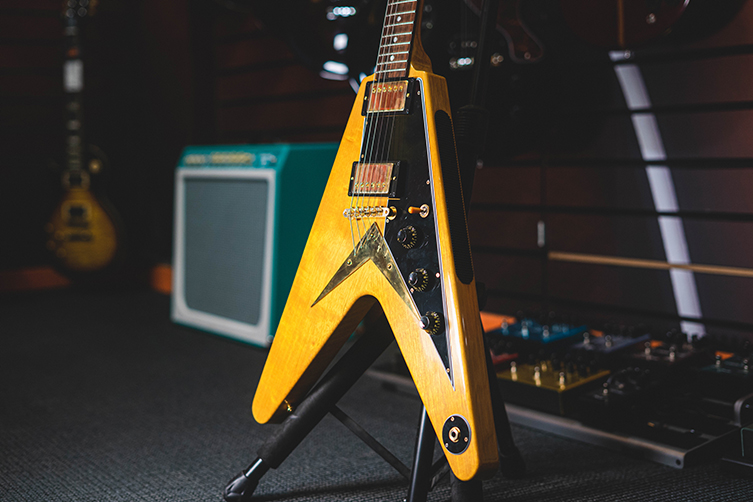
50s Modernist Guitars: Those looking for classic Korina Flying Vs and Explorers will find what they want from Gibson’s catalogue, but weirdly not as 50s reissues. You can have a natural 70s model of each, and other decade reissues, but you’ll currently need to go to a Custom Shop option if you hanker after a ‘proper’ 58 Flying V. Still, it’s a pretty incredible guitar, complete with the gold delta bridge and black pickguard.
Epiphone Reissues
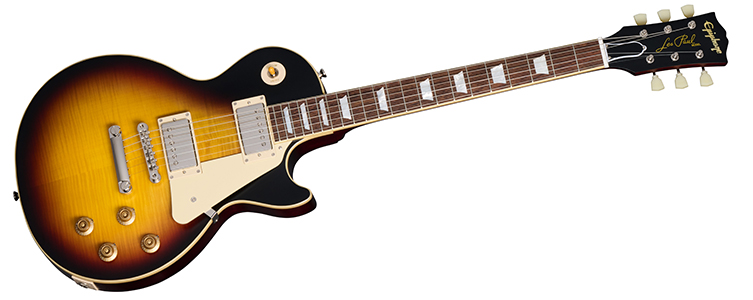
Epiphone were certainly around in the 50s, but they were not making Les Pauls or ES-335s. For this reason, we look at Epiphone’s reissues as being replicas - official, licensed replicas - of Gibson guitars. You can buy an excellent Epiphone 59 Les Paul Standard that will not be indistinguishable from the holy grail originals, but it will be a considerable step up from their regular offerings, and it will be an excellent guitar. Look out for the ‘Inspired by Gibson’ term in the titles, and you’ll find some wonderful 59s Les Pauls (with the all-important 'open book' headstock!) and even a 1959 ES-355!
Gretsch 50s Reissues
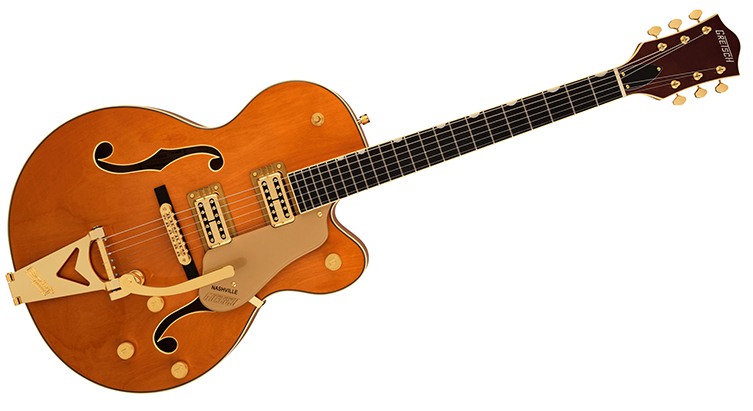
Like Fender and Gibson, Gretsch are a brand whose most widely loved instruments came about in the 50s. Unlike those other companies, Gretsch are less specific in their yearly dating for reissues, and that might be because they like to change up details more than those other brands. In fact, much of their offerings are reinterpretations of older guitar rather than strict reissues. For example, the Gretsch Synchromatic Nashville is a new model from 2025, but it’s very closely based on the original 1955 Gretsch Chet Atkins Nashville model. It also comes in a finish called ‘50s Orange’, so they are clearly looking to evoke those halcyon days of the 50s, without it being a painstaking project.
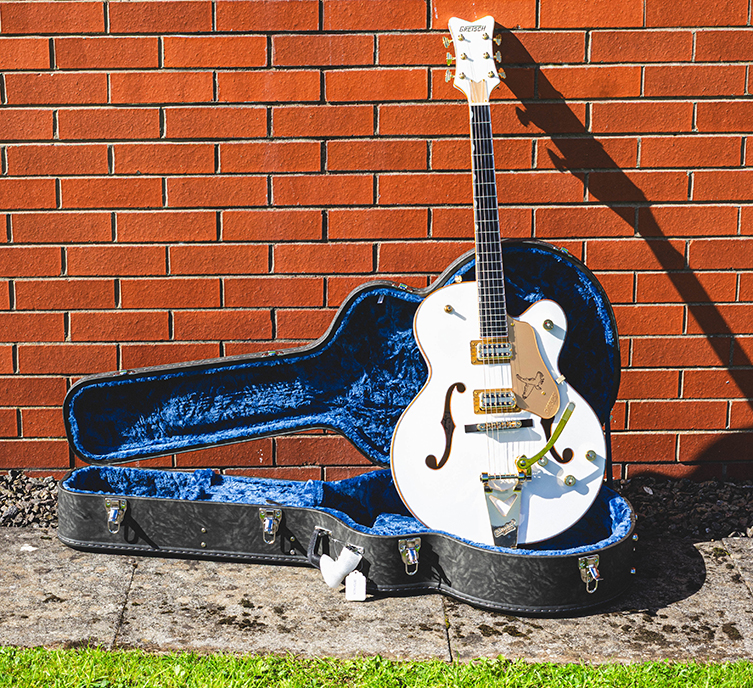
The same goes for the Gretsch White Falcon, since it was created in 1954 and is available in a wide range of versions today. The Gretsch G6136T-59 is spoken of as being a recreated of the 1959 White Falcon, but it sports a set of (excellent) TV Jones pickups, which were most definitely not a thing back in 1959! These anachronisms often actually improve the instrument - I don’t think I’ve met a Gretsch player who isn’t a die hard TV Jones fan, for example - but it does slightly put into question the supposed ‘authenticity’ of certain reissues.
Reissues, Sort-of Reissues and Vintage-Inspired
This brings me squarely to the summing up of my point today. There are lots and lots of guitars which are more of less direct reissues of 50s originals. Put simply, the more you pay, the closer your reissue will be to its inspiration.
Now, that’s great - it is in fact the whole purpose of it being a reissue - but does it make for a better guitar? That’s something that’s worth thinking about before you choose what to spend your money on. Take a Fender Strat, for instance. There’s so much subjectivity out there for them: you need the old 6-point tremolo to get the correct feel, for one thing. Well, who is to say what ‘the correct feel’ even is? The same goes for pickups. I happen to be of the opinion that low output 50s-style Strat pickups are the way to go, and I happen to think that Fender Pure Vintage pickups (the ones you’ll find on an American Vintage II Strat) are excellent at capturing that tone. I speak as somebody who has played a small number of actual vintage 50s Strats, so I have a real world reference point.
But! That doesn’t mean that your idea of the perfect Strat sound matches mine, and why should it? You may prefer all manner of other elements that have come around since 1954, from flatter fingerboards to hotter pickups. This is why there are so many reissues out there, in so many permutations. In fact, sometimes it’s better to ignore your perception of preferred specs and simply try a guitar on its own merits. You may like a C-shape neck, but that’s only because you haven’t tried too many V-necks, or whatever.
My point is, right now is a great time for us guitarists. We can be as retro or as modern as we like, and we can also strike any balance of those two poles as we feel. We can buy affordable guitars from Squier or Epiphone; we can buy Fenders from Mexico or the USA, and we can buy Gretsch at every price point that exists, more or less. They are all great guitars. They are all legitimate choices, and you’ll be able to have fun, sound good and rely on them all. As I say, it’s a great time for us guitarists! Enjoy!