How did you first get into Zakk? Was it through Ozzy? Or did you hear his Black Label Society music first? However you found your way to the temple of Zakk, you are sure to be an acolyte by now. After all, he is one of the best, most respected and genuinely iconic guitar players in the world of hard rock. He has the riffs, the sound, the solos and the vibe to easily step up to the Mount Rushmore of guitar heroes, and I’m sure he has a lot more to give us!
For today, I’ll take you on a brief guide on how you can get your sound to be a little more like Zakk’s, and also how you can add a few of his signature playing techniques into your own style. I’ll look at Ozzy favourites and I’ll check out Wylde’s solo efforts too.
First the gear, then the techniques. Are you ready for this, Doom Crew? Then let’s get going!
Zakk Wylde’s Guitars
Wylde Audio
I suppose the obvious place to start would be Wylde Audio, Zakk’s own guitar brand, right? Even though it’s a relatively new thing for him - well, ten years or so - and aren’t on many of his most famous recordings, they still embody many of the features that he prefers in a guitar. So, let’s check this brand out, shall we?
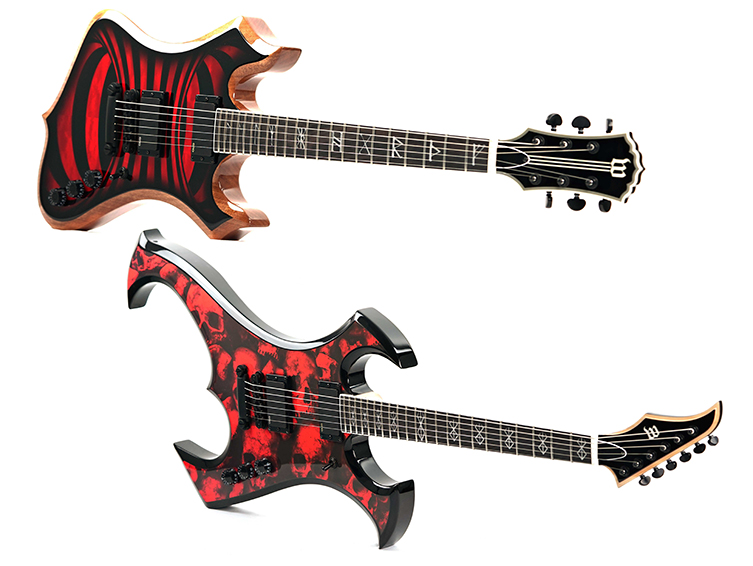
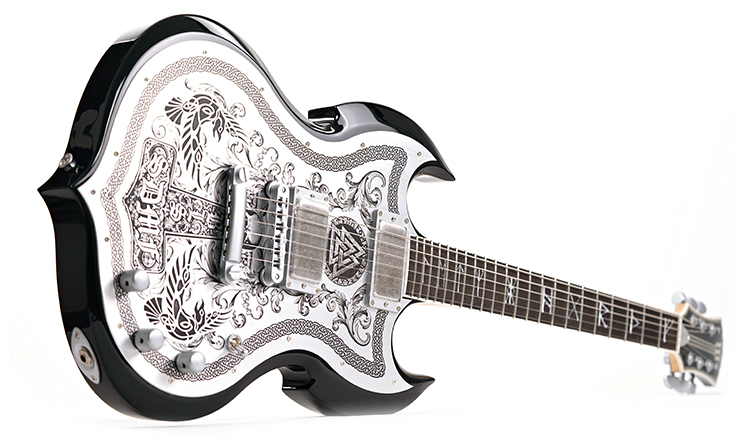
First off, they are all pretty much wild (sorry) shaped variations on the ‘active Les Paul’ vibe, which I’ll talk about soon enough. By that, I mean a thick mahogany body, set neck, 3-a-side headstock and a set of active EMG pickups. Those body shapes are all quite original, though I’d say it’s relatively clear that they’ve come from Schecter: Schecter build these guitars, and are industry leaders at creating ‘desirably mad-looking’ guitars like the Avenger and the Ultra.
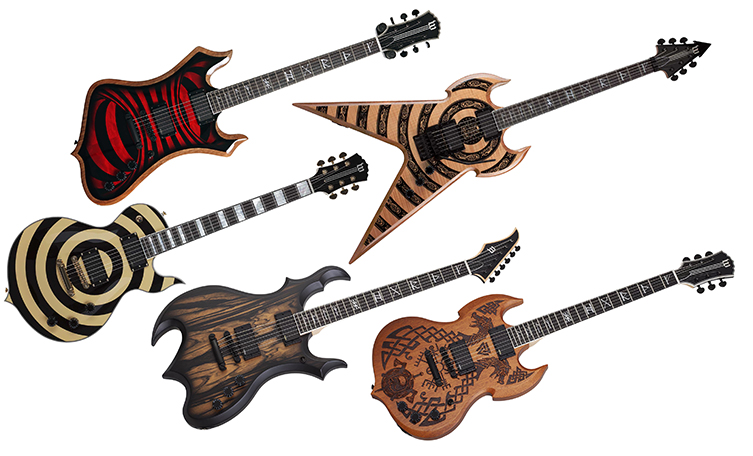
The Wylde Audio range has a bunch of shapes that are pretty esoteric, like the Goreghen (do you say it like ‘Gorgon’?) and the Wrathmaker. Others are somewhat discernibly drawn from existing shapes, though they all take on their own unique life. The Barbarian could conceivably have come from the Gibson SG shape (although even more demonic) and the Odin Grail is clearly Zakk’s take on the Les Paul. Again, you won’t be confusing these with ANY other brand: they are very much a unique aesthetic, and mostly include Wylde’s signature ‘bullseye’ graphic from his Gibson days. More of which right now…
Gibson and Epiphone
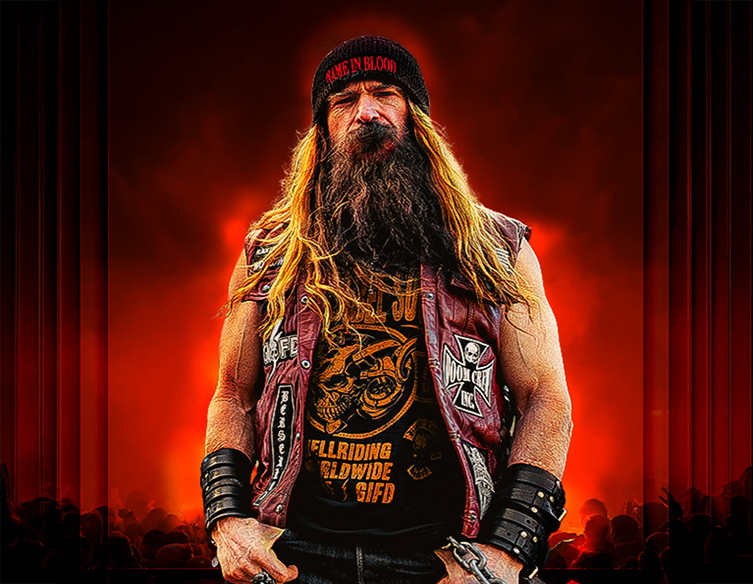
Prior to Zakk starting up his own instrument business - as all self-respecting guitar heroes should - he was very much a Les Paul guy. Early on in his career with Ozzy Osbourne, Wylde played a series of Gibson Les Paul Customs, and those particular guitars are known well to fans to this day. One had beer bottle caps stuck onto the top, and another had a custom ‘bullseye’ graphic paint finish. This one in particular went on to become the signature look for Wylde: cream and black finish, gold hardware and a set of black active EMG pickups (81 in the bridge, and an 85 at the neck).
Gibson released this as a signature model for years, followed by an Epiphone version and a range of subsequent finishes (camouflage, orange and black etc, all with the bullseye). These were popular, and available for years until Zakk broke ties with Gibson and started Wylde Audio.
Gibson Les Paul Custom
Gibson Les Paul Custom Zakk Wylde signature
Epiphone Les Paul Custom Zakk Wylde signature
Wylde Audio guitars: all models, including the Odin Grail, Barbarian and Berzerker.
Zakk Wylde’s Amps
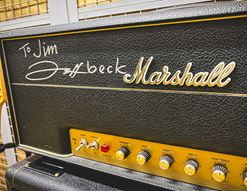
Zakk’s a Marshall guy. Two JCM800 2203 100watt stacks are what’s required, rigged in stereo via his chorus pedal. So, grabbing a classic Marshall amp of the higher-gain flavour and dining it is a good start, basically.
Also, very recently (so recent that it’s not released as of May 2026) is the Wylde Audio Berzerker Mini head, a limited edition 50w amp head that gives you the full-pelt Wylde tone in a very portable package. It’s so new that I haven’t of course had my hands on one, so I can’t really comment on how successfully they've captured Zakk’s sound, but the key designing it is well known from KHDK, so if he’s good enough for Kirk Hammett…
Going back to the Marshalls, you definitely don’t want a plexi sort of deal here. The upper mids and compression of 80s-era Marshalls is something very integral to most modern hard rock, and that’s what to look for here. JVM amps will deliver it, some JCM2000s will under the right circumstances (i.e. lots of glorious volume) but the classic 2203 model JCM800 is a dang classic for a reason! Use a guitar with a mahogany body and active pickups to get the most push and squash required for a filthy-good approximation of Zakk’s sound. Scoop the EQ but do leave a bit of midrange in there!
Zakk Wylde’s Pedals
Zakk uses a small selection of pedals fairly frequently. As part of a collaboration between Dunlop/MXR and Wylde Audio, many of these are available now as artist signature pedals. The good thing about this is, they are still pretty much delivering the same sound as the gear he used prior to those pedals being made, so choosing Wylde Audio pedals will get you the tones you want. They are also, of course, the pedals Zakk uses today.
So, in brief, here’s a rundown of what’s most often on the Wylde pedalboard…

- Crybaby Wah: a regular Crybaby back in the day, a Zakk Wylde Crybaby today
- Rotovibe: the treadle pedal style, again a regular Dunlop pedal previously, not a Wylde Audio Rotovibe
- Overdrive: A BOSS SD-1 in early years, but an MXR Wylde Overdrive for ages now
- Chorus: stereo BOSS CH-1 then, Wylde Audio Chorus now
- Phaser: Phase 90 then, Wylde Audio Phase now
- Delay: often an MXR Carbon Copy
Not every pedal is used on every song (or indeed in every era: there was no phaser in early Ozzy days), but together, they offer the complete picture on what Zakk requires at his feet. In fact, some pedalboards of his will house multiples of the same effect, but I don’t think that’s required of you!
One thing I’d note is that, on recordings, his chorus and delays are often added after the performance by the engineer. That’s a pretty normal thing, but it’s worth noting regardless. He’ll double track them for thickness of course, but any modulation on his studio sound is actually not likely to come from a chorus pedal, in most famous circumstances at least. More below…
The Symphonic Sound
Now, here’s a thing that may or may not be news to you. Following on from my advice that Zakk tracks his huge rhythm parts largely ‘dry’ of effects, here’s a secret to nailing his studio tone.
And brace yourself, because it’s a rack effect.
I know, we’ve talked about chorus pedals, and how that helps him achieve a big stereo spread for his live sound, but the studio is a different animal and requires different equipment. You may have tried several chorus pedals and have been able to nail Wylde’s live tone but not the studio sounds heard on albums like No More Tears and so on.
What you need is an old Yamaha SPX90 effects unit.
Then you need to find yourself the ‘Symphonic’ preset. And then you can thank me profusely, because THAT is the sound you are looking for. It’s that exact sort of wide chorus that doesn’t ‘move’ the way a modulated signal tends to. Now, can you get this Symphonic sound anywhere else?
Yes. Lots of Yamaha processors from back then had it, including the FX-500 and the REV7 reverb, from which the Symphonic sound originated. Modern day digital modelers such as the Line 6 Helix and the Fractal Axe FX frequently have convincing versions of the Symphonic algorithm. Lastly, in certain contexts, the BOSS Waza Dimension pedal can do a pretty great rendition of the Symphonic sound. Try them!
How to Play Like Zakk Wylde
So that was the equipment. Now for the techniques! Nothing will substitute putting hours in on the fretboard, so this article isn’t about shortcuts: there aren’t any! Zakk himself used to play for 14 hours a day as a teenager, in order to get to the level he hit at 20 when he joined Ozzy’s band.
Still, there are points to his technique and style that, if applied to your own style, can get you a flavour of Wylde in your own way. Read on!
Tune Down
First thing: restring your guitar with a set of 10-60 gauge strings. That much heavier bottom end is going to come in handy, because you’ll be tuning everything down one half-step, and then often detuning that low string to C#, B and even A!
It’s Basically the Blues
From his riffs to his solos, Zakk leans much more heavily on the regular minor Pentatonic and Blues scale than on exotic modes. What he often does do though, is he extends the reach of these scales by adding notes from different positions, or by bending outwith the harmonic regulations of the scale.
Unison Bends
Zakk is a big fan of the dramatic potential available in unison bends. A unison bend is the type that uses two adjacent strings, and you bend the lower string up to meet the pitch of the fretted note on the higher string. The dissonance between the pitches as they move to resolve makes a wonderful screech that can be a really big statement in a solo.
Wide Vibrato
This is one of the most obvious and easy ways in which you can grab some Zakk moves for your own playing. His vibrato is extremely wide, to the point of it almost feeling like mini bends. It won’t take too much practice either: it’s simply an ‘up and down’ vibrato with a particularly forceful left-hand movement. Couple this with the technique below and you’ll be in full-on Zakk Attakk mode!
Pinched Harmonics
Pinched harmonics are part of any good rock player’s bag of tricks, but pay attention to two extra things with Zakk’s approach. Firstly, he actually uses the technique less than you think, but just in a very clear and dramatic way, so listen out for when he does and doesn’t do it. Secondly, notice how often he uses pinched harmonics on the lowest two strings. This isn’t what every player does - the obvious thing is for the G and D strings - but Zakk understands the special texture that lower pinched harmonics take on. He does them all over the guitar, don’t get me wrong, but the lower pitched ones will definitely get you closer to an obvious Zakk Wylde vibe.
And in case you aren’t sure what a pinched harmonic even is, it’s this: those high pinched squeals which seem to jump out of nowhere, but are in fact the byproduct of you playing a note with both a plectrum and the flesh of the side of your thumb at the same time. Different right hand positions in relation to the strings will result in different pinched pitches (try saying that fast), so do experiment with where your thumb meets the string.
All Picking, No Legato
If you can get this one down, I feel like it’s one of the most important elements in nailing Zakk’s approach to lead playing. In short, he doesn’t EVER use legato. Now, for those who may not know, legato is the smooth sounding technique where a series of hammer on and pull off techniques are used to sound notes, rather than picking them individually.
That, in fact, is what Zakk does: he picks every note of his speedy runs individually, and once you know this, you can immediately hear it. The effect is quite special: it adds a lot of haste and urgency to the notes, in direct opposition to the languidity of the legato approach. This may take quite a fair bit of practice, but you don’t get to be the best without paying your dues, do you?
It may be useful to know that Zakk prefers a fairly heavy pick: a Dunlop Tortex 1.14mm, or a ‘purple tortex’ as we know it in the industry. Try one of those, especially if you tend to use lighter picks normally. It will absolutely have an effect on your playing.
Heavier Than Hell
Zakk is one of Ozzy’s peerless stable of guitarists, standing tall next to Randy Rhoads and Jake E Lee. He’s a larger than life character whose persona is steeped in Viking and biker lore, and though he’s neither of those things (he’s a Catholic New Yorker who has never ridden a bike), he inspires a sort of rock ‘n’ roll outlaw spirit in his fans. This doesn’t mask the fact that he wasn't born a genius player: he has worked his ass off to build up the dexterity, taste and ambition that it takes to pull off his level of playing.
If you really want to play like Zakk, then that’s the real thing that I’d like to express in this article: WORK for it. Don’t skip out on techniques that don’t instantly land, but recognise that you need to work on them. It seems easy to Zakk because he has put in thousands of hours of playing.
You do the same, and add as many of Zakk’s bag of tricks to your own style, because the great thing is, you will always sound like you.