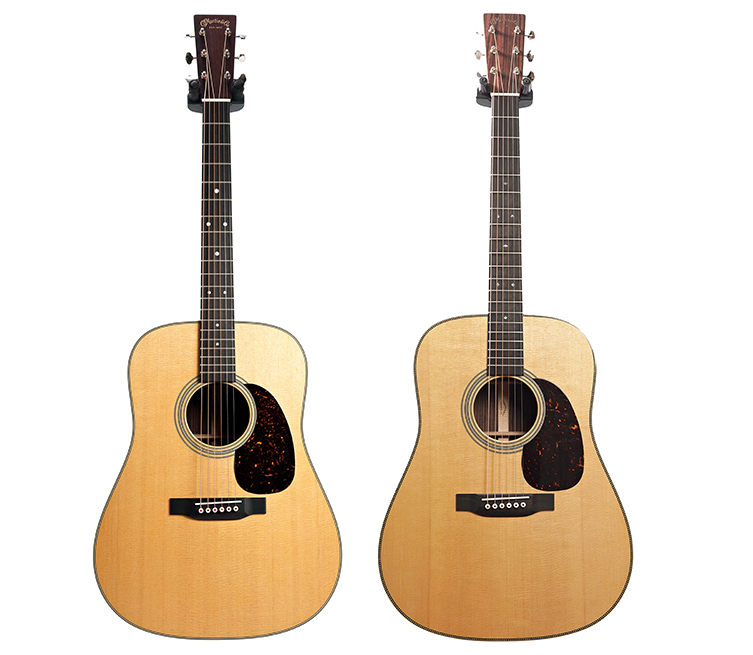
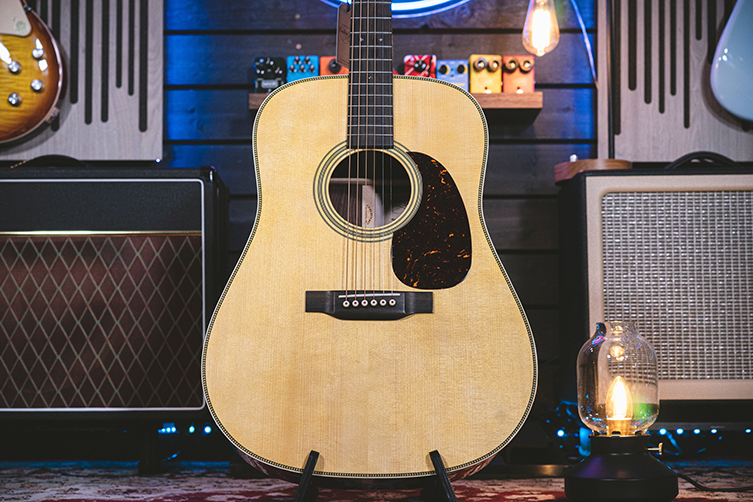
Two classic Martin acoustic guitars, which look pretty similar from a casual glance. What really are the differences between the Martin D-28 and the HD-28?
That’s what I’ll tell you right now, so sit tight and prepare for some authentic Martin knowledge!
The D28 & HD28: What They Have in Common
Both of the guitars in question today are dreadnoughts. They are both historical Martin models, and in reality, there’s more in common between the two than what differentiates them. That said, there are a couple of key differences, so let me point them out to you in a second. But first, here are the features shared by both guitars…
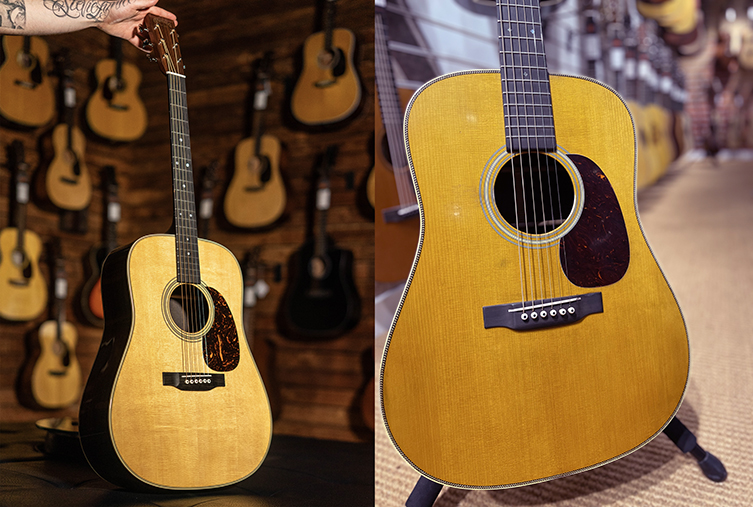
- Nazareth-made: both models are built in Martin’s Nazareth, Pennsylvania premises, so that are both fully USA-made guitars.
- Dreadnoughts: both models are Martin’s classic dreadnought body shape, with regular (non - ’slotted’) headstocks.
- Spruce and Rosewood: both guitars are made with spruce tops and rosewood bodies. All timbers are solid and high quality.
So, those are the main similarities, but what of the differences?
The Differences
Put simply, the differences between the two models can be boiled down to two things: decoration and bracing. Let me take the bracing first...
Bracing
A guitar’s bracing plays a significant part in how the guitar ends up sounding. The bracing - strips of carefully positioned timber glued to the underside of the guitar’s top/soundboard - ‘shapes’ and ‘focuses’ the sound created by the energy inside the acoustic guitar body when you play a string, so luthiers can adjust the sound of a guitar by altering the shape, size and position of the bracing.
In the Martin D-28, typical ‘straight’ bracing is used in Martin’s proprietary X configuration. In the HD-28, ‘scalloped’ bracing is used in the same X pattern. Scalloping the bracing means hand-shaving away certain amounts of the wood braces. Removing wood allows the top to move and vibrate more, allowing more volume to occur, as well as more bass and mids in the tone. Lots of players report noticing a more responsive touch factor, too.
Decoration
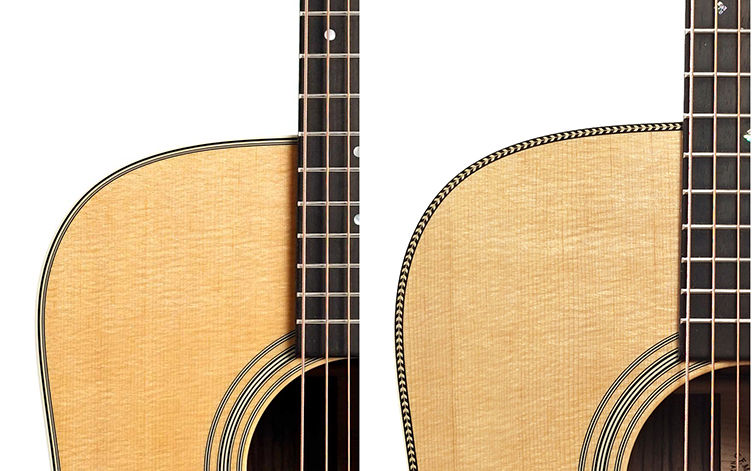
The more immediately obvious differences between the D-28 and the HD-28 are cosmetic. In particular, the ‘H’ in HD-28 refers to ‘herringbone’, because the guitar has herringbone pattern purfling around the guitar’s top. It sits just inside the binding and adds a subtle but noticeable visual flair to the guitar’s look.
On top of that, there’s a lovely black and white stripe up the middle of the guitar’s rosewood back, and there are also abalone diamond inlays on the guitar’s ebony fingerboard. It’s all pretty subtle - there are no inlaid dragons flying around on the HD28 - but it does set the guitar apart from the D-28.
Similar but Not the Same
So, that’s actually the whole story. Those are the differences between the Martin D-28 and the HD-28. I think the bracing change is the main thing, really, but the herringbone is a famous addition. In fact, the HD-28 as we know it today was actually how the regular D-28 was back in the day. The scalloped bracing happened in 1938 until they changed back to straight bracing in 1944. The herringbone got lost over the years, until the actual HD-28 model brought it all back in 1976.
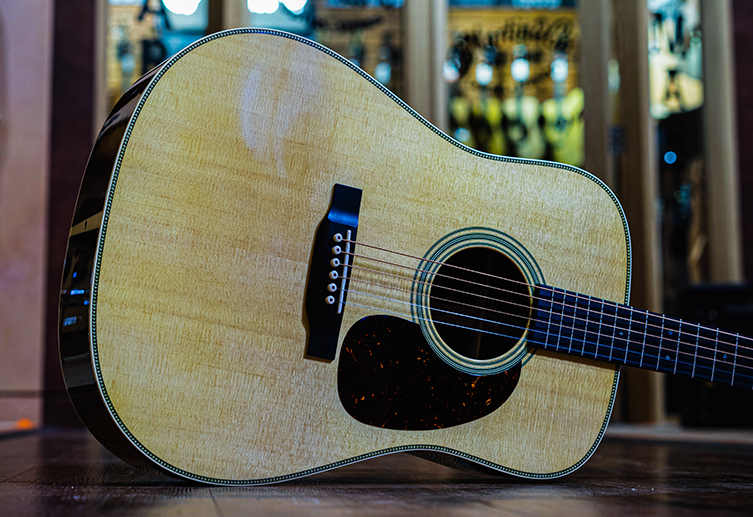
So, they kind of ARE the same guitar, but in 2026, they are distinctly different. Try them both, and go with whichever speaks to you!