Finding your dream guitar. It’s all about that really, isn’t it? You search and search, buy and buy, all in the hopes of landing on that one perfect instrument that just does everything you need, in a way that you love.
It’s not an easy thing to find, either. We’re maybe all in the same boat here, searching for The One, in guitar terms. Does it even exist? That’s partly what I’m going to investigate today, but the main focus of the article is to consider ways of streamlining your search; of the considerations that may help you connect with your dream guitar. Things to consider and things to avoid on your hunt. I’ll ask rhetorical questions, and I’ll suggest angles to approach the subject.
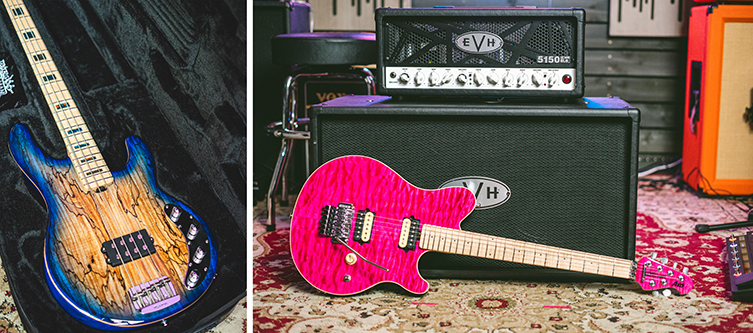
Come with me, and let’s see what we can uncover!
What Makes Your Dream Guitar?
This is the big question, and therefore the most important to tackle. Do you already know what your dream guitar is? If so, then I suppose it’s simply a matter of getting the funds together and acquiring the guitar. If so, I hope it’s not a vintage 1959 Les Paul Standard, because it’s gonna cost you! But even if it is that magnificent holy grail of a guitar, there are ways that you can attain it without being a millionaire. I’ll approach this subject again later.
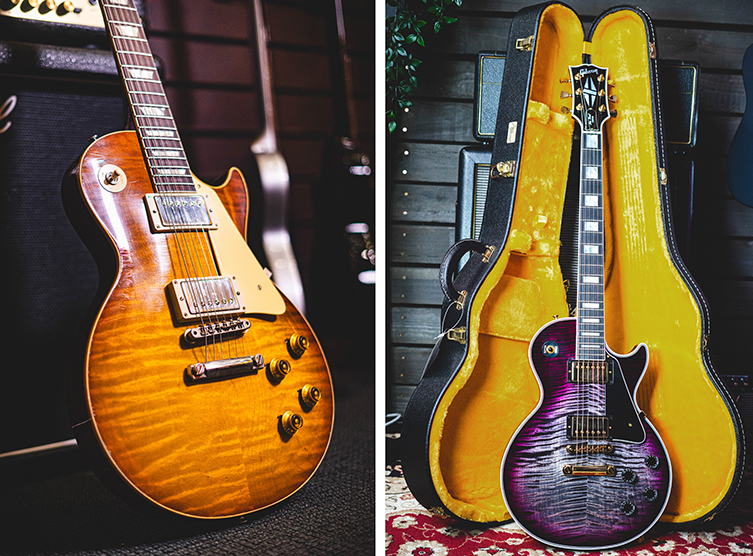
Now, if you don’t already know what your dream guitar is, then perhaps you have a set of specific ‘wants’ in a dream guitar? Maybe it’s a shape and color; perhaps it’s a certain collection of specs and hardware? The main thing here is to have a vision of at least roughly what you like and want, because that’s going to be your rudder towards your destination as you sail these guitar-strewn waters! If you know of an existing guitar that’s close to your own dream instrument, I’d say that’s very useful to keep in mind. It can be your inspirational springboard, or indeed serve as the actual basis for your dream guitar through modification.
The Hybrid Axe
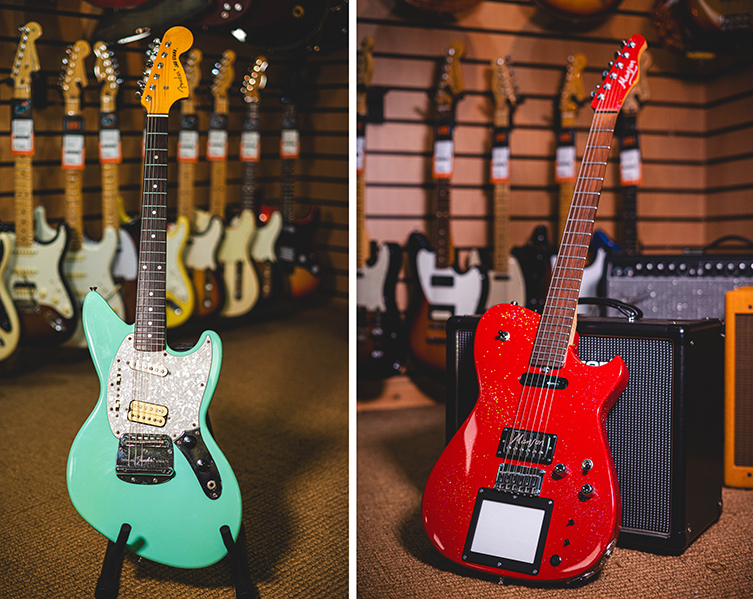
Some of the most well-known original design artist guitars came around as a result of wanting a blend of two existing instruments. Two spring to mind: Kurt Cobain’s Jagstang was literally the top half of a Mustang and the bottom half of a Jaguar (or the other way around!); and Matt Ballamy’s custom Manson guitars were the culmination of his desire for something that looked a bit like a Telecaster but sounded like a Les Paul.
Think along these lines and have fun dreaming up possibilities! It’s almost always the case that if you can dream it, someone can build it.
Boutique versus Big Brand
Does your dream guitar come from a specific brand? If you’ve always longed for a Martin D-45, let's say, then it doesn’t matter how amazing a Lowden or an Atkin is when you play it, because your heart desires a Martin D-45. I get it, and suggest trusting those feelings, because that’s the way to remain happy on this journey. It’s about what YOU want, not what makes the most sense to somebody else.
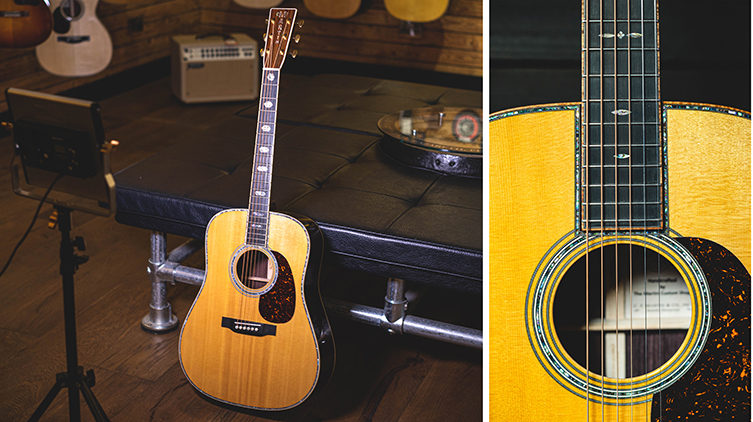
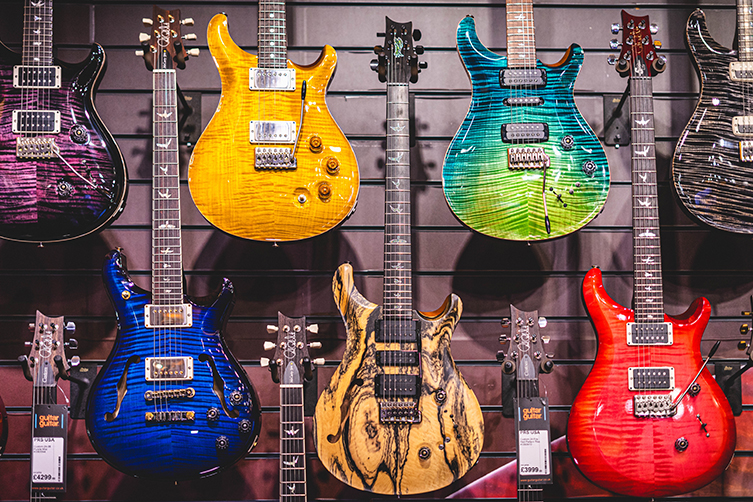
If, however, specific brand alignment is not a strong part of your vision, I believe it would be prudent to look closely at boutique and small-run builders. This is particularly true if you desire an acoustic guitar, but there are a great number of electric boutique brands that offer guitars which resemble traditional favourites, but add their own personal spark. That extra flavour may just be exactly what you’ve been dreaming about.
Are You Open to Other Brands?
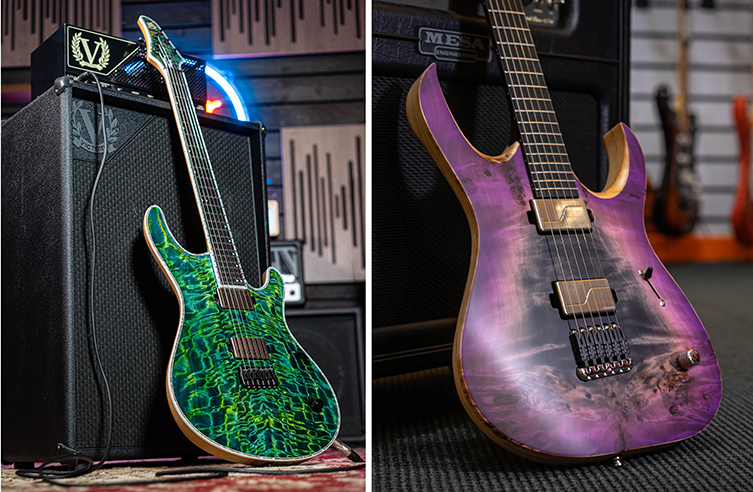
This sounds like the same point I just made a second ago, but consider this: if you are searching for your dream singlecut guitar, let’s say, are you open to that guitar being maybe a Collings? Or an ESP? Maybe a PRS Singlecut? You might not be open to any of these, for any number of reasons that you do not need to validate. But I’d ask myself the question at least, if I were you!
Put it this way: if you are looking for a Superstrat type of guitar, then you have a huge, excellent pool of resources to draw from, right? With so many available options, it seems a shame to be rigid about the brand, since you may miss out on your perfect guitar simply through a lack of familiarity with a brand.
Play It In Person
This is perhaps more for those seeking an ideal used guitar, particularly a vintage one. If you can, play your prospective dream guitar in person. Every guitar is different, but modern, new instruments have a consistency that just wasn’t around in the past. Vintage guitars vary wildly in every way: playability, feel, sound and of course condition.
If you are buying the guitar in order to play it - and I assume you are throughout this article - then getting your hands on it and having a shot will tell you things that no photo, spec sheet or description will be able to.
Most Things Can Be Fixed
On the subject of used or vintage guitars, there are only a few issues that are difficult to sort out. Most things can be fixed, and that includes warped necks (up to a point), dead spots, bad frets, electrical issues, fret buzz, and so on.
So, if a guitar with some issues really speaks to you, those issues can normally be dealt with. It’s more a question of whether the fixes are cost-effective, and whether they lessen the value of the guitar. On that note, it also matters whether you care about its resale value to a high degree, because that will influence your decision. Which brings me to this point…
Are You Buying an Investment?
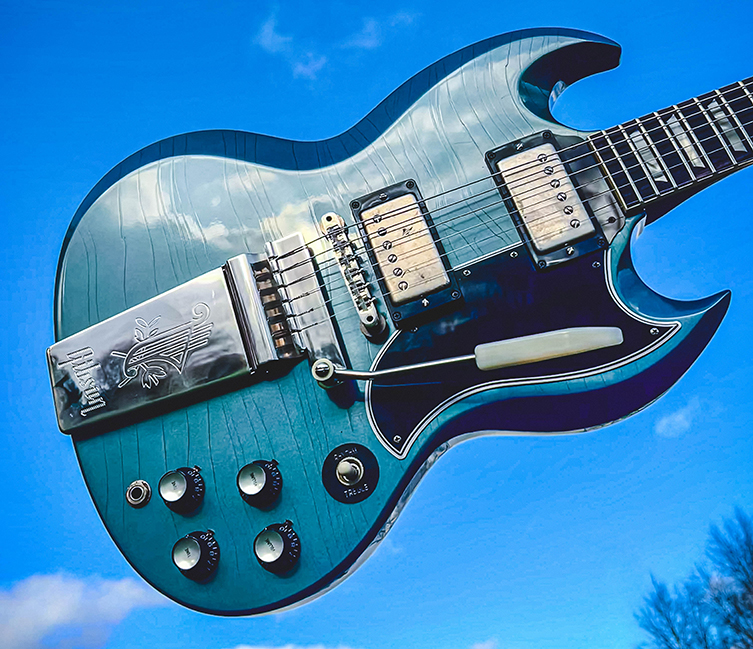
Let me be clear: any expensive guitar is an investment. That’s not really what I mean here. What I’m hinting at is whether your dream guitar is one you’re buying with an eye on its future value. That will be very much up to you, but knowing that in advance will help clarify moments when you find something close to perfect but maybe has a few issues that affect the value (a repaired headstock break, for example) of a subsequent resell.
Also, circumstances can change the investment value of a guitar in ways that you can’t predict. Here’s one recent example that I know about…
Fender Custom Shop created a popular run of David Gilmour signature Stratocasters a number of years ago. They sold well and were around for years, but the run ultimately ended. Their resale value was good - all Fender Custom Shop guitars are, frankly - but then an interesting turn of events occurred.
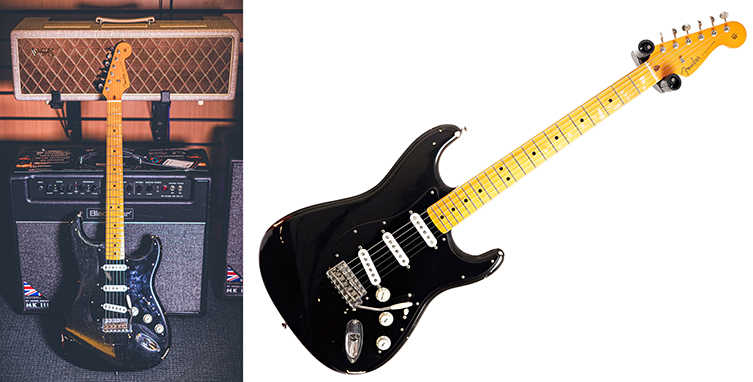
The real, original ‘Black Strat’ from which the signature models were derived, sold in auction for £10.9 million (fourteen and a half million US dollars), making it the most expensive guitar ever sold. As soon as this happened, the market for the Fender Custom Shop Gilmour Strats went through the roof! With Fender no longer making them, the second-hand market saw the prices of these guitars shoot up to over £11000, almost four times’ their cost when new. This has only happened recently (March 2026, 4 months before time of writing), so it’ll be interesting to see what the future holds for the Custom Shop Gilmour prices.
I’m including this anecdote to illustrate not only how unpredictable the used guitar market can be, but how even a replica of an iconic guitar can end up becoming very valuable in its own right. Some people’s dream guitars are also investments, which I totally understand, and just wanted to reflect that in this article.
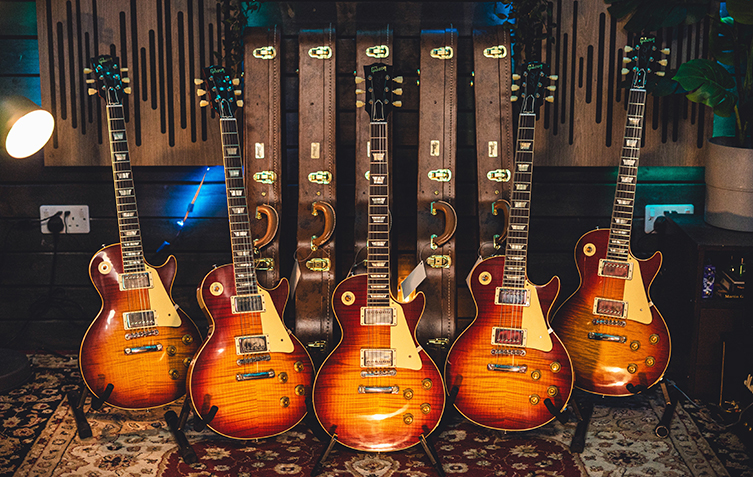
The last consideration here is the choice of an expensive vintage replica over an actual vintage guitar. Earlier on, I mentioned the rarity and expense of a genuine 1959 Gibson Les Paul Standard 'Sunburst'. It's perhaps unrealistic to even aspire to owning an original since there were only ever a few hundred in existence, and they cost at least six figures to own today.
But, a Gibson Custom Murphy Lab guitar essentially puts an exact replica of this into your hands, with all of the idiosyncracies, tone and power of that world-renowned guitar. They are also expensive, but are not even approaching the price of an original. These are dream guitars in their own right, and desrve to be seen as such, because they are simply remarkable instruments.
Are You Fine With a Refinish?
Lots of older guitars have been refinished. Sometimes it hides badly executed repairs, but more often than not it was just the whim of a previous owner. Whether the ‘refin’ has been carried out brilliantly or not-so-brilliantly, it will always bring down the cost of the guitar. If you don’t care so much about the colour over other factors, a refin is a good choice for a guitar that’s being bought to be played.
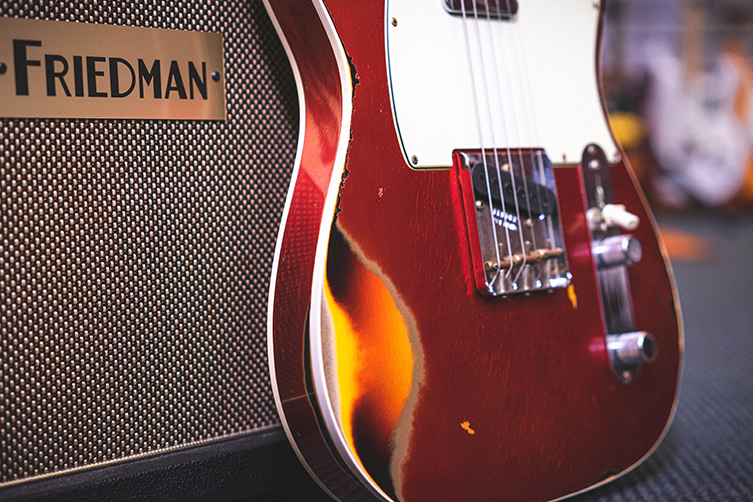
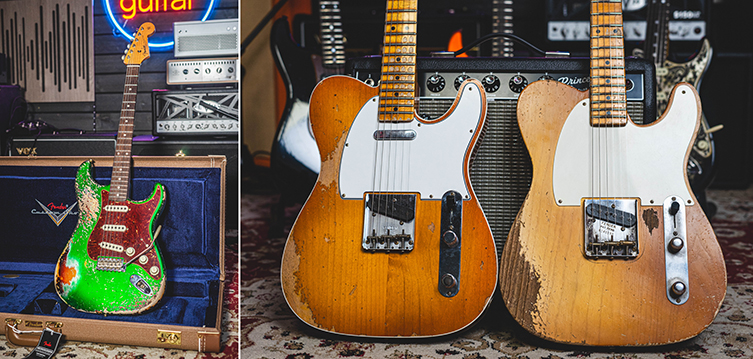
(Unlike this lovely Custom Shop Telecaster, most refinished guitars do not have the original finish hiding underneath. But who knows? You might get lucky!)
If You Aren’t Playing a Guitar, Trade It
This one speaks to the other side of the equation: paying for your dream guitar after you find it! If the dream guitar is ultimately going to do most or all of what you need in a guitar (and if not, why is it your dream guitar? Just asking…), then it’ll be replacing at least a few that you currently own.
Okay, makes sense. Indeed, that is the whole point! If this means that a bunch of guitars will just sit there gathering dust after you acquire your new one, then why not use those un-needed guitars to help pay for the new one? Unless you are a collector or just wealthy enough to hang onto every guitar you buy, then it makes a lot of sense to clear the decks a bit and get some cash to throw towards your dream axe.
Trading in 3 or 4 guitars that you like for one that you absolutely love makes a lot of sense to me!
Check Out our Trade It, Sell It Options
Custom Ordering
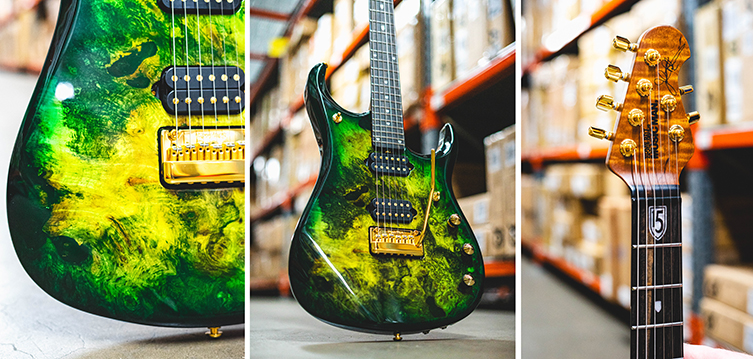
If the guitar of your dreams doesn’t seem to exist, then I suppose you’ll just have to have it made for you, right? And why not: it’s the dream of most players to be able to order a new high-end guitar that is created to their own favoured specifications. We can assist in this with many brands, so please have a conversation with us if you feel like Fender, Suhr, PRS, Tyler, Mayones or ESP might be the answer to your dreams. The sky is often the limit with custom builds, so dream big if you have the means to support it!
I’ve been lucky enough to play a wide range of of what I’d call ‘dream guitars’ over the years: from Gibson Custom Murphy Lab ‘59 Les Pauls, to their real life ‘Holy Grail’ equivalents; from numerous vintage Strats to some incredible custom guitars from Tyler, Gretsch, Mayones, PRS, Suhr and of course Fender Custom Shop.
It’s not my job to tell you what to like, but what I can tell you is that whilst some vintage guitars were incredible, others were okay to ho-hum, but ALL of the custom built stuff that I've played has been uniformly incredible. From brand to brand, style to style, you will get a world-class guitar if you choose to walk down the custom-made path.
Is Your Dream Guitar Actually Two Guitars?
This one is a passing consideration, based on not only my own experience but also my years on the shop floor selling guitars and talking to musicians. Basically, we all want one guitar that does it all: crisp clean twang, cranked sustain and hard rock heft. We want rock-solid tuning stability AND a whammy bar that lets you go crazy. We want something wild and sensible; classic and yet idiosyncratic.
What it sounds like to me, is that most of us actually want two pretty different guitars, and we want to somehow squeeze them into one instrument. If you are trying to cram as many features and sounds into your dream guitar creation, it’ll either be possible or it won't, and you’ll need to settle for spreading your dreams across two or more instruments.
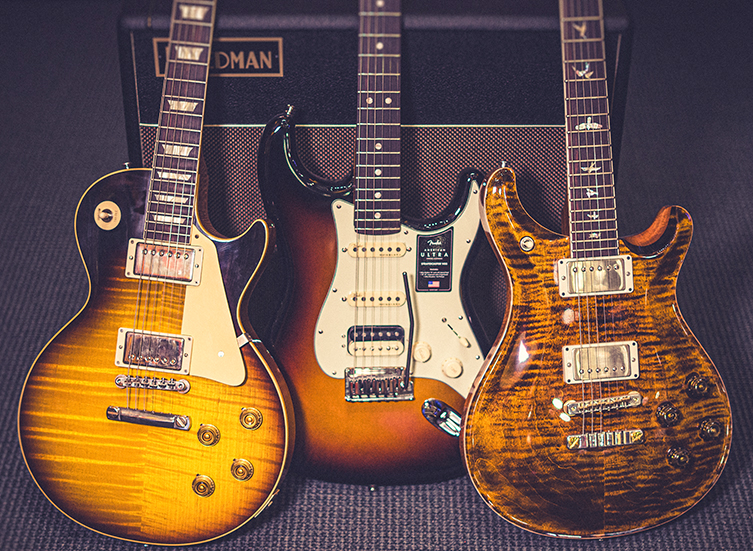
To me, that sounds ideal: you might actually be one of those players who is equally comfortable on a number of guitar styles. I’d suggest that your dream guitar is perhaps two dream guitars who work together to make those dreams come true. Whether that’s a Strat and a Les Paul, or an Ibanez JEM and an Eastman hollow body, I’d recommend being open to the idea!
Buy What You Love
If you make a connection with a guitar - if it starts to sing like a siren when you sit with it for a strum - then it seems to me like you’ve just met your dream guitar. Congratulations! Was it what you expected? Were you open to the notion of looking outside your initial desires? Or did you land on the bullseye, the guitar you’ve always placed on your own inner pedestal?
If the search continues, I wish you good fortune and lots of fun along the way. I believe that your perfect guitar is out there awaiting you: it’s maybe just a matter of how you perceive ‘perfect’!
I hope this article has proven useful, even as a motivator for certain thought processes. Selecting (or finding) and buying your dream guitar is a special adventure, and one that will hopefully provide you with a loyal and everlasting guitar companion. Consider what your heart desires first, because then you’ll always be able to trust your decisions.
And remember, we are here to help! Our staff are on similar searches themselves, and many of us have experience of ordering custom guitars from builders like Music Man, Suhr, PRS, Fender Custom Shop, Gibson Custom, Tyler and a great many more. It’s our job to connect you with your dream guitar, so let us help!
Good luck!