Have you ever wondered how signature guitars actually get made? As in, what is the process from the artist using a guitar - or wanting something that doesn’t yet exist - to the point where a new signature model is released to the market?
I wonder about that. At least, I used to, until I asked a bunch of famous guitarists about it. From Yngwie Malmsteen to Steve Vai to Uli Jon Roth, I’ve been lucky enough to hustle conversations with some incredible musicians, many of whom have their own signature guitars. Not only guitars, in fact: I had a great conversation with Joy Division/New Order’s bassist Peter Hook right around the time Yamaha were releasing his signature bass.
The story behind each of these instruments is a little bit different, so I’ll dive into them as I cover this subject with you today.
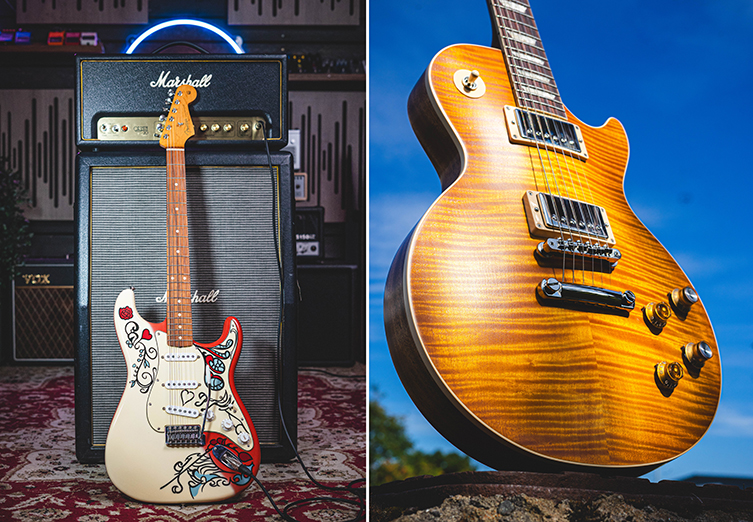
On top of the artists themselves, there are also the brands, who have their own requirements when it comes to issuing new instruments of any type. I’ll investigate this as part of a separate story, so today is more artist-focused. Will I find a common thread that runs through it all? Or is every case different?
Find out by joining me on this adventure…
Types of Signature Guitar
When we think about signature guitars, we might be considering a few different types of instrument. As I see it, the subject boils down to four main variations:
- An exact replica of a guitar that is well-known or associated with the artist.
- A new guitar model based heavily on what a given artist uses.
- A new model that breaks ground for both artist and brand, i.e. it hasn’t been seen before.
- A Legacy signature: made for a deceased artist, which closely resembles their instrument or vibe but is ostensibly a new guitar.
I’ll return to these ideas as I explore some of the incredible artist guitars that exist, and the stories behind their genesis. There are of course other factors such as the building of entire guitar ranges, based on a popular signature model, but I’ll address that when it pops up! Firstly, let me check out the first of those three: the exact replicas…
Recreating an Iconic Guitar
- Guitars that are legendary in themselves
- Eddie’s Frankenstein guitar, Clapton’s black Strat, the Greeny Les Paul and more
This first one is about a specific instrument that already exists and is played by a superstar guitarist. When you think of Jimmy Page, it’s not a Sunburst Les Paul Standard as much as it’s his Number One ‘59 Les Paul Standard, right? With Eric Clapton, it’s not simply a black Stratocaster but Blackie, his famous black cobbled-together Strat. You can say the same with the Gibson Les Paul Greeny Les Paul, the EVH Frankenstein and a bunch more.
These are all famous objects in their own right, and whilst you can certainly buy guitars that are similar to these (even the Frankenstein these days!), there are models that are more thoroughly based on their inspiration than others.
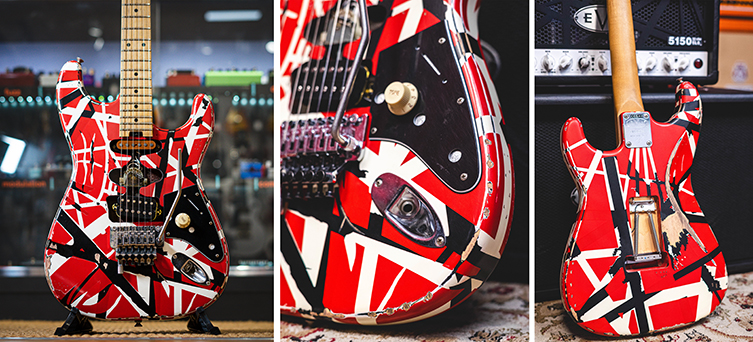
When it comes to recreating such instruments for the market, the first place to look is generally that brand’s custom facility. Fender Custom Shop is an obvious point of reference, since they arguably started this trend with top-priced replicas of Clapton’s Blackie Strat and then Andy Summers’ lovingly beaten up Telecaster.
There have been many since, but the process is mostly the same: the Custom Shop actually get hold of the original guitar first, and begin making almost forensic-levels of studies, photographs and, crucially, 3D scans of the guitar. The body, the neck, every detail of wear…it all gets exhaustively documented so that the replica instruments - which are invariably made by hand in very small numbers - are essentially indistinguishable from the original.
On some occasions - I can think of Jimmy Page’s 1960s Fender Tele replica - certain features like the reflector stickers he added to the body are included in the case, since it’s a step that not every fan necessarily wants.
So, how do they decide on which guitars to recreate? It’s a simple case of demand: people ask, the artists or their estate agree, and the project gets going. Some of these instruments are strictly limited in numbers, while others (the Greeny Les Paul) are made to a number of price points that incorporate different levels of accuracy in their recreation in order to meet the market at a specific price point.
If the artist is living, then they usually approve of the final items and offer signatures and promo to market the guitars. If the artist has long since passed - like Hendrix, for example - then his estate will be in charge of approving the guitar, consulting on additional documentation and case candy, and generally being a creative and financial partner on the project. I’ll look more into the idea of the ‘Legacy Signature’ later on.
Chasing a Bold Vision
- Steve Vai is a guy who knows what he wants
- The art of making guitar companies come to you
Some signature guitars are born out of a desire to see a bold new vision made real. This is where an artist works with a brand to develop either a vastly altered take on an existing design, or a completely new version of the guitar.
(Pic by Michael Mesker)
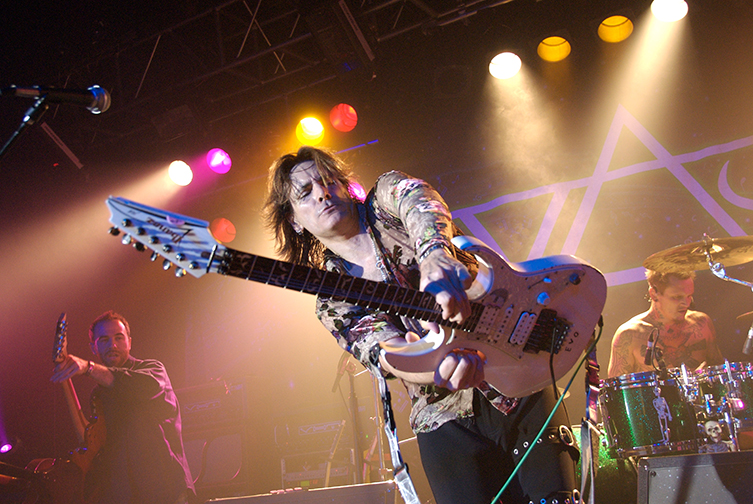
In the 1980s, Stee Vai was tearing it up in California as the hottest shredder in a town full of gunslingers. He was using his highly modified ‘Green Meany’ superstrat but wanted something that better expressed his natural eccentricity. You know where I’m going with this of course, but the story of the Ibanez JEM is a really interesting one. I had the privilege of chatting to Steve directly about the entire story of the JEM - which you can read by hitting the button at the end of this section - but here’s a little but about the early process, from Steve himself:
“And so various companies were interested. And I thought, okay, here's the guitar that I play. And here's the specs. If you can make me this guitar, whoever makes me the best one… I didn't care if it was Fender or Gibson or any of the others. Kramer was popular at the time. And Tom Anderson, I really liked his instruments, he just made such great instruments, they were just a cut above everything. And, as a matter of fact, Tom Anderson made me one. But inevitably I would get these guitars back and they just weren't the guitar that I gave them. Tom came close - he put a handle in it - but it was still…it wasn't the JEM, but it was nice, and I used it a lot on Passion & Warfare.
All the other companies, they sent me their guitar with my name on it and a couple of little tweaks, because that's really what a signature guitar usually is - not all the time - but usually it’s a brand of guitar that already has an audience, it's already known. If you make a signature Les Paul for somebody, it'll have maybe the fret size they like, it'll have the electronics that they like, little things, but the guitar is still a Les Paul.
That's kind of what I was receiving. I'm like, 'no, I don't want that stuff'. So I just figured that's fine, nobody could make it. And even Ibanez, when I told them what I wanted, they sent me a guitar and it was called the Maxis. It was something that they had at the time. And I was as confused as I was by the others who sent me guitars that had no resemblance to what I wanted! And I get it: to make a whole new instrument, that's a heavy lift, because you have to retool everything. I'm like, 'no, I want this whammy bar. So you have to make that'. It's a heavy lift to make the bodies and to do all that.
They figured I would be happy with what they thought I should play (laughs). But then when Ibanez sent me this Maxis, it was another fail. I didn't like the guitar, I thought it was hideous. And so I just said to everybody, ‘thank you. No thanks’. But Ibanez: they got it then, finally they got it. I kind of know what happened. At the time, Ibanez… I wouldn't say they were a struggling company, but they didn't have the kind of cache that the other big companies had, and there was a directive sent down from their headquarters to their A&R people: ‘find the next guy and whatever he wants, make it’.
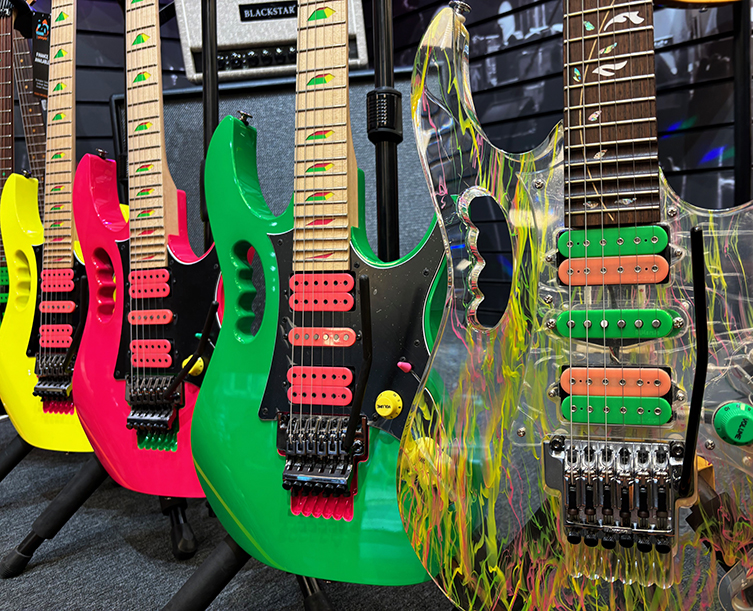
So, I just happened to be around at that time, and you know, they saw me on the covers and they saw what was happening. They said, okay, that's the next guy. What does he want? What does he really want? (laughs) So, it was hard for them because I'm like, I want this guitar exactly. Oh, by the way, I want it to be released in three day-glo colours, which was taboo -You didn't do that, you know? - and I want to put a monkey grip in it as a handle.
So, they're like, ‘are you sure this is the next guy?’ (laughs) And I didn't know, I was so naive! I was just like, why should I compromise anything? I don't need anything from anybody. I got it all! I love the music I'm playing. That's enough.
But they delivered. I received this guitar that was the JEM. It was what I had given them exactly. The things that they added that were really wonderful to me were the neck inlay, the floral pattern neck inlay. So that's when I said, okay, this is it. And what I had come to discover since that time, was what a good choice it was to go with Ibanez because they are a solid, solid, solid company. Several of the companies I was talking to at the time, just aren't around today, and Ibanez was eager to make this work and to make it right.
Now, when they had approached me then to do an endorsement deal, I still wasn't so keen on endorsing in the conventional sense. I just didn't want to feel confined, but they were going to make these JEMs for me, and I'm like, well, that's worth the price of admission, you know?
And then they said, ‘we'd like to make these for other people’. And I thought, well, I know this works for me, it's got all these things that I like. Maybe some other people will like it, because there's a lot of practical things. It was a fast, sleek instrument, it really was a player's kind of a thing at that time.
Plus there was an economic value to it: if you design an instrument and it sells, you make a royalty, so that was an allure. I was a working musician, you know, and still am! What I discovered about endorsements is, if you feel like you can retain your integrity, then it could work. If it’s a good company!”
Steve didn’t compromise with his vision of the JEM, and waited for the right company to make what he wanted. It wasn’t something he already used and played, and the decision to market the guitar was only agreed upon after his unique requirements as a player were met by the JEM. As unusual as it is, the JEM has been in constant production for nearly 40 years now, so there’s room in the market for original ideas!
Click to Read the Full Interview with STEVE VAI on the Creation of the IBANEZ JEM
Creating a New Concept
- When regular guitars just won’t cut it
- Exclusive input from Scorpions legend Uli Jon Roth on the making of his SKY guitars
Sometimes, what an artist needs in their instrument goes beyond conventional builds. We’ve seen how Steve Vai threw down the gauntlet to whomever could build his heart’s desire, and how Ibanez were the company to successfully bring those desires to life. But even before Steve made his JEM and Universe guitars, another player saw the limitations of their Stratocaster and dared to dream.
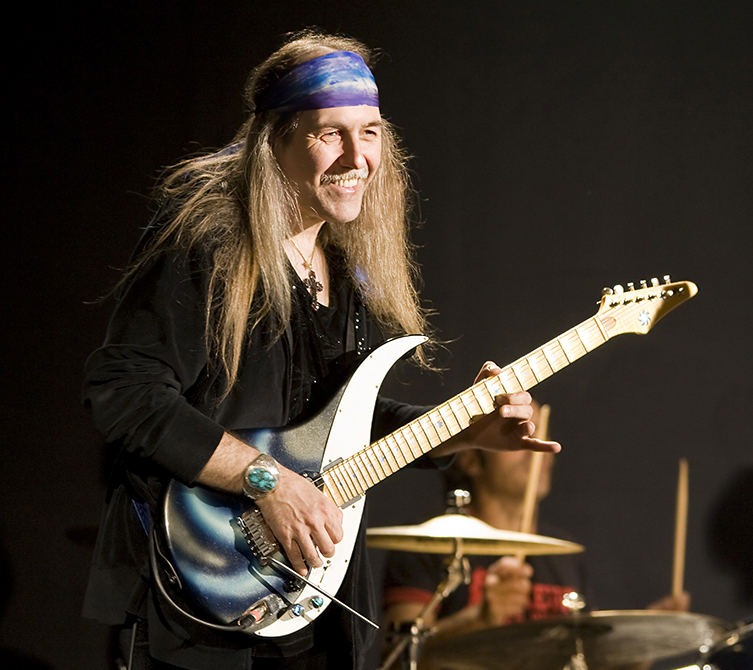
The Scorpions’ Uli Jon Roth initially asked a luthier to add extra frets to his Strat in order to let him play the music he heard in his head. As he explained to me a few years ago:
“That was the bridging moment, because the guitar builder in Brighton - Andy Demetriou was his name, he lives in Cyprus now - he was very good and he did a great job on that white Strat of mine. After he saw how pleased I was, he said ‘Look, I can build you any guitar you want!’ He literally said that. I’d never ever thought about questioning the integrity of the Strat up to that very moment. And then I thought, you know…any guitar…and that’s when I completely abandoned traditional thinking and started to question everything.
I knew I wanted a guitar that could do everything a Strat does, but I also wanted a guitar that can sound like a Les Paul, and a Strat can’t. So that was quite an unachievable thing to start with, for many different reasons. The initial phase was that I came up with the shape for the Sky guitar and he built the first Sky guitar. That was in 1983. I never went back, you know? We built five prototypes over the years, including two 7 strings, and those were the first 7 strings in rock.”
(Pic courtesy of Uli Jon Roth)
His famous range of Sky guitars (including Mighty Wing, his 7 string model) developed from there, with some models having 28 frets (and more!) and unique circuitry:
“We have this super-sophisticated sound system in it which is called Megawing. It’s all-singing, all dancing and allows me to control any amp from the guitar beautifully with a gain stage, and has a very sophisticated EQ done by John Oram, the designer of Trident mixing boards, a master of analogue EQ.”
In Uli’s case, he refrained from turning the Sky guitar into a production model for many years. There have been occasional runs, and limited models made available from time to time, but the Sky guitar remains highly associated with him. Read the full story about it by clicking the button below.
Click to Read the Full ULI JON ROTH Interview
Refining a Classic
- Pre-modded versions of classic guitars
- Clapton’s Artist Series Strat
- Yngwie talks Fender Strats
- Peter Hook's iconic Joy Division bass gets an overdue reissue
One of the most popular things to do with a signature guitar is take a base model - say, the Fender Stratocaster - and build a series of artist-approved modifications into it in order to both satisfy that artist’s unique needs, but also bring something fresh and new to the marketplace.
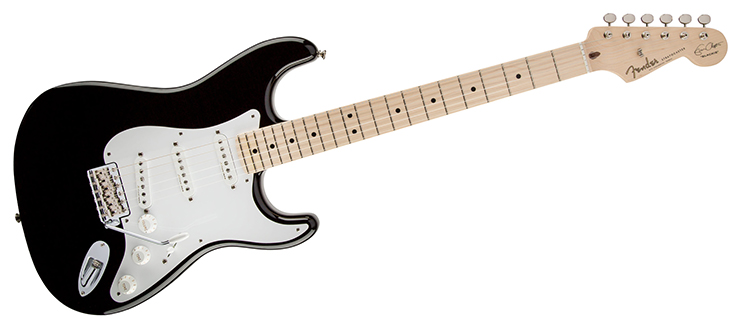
One of the most resoundingly popular examples of this is the Fender Eric Clapton Artist Series Stratocaster. This guitar is not really like the replica of ‘Blackie’ that I mentioned earlier, despite this model’s black finish option having ‘Blackie’ inscribed on the headstock.
This Strat is a pretty souped up take on a 50s Strat. It has the feel of an old Strat, with a curved fingerboard and a v-neck profile, but it also has Fender Noiseless pickups (it formerly had Lace Sensor units), a blocked-off tremolo bridge (which can be reversed) and an active mid-boost circuit onboard to turn that vintage Strat sound into something resembling a cranked Gibson SG, perfect for all of Eric’s Cream-era moments.
I’m describing this guitar so specifically so that you understand how much it was changed under the hood, which makes the whole ‘artist signature’ concept work in the first place. This guitar represents an early and enduring example of offering the public an artist guitar that is simultaneously similar to what they know, and quite different in operation from a regular Strat.
Another player with such a guitar is Swedish maestro Yngwie Malmsteen. In fact, according to Yngwie - and who am I to doubt him? - he was the first recipient of a Fender signature guitar. Here’s the man himself telling me the story of how his signature guitar came about, from a phone conversation we had a year or two ago…
“In 1986, I was playing in Long Beach Arena, California, and Dan Smith and his whole team came backstage before the show. At the time, I was playing a 1956 Strat and a 1961 Strat, those were my main guitars. In fact, I gotta tell you a funny story. When I first came on the scene, Fender Strats were very, very unfashionable. Nobody wanted to fuckin’ play them: everybody wanted a humbucker in the Strat and the Floyd Rose and the striped guitar, pointy horns, all this shit.
So when I came on the scene in 1982-83, I had literally every guitar company in the world coming up, saying ‘we’ll make you whatever you want’. Except Fender! Fender didn’t do signature models. So Ibanez, Gibson, every guitar company, ‘We’ll make you whatever you want!’ Schecter, I can’t remember them all. And I said, ‘thanks, it’s okay. I bought my Strat, I’ll just use them.
Dan Smith told me that when my first solo album came out (Rising Force), with the Fender Strat coming out of the fire, they couldn’t fuckin’ sell those things fast enough! Before that, they were just laying around! So he came up to me and said, ‘I want to have an Yngwie Malmsteen signature guitar’. I thought he was joking, you know? I was 22 years old. I didn’t know him that well - we became very good friends after a while - anyway, they came in and measured the necks, measured everything. Then he said, ‘well, I don’t think we can do it scalloped, I don’t think it’ll sell’. ‘Well, I don’t want it then’. Haha! So they made it scalloped! ‘Should we make it 22 frets?’ No. ‘Should we do a locking…’ No.
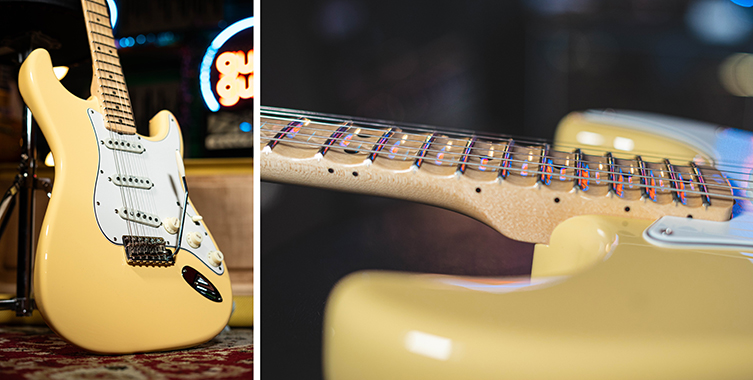
But I’m not used to Fender pickups, they suck. I said, if you wanna do this, you gotta do this right. And they did whatever I wanted, in March or April of 1987. I was in Texas in a recording studio and Dan Smith flew into the studio and gave me the first Yngwie Malmsteen Stratocaster. Okay? I told my tech to just tune it up - don’t even change the strings - tune it up and give it to me. I was recording a solo on a song called Heaven Tonight. That solo is recorded on that guitar, the first guitar they ever built me.”
Scalloped frets and a pickup change were all that Yngwie requested. Like Vai, he stuck to his guns about what he wanted and in the end, got an instrument that has been in constant demand since then.
Read the Full Yngwie Malmsteen Interview Here
There aren’t tons of signature basses out there, but if ever a bassist deserved one, it’s Peter Hook. Owner of one of the most iconic and instantly recognisable bass sounds in history, Hooky innovated by developing his ‘lead bass’ style inside music that was globally huge, not just a niche amongst diehard fans. Joy Division and New Order changed music, and Hooky was central to all of that. And for almost all of it, he used one specific Yamaha BB1200S bass.
It’s only polite that he was given a signature model.
“Every single track that I’ve ever recorded, up to the last one I did, which was the Gorillaz about a month ago, was on a Yamaha BB1200S! They aren’t reissuing it as a BB1200S, they’re issuing it as a different guitar. But it’s a copy of the BB1200S: it has the same electrics, the only difference is that nowadays they don’t do the straight through necks, so they had to modify the guitar to give it the stability, the rigidity, of a 1200S”.
I asked him how close the new signature model was to his original:
“It’s really, really close! The top end is exactly the same, but low and behold, good old Yamaha, they’ve actually given me more of the bottom end, so it has an enhanced bottom end. But the top, for me, sounds exactly the same. I must admit, I’ve been using the same BB1200S right the way through, and I switched to the new guitar because it sounds exactly the same. So Aries, by the Gorillaz, was done on the new one”.
Read the Full Peter Hook Interview
The Ultimate Tool For the Working Player
- If it ain’t broke, make it into a signature model!
- Signature guitars with subtlety from Guthrie Govan and Pete Thorn
Certain signature guitars are created to perform like a sort of Swiss Army Knife for their players. Certain guitarists need to cover many bases during their live sets, and prefer to do that on one instrument if they can. Normally, their signature guitars are alternative takes on existing models, made with the features they specify for inclusion.
I’ve got two examples for you, with the first being the incredible Guthrie Govan. During a typical Hans Zimmer live show, Govan needs clean tones, distorted tones, a useful whammy bar that neither locks nor goes out of tune, and the ability to both shred and play slide.
All on one guitar. No small feat!
Govan’s first signature model was with Suhr, and a few years later he moved to Charvel, with whom he has remained since. He takes only two guitars out on the road with him, set up in different tunings:
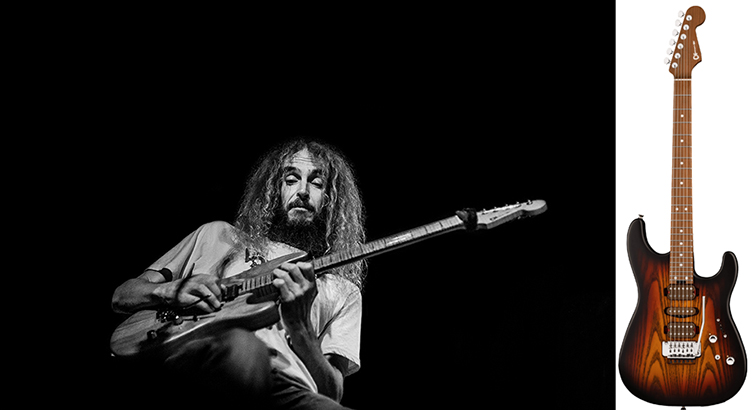
“I'm using two of my Charvel signature model guitars - I have an ash-bodied one in Drop D tuning plus the original basswood/maple version in standard tuning.
My guitars are typically set up with what most people would consider to be a low action but I did recently move up to .011 gauge strings, which “fight back” a little more against the slide and seem to solve most of the fret rattle problems which so frequently plague players who might need lower action for other facets of their playing vocabulary. In terms of lightness of touch: I’m honestly not sure how to describe it but it’s one of those things where it’s best to explore a few different playing approaches and just remember how it feels when the results are sounding right.”
Guthrie has obviously experimented a lot and based his preferences on practical situations rather than simply what he fancied trying. As such, he has landed on his ultimate guitar, and thanks to Charvel, you can see if it’s the ultimate guitar for you, too.
Read the Guthrie Govan Interview
My other choice of player who needs a Swiss Army Knife guitar is Pete Thorn. Speaking to him a couple of years back, our conversation turned towards his most recent Suhr Pete Thorn signature guitar, and he had some typically insightful thoughts around the concept of its existence:
“Here’s the thing behind my guitar. I always say that most artists that have signature models - let’s take Steve Vai or John Petrucci - those guys are - and rightfully so - stylists that exist in their own universe. Steve Vai is Steve Vai and Petrucci is Petrucci: they are their own category of guitar music, basically, when we think about it, right? So they have signature instruments that kind of reflect that. They are very personalised: Steve’s guitars can have all the crazy stuff like vines down the neck, or he’s got the monkey grip, stuff like that, right? That’s what sets him apart: he’s a stylist and he can do all these crazy things to have an instrument with all these unique features to set it apart."
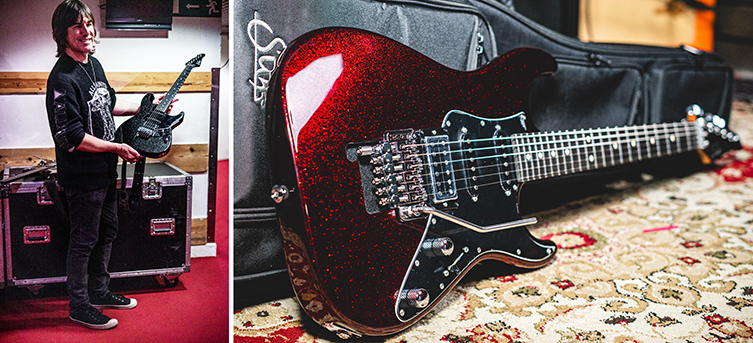
"I exist in kind of a different world, where I’m mainly known as a touring sideman. And a guy from Youtube. But the touring sideman thing is where I came from: a bit of a jack-of-all-trades, and having to morph into different situations. I’m a little more akin to a working player that does different styles of gigs, so with my gear, it’s gonna reflect that. It’s gonna be a tool where, hopefully, if you can only bring one guitar to a gig, it’ll be able to cover most or all of the bases, you know?
And also a look that works in a number of different situations. I can’t show up with a hot pink guitar if I was playing a show with Don Henley or something, you know? (laughs) ‘Get that thing outta here! Where’s your Telecaster!’ Haha, so I have to be careful sometimes. I try to make guitars that have features that are gonna appeal to a wide range of working players, that really need an instrument they can fall back on. One minute playing rock, the next minute playing country and stuff, and it stays in tune and is really versatile, and also will have a look and an aesthetic that just fits in”.
I love how matter-of-fact Pete is about this, and how self-aware he is about the space he occupies as a player. Still, he’s not beyond simply wanting something in his guitar because he likes it! Here’s what he had to say about the ‘pickup window’ that covers up the sides of the guitar’s humbucker:
“The reason we did the guitar with no pickup ring is, my other guitar has pickup rings. I had to talk them into it: they didn’t wanna do it initially and I said ‘It looks cool!’ It’s the one thing, otherwise it looks like a Suhr Standard. These little visual things can set my guitar apart. So this one (the new model) was originally a direct mounted pickup and there wasn’t enough going on in that part of the guitar. I said ‘let’s try a ring’ - had to talk them into it again - and then we tried a covered humbucker, open coil, the whole thing, and it was actually John’s idea to go, ‘What about a window cover?’ I’m like, ‘what’s a window cover?’ ‘Oh, you know, one of those ones that makes them look a little like a Gretsch Filtertron’. We tried it and I was like, ‘Oh, damn, that’s cool’. So the ring and the chrome, and the pickguard flowing through: all the stuff we spent a lot of time on to give the guitar a visual that’s very distinctive and unique, and I just love it, man!”
Both guitars - Pete’s and Guthrie’s - are not overtly obvious as being signature instruments, but both definitely display the decision making of their owners. Fans can connect with their hero’s guitar in a real way, but anyone can pick up these instruments and make them theirs.
Read the Full Pete Thorn Interview Here
Legacy Signature Guitars
- They may be gone but their guitars (and a market for them) hasn’t!
- Who decides the terms of a posthumous signature guitar?
I mentioned this term earlier (which I may just have invented, to be honest with you) so now it’s time to shed a little more light on it. Legacy signature guitars appear when famous deceased artists continue to hold influence over today’s players. Two iconic people spring to mind immediately: Jimi Hendrix and Kurt Cobain. They both have posthumous signature guitars that are, in one way or another, not what they played in life but somehow still really connect. Let’s dive in.
The Fender Jimi Hendrix Strat is an interesting specimen. Jimi, you’ll doubtless know, was a lefty who usually grabbed a standard right-handed Fender Strat, strung it in reverse order and played it upside down. In creating a signature Strat, Fender understood that only 10% of us are left-handed, so created a right-handed guitar. Makes sense, but this model adds some left-handed detailing: a reversed headstock (though the logo is not upside down), and a bridge pickup that is slanted in the opposite direction.
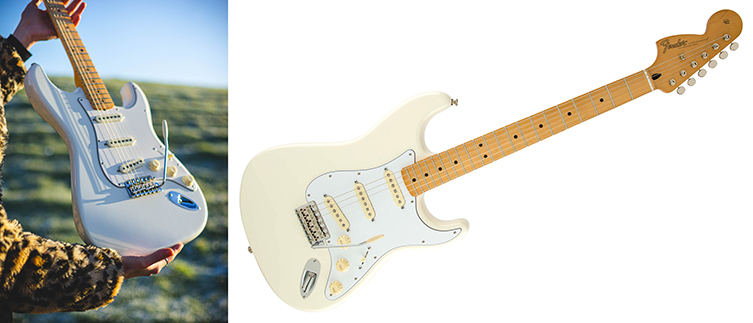
Why? These changes actually do affect both string tension (the low E has more tension due to longer length behind the nut, and the high E has less for the opposite reason) and tone, since the bridge pickup’s polepieces are now in a different position. This guitar, then, was made in order to give the regular right-handed player a similar playing experience to the one Jimi himself had. That’s the primary aim for this guitar, though it does seem unusual to not also have a left-handed tremolo. An easy mod!
As for Kurt, I’m thinking here about his famous Jagstang guitar. Kurt designed it, there’s no doubting that: he famously chopped up two pictures of a Jaguar and a Mustang and stuck two opposing bits together. But the kicker is this: he died before he ever saw them created. It’s true that he had a blue prototype that was used on stage, but we’ll never know if this was his final vision for the guitar. The models that have been sporadically available since his death all pertain to this prototype, which is all that Fender ever had to go on for their production model. The Jagstang was released in 1996, two years after Cobain’s death.
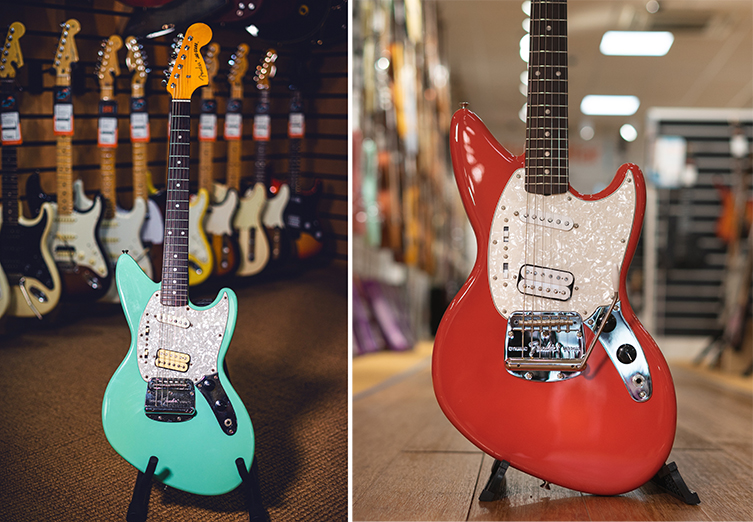
This type of posthumous release is fairly prevalent in the industry, since we all still revere artists from the past who died long ago. The impetus to create these is based squarely on a constant demand for the artist from the public.
Why Do We Play Signature Guitars?
If signature guitars are made to the special preferences of a given artist, why do regular folks want to play them too?
I can think of a few reasons, and they are a mix of emotional and practical reasons.
- Sensible upgrades: Clapton’s Strat makes a lot of sense to the function guitarist who needs Strat tones plus more power. Jeff Beck’s Strat has performance upgrades that go beyond a classic Fender spec, and lots of players are looking for that extra percentage of expression. Similarly, Guthrie Govan’s Charvel is a deeply versatile instrument that crosses lots of stylistic thresholds, so lots of players can enjoy it.
- Star worship: The most common reason for owning an artist signature guitar. People will always want to pick up a white Strat and feel like Jimi Hendrix, and even more so for a guitar that is somehow - no matter how indirectly - related to him. Vai fans know that owning a JEM will not automatically bestow them with Steve’s abilities, but it’s still very much the correct guitar to play his music on.
- Professional Admiration: It’s quite possible to be indifferent to an artist’s music but love their guitar tone. Buying their guitar (or other piece of signature gear) is a significant step towards capturing that magic.
- Collector’s Piece/Investment: signature guitars are great collector’s pieces for hanging on a wall or displayed in a glass case. Some people used to buy artist signature models for posterity, and simply hang onto them unplayed until they accrued value. This isn’t really the world we live in today, due to the fluctuating used market, so it’s not something that happens as often for that sole reason. Still, collectibility is a huge thing - particularly with limited edition artist finishes and so on - and so it’s a strong motivator for fans.
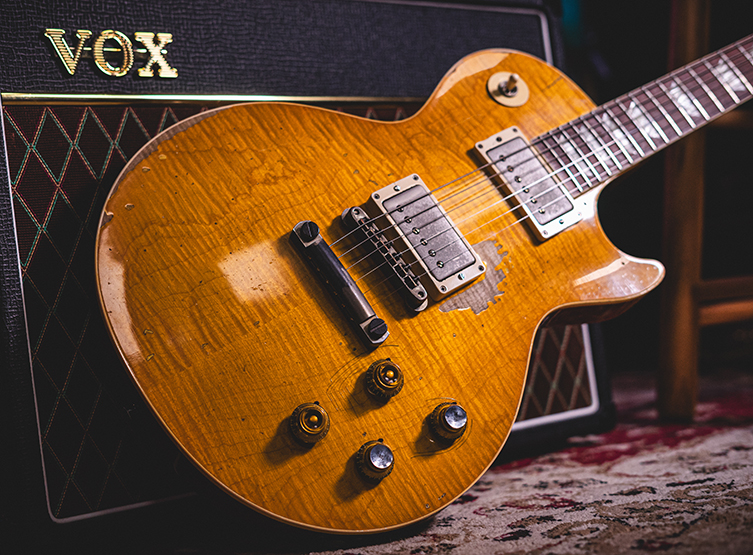
So, to wrap it up, there are numerous legitimate reasons why you might want to own and play an artist signature guitar. They are all valid, including the simple reason that you happen to think the guitar itself is awesome, and couldn’t care less about the artist. In fact, that might be the best reason of all! But however you arrive at these guitars, the important thing is that you are connecting with music that you love, because there really is nothing more powerful than that.
Have fun, do your thing and keep playing!
Read More
-
The guitarguitar Interview: Guthrie Govan
-
"Chris Cornell was a great cat, man. I'd do anything for him": PETE THORN Talks about his New Suhr Guitar, the Classic Rock Show and Loads More!
-
"The Scorpions: ULI JON ROTH talks EXCLUSIVELY to guitarguitar!
-
The Definitive Story of the Ibanez JEM, as Told by STEVE VAI!
-
YNGWIE MALMSTEEN, from his Ferrari, on Miami Beach
-
Finding Your DREAM Guitar