It’s been 35 years since Nirvana’s second album Nevermind changed popular music forever. Whether you were there at the time or found the record later on, the raw, brutal punch of Nevermind is as powerful now as it ever was. Decades of hearing Smells Like Teen Spirit has not diminished its power, and in this 35-year rearview mirror that we now find ourselves looking through, maybe we can see the album even more clearly than we could at the time.
It has aged well, partly due to producer Butch Vig’s skill, Andy Wallace’s mixes and mostly thanks to vocalist/guitarist Kurt Cobain’s well written and well-judged guitar parts. He was no virtuoso, but there of course lies the genius: what he chose to play has never gotten old or out-of-date, no matter how heavily his style was copied. He’s a truly iconic guitarist whose ‘anti’ style is easily as influential as the equally-legitimate shred styles.
So, today I’ll take you through Kurt’s guitar gear, describing what makes them interesting, and hopefully providing you with some info to work with yourself. One thing I have noticed is that Cobain had LOADS of guitars over the years, so I’ll stick to the more significant ones for this article. Take it as read that he had bits and pieces of gear that maybe made it to a rehearsal or a show or two, and I may not include such equipment in today’s article.
The following is the gear most used, abused and loved by Nirvana legend Kurt Cobain…
Kurt’s Electric Guitars
When thinking about Cobain’s guitars, I imagine you might instantly think of Fender offsets, right? I certainly do! This is largely true, but Kurt actually used a wide number of electric guitars during his short but stunning career. I had the idea to make this a chronological list, but that quickly becomes messy, with Cobain buying multiples of certain guitar styles, sometimes years apart. So, instead, I’ll just do like for like and you can find the relevant info together.
Univox & Mosrite
It seems that Cobain’s first electric guitar was a Univox Hi-Flier, which was an affordable copy of a Mosrite. Mosrites had distinctive bodies with longer lower horns (the opposite of a Strat) and ‘German curves’ carved into the top of the body. Cobain had one of these in 1986 at least, as there’s a picture of him happily playing away on it as he sits on the floor of his friend’s house. It’s sunburst and covered in stickers. This guitar lasted until late 1988, when Kurt destroyed it at a gig. This is not the last time you’ll read that sentence, by the way.
Another Univox Hi Flier was gifted to him in the 90s by his guitar tech Earnie Bailey, which would imply to me that Kurt was a fan of the model!
He did also own a ‘proper’ Mosrite - not a Univox copy - which was bought in San Francisco in 1990. From what I can gather, it was a Mosrite Mark V, not a Mark IV as some have noted. His had the ‘Gospel’ body style, which is a slight variation on the usual Mosrite shape.
Fender Stratocasters
Kurt played a number of Strats, since they were often the only left-handed models he was able to source locally, on a budget. Most often, these were Japanese Strats, and they’d invariably get personalised, modded and worked on whilst on tour.
His most famous Strat is probably the ‘Vandalism’ one. This was a black Japanese Strat with a black pickguard, rosewood fingerboard, bridge humbucker and that infamous sticker that read ‘Vandalism: As Beautiful as Rock in a Cop’s Face’. This guitar was used a lot on the Nevermind tour, and the neck was eventually swapped for a Fernandes one, before again finding itself with a Fender neck.
What was the bridge pickup? Good question! There’s a lot of conjecture out there, but I believe the pickup modification was for a Seymour Duncan JB. Some sources say a DiMarzio Super Distortion; others say an SD ‘59 (both the neck and bridge models are mentioned, though only ever used in the bridge position). Given that his Univoxes had high output pickups (surprisingly so for such a guitar), and his subsequent pickup buying habits, I’m going with the JB.
Mustangs
Kurt played a number of Fender Mustang guitars, including more than one that he named ‘Sky Stang’ due to their Daphne blue finishes. His first Mustang appears to have been a copy, actually: it has a Greco logo on the headstock, though Nirvana bassist Krist Novoselic has since claimed that the guitar was a genuine Fender. He’d know better than anyone, but Greco certainly made Mustang copies in the late 70s and early 80s. These were often made in the Fujigen factory too, so they’d be decent!
At any rate, the guitar was initially a sort of beige/brown/orange colour, and Kurt (very creatively) DIY’d a custom pickguard from an old vinyl record of a religious sermon! Kurt started using this guitar in late 1988, after he smashed his Univox. This Mustang was painted blue in ‘89 and lasted about a year before Kurt smashed it to bits, too.
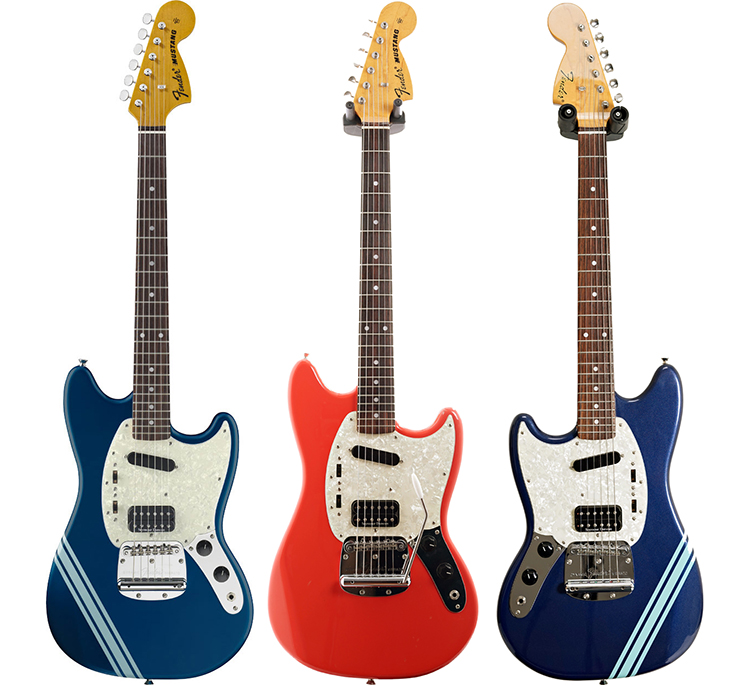
Kurt’s most famous Mustang is of course the ‘69 Competition Stripe Mustang. Used in the Smells Like Teen Spirit video, this was bought by Kurt from someone at a party in Evergreen State College for the princely sum of $50. This student-grade 60s Fender sold for nearly $7 million at auction a couple of years ago, which puts Cobain’s influence into some perspective.
As with almost all of Cobain’s guitars, this one was modded with a Seymour Duncan hotrails-style single coil sized humbucker at the bridge. He seems to have also had one with a full-sized humbucker, and I do not know if that was a further mod of this guitar or a different one altogether.
Kurt actually ordered ten Mustangs from Fender, to be delivered in pairs: one in Fiesta Red and one in Sonic Blue. These were made by luthier Scott Zimmerman at the Tokyo Fujigen factory. The reality was that Cobain only took delivery of 6 of these guitars before he passed. What happened to those final 4? Were they even made?
65 Jaguar
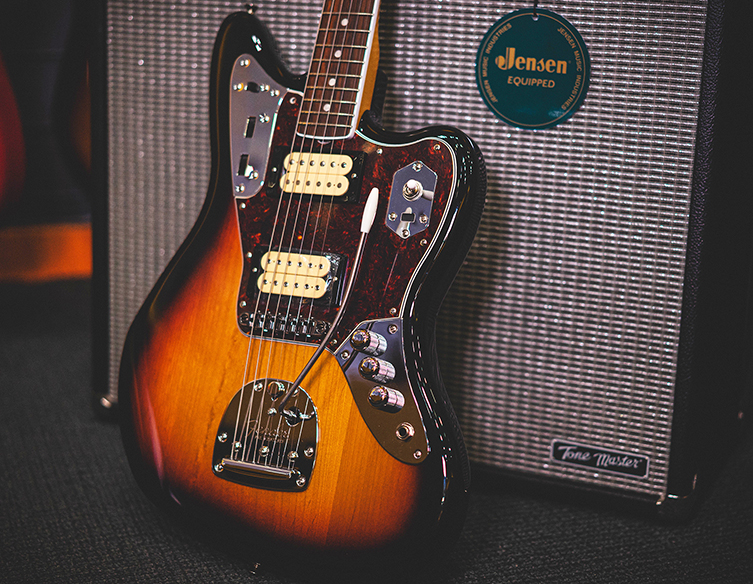
Kurt’s most famous Jaguar - and the one you can buy today as the Fender Kurt Cobain Signature Jaguar - was heavily modded, but not by him!
Indeed, his ‘65 or ‘66’ Jag (I’ve seen different sources citing these dates) was bought used - liked almost all of his guitars - from the Recycler newspaper. It was heavily modified, but none of the mods were Kurt’s interestingly. The previous owner had already gone to town on it, changing the pickups for DiMarzio humbuckers, switching the pickup selector sliders for a 3-way toggle, and adding a third control knob, all of which were changed out for metal Telecaster-style knobs. There was also the addition of a tune-o-matic bridge in place of the original temperamental Jaguar bridge. In short, it looked like a Fender Jaguar but in no way did it sound like one!
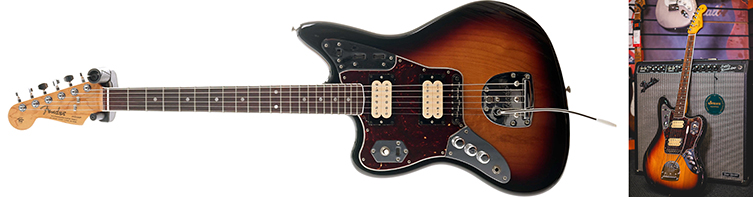
He bought the guitar in Los Angeles in 1991, and it was the main instrument used to tour Nevermind (particularly after he’d smashed the Vandalism Strat in France) and to record In Utero.
Jagstang
Is it really fair to talk about the Jagstang in an article about Kurt Cobain’s guitar sound? After all, it was absolutely his idea and design, but the sad fact of it is that he didn’t live long enough to get his hands on one. Still in the prototype stages at the time of his death in 1994, it would be two further years before Fender issued the instrument, which by now was more commemorative than celebratory.
Still, it does exist and it’s a direct reference to Cobain and his own ideas about guitar design. It’s relatively unorthodox in terms of its looks, simply due to the unusual body shape. Legend has it that Kurt took photos of his two favourite guitars - the Fender Mustang and Fender Jaguar - ripped the pictures in half along the length of the guitar, and put the top of one picture above the bottom of the other.
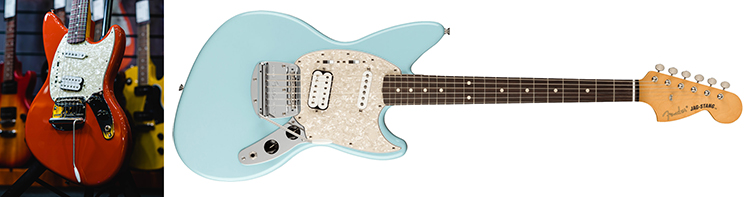
I say ‘legend’ but apparently that’s exactly how it happened, with Cobain handing his DIY collage (he took Polaroids of his own Mustang and Jag) to the Fender Custom Shop in 1993. Was this Kurt’s ideal electric guitar? That’s the question asked by fans to this day.
Kurt’s Amps
When checking out the amps used in Nirvana, it’s tempting to just draw a line in between Bleach and Nevermind for a sort of early period/late period. Again, there is a fairly long list of amps that Kurt may have used for a session or a gig,but I feel like we’ll get the most out of this if I highlight the gear he actually chose to work with repeatedly.
Early Amps
In the Bleach days, Kurt toured with a Randall RG-120 Commander solid state head and a closed back 2x12 cabinet filled with 70-watt Celestion speakers. The head popped up again during the recording of In Utero, but it was getting repaired during the recording of Bleach (which cost a grand total of $600 to make!!!), so Cobain borrowed the studio’s Fender Twin Reverb amp and put that through his cab.
During the Bleach tour, Cobain used Sunn Beta Lead heads, of which he had a couple and ended up destroying in 1990. This is roughly when he moved onto the setup I’d refer to as the ‘Nevermind rig’, while I’ll tell you about now.
Nevermind Amp Rig
For Nevermind, Kurt used a more complex setup. He decided on a rack setup, and used a MESA/Boogie Studio .22 preamp alongside a Crown Power Base 2 power amp. The Crown was replaced with a Crest 4801 rackmounted poweramp from early 1992 onwards. Other rackmount power amps showed up from time to time during the 1991-2 period, such as the Carver PM-350.
Given how ‘physical’ Kurt seems to have been with his equipment, I’d say that anything that lasted as long as the Boogie did with him is a good indicator of quality!
In the studio, Cobain and producer Butch Vig did make use of some other amps, too. A Fender Bassman and a Vox AC30 both made appearances, though on which songs, I don’t know. Nevermind has a much more layered sound compared with both Bleach and In Utero, and so there’d be more sonic space in which to be meticulous about amp setups.
Amps After Nevermind
Cobain used his Boogie rack setup for almost all of his subsequent live work, as far as I can tell. When recording In Utero, though, he brought out the old (presumably fixed) Randall Commander head, plus another amp that may well have provided the ‘secret sauce’...
Producer Steve Albini had an old, massively battered Fender Quad Reverb combo, a tall, hulking amp with four 12” speakers and built in casters to help users wheel its 40kg weight around! The Quad Reverb is sort of like an all-in-one half stack, an all-tube behemoth that was made for a few years in the mid 70s.
This particular one was almost not working, according to Albini. Only one of the power amp valves worked, and one of the speakers had blown, but the resulting ‘nearly knackered’ sound appealed to Kurt, and so they used the amp as it was, without getting it fixed for the sessions.
Kurt Cobain’s Guitar Pedals
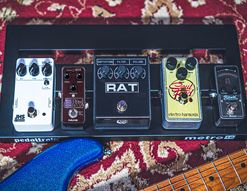
Pedals were central to Kurt Cobain’s approach to guitars and guitar sound. I’ll highlight the most significant stompboxes of Nirvana’s career, outlining Kurt’s most used distortion and modulation effects. Lots of ‘secondary source’ people (i.e. individuals who weren’t there to witness things first hand) mention all kinds of fuzz pedals and other devices that they swear Kurt used. I’ved tried to keep to official facts, such as the direct words of Bleach producer Jack Endino and Nevermind producer Butch Vig.
BOSS DS-1: possibly the most significant gain pedal for Nirvana, the simple ‘orange BOSS’ was Cobain’s main source of dirt for both Bleach and Nevermind. In the interest of accuracy, I’d share with you that Kurt’s DS-1 was an old Japanese model with a different chip inside it than the DS-1 you can buy today. In all honesty, it’s a pretty different sound, and that’s maybe why he went for a DS-2 once his initial DS-1 bit the dust.
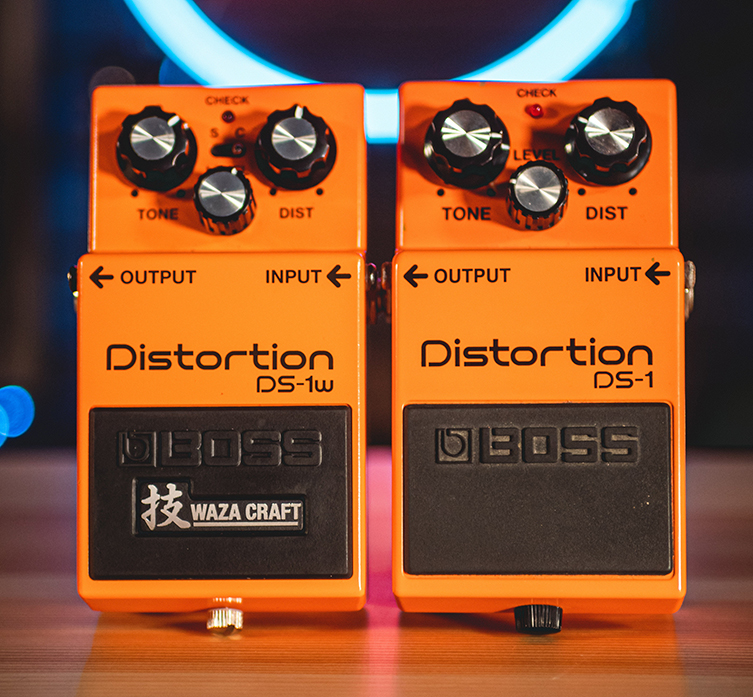
That said, I reckon you can still get close with a current DS-1, and particularly close with the BOSS Waza Craft DS-1W! Do you want to try Kurt’s own DS-1 settings? Or course you do, why wouldn’t you? Max out the gain, max out the volume (or have it so it punches above your clean sound at least) and set the tone knob to ‘11 o’clock’. Done!
BOSS DS-2: favoured as a distortion pedal for live work, Cobain replaced his ailing DS-1 with this Turbo model successor. As mentioned, BOSS changed certain components within the DS-1 and my guess here is that Kurt heard more of his original DS-1 sound in the DS-2 pedal. Incidentally, this is the distortion pedal he used with his acoustic guitar on MTV Unplugged in New York.
For settings, use the same as above (volume and gain dimed, tone at 11 o’clock) and keep the Turbo switch on ‘1’.
Electro-Harmonix Small Clone: this is the chorus effect used in the intro to Come As You Are, the clean parts of Smells Like Teen Spirit, the In Bloom solo and most other clean guitar parts on Nevermind.
Stick the depth switch in the ‘up’ position (Kurt’s tech eventually welded it there so it wouldn’t change!) and put the rate somewhere around the ‘10 o’clock’ position for Kurt’s preferred sound.
Electro-Harmonix EchoFlanger/PolyChorus: here’s something you don’t learn everyday: the Electro-Harmonix EchoFlanger and PolyChorus pedals have identical circuits! They are effectively the same pedal with different chassis paintjobs and control layouts. Reissues may be slightly different (as almost all pedal reissues are), but either of these will get you Cobain’s sounds on songs like Heart-Shaped Box and Scentless Apprentice.
EHX Big Muff: According to Butch Vig, they used a Big Muff on Lithium to get a more scooped, fat fuzz sound. Kurt was not known to use one live for this song or any other.
Tech21 Sansamp Classic: this was the main source of distortion for In Utero, presumably plugged into the knackered Fender Quad Reverb rather than going direct. The Sansamp Classic is a unique pedal: it is designed to be DI’d (hence the name Sans, which is French for ‘without’), and has 8 small ‘character switches’ in the middle to sculpt and carve the type of sound you want.
From what I can gather, Kurt’s settings were the following: Character switches: first three are UP, the next three are DOWN, and the final two are UP. Then, max all of the control knobs apart from the High setting, which you want around 12 o’clock.
Kurt’s Acoustics
You’ll see pictures of Kurt with a number of acoustic guitars (an old Kay and an Epiphone Texan spring to mind instantly) but two acoustics are more significant by far…
Harmony Stella H912 12-string: lots of Nirvana classics were written on this humble acoustic, and it appears on Nevermind on both Polly and Something in the Way. These songs have 12-string acoustics? Yes and no! Kurt bought this Stella for $30 in Denver, Colorado, and instantly removed the strings. He replaced them with 5 nylon strings (I do not know why he stopped at five!) and allegedly kept it that way, never changing the strings again.
As well as appearing on Nevermind, the guitar accompanied Kurt on tour as a warmup and chillout guitar.
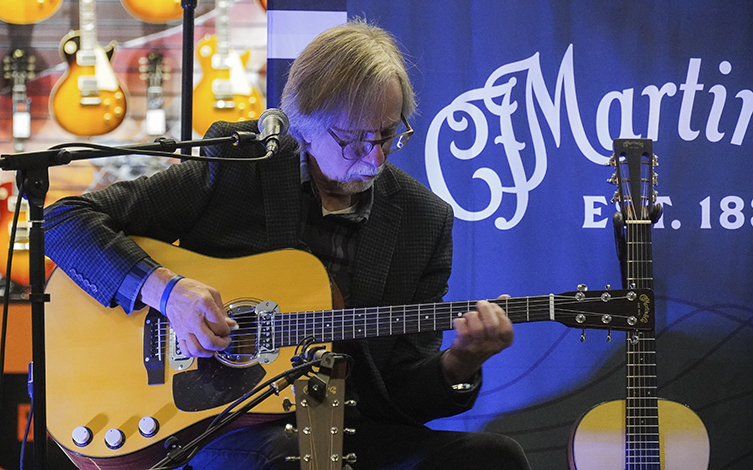
Martin D18E: Yes, you’ll recognise this from MTV Unplugged in New York! It’s easily Kurt’s most famous acoustic guitar, and I’m pretty certain he was attracted to it mainly for its cool/ugly control knobs and idiosyncratic pickup. Always mindful of making a statement, Cobain was never going to play a fancy, shiny guitar, was he?
This guitar sold in auction for an astounding $6 million in 2020.
Cobain’s Music Tools
What I get from checking out Kurt’s guitar equipment in some depth is that he was a practical, pragmatic guy. As a lefty, he didn’t have the same access to equipment as right-handed players, and even though he seemed to be quite deliberate in his choices (and happy to smash up what wasn’t happening for him!), he used what he could get his hands on and make work.
By the end of his time, he was ordering Fenders specifically from Japan, which speaks to his experience with used Japanese Strats and offsets. He used BOSS pedals because they were reliable and replaceable, and the guitars that survived tours were the ones he continued to use.
He never got to see his Jagstang dream come true, so we’ll never actually know if he’d have liked them or not. What we do get to see is a pattern of using functional, utilitarian instruments that he’d invariably tinker with and modify. We see him using amps that did the job, over vintage museum pieces. He went to rack units because they were more tour-friendly and consistent, and then he used a clapped-out old Fender amp for recording the follow up to the biggest record of the year.
Deliberately counterintuitive? I’d say not: I’d say he followed his nose when it came to equipment, and he was specific, but he was no snob. He went for the sound and the feeling, and maybe only then did he consider his carefully constructed iconoclast image.
But who knows? I never met the guy. I’ve listened to him since I was a kid though, and I think what he did with guitars was frequently thrilling. You do too, or you’d never have made it to the end of this article, so thanks for sticking with me and I hope you learned some cool stuff along the way. Kurt had more gear that I’ve spoken about today (a Tele sprayed blue with’Courtney’ scratched into the latex paint, for example), but I think I’ve covered the major moments.
Time to make some noise!