Every guitarist needs an overdrive pedal. That’s just common knowledge, right? And not a distortion pedal so much as something light and somewhat transparent, that’ll put a little dirt into your tone without it getting too buzzy or saturated. Distortion is a different subject, which I’ll address elsewhere.
Overdrive opens up the voice of any electric guitar. It allows that voice to sing, to sting and to chop in ways that clean sounds just can’t. You get colour and dynamics once you introduce overdrive to your sound, so it’s a very expressive thing for every guitarist to have.
Now, we are currently living in an age of countless overdrive boxes. We really have more than we need, and it may not always be too clear what the best option is. New overdrives are offered up on an almost weekly basis, and yet the old classics are still as popular as ever. How are you going to decide what you need?
I’ll help you!
Even before my time at guitarguitar, I was a pedal nerd. I’ve been using, buying, trading, re-buying and generally geeking out over pedals for literally decades. From overdrives to fuzzes to more esoteric choices (Digitech Synth Wah, anybody?), I’ve been through hundreds of pedals, and I’ve got opinions on them all! Crucially, I’m no snob. The cost of a pedal does not impress me, and neither does a fancy paintjob on the chassis. I’m here for the sound and the expression, and those two things can be had at all price points!
So, please join me for a while as I run down the top overdrive pedals that are available today. Not fuzz pedals, not high gain distortion, but overdrive in its truest sense.
Enjoy!
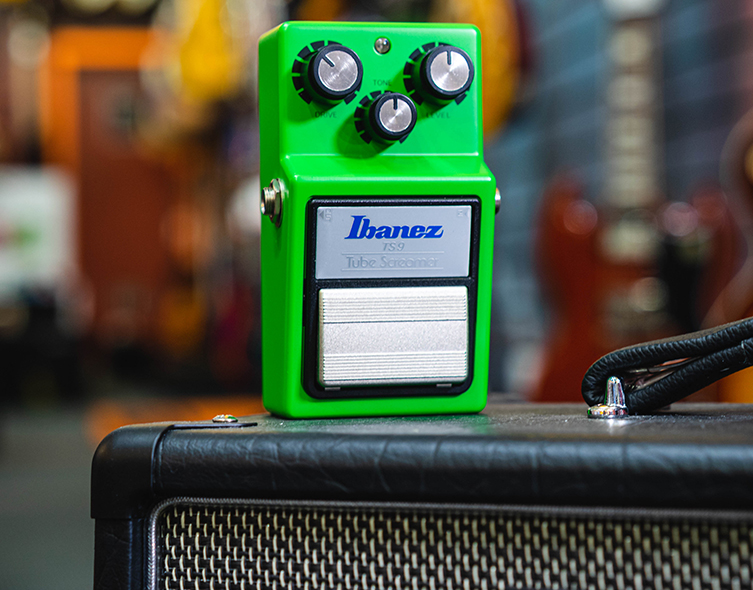
Ibanez Tubescreamer
Ibanez’s ‘little green box’ is one of the world’s most enduringly popular overdrives. From light to medium levels of gain, this pedal delivers with a slight midrange boost in its character that proves to be very useful to most players.
The Tubescreamer (or Tube Screamer, I’ve seen both) is available in a number of variations, with the two most popular being the TS-9 and the TS-808. Let me be practical here: guitarists talk themselves dizzy over which version is best, and there’s no real answer. Both sound VERY similar, and so you should simply try both, or just go with the one that’s available to you. You’ll love either one, I have a strong feeling about it!
Pro Tip: The ‘Tubescreamer’ trick is where you connect a TS pedal in front of your highly distorted amplifier in order to tighten up the sound and add a very special, noticeable quality to the sound. On the pedal: volume maxed, gain at zero, tone wherever you like (I’d dime it). Keep the pedal switched on and enjoy the superior tone!
Also check out: Nobels ODR-1X, Keeley Noble Screamer, Earthquaker Devices Plumes, JHS 3 Series Screamer. These are all high quality TS-style pedals from other makers.
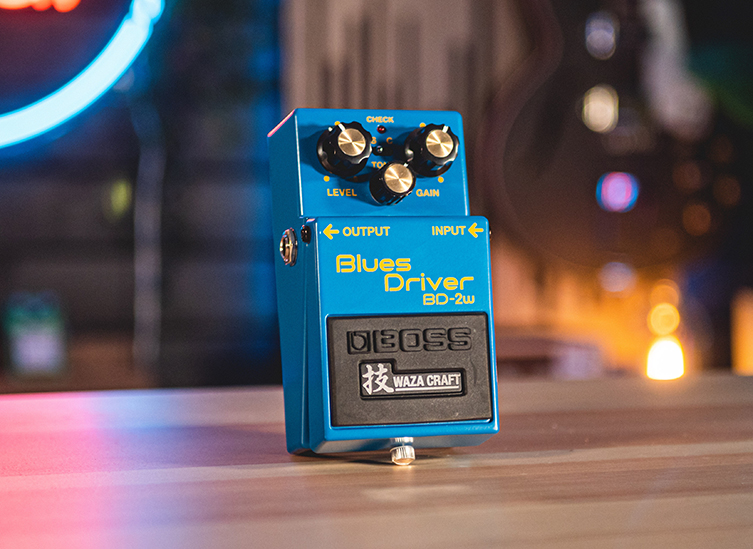
BOSS BD-2 Blues Driver
Here’s one from pedal giants BOSS that I’d describe as a well-deserved classic. For light to medium gain, the BD-2 excels, with a quality of tone that belies the reasonable outlay. There’s so much potential in this pedal, given the dynamic range and levels of subtlety available. Regardless of how ‘champagne’ your other pedals are, I believe the humble Blues Driver will prove its worth time and again. A/B it against anything at any price and then see if the difference is worth the cost. It might be, but you’ll be impressed!
Klon Centaur and Klones
I presume you might already have heard of this pedal? This maybe isn’t the place to go into the fables of the Centaur though. Whilst I do personally find the mythology surrounding the Klon Centaur a bit much, there’s no denying that it is a great sounding overdrive pedal, in all of its numerous guises!
The Centaur sound is that of a particularly transparent overdrive. Guitarists like it because it adds to their sound without changing anything fundamental. The drive is clear and not too dirty, but still enough to put some hair on the signal, as it were. It’s the sort of sound that encourages you to keep playing and having fun, so yes, I totally get why people love a good Centaur!
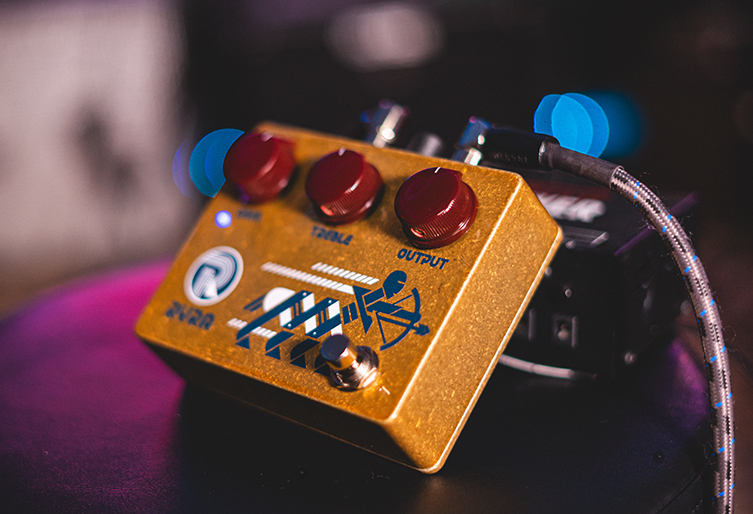
Original Klon units (and KTR replacement versions) still command silly money today, though. I mean REALLY silly money. The good news is that plenty of other companies nail that sound today, including Wampler’s Tumnus V2, the RYRA Klone and the very affordable Electro-Harmonix Soul Food overdrive. I recommend checking out the two I mentioned there and seeing how they work for your sound, because these basically ARE Centaurs, in sonic terms, and they don’t cost a holiday to buy.
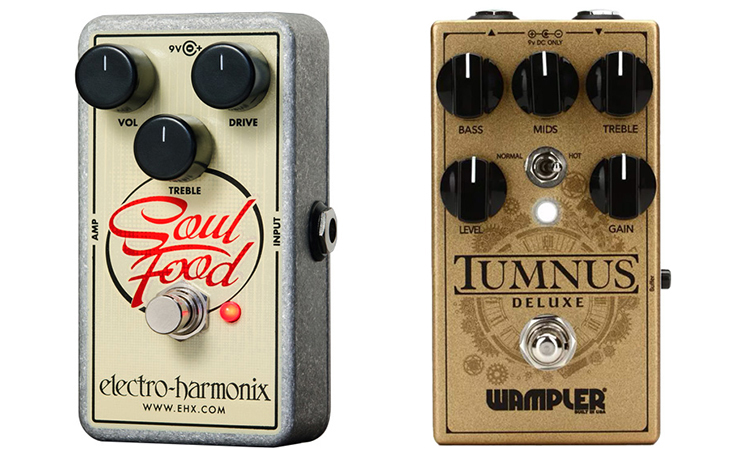
See: Electro-Harmonix Soul Food, Wampler Tumnus, JHS Morning Glory, RYRYA The Klone
MXR CSP027 Timmy
MXR is a good company to keep an eye on. Now owned by Dunlop, they benefit from lots of interesting collaborations from some of the best names in the biz. One such is the Timmy overdrive, which is an officially licensed clone of the Paul Cochrane Timmy overdrive. Like the Centaur, lots of companies have had a stab at replicating the juicy, expressive overdrive flavour of the Timmy, so why not go for the real thing?
You’ll find the original Timmy on the pedalboard of many Nashville sessions players, but as with all OD pedals, you use it as a platform to do your thing on.
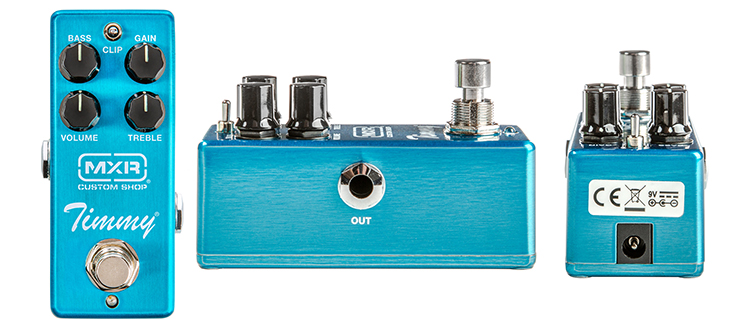
See also: MXR Duke of Tone
Marshall Bluesbreaker
Marshall are obviously makers of some of the greatest overdrive tones in the world. Their amplifiers ARE rock ‘n’ roll, after all, so it makes sense that their overdrive pedals also have game. What’s interesting to me is that they aren’t always the most directly obvious first choice for guitarists. Strange, right? It may be option paralysis from too many brands, so let me spell it out here: do not overlook Marshall drive pedals!
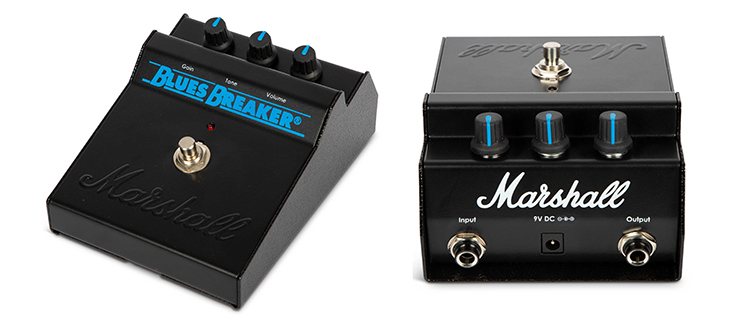
Marshall does a whole range of new gain pedals that are painted gold and based on amps like the JCM 900 or whatever. They are great, but not what I’m interested in today. I want this big chunky steel bodied Bluesbreaker pedal, a reissue of the original 1992 one! You may remember these, you may not: either way, it was part of a range of hugely successful renditions of classic Marshall drives, back in the days before boutique overdrives were a thing.
This one is a belter, for blues, indie, rock and all other genres when you just want to sound good and don’t need too much gain. It’s warm, responsive and oh-so-very Marshall coded in its tone. What else do you really need?
Universal Audio UAFX Enigmatic ‘82 Overdrive Special
Universal Audio are a tech brand who produce top interfaces and digital plugins. Well, that was what they were known for until they started absolutely ruling the world of guitar pedals, that is! Their recent-ish range of UAFX pedals have been uniformly stunning, to the extent that pro players like U2’s The Edge chose them exclusively for his tones during those gigantic Vegas Sphere gigs. No amps, just a few of these UAFX boxes. Not a bad advert for quality, right?
Anyway, these are all like amp simulators in-a-pedal, with each one chasing the sound of a different amplifier. You can have pedals that capture the tones of a Boogie Dual Rectifier, a Peavey 5150, a Marshall Plexi and loads more. The one that fits the bill today is the Enigmatic ‘82, which is a highly successful version of a Dumble Overdrive Special amplifier.
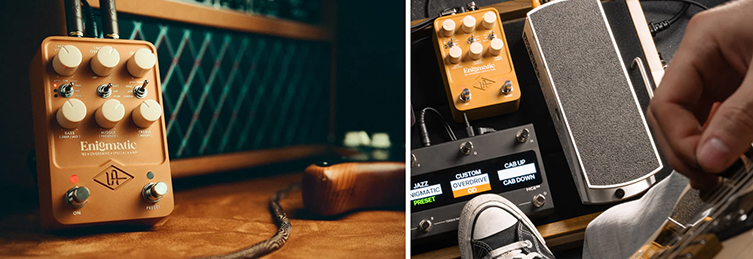
I mean, I say that, but I’ve never played through an actual Dumble amp, because they are rarer than leprechaun’s gold. Hardly anyone has used one, let’s face it! But, I HAVE played many of the other amps the UAFX have modelled for other pedals, and they’ve hit the mark so squarely that I have no doubts that this one is as good as the rest. On its own terms, it’s a beautifully clear and ‘moreish’ sound that pushes your playing and technique forward in a very musical way.
Used Dumbles cost a hundred grand out in the wild, so maybe consider this is a viable alternative to achieving mythical overdrive goodness!
DOD Badder Monkey
A few years ago, a fairly forgotten overdrive pedal from the past became the latest beneficiary of ‘viral success’ after the internet decided that it sounded like a Klon Centaur (see above). The fact is, it did, but the other fact was that loads of pedals do, as we’ve covered today already. Still, folk went nuts for the Digitech Bad Monkey and paid silly money for it, because the internet told them too.
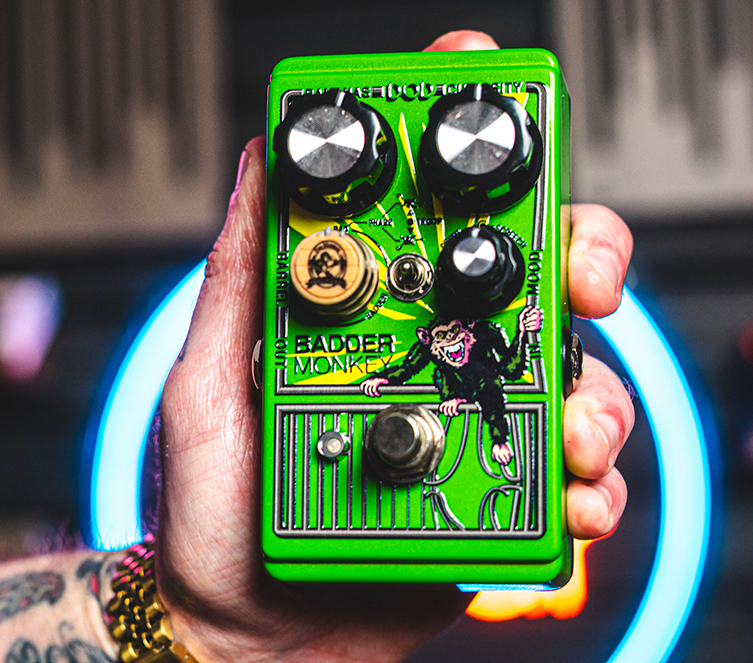
Well, now you can reliably grab yourself an improved and expanded version of said pedal, and enjoy more tonal benefits for ‘normal pedal money’. The DOD Badder Monkey (DOD and Digitech are the same company) adds a number of variations in addition to the original tone. One control (shaped like a barrel, ok?) is an endless 360 degree control for blending those variations together to get just the right blend of overdrive.
Fulltone OCD
At the beginning, I mentioned that this blog was about lighter overdrive pedals, rather than full-on distortion. So why am I including the Fulltone OCD? It’s pretty well known to be a higher gain drive, right?
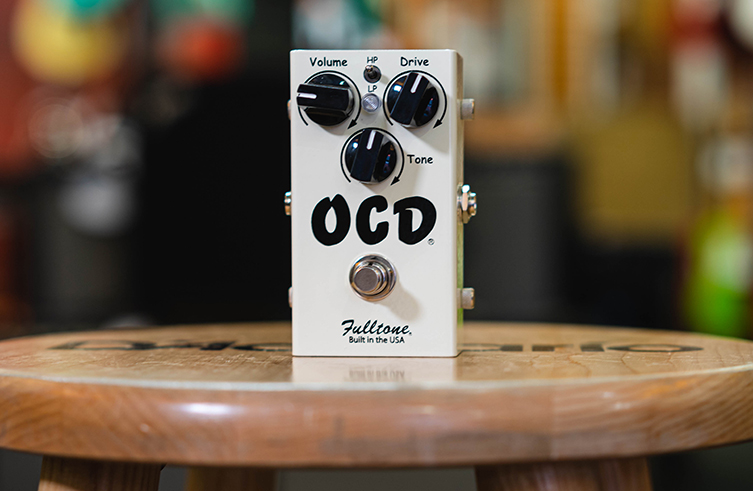
Well, yes, but have you ever actually used it on a low gain setting? No? Ok then. Do that and then tell me that it isn’t at least the equal of everything we’ve looked at today. It does low gain and mid gain extremely well, and can go further into actual distortion than the other pedals I’ve shown you today. If you can buy only one drive pedal, this one will satisfy a large chunk of your needs, outwith high gain metal. It’s ace.
Everybody Needs an Overdrive, Not a Story
What did you think of these overdrive choices? 8 main choices, and 16 overall if you have a look at my further recommendations within the text.
What I’ve noticed in the writing of this guide is that there is a lot of snake oil spoken and written about the subject of overdrive. From Klons to Dumbles to Bad Monkeys, our industry and culture can’t wait to espouse the next piece of gear that will deliver some sort of supernatural overdrive, if only you can get your hands on one. Fans get excited, prices rise, and objectivity gets lost in the noise. It happens every couple of years, and us guitarists seem to be particularly susceptible to it.
Can I be bold here? Here’s my take. There is nothing mysterious about ANY of that equipment, and you can sound as good as anyone with a Klon or a Dumble without having to fall into this culture/clickbait/MOFO trap. Check out the pedals I’ve mentioned today and you’ll find the truth for yourself: sounding your best is a matter of understanding what’s out there and making a choice based on you as a player. Your actual skills and feel as a guitar player will determine how good you sound over any stomp box.
But hey, you still need a good overdrive, right? And a great overdrive pedal does not need to be expensive or complicated. What it needs to be is right for you. Nobody else!
If I were offering advice - and I suppose I already am - then I’d say that there is a reason why the Ibanez Tube Screamer has been unceasingly popular for decades, and it’s not just because people have read that SRV used one. If I were beginning my quest to find a great overdrive, I’d begin there. Try one and see how you get on.
But there’s a LOT of great overdrives out there, and part of the fun is doing the research, visiting the shop, and trying out your favourite potentials. I hope this guide has played a small part in helping you assess what’s out there. Go with your ears and your fingers, because they’ll tell you everything you need to know.
Good luck and have fun!