What is an active pickup? What makes a pickup active or passive?
Give me five minutes today and I’ll put you straight on the subject. I’ll clear up any confusion or uncertainty you might have about this subject in a clear, straightforward manner. I’ll describe both styles, explain their differences and hopefully help you understand whether you need active or passive pickups in your guitar.
Passive pickups
Passive pickups are the sort of pickups you’ll find on the vast majority of electric guitars and basses. Passive pickups work without requiring any extra source of power. You simply plug your guitar into an amplifier and you’ll get a sound. Passive pickups use magnets and copper wire coils to turn the movement of a string into an electrical signal, which is what travels through the output of the guitar to your amp, giving you your sound.
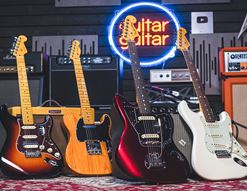
Most Stratocasters, Telecasters, Les Pauls and so on all have passive pickups. It’s what we consider to be ‘normal’, to put it one way.
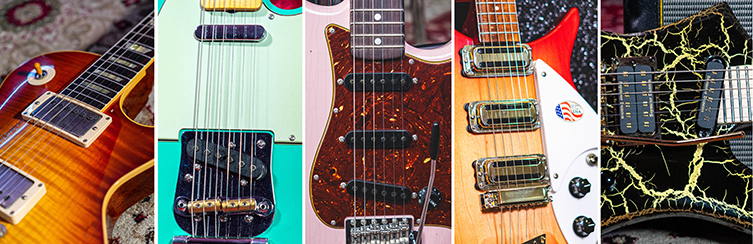
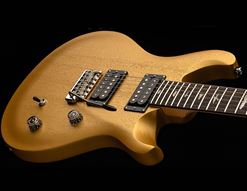
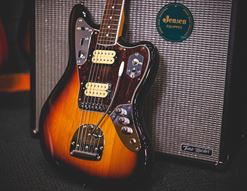
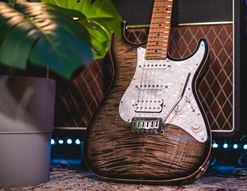
(All of the examples above show different types of passive pickups)
Who are Passive Pickups For?
Passive pickups are for everyone. All guitar styles can use passive pickups, and all musical styles are suitable for passive pickups. Because they are thought of as default ‘standard’ technology, the majority of guitar pickups out there in the world will be passive.
Passive pickups can range from low output to very high output, and this will reflect their intended user. For example, low output Strat-style passive single coil pickups are great for blues styles, and high output passive humbuckers are great for shred and metal.
In case it’s useful for a reference, here is a very small list of top players who prefer passive pickups, but bear in mind that most guitarists do use passive units!
Guitarists Who Use Passive Pickups
- Jimi Hendrix
- Jimmy Page
- Kurt Cobain
- Ritchie Blackmore
- Eddie Van Halen
- Joe Satriani
- Steve Vai
- Nuno Bettencourt
- Dimebag Darrell
- John Mayer
- Angus Young
- Stevie Ray Vaughan
- Scott Ian
- Wes Borland
- …and so on
Active Pickups
Active pickups require an extra source of power in order to work. Most commonly, this is a 9v PP3 battery, which is normally housed in its own little compartment within the guitar body.
Active pickups generally have a higher output than passive pickups, and a much lower noise floor. This means that you can achieve a very loud, thickly distorted sound without having to put up with lots of background noise and hiss.
Active pickups are most often found as humbuckers, but active single coil pickups exist, too.
Active pickups actually function in a similar way to passive pickups (they have magnets and copper windings, though hardly ever polepieces) but also have little preamps built into the pickup itself, and that is what needs the battery power. Active pickups also need slightly different electronics (wiring, pots, capacitors etc) so these are generally replaced when a set of active pickups are installed on a previously passive guitar.
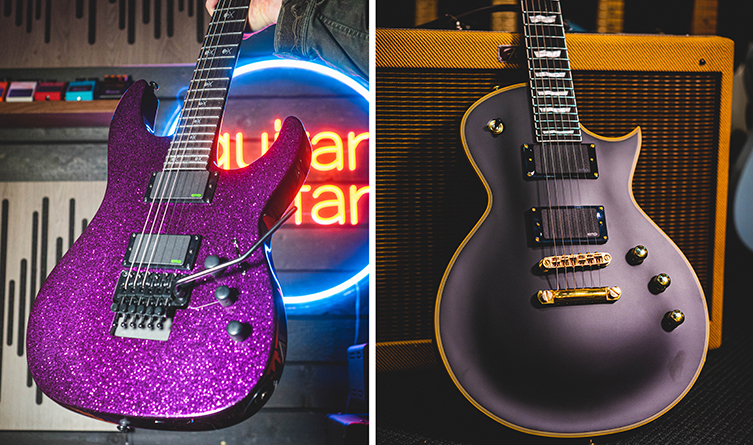
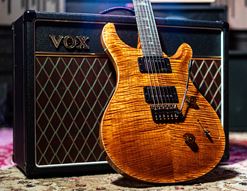
(These two ESP guitars both have active EMG humbucking pickups)
Who Are Active Pickups For?
Hard rock and metal guitarists tend to use active pickups more than other players, since the technology allows for bigger, more intense tones with far less background noise and buzz. Brands like EMG and Fishman are very popular with metal guitarists for this reason.
That said, you will also find guitarists like David Gilmour, Steve Rothery and Mark Knopfler using active pickups in their guitars too, often in the single coil style. This is perhaps to enjoy the benefits of a quieter overall rig in terms of hum and hiss.
Active pickups can also be very useful for players who use a lot of effects and processing, since the stronger signal strength from these pickups isn’t as compromised as a passive one when it travels through lots of pedals and rack units.
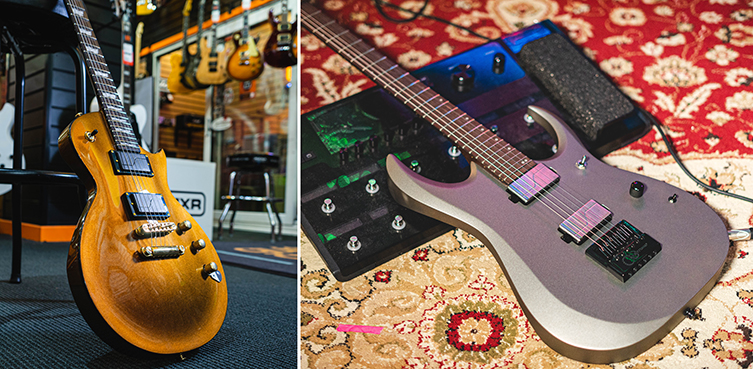
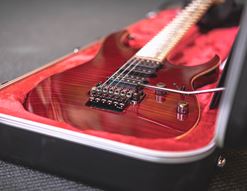
(These guitars are fitted with Fishman Fluence active humbuckers)
Here’s a brief list of some guitarists who use active pickups, and the actual pickups they use:
Guitarists Who Use Active Pickups
- Zakk Wylde - EMG Zakk Wylde set
- James Hetfield - EMG Papa Het set
- Kirk Hammet - EMG Boneshaker set
- David Gilmour - EMGDG20
- Steve Lukather - EMG
- Prince - EMG
- Mark Knopfler - EMG 85 and SA
- Steve Rothery - EMG SA
- Rammstein - Paul uses EMG and Richard uses Fishman Fluence
- Stephen Carpenter - Fishman Fluence Signature set
- Tosin Abasi - Fishman Fluence signature set
- Devin Townsend - Fishman Fluence signature set
- Jennifer Batten - Fishman Fluence
- Slipknot - Mick uses Fishman, Jim has EMG
- Polyphia - both players use Fishman Fluence
How Can I Tell if a Guitar Has Active Pickups or Not?
The easiest way to tell if a guitar has active pickups or not is to look for a battery compartment on the back of the body. Usually, this will be a little area that can be opened by hand or screwdriver, and houses the 9v battery required to power the active electronics.
Now, this isn’t foolproof! I’ve personally owned guitars that I’ve bought second hand, and a previous owner has modified it from passive to active. There was no specific battery compartment - the battery was tucked in under the pickguard - and so there was no obvious way to tell if the guitar was passive or active.
Active pickups are immediately switched on when you insert your ¼ jack cable to the guitar’s regular input, so if you are in the habit of leaving your cable in your guitar, and are finding that your new guitar has gotten progressively weaker sounding, than you may well have an active system and the battery has been running out!
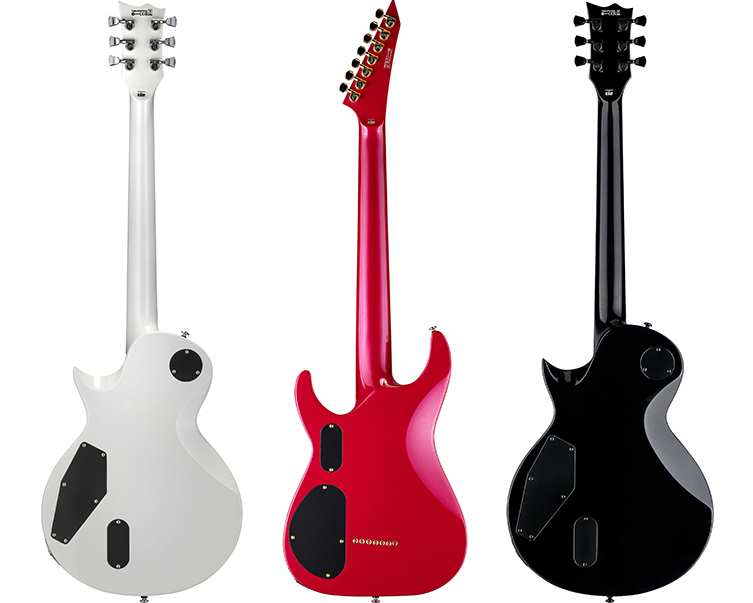
(Notice the little compartment on the back of each of these LTD guitars? That's where the 9v battery goes, and it your most obvious clue that the instrument is active.)
Active vs Passive Pickups: Which is Better?
In terms of which type of pickup is ‘better’, well, that’s a very subjective thing. As I’ve covered earlier, metal guitarists love active humbuckers because they get extra crunch and less noise, but those same pickups are maybe not so suitable for vintage tones, classic rock and blues. Some tones work really well with active pickups, and some don’t.
For passive pickups, there’s so much choice out there that you’re likely to find something that’s close to what you require: it’s just a matter of making the right choice for you. But if you want a similar sound to somebody who uses active pickups (be they James Hetfield or Mark Knopfler), then you’ll have a much easier time achieving that with the same active pickups.
So, neither is ‘better’, but one type may be better for you than the other.
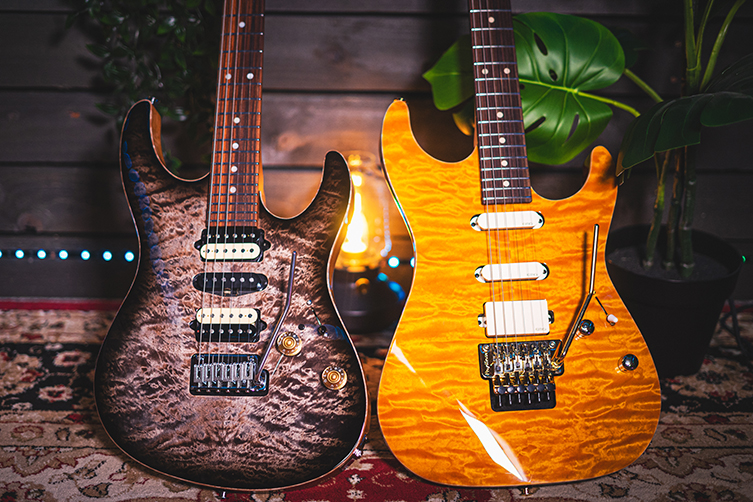
(The Suhr on the left has passive pickups, and the one on the right has active pickups. Both are great, and neither is objectively 'better')
What is Active EQ?
An active EQ is a circuit with an instrument (usually a bass) which requires a 9v battery, but not for the pickups. It’s to power an onboard EQ, which is normally manipulated via control knobs, just like the volume and tone knobs on a regular passive instrument.
The active EQ often allows you to both cut and boost certain frequencies, allowing you a greater degree of control over your sound. Active EQs often work quite separately to active pickups, and in fact many basses - such as the famous Music Man StingRay - use passive pickups alongside active EQ circuits.
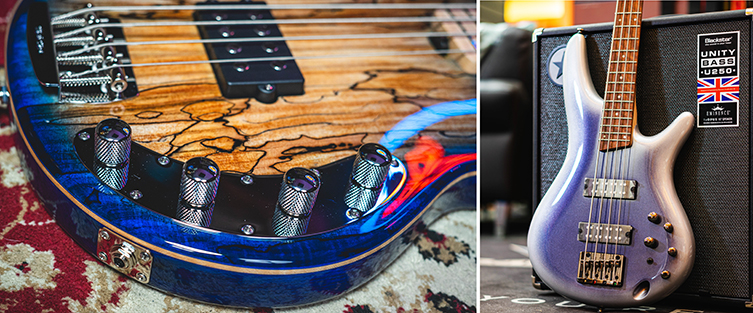
(Examples of basses with active EQ circuits built in. One from Ernie Ball Music Man, and the other from Ibanez)
Can A Guitar or Bass be Both Active and Passive?
So, can a guitar or bass be both active AND passive? Interestingly, the answer to this is ‘sort of, yes’. This is more about a slight misunderstanding of which parts of an instrument are active or passive.
Let me explain. Earlier, I talked about active EQ circuits? Most often, an active EQ is used with passive pickups, and the EQ section forms part of an overall active preamp. This can usually be switched on or off via a toggle on the instrument, so the loss of battery power doesn’t mean that the instrument will stop making a sound. It will simply lose the use of the active preamp and EQ until a fresh battery is swapped in.
Some bassists like to have the choice of going between a passive sound and an active preamp/EQ sound, so it’s often a matter of taste, and many basses can supply both.
Guitars don’t tend to have active EQ/preamps, but you do sometimes find active mid-boost circuits on guitars like the Tyler Studio Elite, for example. When the mid-boost is switched off, the instrument functions like a regular passive guitar.
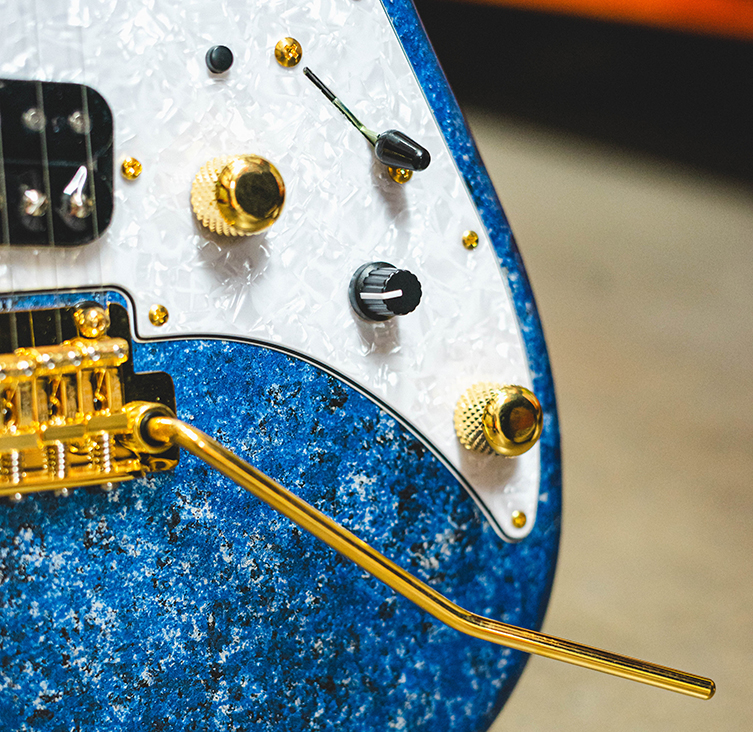
(That mini switch you see on this Tyler JTG switches on the active mid-boost. The guitar can totally function as a passive instrument without it)
That said, it’s technically quite possible that a guitar can be both passive and active at once. It’s pretty much never done, but it is doable. Separate pickups with their own electronics and wiring would be required, and though it’s a careful job, it’s perfectly possible. It’s more a case of guitarists not wanting it! Guitar players seem to prefer to have active and passive guitars as separate instruments. It’s a reason to own more guitars, after all!
Summing It Up
So, those are the main points around active vs passive pickups as I see them. What I didn’t do was to try to describe the ‘active sound’ vs the ‘passive sound’, since I feel that there’s so much variety out there, any descriptors would be overly general. After all, if both Zakk Wylde and David Gilmour have used active pickups, then there’s more to the subject than just one sound, right?
Passive Pickups
- No extra power needed
- Lots of dynamic range
- Endless options
- Susceptible to 60 cycle hum
Active Pickups
- Requires a battery in order to function
- High power
- Low background noise, no 60 cycle hum
- Relatively few options
- Compressed sound
In brief, you will mostly be able to get what you need from the correct - and I do mean correct - passive pickup for you. There’s a lot of choice out there and not all passive humbuckers are equal, not by a long shot. But that’s a different subject!
If you love chunky metal sounds and really want your notes and riffs to stop dead without any hiss, then active pickups are your friends.
If you want more compression, more power going into your effects or amp, then active is the way to go.
If you want a clean sound that is pristine, clear and noise-free, then check out active single coils.
Just remember to unplug your guitar cable when you’re not using it!
Click to View All of Our Pickups