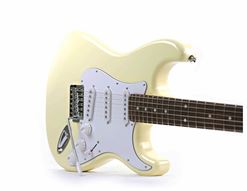
Do you love the Fender Stratocaster? If so, then you are most welcome here! Today’s article seeks to explore and discuss the various ways that we can get the most out of a Strat in terms of tone. Whether you’re a Hank fanatic, an SRV aficionado, a Gilmour maniac or none of those types at all, your love for Fender’s greatest creation will mean that there’s going to be plenty here for you to love!
This article offers a number of tips, observations and suggestions about how you can get the best from your Stratocaster. These tips will be mostly based on the guitar itself - ways you can utilise the controls or make adjustments - but some tips may include other bits of gear. All of them will hopefully help you in your quest for excellent tone!
The only thing I’m taking for granted here is that - unless stated otherwise - I’ll be talking about the traditional 3 single coil pickup Strat style, as opposed to any other pickup configuration. You with me? It’s twang time!

Lower the Pickups
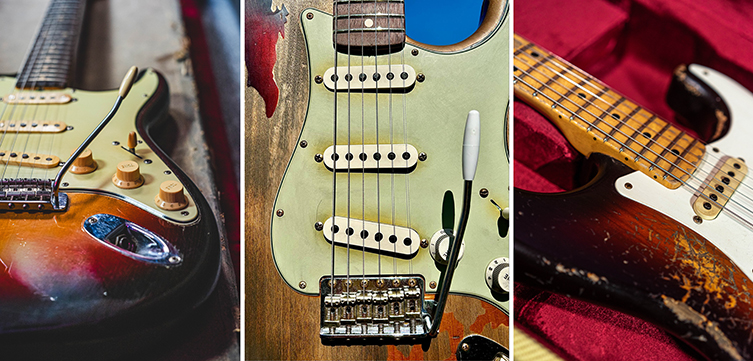
Here’s my first one for you. If you’ve never done this before, grab a screwdriver and lower the pickups a little. Although Strats do not have high output pickups, the magnets within them will still be pulling at the metal guitar strings. After all, that’s how they pick up the vibration and convert it to an electrical signal!
But lowering the pickups even a little allows more room for vibration, resulting in a clearer, more open sound. You’ll get more dynamic range, which I believe is one of the Stratocaster’s chief strengths as an instrument. Also, you’ll lessen the ‘Stratitis’ effect: those strange, wonky overtones that sometimes just happen as you play. Less of that!
There is such a thing as having the pickups too low, so just use your eyes and ears wisely, and don’t go crazy.
Also, for a further tip: try lowering only the middle pickup. Doing this not only gets it out of the way of your plectrum, but it also makes the in-between ‘quack’ sounds more pronounced.
Neck Pickup For the Win
Regardless of what styles and genres you play, here’s something to try: stay on the neck pickup. Dial your amp and pedals when the neck pickup is selected, making adjustments to make this setting as good as possible. Make this your default pickup selection.
There are two reasons for this. Firstly, most guitarists agree that the neck pickup is the Strat’s most useful and full-of-character sound, so it’s the best one to base your sound around. Secondly, if your settings all sound good on the neck pickup, they are 99% likely to sound amazing on the bridge pickup, too. The other way isn’t so easy: setting your tone up for the bridge pickup often leaves the neck setting muddy, flat or lacking in sparkle.
Rewire the Tone Controls
Let’s be honest with each other: how often do you feel the need to have an individual tone control for a Stratocaster’s middle pickup? If, like me, your answer is ‘never’, then there are a few easy mods you can try in order to get more from your controls. Do these yourself if you’re handy with a soldering iron, or ask your local tech:
- Bridge tone mod: rewiring to have the bottom tone knob control both the bridge and middle pickups simultaneously. You can physically move the wire, or add another little ‘jumper’ wire for this.
- Master tone mod: ditch the whole notion of separate tone controls altogether: go for a master volume, a master tone and then whatever else you fancy having on the third pot! Some sort of filter or passive boost?
Roll Off for Rock
If you’re playing rock music on your Strat, you can approximate the sound of a humbucker by selecting the bridge pickup and then rolling the tone control back a little. It’s not identical by any means, but that slight shaving of treble frequencies from the signal definitely gets a Strat into the right ballpark, sonically. You need to have a bridge tone control to begin with, of course, and vintage Strats are not born with them, so please see my previous tip for some ways around this.
“The Good Strat Sound”
Is this a bold claim? THE Good Strat Sound? Not A good Strat sound? Well, try it for yourself and see what you think!
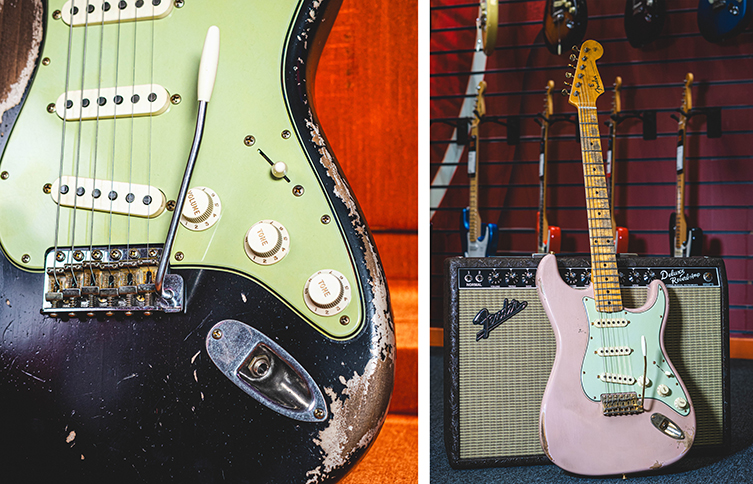
Whichever amp or modeller you prefer using, dial up a light overdrive sound. Connect your Strat and simply turn the guitar’s volume back until the sound cleans right up. Give it a go. It’s a completely different kind of clean, isn’t it? Still very Stratty and of course it’ll get hotter as you wind the volume back up. The good Strat sound? I reckon so! What other guitar can give it to you like this?
Get a Compressor and an EQ Pedal
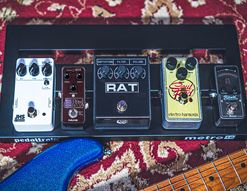
Maybe you already have a compressor and an EQ pedal? If not, I recommend splashing out on one of each. I feel that Strats are so malleable in terms of their sonic make-up, that you really notice it when you compress one or adjust the EQ. You can achieve some pretty dramatic results from this combo, from adding beef to distorted sounds to warming up the tone for some jazz.
Compressors, when used with relatively low gain guitars like Strats, can actually act as excellent clean boosts too, so you’ll get loads of tonal mileage and sculpting potential from a Strat if you use these, particularly if you also follow some of the other tips in today’s article!
Replace the Missing Mids
Stratocasters are beautiful sounding guitars. Part of the reason they have such good clean tones is that they have a natural midrange scoop to their sound. This is also why they can sometimes sound a little bit weedy when you want to ‘go big’ with the distortion. You can get some of that back by either using an EQ pedal with the mids boosted, or you can use an overdrive like the famous Ibanez Tubescreamer, which has its own pronounced midrange ‘hump’.
Mids are important for guitarists, particularly when paying live, so don’t lose those frequencies!

The Quack
Those in-between ‘quack’ sounds that you get from a Strat are some of that guitar’s most famous tones. Where would the funk genre be without them?
You get two of these out-of-phase sounds on Strats, and I think it boils down to this: position 4 (between neck and middle) for Nile Rodgers, and position 2 for Where the Streets Have No Name. Remember to turn the volume back to 8 or 9 for the Nile Rodgers sound. Why? See below!
Volume on 8 or 9 for Clean Tones
This is a Nile Rodgers thing (see above) and you might really like the effects you get. Basically, you keep the volume slightly off the top spot, so 8 or 9. This is for clean sounds in particular, and there are two reasons for it: one; it actually changes the resonant peak for the output signal a little, thus changing the tone, and secondly; it helps to do away with a little bit of the plectrum attack on the strings. You get less ‘click’, which may or may not be something you like!

Add More Springs to the Tremolo
If you like using the Strat’s tremolo, but feel like the tuning stability sometimes gets thrown out the window as a result, then try adding two more springs to the tremolo claw at the back of the instrument. This creates much more tension, so you’ll need to set up the guitar again, but what it’ll do is stabilise that tuning, and hopefully mean that you can abuse the tremolo more without suffering from tuning slippages.
Consider Blocking the Bridge
If you’re not too fussed about wobbling the tremolo arm when you play, then you might hear and feel significant benefits if you block the tremolo. Blocking the tremolo means literally sticking a block of wood inside the back with the tremolo block so that it physically cannot move back and forth. Now your Strat is essentially a hardtail model. You can do away with the tremolo springs, since they no longer have a function.
Here’s what you get back:
- No more sympathetic ringing from those tremolo springs
- Increase in sustain
- String bends that stay in tune and don’t shift in pitch (particularly compound bends)
- Punchier low end to your sound
If those sound like good trades compared to losing the whammy bar, then give it a go! That said, those changes do kind of make the guitar less ‘Stratty’, so weigh up your options. It could be exactly what you need, and you won’t know until you try!
The Strat: A Canvas Full of Character
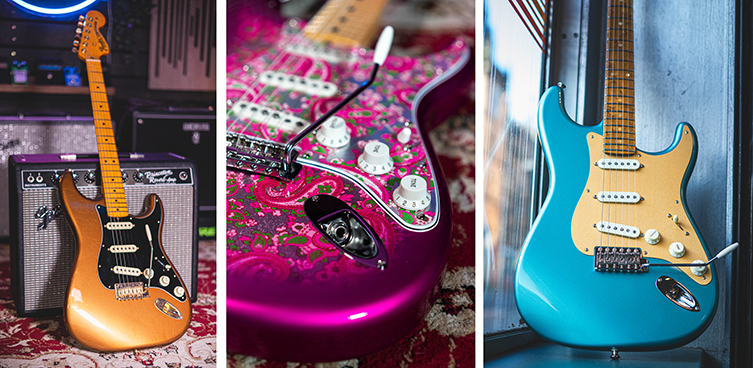
The Strat is one of the most distinctive sounding guitars out there. The clean snap and twang of a Strat is as immediately recognisable as the jangle of a Rickenbacker or the roar of a Les Paul. More so, I’d say! And despite that, there is room within the Stratocaster’s voice for every player who approaches it to have a unique expression of that voice. Jimi Hendrix is as distinct as Jeff Beck, for example. There is room for your own identity inside a Strat, and plenty of potential since the Strat covers as much sonic ground as a guitar can.
Use the tips in this article to get a little bit more from your Strat, be that more expression, more range or simply more fun! I hope I’ve been of some use to you today, and don’t forget to check out my other articles and guides right here on the guitarguitar website!