The blues is a form of music that almost every guitar player touches on during their lifetime. There’s just something intrinsically suited to the form and voice of a guitar that makes it the best instrument for expressing the emotions and lyricism inherent in blues music. Ever since guitars have been available, they’ve been the prime instrument in supplying blues artists with both accompaniment and an additional lead voice, and that influence extends out into most of the other popular music genres. You hear blues everywhere!
For that reason, it makes sense to become proficient in the form of blues guitar. Now, there are many different styles and approaches to the blues, and today’s article isn’t actually about that. What I want to discuss with you today is the gear side of things. What do you need in order to play blues properly, authentically and sound amazing whilst doing so?
I have the answers today. They are subjective answers, but subjective from the point of view of somebody who has worked in the guitar industry for nearly two decades, interviewed over 200 artists and also been a gigging musician themselves for over 20 years. I hope to thread this article with my accumulated knowledge, in order to help fasttrack you towards great blues tone without all of the in-between messing about. I’ll tell you what you need, and I’ll tell it straight. Then it’s up to you if you take heed of my advice or not, but at least you’ll know!
Sound good? Then let’s dive in!
Best Acoustic Guitar for Blues
Before we get into the electric guitar gear, let’s spend a minute on acoustic blues. This was the first manifestation of the blues spirit in guitar music, and this may well be your focus. So, what type of acoustic guitar do you need for blues playing?
With the caveat that all acoustic guitars will do the job - which is something you already know, right? - then there are certain things to look for…
- Smaller body - ideally, a parlour, 0, 00 or 000 style of body is best for blues. You’re looking for good note separation more than overpowering volume for acoustic fingerstyle blues, so smaller bodies will offer more of that.
- Warm tonewoods - this is more about personal taste, but having mahogany involved in the body and/or top of your guitar will bring warmth and subtle overtones. I wouldn’t say ‘mellow’ as much as I’d imply ‘subtle richness’.
- Shorter scale length - although you aren’t bending strings the way you would on an electric, acoustic blues still requires quarter tone bends and double stops. These are easier if the scale length is on the shorter side. For example, I’d go for a Martin 000 over an OM, because even though both models share a body size, the 000 has a shorter 24.9” scale length as opposed to the OM’s 25.4” scale. It makes a difference!
- 12 fret neck, if possible: this is trickier to achieve unless you’re able to choose any guitar that you want, since it’s a little less common. A 12 fret neck is where the guitar’s neck joins the body at the 12th fret instead of the 14th. The 14 fret style was introduced to cater to banjo players: before that, all guitars joined at the 12th fret. There’s a slightly slinkier feel to the 12 fret models, and I think it makes for a better blues experience.
Here are some specific acoustic guitars to try…
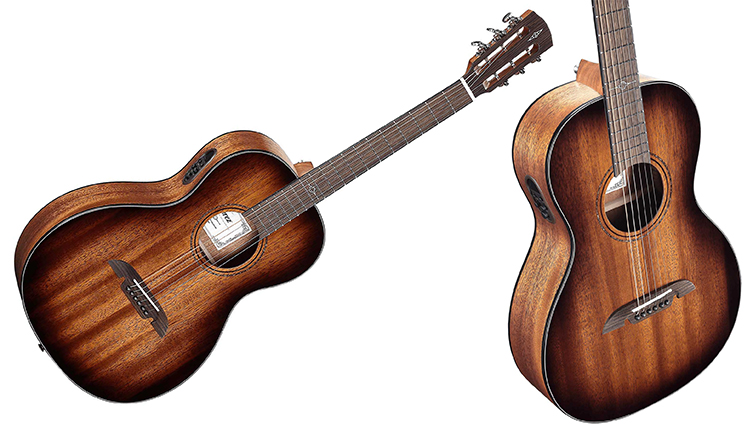
Alvarez Artist Series AP66e Shadowburst
You may or may not already know that Alvarez offer some of the best value guitars in the market right now. I don’t know how long things will stay that way, but right now you can get a pretty perfect blues acoustic for a very reasonable price!
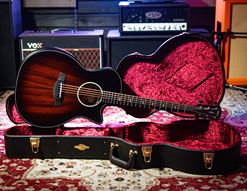
The Alvarez Artist Series AP66e in Shadowburst packs loads into its relatively low price. First off, you get the mahogany body and solid mahogany top, finished in a glossy dark burst finish they call Shadowburst. It’s a looker! There’s also a short 24” scale length, so we’re getting what we need for some good blues. Add in a fancy LR Baggs pickup system and we’re talking about a serious instrument here, that can hold its own on stage and off. A very worthy contender!
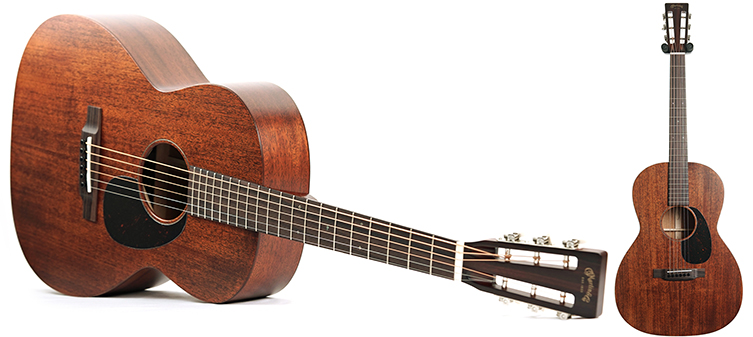
Martin 000-15SM
If you want to go a little further, then I believe that this Martin 000-15SM is exactly what you’re looking for. Made in the historic Nazareth, PA Martin workshop, this all-solid mahogany beauty has a 12 fret neck and a slotted headstock for proper old-time vibes.
The Martin 15 series is, in my opinion, one of the best acoustic buys out there. American made (apart from one or two models) and brimming with authentic ‘depression era’ vibes, these are some seriously cool acoustics, and for my money, this 000-15SM is the one for blues players and folkies alike.
The Best Electric Guitars for Blues
So, onto the electric guitars. Here’s when things become somewhat dictated by personal preferences. To call a spade a spade, almost all electric guitars boil down to being either ‘Fender-influenced’ or ‘Gibson-influenced’. Almost all companies base their wares on the measurements and building styles of these two opposing giants.
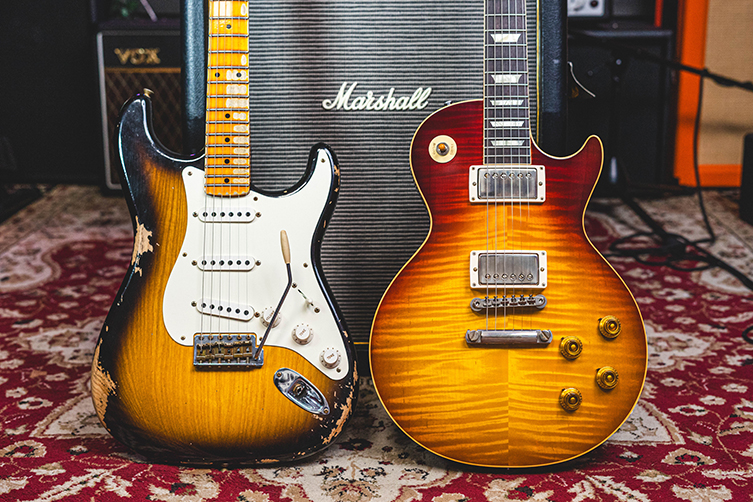
I call them ‘opposing’, because most of the variables of Fender guitars are different to Gibson. To save a long spiel, check out the box below to see how the differences stack up.
Fender General Build Specifications
Fender neck joint: bolt-on
Fender neck: maple with straight headstock, optional rosewood fingerboard
Fender scale length: 25.5”
Fender fingerboard radius: 7.25”, contemporary models 9.5”
Fender pickups: single coil
Fender bodies: solid, slab-body alder or ash
Gibson General Build Specifications
Gibson neck joint: set-neck/glued
Gibson neck: mahogany with back-angled headstock, rosewood or ebony fingerboard
Gibson scale length: 24.75”
Gibson fingerboard radius: 12”
Gibson pickups: humbuckers almost exclusively, occasional P90 single coils
Gibson bodies: mahogany, often with carved maple top
When you see the specs laid out like that, it’s easy to understand why a typical Fender guitar feels and sounds so different to a Gibson.
The first point I want to make is that you will almost certainly prefer one style over the other. I’ve hardly ever met anyone in all my years in this industry who truly likes both styles equally. I’m talking mainly about feel here, too: some people don’t like how a Gibson seems to slightly wrap itself around you, and others think that Fenders are stiff surfboards. It’s all about personal preference, which is why my next point may prove a little sticky for some of you…
Go With the Strat
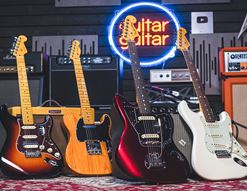
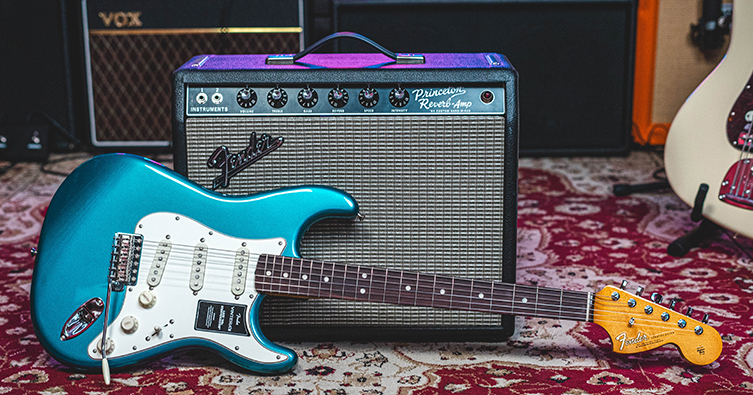
Yes, I fully believe that the correct guitar for playing electric blues on is the Fender Stratocaster. Now, without repeating myself too much: yes, you can play blues on literally any electric guitar, and; you might well strongly prefer how Gibson-type guitars feel. I know I do! But the fact remains that from Jimi Hendrix to Stevie Ray Vaughan, Robert Cray to Philip Sayce, Rory Gallagher to Eric Clapton, Buddy Guy to Eric Gales, almost all the greatest blues players use a guitar that is Strat-shaped, if not a full-on Fender Strat.
Nothing else sounds like a Strat. Nothing else has that tactility too, or that set of controls, or that whammy bar. If they do, they are simply Strat copies. If you want to play authentic sounding electric blues, then you need a Strat. Here’s a few that I believe are great choices for blues aficionados…
Fender American Vintage II 1961 Stratocaster
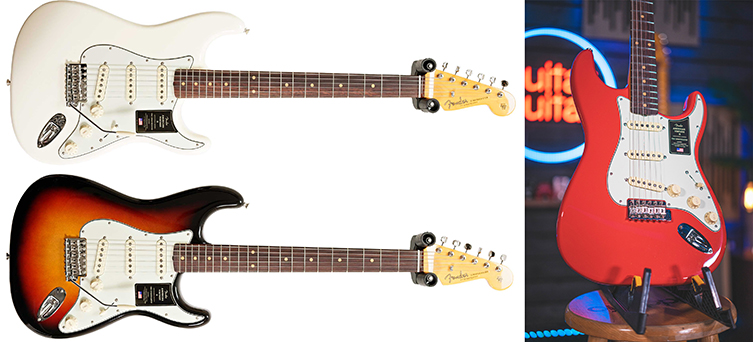
I’ve chosen the Fender American Vintage II 1961 Strat for today. All Strats will give you that characteristic tone to one degree or another, but the whole point today is to be specific, so I want to offer a Strat that references lots of famous blues players. From Rory Gallagher to SRV, a sunburst 60s Strat is the shortcut to that sound and feel.
Strats in the 60s had rosewood fingerboards and pickups with slightly more winds on them. These factors lead to a Strat with a distinct feel (rosewood is far more porous than maple) and a hotter sound that works well for overdriven blues. This USA-made reissue captures the details brilliantly, and offers a high quality workhorse vibe that will cater to all of your blues needs and beyond.
Fender’s Pure Vintage pickups are some of my favourites available anywhere - I don’t necessarily think anybody makes better Strat pickups, to be honest - and the units on here deliver that overwound sound with abundance.
A lovely neck carve and a high level of response make this a real pleasure to play.
Fender Artist Eric Clapton Stratocaster
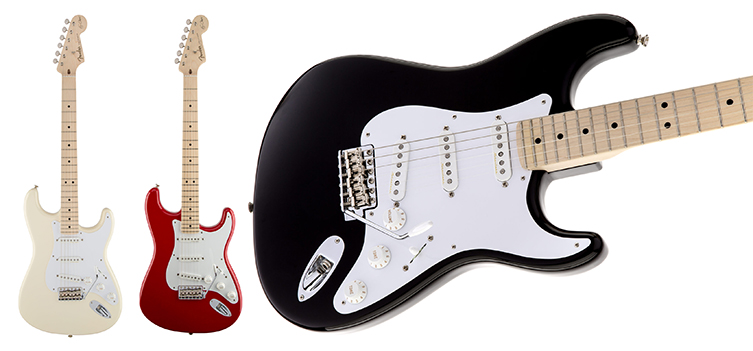
Why is this one of the most popular Stratocasters in Fender’s history? Is it because every guitarist is a huge Clapton fan? Maybe, but I also know that loads of players who have no strong feelings for Slowhand still want one of these, and here’s why.
The Fender Artist Eric Clapton Stratocaster is one of the most cleverly modded, sensitively upgraded Strats out there. On the surface, it’s just a nice 50s style Strat with a lovely v-neck (don’t let that put you off! It’s ace), but there’s magic inside this one…Not least a built-in mid boost circuit that can be dialled in via a tone control! That fattens the sound right up, almost approaching humbucker levels of chunky output. The pickups are Fender Noiseless units, which are enormously practical if you happen to be using lots of overdrive.
The tremolo actually comes ‘blocked off’ but it’s an easy job to remove the wooden block and have the whammy bar restored. It’s how Eric likes to have it: sacrificing the tremolo use for greater tuning stability.
I think this Clapton Strat allows you to cover all of the blues bases easily and convincingly. You can buy a Custom Shop version if you want, but this US-made Artist series guitar is already a minor masterpiece so my advice is to try this one first.
Why No Les Paul?
Hey, play a Les Paul for blues if you want! It’s an excellent blues guitar, and Peter Green, Billy Gibbons and Joe Bonamassa would doubtlessly agree! But this guide isn’t designed to run you through every available option: it’s to curate a specific collection of gear, and for my money, the Stratocaster is the ultimate blues axe.
For context, this opinion is coming from a person who prefers a Les Paul almost always! But if you want that scorch and sizzle of Steve Ray, or Kenny Wayne Shepherd and the rest of them, then a Strat is the tool that will do the job.
The Greatest Amplifiers for Blues
What you play through does more to determine your overall sound than what you play on.
Read that again.
The amplifier is a crucial part of the tone equation, so let’s make sure we pay attention to the details. It behooves us to select an amp that gives us the sound we are after, without expecting the guitar to do all of the work, because it won’t.
If you have the better part of a million quid - and are so inclined - then by all means hunt yourself down a nice Dumble Overdrive Special. If you are a great player already, this amp will reflect that. If you’re not such a great player, then you’ll still have considerable bragging rights, just for owning one of these semi-mythical things.
But hey, let’s not kid ourselves! Nobody is buying a Dumble. Let’s busy ourselves with what’s reasonably available to working players. As with the guitar question, amplifiers tend to boil down to three main originals, from which all other variants come. These would be Fender combos, the Vox AC30 and Marshall stacks. Generally speaking, all subsequent amplifiers have been takes on these ones, with the exception of maaaaybe the MESA/Boogie Dual Rectifier, which lies outside the scope of today’s article.
Today, I’ll recommend a couple of amps that I know deliver great results for blues, but first, here are the criteria I based my choices on…
What to Look for in a Good Blues Amp
Combo: stacks are hard to justify these days, and you don’t need their volume for most gigs. Combos are a solution that work in more circumstances, provided that they project well and don’t sound small.
Good clean sound: An excellent clean sound can still be roughed up with a nice overdrive pedal: a so-so clean sound does nothing for anybody, and isn’t a great ‘base’ for pedal work either.
Simple stuff: Too many controls and options seems the antithesis of dialling a direct, true blues tone. Unless you really know what you’re doing with such an amp, I’d say that simple is better.
Tubes: We’re going with valves here, unless there is a very good reason not to. With such a preponderance of good digital modellers around, I feel that if you’re going to use an amp for blues at all, then you may as well get some actual valves cooking, right? For those who use digital modellers, maybe the advice in this article could be used within your modeler to create a few new patches?
Fender Blues Deluxe Tweed
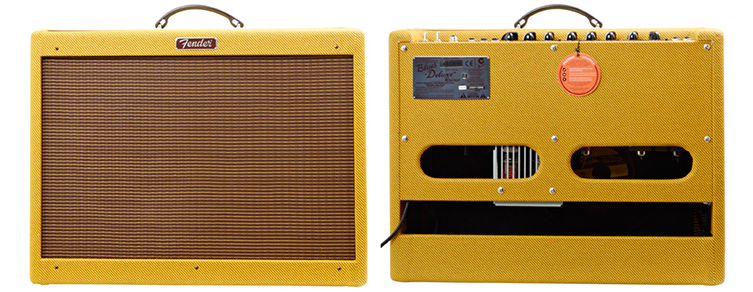
The clue’s in the title, isn’t it? But in all seriousness, the Fender Blues Deluxe Tweed has more than proven its worth over the decades. It’s probably the amp that most of us are at least familiar with, and it offers a lot. 40 watts of lovely Fender clean tone, in a tweed covered enclosure that houses a 12” speaker. There is a drive channel, but I believe you will be best served by simply dining the volume knob and controlling the volume via the master knob. Three-dimensional tube tone with a lovely built in reverb. Get some drive pedals (see below) and you are ready to dominate.
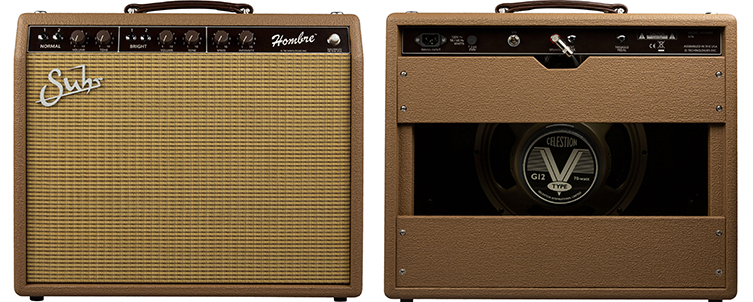
Suhr Hombre 112
Now, this may look a lot like a certain other brand’s tweed efforts, but the Suhr Hombre is a slightly different kettle of fish. It’s still an all-valve combo, but this 20 watt amp has a totally different tonality. Indeed, the whole ambition of this one is to add a dirty, raggedy, irresistible layer of filth to that vintage tube tone. For some reason, it always reminds me of a ‘Quentin Tarantino’ guitar sound, if that makes sense? It’s retro, it’s full of character and it’s very expressive. Add in some deliciously tremolo and you’ll be having one of those evenings where the hours just vanish in front of your eyes as you play. For Texas and Chicago blues, wind this thing up and you’re there.
The Ultimate Effects Pedals for Blues
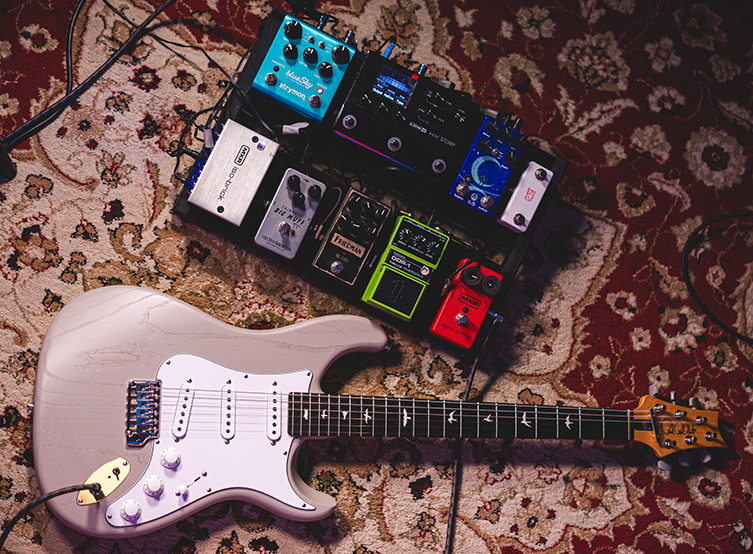
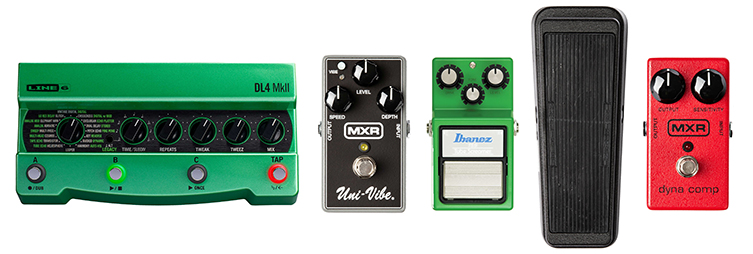
It’s time to look at effects. When it comes to blues playing, there are certain tonal flavours that are part of the form’s rich tradition. Obviously, overdrive is a big one, but let’s cast our nets slightly wider. I believe that a well-aimed compressor can be a very effective weapon, not just for better clean sounds but also for a solo boost. Also, we need some ambience and we need some movement in our sound. I’m going for a delay pedal and a Univibe, respectively. A wah pedal is another effect that I believe is an essential for the modern day blues player, so have a look below to see what I recommend to you…
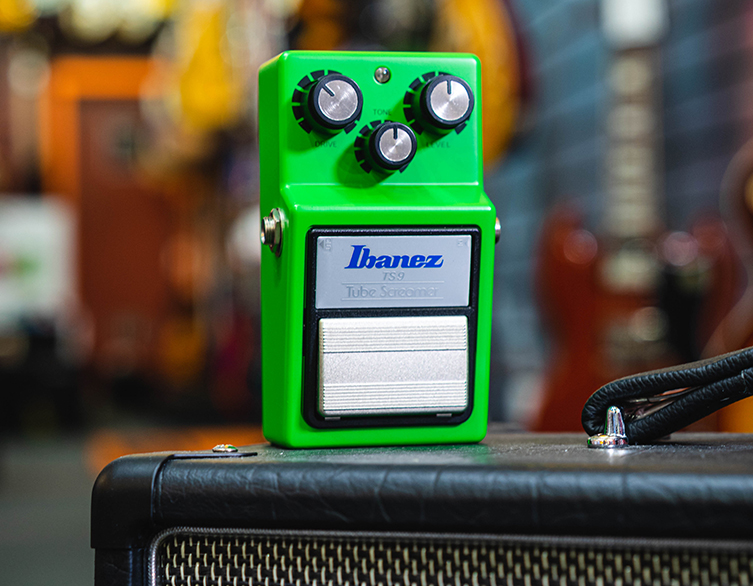
Overdrive: Ibanez Tube Screamer (TS808 or TS9)
This is the most obvious choice out there, and that’s because it’s overwhelmingly the right choice! Tube Screamers (or Tubescreamers, you see it written both ways) add the right amount of grit, clarity and flavour to a tube amp, and I believe you’ll get results from both varieties, so I’m not going to be specific on that one.
Klon Centaur
Come on, get over this. You do not need a Klon Centaur. And you don’t need a Klone either (one of the endless cheeky Klon copies) unless you don’t have a Tubescreamer. In that case, I’d say this: buy a Tubescreamer!
Compressor - MXR Dynacomp
It’s the choice of Nashville session supremos and if I’m being honest, it’s not the most subtle compressor in the world, but that’s precisely why I like the MXR Dynacomp! You can experiment with it as a boost for your solo moments, or just leave it on for a little extra ‘production value’. It’s just a handy pedal, and is easy to work into your style.
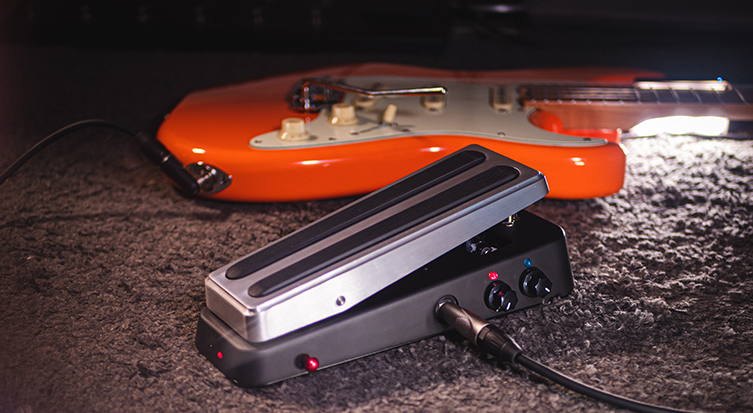
Wah Pedal - Crybaby GCB95
When it comes down to it, there’s really no point messing around: just get the straight up regular Crybaby GCB95 wah. It’s a cracking pedal, and it doesn’t have to have a sweepable Q section on a mini toggle to change the inductor, because how it sounds is pretty perfect to begin with.
Delay - Line 6 DL4 MKII
For sounds, for ease of use, for experimental potential and for sheer inspiration, the famous ‘other green box’ is the one to beat. The Line 6 DL4 MKII is absolutely jam-packed with beautifully realised ambience, it packs in a decent looper pedal (you never know!) and best of all, it’s an entirely straightforward and simple pedal to operate. You can mess around with other delay pedals until the sun goes down, but I don’t think you’ll actually get better results than what you’ll find inside this stone cold classic.
Modulation - MXR M68 Univibe
Blues music isn’t the sort of style that requires lashings of soaking wet modulation, but a little movement in the signal can work wonders. Let’s follow the prime examples set by Jimi Hendrix and Robin Trower, and get ourselves a univibe pedal.
Univibes are actually pretty similar to phasers (in fact, they ARE phasers) but they have a particular colour, sweep and overtone that makes them sound unique and very distinctive. They work extremely well with distorted guitars, and add some watery loveliness to clean tones, too.
I’m keeping things simple here and going back to MXR for their M68 Univibe pedal. They call it a chorus/vibrato but we know it’s not! I’ve chosen this one because it delivers that classic, watery sound in a perfect recreation. The ‘Vibrato’ section isn’t really a vibrato either (I do not know why or how such things acquire their names…) but what it does do is remove the dry signal completely, leaving only the cool wobbly vibe sound.
Well-heeled guitarists who want continuous control over the sweep speed could go for the MXR Wylde Audio Rotovibe, which is housed in a wah-style treadle pedal. Real time noise!
Best Blues Accessories
We’ve covered most of it now, but there are still a few smaller bases to cover in the quest for the best blues gear. I won’t tell you specifics unless it makes sense, because you’ll have your own preferences, but I will offer whatever guidance I can. Here are some tips for accessories…
Strings: go with your normal gauge, or lighter. Don’t buy into the stories about Stevie Ray Vaughan using custom heavy string gauges of 13 to 56 or whatever they were. Copying that won’t help you attain the sound, I guarantee you. Much better to stick to a set of tens (or nines if string bending is difficult) and express yourself comfortably than to battle with a set of telephone cable strings just because your hero did.
Use a long cable: Yes, you do lose some decibels with every foot of cable you use, but think about Buddy Guy’s 200ft cable, used sorely in order to allow him to walk around his venue amongst the audience. Blues music is still a show, so a big long cable may help that!
Picks: an entirely personal choice, but have a look at my article The Search for the Perfect Plectrum for a detailed look at this subject.
Just Play With Soul
Let me lay down the truth right here: if you are able to play from your soul, express yourself honestly and connect with your audience, then it does not matter what gear you use to achieve that aim. If you don’t have the ‘correct’ gear but your audience is still paying close attention to you, then you have something that no money on this earth can buy, and you’re going to do fine with whatever equipment you have. You know that, I know that, and the guy with the ‘62 Strat and Dumble knows that.
But still, you may be connecting with an audience and still feeling that you can align more closely with your ambitions by tuning your gear choices slightly and finally unlocking the tones you’ve always wanted.
If that sounds like you, then I hope this article has proven useful for you. All of today’s choices have been mine, and should be seen as being the subjective things that they are. As ever, take what resonates with you and run with it. Leave what doesn’t.
I’ll see you down at the crossroads.
Read More
-
Troy Redfern: Slide, Attitude and Playing a 100 Year Old Guitar [Interview]
-
"I generally like things on ten, full bore, all the way up, hammer down. Full speed ahead!" KENNY WAYNE SHEPHERD talks about his NEW album!
-
"Back in the Doors days, I would break the neck off a Champagne bottle for a slide: they had the best sound!" ROBBY KRIEGER talks EXCLUSIVELY to guitarguitar!
-
25 Best Songwriters of All Time (Updated January 2026)