Greetings, Jackson fan! You’re here because you want to learn about the differences between two of their most famous guitar models, aren’t you? You love the look of both the Jackson Dinky and the Jackson Soloist, and you’re wondering just what sets them apart? I mean, they look so similar from a glance! Jackson make so many varieties of Dinky and Soloist that there must be some sort of distinction between them, right?
Right.
Find out everything right here. I promise you, it won't take long and you'll instantly gain a better understanding. I’m a long term Jackson fan and user, so you can trust me to tell you the facts. Let’s go!
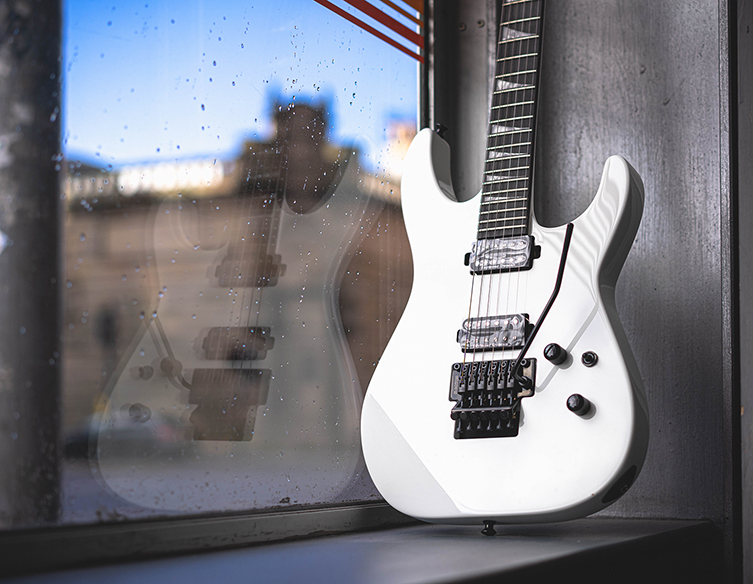
What is a Jackson Dinky?
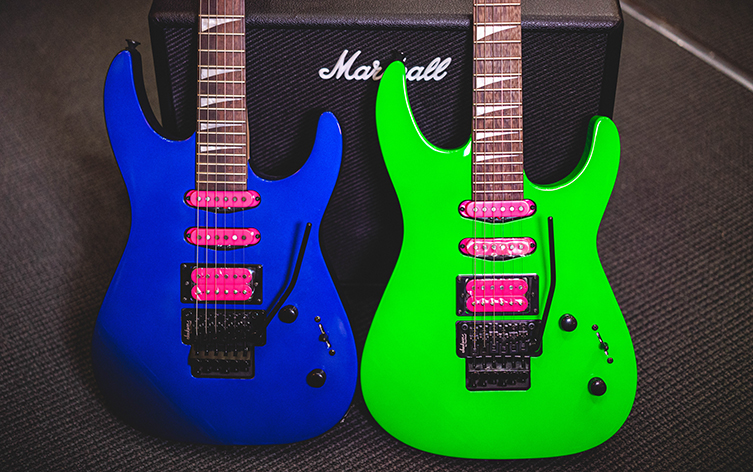
The Jackson Dinky is a type of Superstrat, which means that the body shape is relatively similar to a Stratocaster guitar, though the Dinky has sharper lines for a more aggressive look. It is also 7/8ths the size of a Strat, hence the name ‘Dinky’. The body is made with either a flat ‘slab body’, or as an ‘arch top’, a somewhat anachronistic term used by Jackson to mean that the top is carved rather than flat.
The Jackson Dinky range all have a bolted-on maple neck with a pointed headstock. In terms of pickup configurations and bridge types, this can change from model to model. That said, most people think of the classic Jackson Dinky as having two humbuckers and a locking Floyd Rose tremolo.
The Jackson Dinky is available in many of Jackson’s series, including the JS (Jackson student), MJ (Made in Japan), X series and Pro Plus.
What is a Jackson Soloist?
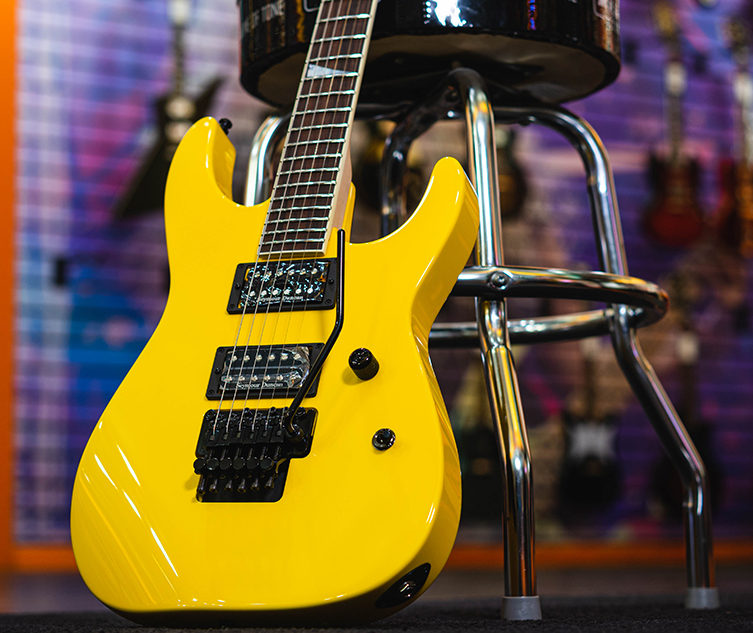
The Jackson Soloist is also a type of Superstrat, with the same 7/8th size body as the Dinky. This body can also be flat or ‘arched’ too, and is also most often seen as a two-humbucker model with a Floyd Rose tremolo, though other configurations do exist.
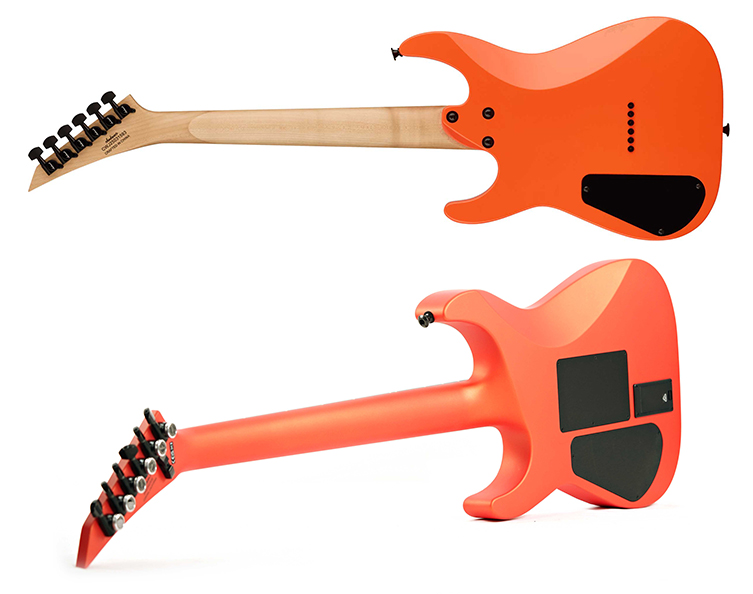
Jackson Soloist guitars all have through-neck construction. Also known as through-neck or thru-neck, this style of build sees the maple of the neck continuing through the entire body as one long piece of timber, so there is actually no neck joint to speak of. The body is finished with two ‘wings’ of another wood type (mostly alder or basswood) which are glued to each side of the maple.
The Jackson Soloist is available in the Pro Plus, X Series, MJ and American series.
What is the Difference Between a Jackson Dinky and a Jackson Soloist?
I reckon you’ve probably noticed the difference already, but in case you haven’t, here’s the big difference between the Jackson Dinky and Soloist.
It’s the neck joint! In fact, it’s how the next joint changes the construction, feel and indeed sound of the instrument. The neck-through construction of the Soloist gives the guitar more sustain and a warmer sound, along with extremely good access to the upper frets.
By contrast, the bolted-on neck of the Dinky gives the guitar a brighter sound, described by many as ‘snappier’. Also, the neck profiles of each model can change slightly from decade to decade. Most Soloists will tend to have an ever so slightly thicker neck profile thanks to the neck-through construction. Dinkies can have relatively skinny necks, though these days will mostly conform to Jackson’s ‘Speed neck’ style. In general, both Dinky and Soloist guitars will have a neck profile that sits somewhere between a ‘C’ and a ‘D’ shape, with a compound radius fingerboard. This means that the playing surface of the neck will gradually become more and more flat as the frets ascend towards the neck joint.
Which Model Should You Buy?
So, as it turns out, the differences between the Dinky and the Soloist are few but fairly significant. Both guitars are aimed in the same direction in terms of genre and style, so I’ m going to presume that both of these models will be equally fit for your purposes. The main areas to consider here are feel and price.
Price: both guitars are available at numerous price points, but the Soloist isn’t available in the most affordable JS range, presumably because the neck-through build cannot be done as cost-effectively as this low-price need would require.
Feel: It’s definitely true to say that each guitar has a different feel. ‘Better’ is a subjective term, so I would advise you to A/B a Soloist with a Dinky to see how they compare in your hand. In my opinion, the Soloist wins thanks to the upper fret access and slightly (and I mean slightly) chunkier feel, but that’s just my opinion.
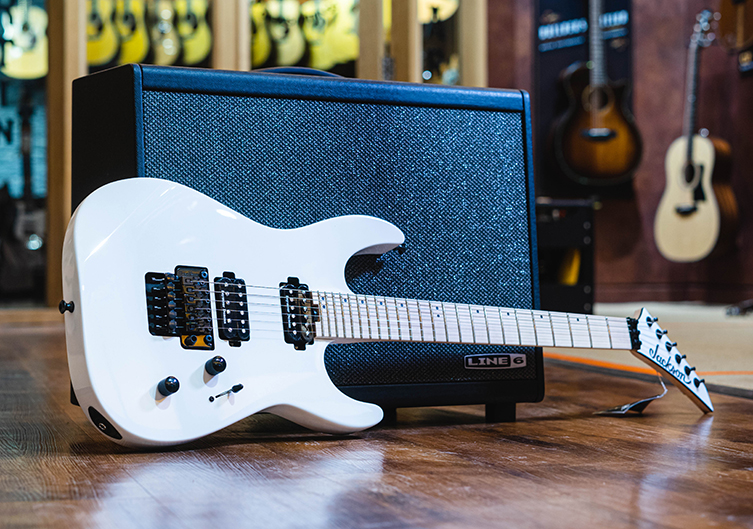
Sonically, this depends more on which series you buy from, because then things like pickups and woods come into play. Taking like for like - for example, comparing an MJ Dinky with an MJ Soloist - I expect you’ll hear that extra midrange from the Soloist, plus some more sustain. That all depends on the rest of your rig though,plus the volume you choose to play at!
If you are a beginner, then your default choice will be the Dinky. If you are more experienced, then it’s worth seeing if you prefer the Soloist, because I believe the benefits are there. Thankfully, whichever you choose, you’ll be making a good choice.
Click to View our Selection of Jackson Dinky guitars
Click to View our Selection of Jackson Soloist guitars