Do you love ESP guitars? If you’re a hard rocker of any description, then this is a brand that you’ll be well aware of. ESP have dominated the hard rock and metal scenes for decades now, and are proudly toted by several generations of rock royalty. In many ways, they are an amalgamation of classic rock guitars with more modern shred machines, dialled in perfectly to meet the needs of today’s heavy players.
But what’s the story behind ESP? Where did they come from? Who uses them? That’s what today’s guide is about. I’ll delve into the brand’s origins, and their progression into being one of the world’s most successful guitar brands. One thing I’ll make clear here is that today is purely about ESP, not LTD or any other associated subbrand. For a more general overview on the brand, please click through to my ESP & LTD Complete Guide to the Ranges, and for a more specifically historical angle, please have a read through my Brief History of ESP Guitars blog!
Okay you hard rockers, let’s rock hard!
What Does ESP Mean?
ESP stands for Electrical Sound Product. Not very cool, I grant you, but that’s what it means. It could be because the brand started out selling parts and spares, before going on to build complete instruments. Back at the beginning, that was the name of the company’s first shop in Tokyo. When they began building guitars, two brand names were used: Navigator Guitars and ESP Guitars. ESP is the one that became an international brand.
How did ESP begin?
ESP began in Tokyo, Japan back in 1975. The main character in this movie is an entrepreneur named Hisatake Shibuya who opened a store called Electric Sound Products, which dealt in custom guitar parts. Early in the company’s history, they also produced entire guitars, under the names ESP and Navigator guitars.
It would be 8 years before ESP made it across to the USA. As far as American history goes, ESP started off in New York City (first in an apartment office) and later moved to Los Angeles, where they have their headquarters today. Shibuya went on to do more in the world of guitars, which maybe lies outside the scope of this article. For more details, please read my Brief History of ESP guitars blog.
What ESP Sub Brands of Guitar Exist?
As of 2026, here are the current ESP guitars ranges that are not LTD models:
There used to be a range called ESP Standard, which was their flagship range of instruments. The term ‘ESP Standard stopped being used in 2014, replaced by E-II. So, think of the E-II range of guitars as essentially being the ESP Standard series, because that’s effectively what they are.
Where are ESP Guitars Made?
ESP Standard Series guitars have always been made in Japan. They are factory made to very high standards, and have been known as the E-II range since 2014.
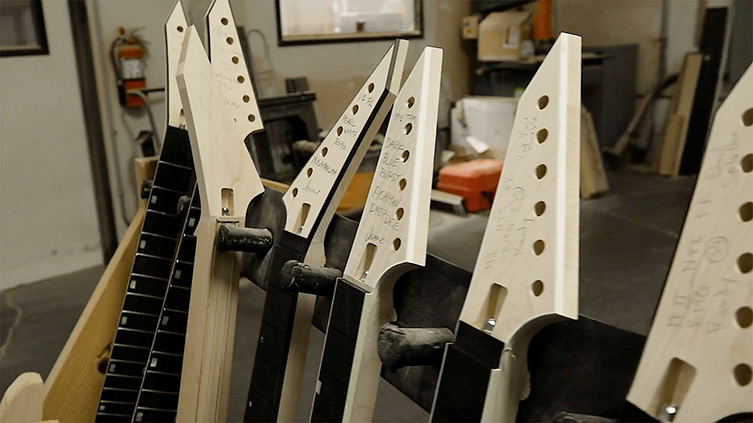
ESP Original guitars are handmade by master luthiers in ESP’s Tokyo facility. These are the highest tier of ESP guitars available anywhere. This is the original ESP Custom Shop, where the most amazing and indeed over-the-top ESP guitars have been made.
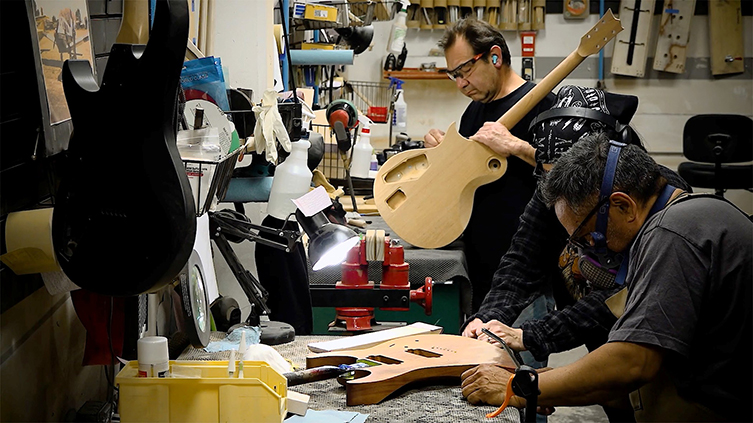
ESP USA guitars are of course built in America. In fact, they are hand made in California, in a workshop in North Hollywood not far from the company’s HQ.
What are Navigator Guitars?
Navigator Guitars were a brand of instrument from ESP that was discontinued in 2025. We didn’t see them much over here in the UK, and that's because they were known as ‘lawsuit guitars’. In other words, they made instruments that were very close in design to existing classic electric guitar designs.
They were discontinued because of a huge backlog of order for ESP Original guitars, which are more popular and more original to the company.
What are E-II Guitars?
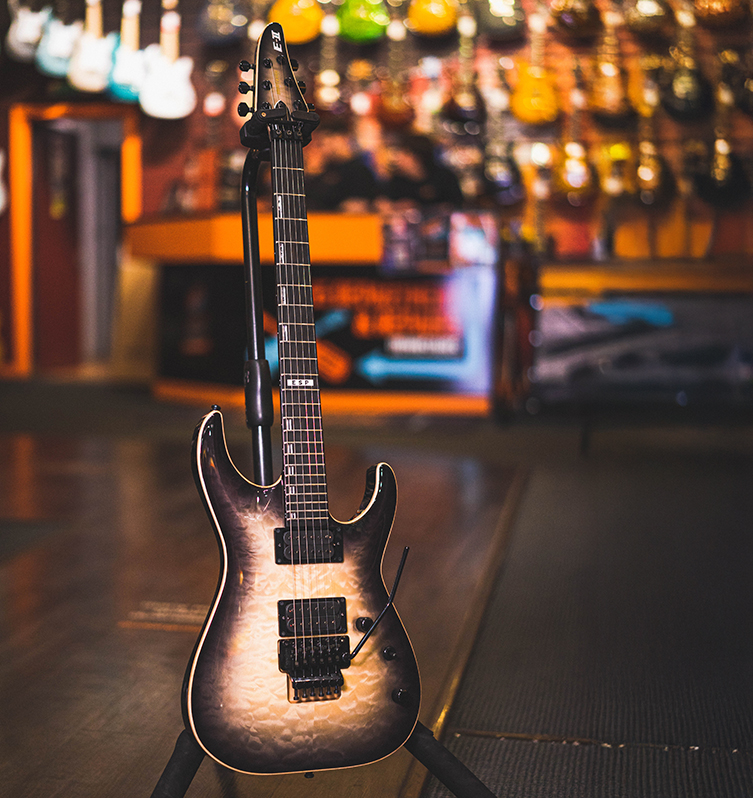
E-II guitars are ESP guitars that are built in Japan. It was a little confusing when these were first released, but they are the same instruments as the previous ESP Standard range, just with a name change. They are made to the same standards as ESP Standard guitars, and are built in Tokyo.
.
Who Plays ESP Guitars?
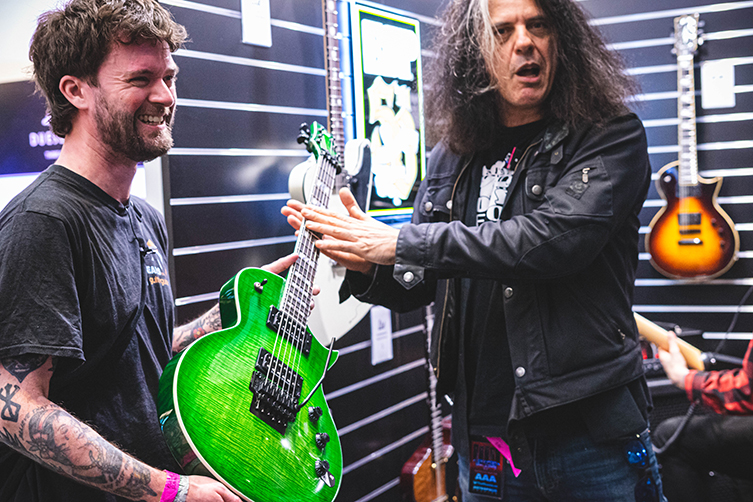
In the world of heavy rock and metal, it’s maybe easier to list who doesn’t play ESP! They are such a ubiquitous brand for heavy sounding guitars that they are all over the metal scene. That said, lots of those players use LTD models, and this blog is focusing only on ESP, so here’s who you’ll see playing ESP guitars out there. George Lynch of Dokken was their first ever endorsee, and not long after that, a couple of guys from some Bay area thrash metal band…
- James Hetfield & Kirk Hammett (Metallica)
- Richard Z Kruspe (Rammstein)
- Alexi Laiho (Children of Bodom)
- Bill Kelliher (Mastodon)
- Joe Duplantier (Gojira)
- Max Cavalera (Sepultura, Soulfly, Cavalera)
- Steph Carpenter (Deftones)
- Mick Thompson (Slipknot)
- Alex Skolnick (Testament)
- Javier Reyes (Animals as Leaders)
- Alex Wade (Whitechapel)
- Jeff Hanneman (Slayer)
- Gary Holt (Exodus/Slayer)
- Nergal (Behemoth)
- Will Adler (Lamb of God)
- …and Ronnie Wood of the Rolling Stones!
ESP Guitar Designs
ESP build guitars in a wide range of styles, mostly leaning towards hard rock and metal shapes. Here’s a little bit about each of the main designs, though please bear in mind they make a high number of variations for each model, particularly for the ever-popular Eclipse style, and there’s more variation to be found within the artist signature models. Some styles actually relate only to LTD guitars, and so with today’s focus being on Japanese and American ESP guitars, some guitars may not show up here.
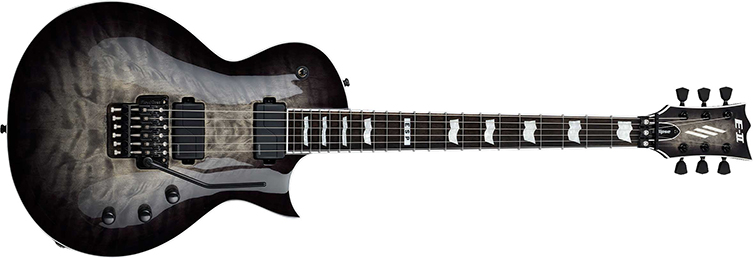
Eclipse
Undoubtedly a take on the Gibson Les Paul, though often with a sleeker, slimmer body. The Eclipse is the whole mahogany body, set neck, 24.75” scale length situation, and comes in a wide array of finish and pickup variations. It’s a perennial favourite for ESP fans, and has versions with Floyd Rose and Evertune bridges too.
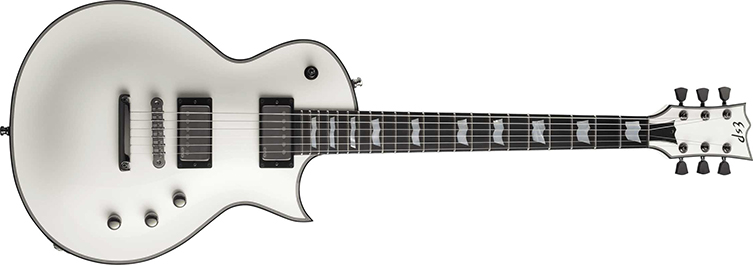
Although superficially similar to the Les Paul, it becomes clear fairly early on from playing one that there’s a whole different feel and attitude at work with the Eclipses.
Horizon/Horizon III
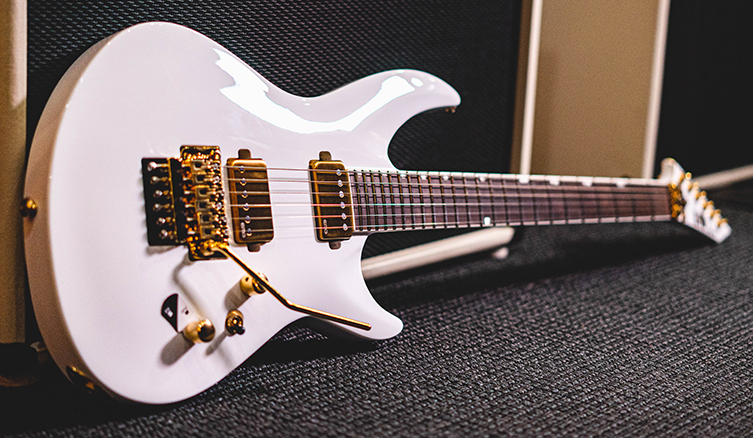
One of ESP’s most recognisable shapes, the Horizon is more or less a carved-top superstrat. The added curves definitely separate it from the hair metal style of guitar, and as with most ESP guitars, it can be had with a large number of hardware variations.
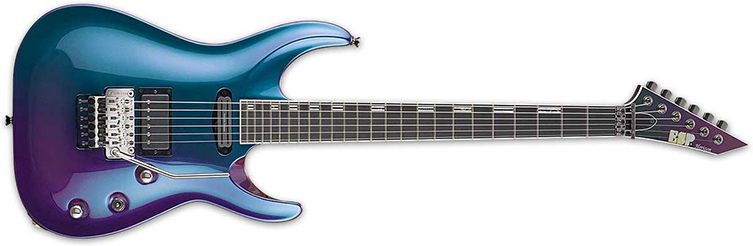
Oftentimes, the roman numeral in a model name denotes a spec of pickup change, but in the case of the Horizon III, it’s a whole different body shape! I call these a futuristic, exaggerated superstrat with a carved top. It still has the pointed headstock but the body is more obviously offset compared with the original Horizon design.
Viper
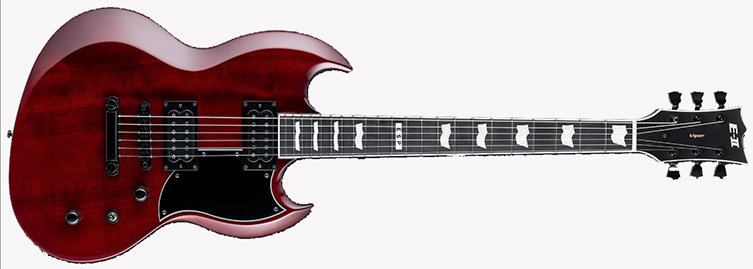
The ESP Viper is an aggressive update on the classic SG design. Featuring a sleeker, more offset body and slightly sharper looks, this model is a great example of the brand taking an accepted style and refining it into their own unique vision.
The Viper is popular with punk and metal players, and can be found in 7 string and baritone specs as well as the regular 24.75” version.
Arrow
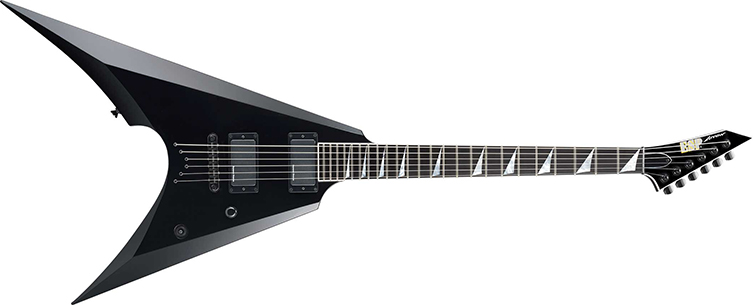
Every good rock guitar brand needs their own V shape and the Arrow is ESP’s! To my eyes, this is a mix of flying V and RR styles, and has a distinctive extra ‘cutaway’ - for want of a better term - at the treble side of the neck joint. Children of Bodom’s Alexi Laiho made this style his own in a series of signature models, though the design existed prior to his adoption of it.
M
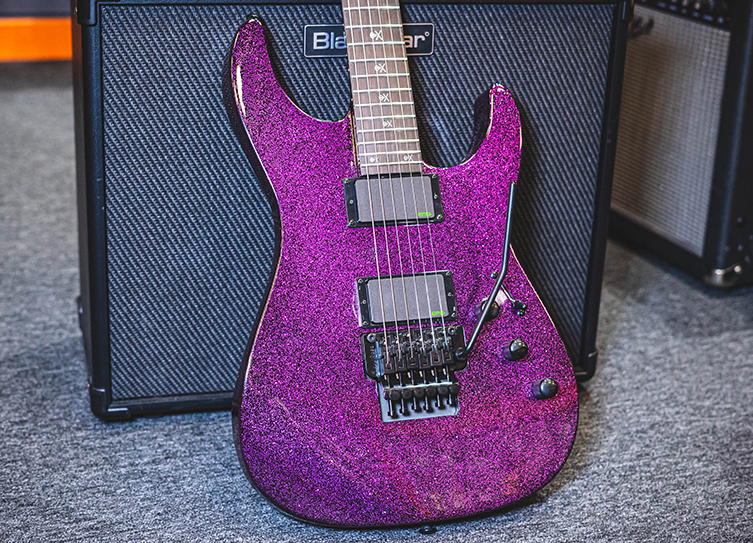
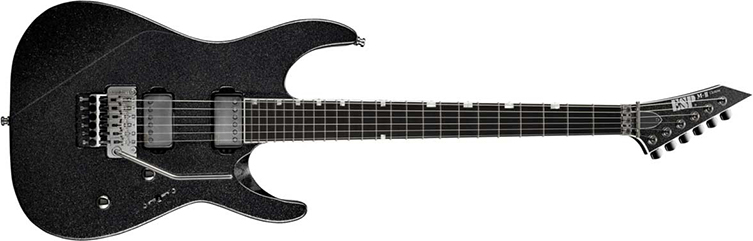
The M is a fairly straight take on the 80s Superstrat style. It is available in a large number of variations, often with a Roman numeral explaining the number of pickups (M-I for a single pickup, M-II for a double etc). The guitar has a slab body, so it looks distinct from ESP’s other superstrat, the Horizon.
Snapper/SN
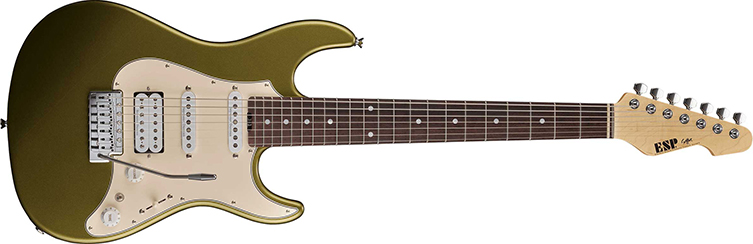
Put simply, this is ESP’s version of a Strat. It’s not as often seen over here as their more original styles like the Horizon, but there are plenty of them around! These days you can even get 7-string Snappers, which is definitely something you don’t see every day!
EX
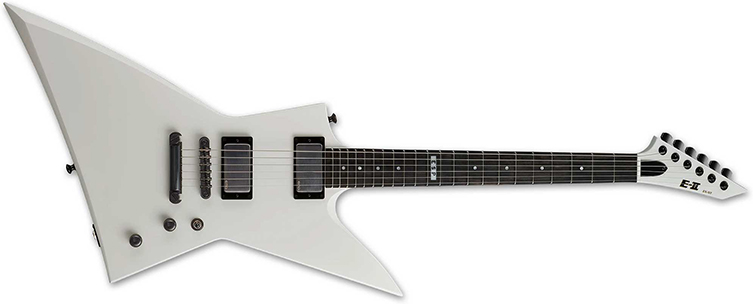
After being famously rapped on the knuckles due to their original Explorer-style models for James Hetfield being a little too close to Gibson’s designs, ESP redrew their EX and added sharper edges and a different headstock. Today’s EX style is still a close cousin to the Explorer, in the same way that many brands make their own versions of this heavy metal classic. Incidentally, Hetfield’s signature ESP Snakebyte is a very cool chunky re-do of this guitar, which removes the sharp edges but replaces them with an original style.
FRX/Forest
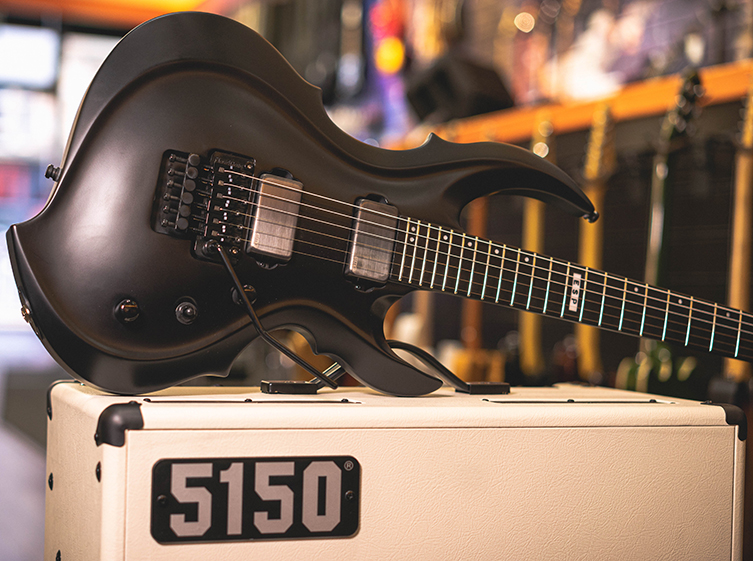
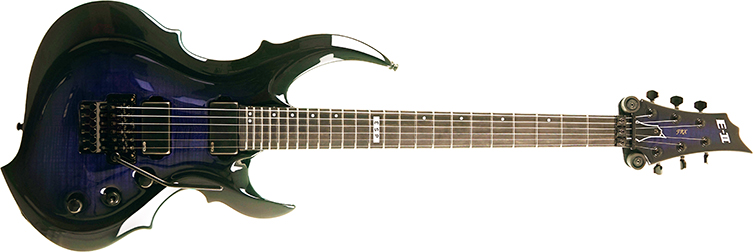
Perhaps ESP’s most original mass-produced design, the Forest is very popular in Japan with J-Rock bands. Over in the west, it’s a popular choice for extreme metal and goth bands, as well as for those acts who are adjacent to those.
TE
This is a straight-up hard rock take on the Telecaster. ESP do offer classic examples (check out the Ronnie Wood model for proof) but they are far better known for delivering more mosh-friendly T-styles. Double octave fingerboards, high output humbuckers and lots of dark finishes mark these out as Teles in (rough) shape only. Hard rockers love the T-style but require more performance and output, which ESP TE models provide.
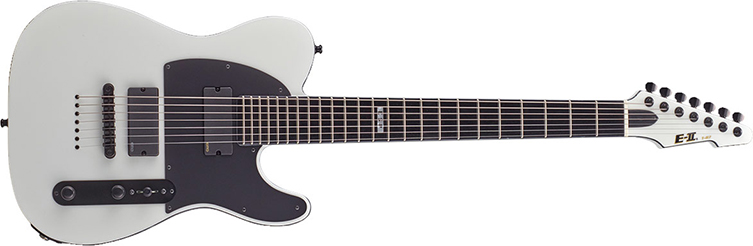
See also the Deftones’ Stef Carpenter: his long list of ESP signature guitars contains many TE models in both 7 and 8 string variations.
Artist Models
Artist signature models are a huge thing for ESP, and some of these are designs that don’t exist in the regular catalogue at all. Whilst many players will base their signature model on an existing style such as the Eclipse or the Phoenix (a version of the classic Firebird, and not often available outside LTD guitars), people like James Hetfield have the Snakebyte and the Vulture, both of which are unique shapes.
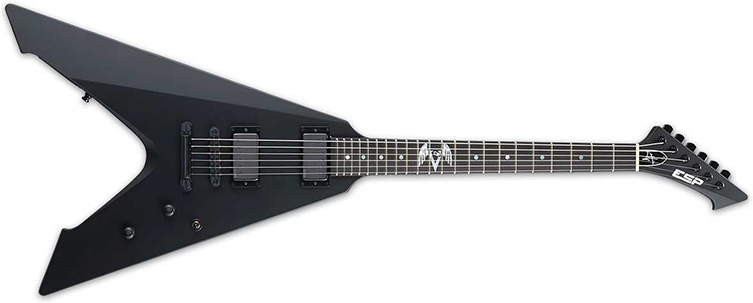
ESP: Hard Rock Masterpieces
I hope this brief flight through the world of ESP guitars has proven interesting and useful! Remember to check out the History of ESP blog if you want more on the backstory, and the Complete Guide to ESP and LTD if you want a comprehensive overview of the entire brand.
And since ESP are a brand that are played by Metallica, Rammstein, Slayer and more, why wouldn’t you? They make hard rock masterpieces, and it's time you had your own one too!
Read More
-
Behemoth: "Man, the Peavey’s like the Kalashnikov of amps!" [Interview]
-
James Hetfield & Metallica: Guitars, Amps, Pedals & More
-
30 Best Metal Bands Ever (Updated February 2026)
-
ESP LTD: A Complete Guide to the Ranges (Updated April 2026)
-
How to Play and Sound Like RAMMSTEIN
-
The Best METAL Guitar Players EVER!
-
Building a Guitar Pedalboard for METAL