Is there truly one electric guitar that can do it all?
That’s something we guitarists often ask ourselves as we negotiate our ever-growing six-string collections. It’s not that we ever want less guitars - come on, now! - but more a case of how much ground we’d be able to cover using only one instrument.
If you hypothetically had to choose only one electric guitar to use for the rest of your playing career, what would that be? It’s something that’s unlikely to trouble you in real life, but it’s worth having a perspective on, because not all guitars are born equal. There are differences in design and features that bring benefits and drawbacks to your playing experience: guitars that excel at a certain task often fall short at others, which is partly why we all own a few different models, right?
But today, I’m going to argue that when push comes to shove, there’s only one guitar that can out-maneuver the competition against all fronts and remain victorious. You already know what it is, since you’ve seen the title and clicked through, but nevertheless: it’s the Fender Telecaster.
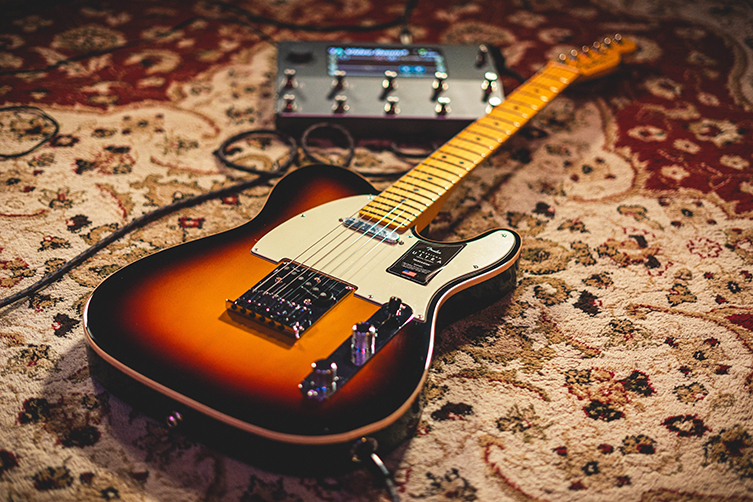
Let me use the following blog to espouse my opinion and see if I can convince you! My only caveat here is that we talk in terms of original designs. In other words, Strats don’t have humbuckers, Les Pauls don’t have whammy bars and Telecasters are how they were released in the 50s.
If you’re down with that, let’s get going!
Versatility
Do guitars need to be versatile? Whilst there is something to be said about instruments that do one job really well, I still believe that most of us want to be able to skip from genre to genre without having to unplug our guitars and reach for another one.
In this regard, the Telecaster is at least the equal to any other ‘standard’ guitar design. Skinnier sounding than a Les Paul but tougher than a Strat, the Tele is able to blend its sound into more genres than either of those models thanks to a tone that is both twangy and muscular.
Turning back the tone knob squares out the sound and makes it not a million miles from a humbucker. Turning back the volume knob softens the attack. Three genuinely useful pickup selections is all you need to cover almost any mainstream guitar tone out there.
Durability
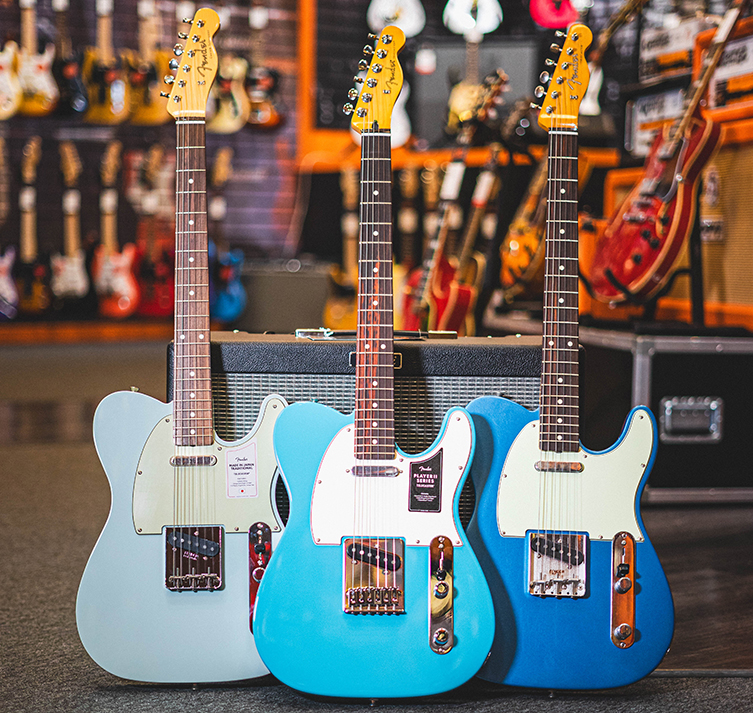
Teles are famous for their near-indestructable build. They are just tough objects: slab bodies bolted to grabbable necks, with a big metal bridge plate and all the controls mounted on a further slice of metal that’s bolted down unceremoniously to the slab body. Telecasters have a functional tactility to them that just breeds confidence in the user. They take all manner of manhandling and come back like Rocky for another round.
I think this is partly due to the simple build, and I’ll develop that idea below. That simple build includes a bolt on neck, which for me brings comfort and peace of mind. I don’t get that feeling from set-neck builds that are somehow more fragile feeling in my hands. The Tele’s bolt-on neck will stay in place (and I can tighten it easily if it needs it), and the headstock isn’t in danger of breaking off because it’s not pitched at an oblique angle.
In short, the whole guitar is designed to last. And last it does.
Simplicity
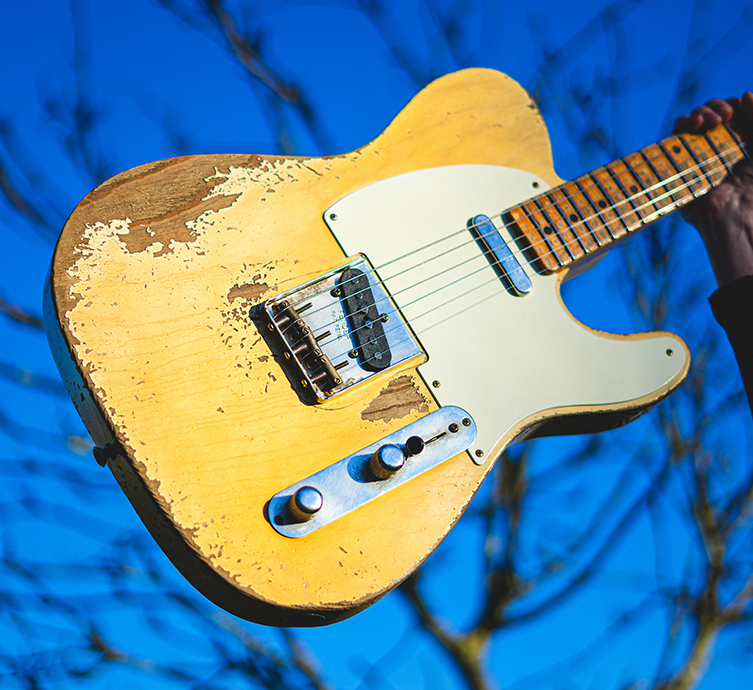
There’s very little to go wrong on a Telecaster. No tremolo (and no locking tremolo, more to the point!) to throw out your tuning and act temperamentally. Whammy bars are a compromise to staying in tune, let’s just be honest with ourselves.
There are no active pickups to run dry and not function, and there are no sharp edges around the body to be careful with. It’s all streamlined back into a fully utilitarian instrument, with perfect control over the elements you need command over (tuning, volume, tone and pickup selections), with nothing else to get in the way.
You don’t need any special tools to fix any problems or make adjustments, just the regular stuff you already have. There is, in fact, nothing at all complicated about the Tele, or how you string it, tune it or play it. It is one very simple guitar, and therein lies the kernel of its genius.
Customisability
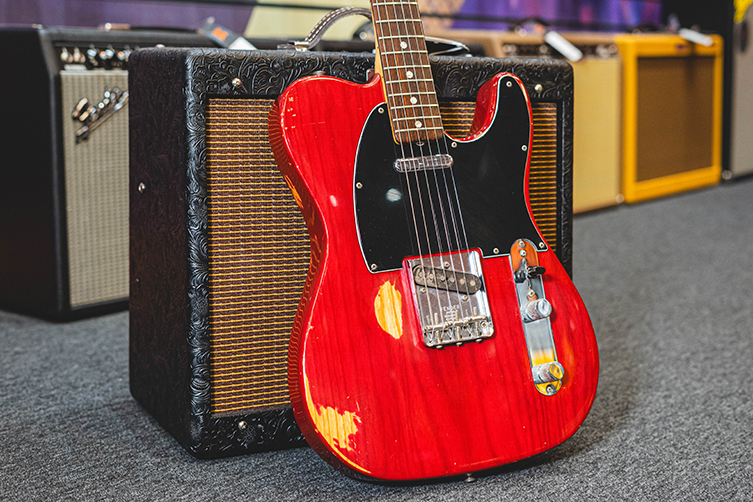
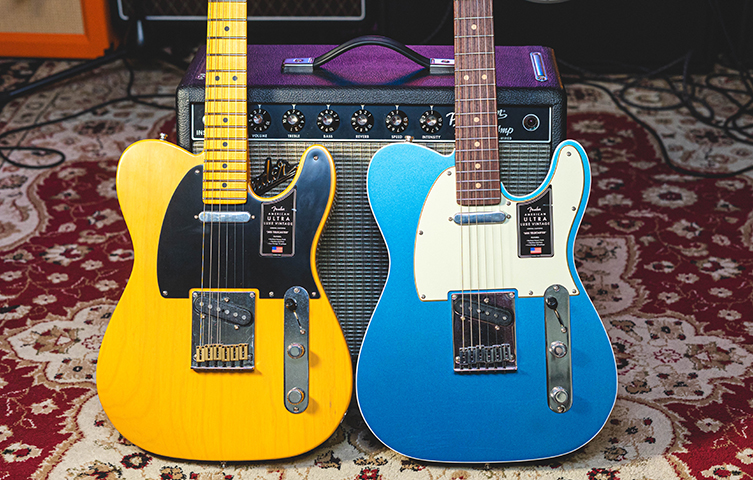
Fender guitars have always been ‘modular’, and this started with the Tele in its 1950 guise as the Broadcaster. By modular, I mean that all of the parts can be taken off and changed for replacement parts very quickly and easily. This can need doing because the part is worn out, or it could be because you just want something slightly different from the guitar.
Locking tuners, pickups swaps and pickguard colour changes are amongst the most frequent mods made to Teles, but practically everything can be unscrewed, taken off and replaced. There’s a huge market of these replacement parts too, so you’ll not struggle to find what you want. This makes the Tele very easy to personalise to your own preferences, which only deepens the connection between the player and their instrument.
Easy Maintenance
Maintenance and adjustability are particularly easy on a Tele. The neck just unscrews completely; the controls are all mounted on a plate that can be removed; and there are no tricky things like f-holes to navigate when working on wiring. In short, you are far less likely to tear your hair out and go in a huff with your guitar when it is as easy to adjust and maintain as a Tele.
Timeless
Some guitars can look extremely trendy for a short while, and then go right out of fashion. Now, I’m not saying that you should care about that too much, because most fashions do come and go, but it’s definitely true that the Telecaster has never gone out of style. Not once.
From the 50s rock ‘n’ roll days, through 60s psychedelia, 70s hard rock and punk, 80s new wave, 90s alternative rock and the past quarter century that has given us everything from post hardcore to the current country revival, the Tele can be seen shining in every musical context.
How many other guitars can you truly and honestly say that about?
Inclusive
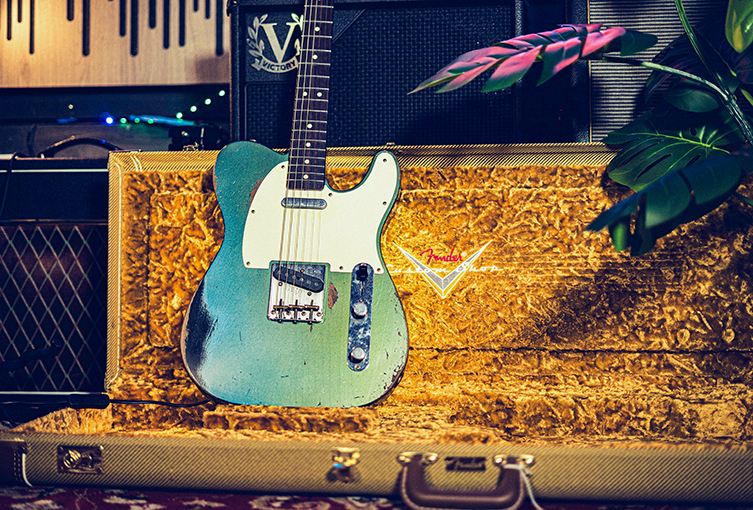
Any guitar that can be happily used by both Brad Paisley and Jimmy Page is clearly an inclusive sort of design. Yes, I stated at the beginning that I was sticking to the original specs of the Tele - and that has largely been true - but it’s important to also check out how different scenes and styles have incorporated the Tele into their worlds. Country musicians and indie rock musicians use the exact same type of Telecaster to make their music, as do punk guitarists, pop players, classic rock fans and so on.
Bringing a Telecaster along to any jam or rehearsal means you are going in prepared and ready to fit into the sound and scene. True, if it’s heavy metal you are playing, a bridge position humbucker seems appropriate (either by a modification or by choosing a Telecaster Deluxe, Jim Root signature or similar), but even there, you’ll find players in the hardcore and doom scenes who tune their very normal Teles to B and C standard, and then use the natural cut of the Tele’s bridge single coil to add a fierce edge that humbuckers maybe don’t achieve. Add a noise suppressor pedal (which you’d do for metal anyway) and you’ll see just how heavy a Tele can be, as well as everything else it’s great for.
One Guitar to Rule Them All: The Telecaster
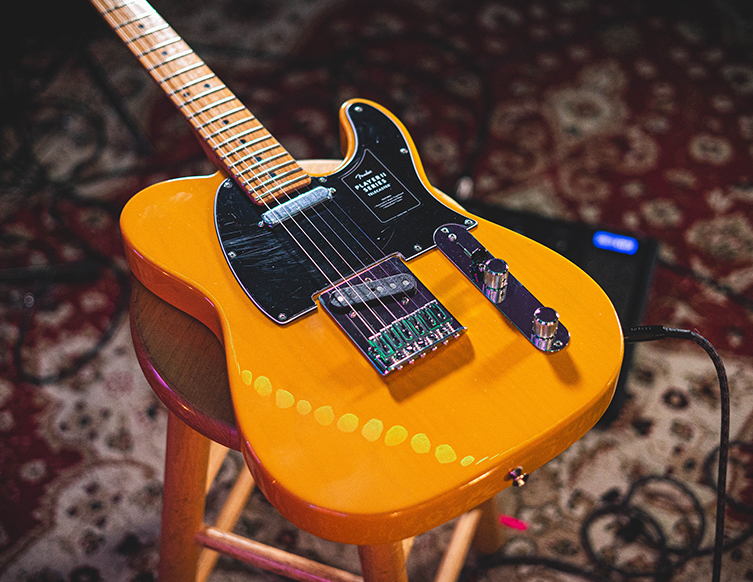
Did I convince you? Would you now feel comfortable bringing a Tele along to any musical situation? Are you fully hyped on how customisable, adjustable and fixable the Telecaster is? Do you now see that it really is the ultimate electric guitar, and the only one that you REALLY need?
Well, maybe you agree with that and maybe you don’t, but I’m sure that if you are a guitar player then you already love and respect the Telecaster for what it is: the original, the first guitar on the block to stick around forever and make its presence felt in every popular style of music that exists. There are lots of cool guitars out there, and they all owe a debt of thanks to the Tele.
Click to View our Entire Range of Fender Telecasters