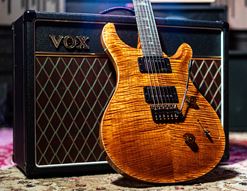
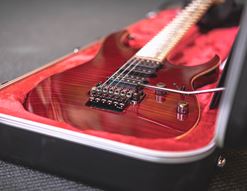
Have you ever played a Yamaha acoustic guitar? I’m going to bet that your answer is a solid ‘yes’, right? Not only are they one of the world’s most popular guitar brands, but they are one of the most reliable names for beginner guitars. Whether on a nylon string classical, an F-series acoustic or a Pacifica electric guitar, I expect you’ll have played a Yamaha or two in your formative years at least.
But beyond those entry level years, Yamaha have dominated the world of musical instruments in a big way. Their SG guitars have been used by everyone from Santana to Siouxsie and the Banshees, and their basses are played by Peter Hook, Billy Sheehan and the late Cliff Burton. Suffice to say that their reputation is a high one, but that still leaves a question of their history. We all know Yamaha, but how much do we know of the backstory?
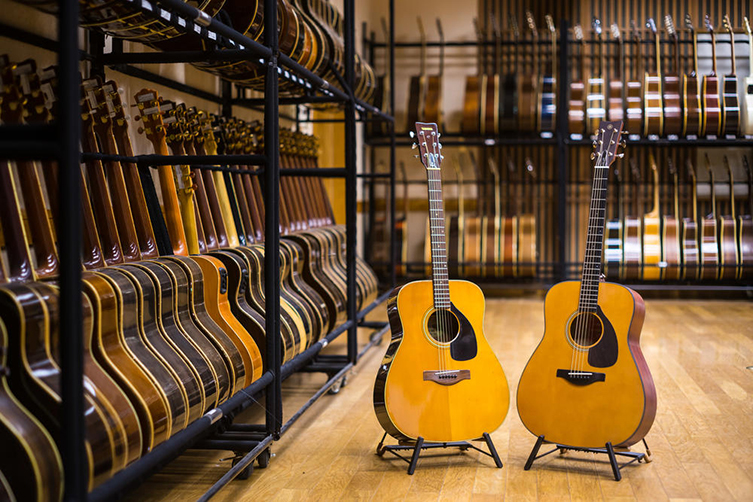
In today’s article, I’m going to take a glance backwards and track the story of their acoustic guitars, from the beginning up until today. I’ll look at series, models and moments that have contributed to make Yamaha acoustic guitars what they are today. Care to join?
The Early Years and the Red Label
Yamaha are celebrating 60 years as guitar builders in 2026, but in reality, they’ve been at it slightly longer. In fact, the brand were producing classical guitars for a full 24 years before the appearance of their iconic FG-180. These classical guitars were hand made in Japan, developing the brand's reputation for quality from an early standpoint.
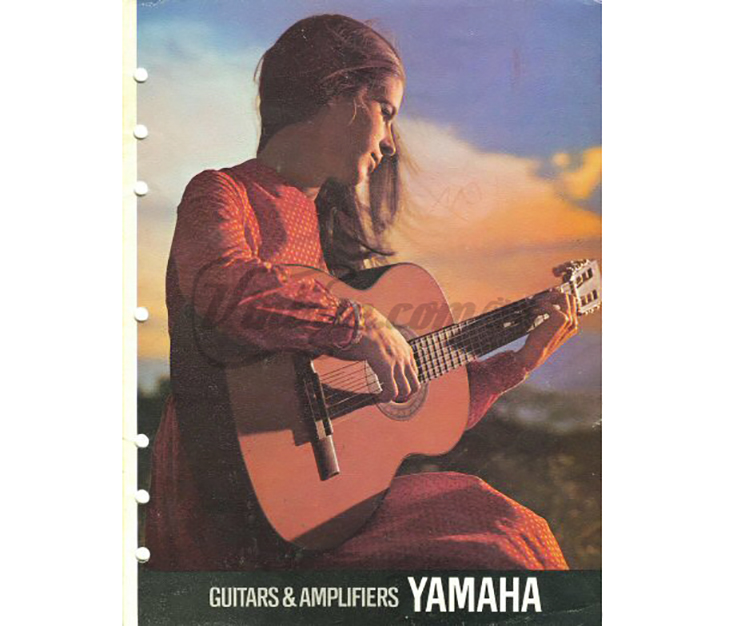
But yes, 1966 is the date written in the books for Yamaha’s official step into the world of the folk guitar. We talk about the FG180 as a singular thing, but there was also an GF150 built in 1966 too, and both guitars in fact had a light green label! The distinctive red label followed soon enough, on guitars that were the company’s own original designs, rather than a straight copy of the famous American brands.
Speaking of America, Yamaha arrived in the USA two years later, in 1968. Perfectly timed, since the Summer of Love hippie era was in full swing, meaning that lots of music fans were looking for good, affordable acoustic guitars. Several Yamaha FG models were being made by this point, including the FG-75 (steel strings but a body shaped like a classical guitar), the FG-110 & FG-150 (‘folk’ sized by Yamaha’s standards, more like a triple oh to the rest of the world) and a number of dreadnought models, which Yamaha called ‘jumbo’.
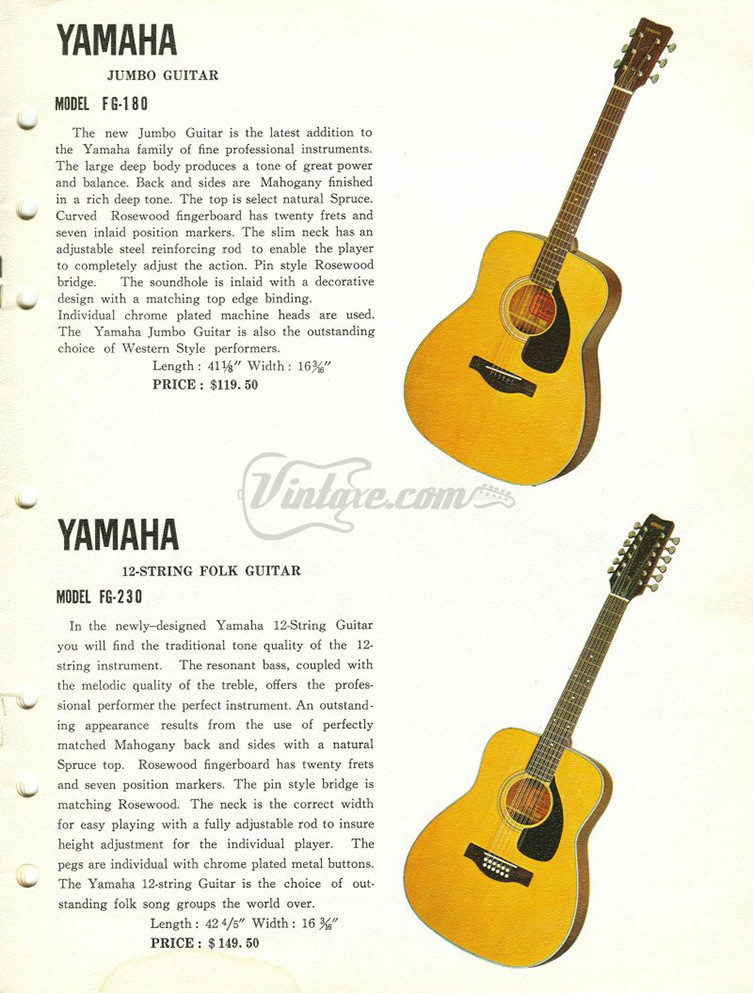
Interestingly, one of the higher-numbered guitars in this line - the FG-300 - was actually made completely with plywood, and still managed to create a sound that fooled a lot of guitarists into thinking they were made of solid wood. Models with solid tops were released a year later, in 1969.
The 70s
In 1971, Yamaha moved a lot of their production across from Japan to Taiwan. These still had the red label inside the soundhole, and Yamaha enthusiasts debate about how much of the early Taiwanese guitars were actually built using Japanese-made parts.
1972 saw the first Yamaha guitars being fitted with pickup systems, with the FG350E being the first significant model.
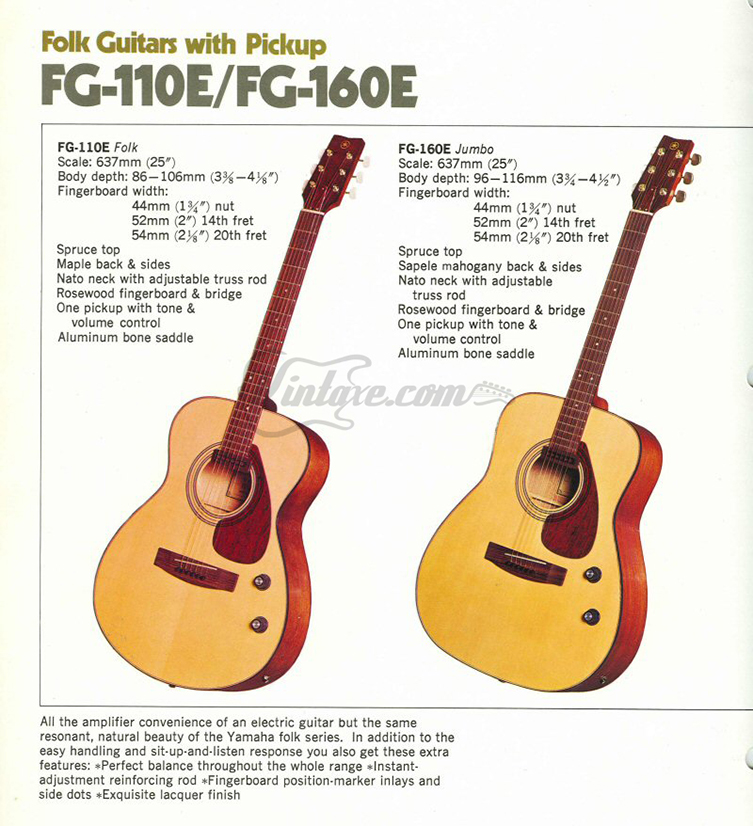
As the 70s progressed, the range increased to include more 12-strings, a ¾ scale model, and more jumbos and folk guitars, all with the FG prefix. By now, the red label had been swapped out for a light brown one.
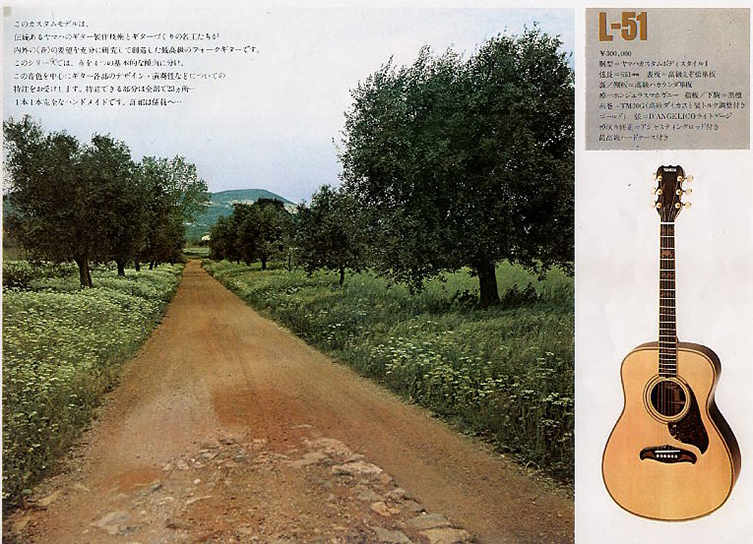
In the mid 70s (I believe it’s 1975), Yamaha introduced a high end range, the L series. Rather brilliantly, ‘L’ just stands for luxury, and the first one of these was in fact a repurposed FG-1000. These L models included solid timbers and more ornate decorative elements, and are still available today as a great mid-priced range with a distinctive rounded body and Yamaha’s Zero Impact pickup.
The 80s and the APX
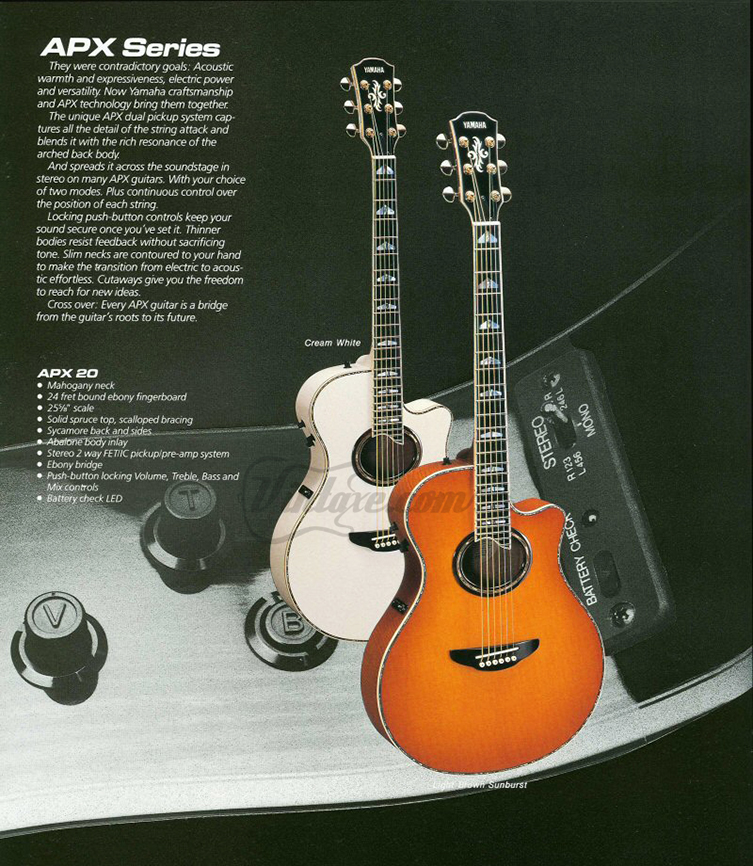
The biggest acoustic innovation that Yamaha made in the 80s was the invention of the APX series. These electro acoustic guitars have downsized thinline bodies, so they are particularly comfortable to use. The other practical benefit (indeed, the actual reason for their design) is that they are much easier to manage onstage than larger bodied acoustics that can create boomy feedback. Yamaha APX guitars all have cutaways for easy upper fret access and a pickup system for playing live. Pretty normal nowadays, but it’s only that way because ranges such as the APX proved to be so successful in the first place!
The 90s
For Yamaha, much of the 90s were about building on their reputation for quality and value, then consolidating that and working on improvements. Many of these improvements would be seen during the next decade, but the nineties did see the emergence of the well loved CPX series, otherwise known as the Compass series. Designed as a mid point between the smaller CPX range and more full-bodied acoustics such as the FG and FS lines, the CPX exists today as an excellent value above-beginners range that feature a large body (volume and projection) coupled with a slightly smaller scale length, for a looser string feel.
The Innovative 2000s
The turn of the millennium brought a high level of fresh ideas and new innovations to the world via Yamaha’s acoustic team. Here’s a brief eagle’s eye view of the major plot points…
Silent Guitar: a perfect practice tool for players who don’t want to disturb others, this proved popular for travelling businesspeople, new parents, people in modern apartments with thin walls, students in halls and lots of other players who value a no-compromise guitar that also has no volume! Of course, a set of headphones into the special preamp allows the player to hear beautiful acoustic tones.
ART pickups: ART stands for Acoustic Resonance Transducer and uses a contact pickup mounted to the underside of the guitar top to collect sound from the entire guitar, unlike piezo systems. Some of the ART control panels allowed separate volumes for the high and low strings, which in itself is super-interesting.
A.R.E.: Acoustic Resonance Enhancement. This is Yamaha’s take on torrefaction, which simulates a century of vibrations and drying out of the wood, for a smooth and rich sound.
NX Series: nylon string models with unique offsets body shapes inspired by the APX range
SRT: an acoustic pickup that blends a mic’d sound and a piezo sound with some discreet digital signal processing to deliver a high quality, natural sounding acoustic guitar sound.
TransAcoustic
One modern innovation deserves its own chapter, and that’s the TransAcoustic. It’s pretty incredible, and I feel like everybody should experience it! To be fairly straightforward about it: an inner processor adds digital reverb and/or delay and chorus to whatever you are playing, but it all comes from inside the soundhole, as if the guitar were producing all of it.
It’s partly like playing in a huge empty space even though you might be in a small enclosed room. There’s no external anything required: no amp, monitor, laptop or anything else. To strum one is to be hooked on the experience.
The newer generation of this technology has also added a looper into the mix, which you can control via tapping the body! It’s a wonderful innovation that really rewards the player and I hugely recommend checking it out.
Yamaha Today - 60 Years On
So, 2026 marks 60 years in the steel string guitar game for Yamaha. They’ve solidified and expanded their reputation as innovators, and they’ve become the choice of professional players across the world. The brand’s significance over the world of music spans out into many branches, but it’s worth remembering just how much Yamaha have innovated within the sphere of acoustic guitars. They’ve moved the art of design forward, they’ve continued to innovate (the Atmosfeel pickup on newer FG guitars is incredibly sensitive and lifelike) and they continue to understand what musicians require.
If you have fond memories of Yamaha from the beginning of your guitar journey but haven’t checked it on them in a while, then you’ve been missing out on a lot! Click below to see what’s in stock right now, and head in for a visit soon to demo the guitars that have caught your eye!
Browse our Entire Range of Yamaha Acoustic Guitars