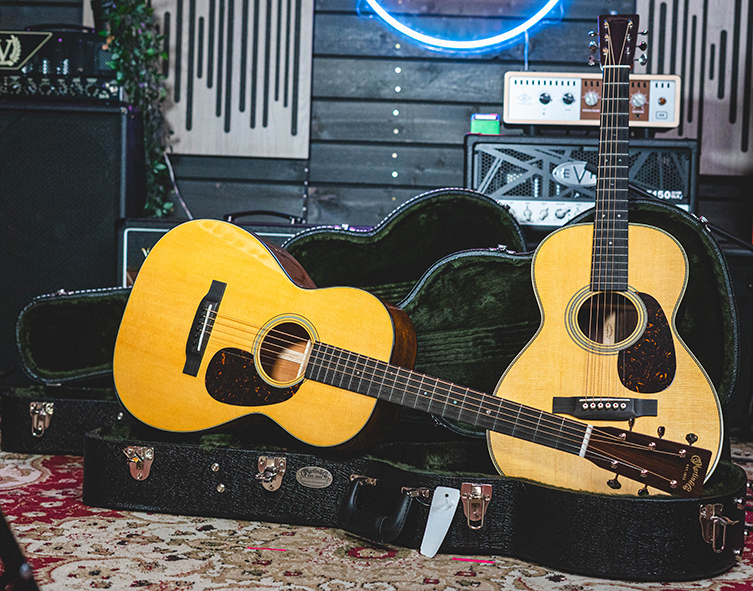
Martin guitars are without doubt the most famous and influential acoustic guitar brand in the world. Every musician recognises a Martin acoustic, and a high percentage of the greatest recordings and performances of acoustic music for the last hundred years have been carried out on a Martin. Truly, only Gibson competes in historical relevance, with both brands creating quite distinct types of guitar.
Today, I’ll take you through a brief backstory of Martin & Co, from their beginnings, back long before the days of the Wild West, right up to today. It’s a whistle-stop sightseeing tour today, so buckle in and get ready for some essential Martin guitar lore!
1833, New York City
New York is continually one of the most significant cities in the world when it comes to guitar culture. There have been several important eras of great scenes, stores, players and builders all contributing to the rich musical culture of the city. In the 80s you had Sadowsky, ESP, Pensa Suhr and all of those builders adding excitement to the city’s music scene; in the 30s it was the flamboyant jazz age of Epiphone and D’Angelico; and so on. There’s always somebody making something in New York!
When it comes to our story today, that somebody would be Christian Frederik Martin, the synonymous ‘C.F. Martin’ you’ve no doubt heard of. C.F. Martin went by Frederik, and was born in Germany in 1796. Frederik was trained in instrument making by famed Viennese master luthier Johann Stauffer, who mostly specialised in violins and violas.
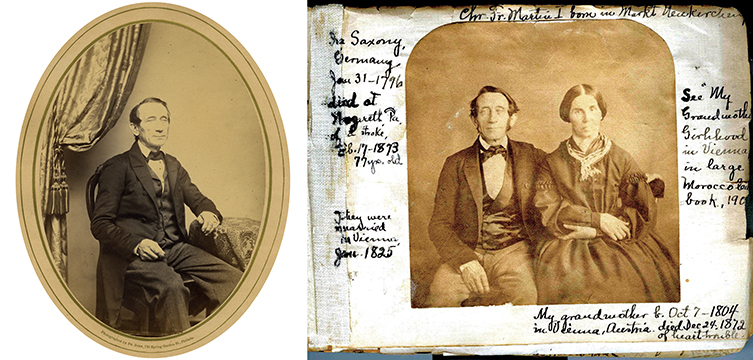
(C.F. Martin and his wife Otilia. Pic courtesy of C.F. Martin Archives)
So it went for years, and as the guitar gained in cultural prominence, Martin turned his attention to the craft of guitar building. At the time, German artisans all belonged to a series of guilds: protective overseers of craft businesses who were not trade unions per se but also not unlike them in practice. A dispute emerged in relation to the building of guitars: just who was actually ‘permitted’ to build them? The violin makers’ guild argued with the cabinet maker’s guild over who had the rights to make this new instrument.
In the end, Frederik saw the simplest answer: leave Germany. He and his family moved to New York City in 1833, relocating their entire lives in order to freely build guitars. Martin set up shop in Manhattan's Lower West side and began to build and sell. In addition to his own custom-made guitars, Martin also imported, distributed and sold a whole catalogue of other instruments including violins (naturally), accordions (they’d just been invented about 11 years earlier), harps, trumpets and flutes.
Now, for context, I always find it helpful to relate historical times to other events, in order to understand a sort of general timeline. So, New York in 1833. This was a wild, busy and really quite dangerous city: if you’re familiar with the movie Gangs of New York, then that story started off a good 13 years AFTER Martin guitars started up. The city would maybe be less operatic than the one shown in Scorsese's movie, but no less violent or energetic. For more context, we’re talking almost 3 decades before America had their Civil war, and over 30 years before the Wild West! Martin have been making guitars for a long time!
1840s: X-Bracing
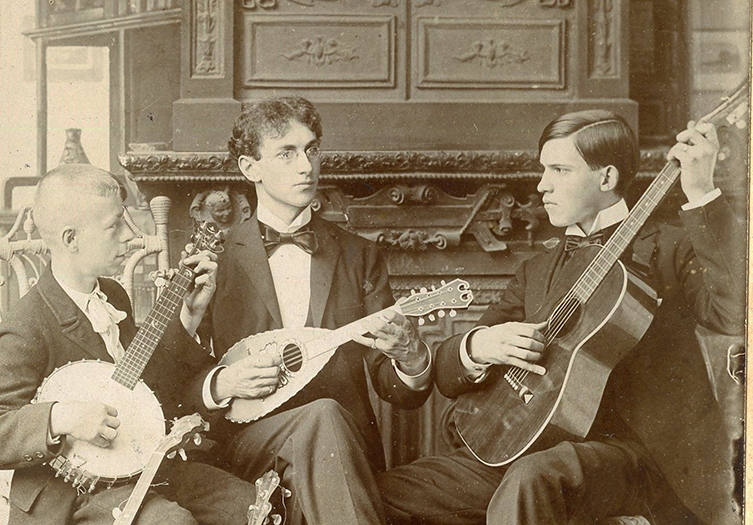
X bracing is something we all take for granted these days. It’s a fundamental part of acoustic guitar tone creation as we know it, and it didn’t exist until C.F. Martin invented it in the 1840s. Briefly, bracing refers to pieces or wood that are shaped and glued strategically to the underside of a guitar’s top. The job of the bracing is to shape the sound produced by the guitar, accentuating certain frequencies and moderating others simply by their size, shape and location. Small changes add up to big differences in how well a guitar top resonates. Traditionally, guitars used fan-shaped bracing, which is something carried over from Spanish classical guitars.
X-bracing, then, was created by Martin in response to a demand for a louder guitar. People were playing them in ensembles and found themselves drowned out by other instruments such as banjos. X-bracing brought more volume and projection to Martin’s guitars, a practical solution to a real problem. Martin’s first X-braced guitar was for virtuoso Madame Delores de Goñi in 1843, a huge musical star at the time.
It changed the way guitars have been built ever since. X-bracing is now the number one bracing style used in acoustic guitar building. The louder, stronger sound has become the norm, and has been what guitarists want for over 150 years now.
1916: The Dreadnought
Martin’s greatest gift to the world arrived in 1916 under the name ‘Ditson’.
What am I talking about?
The dreadnought, of course! The world’s favourite acoustic guitar design was created by Martin in 1916 for another company. The shape, the spruce top, the 12th fret neck join…it was all here in the Oliver Ditson dreadnought, model 222. The dreadnought was specifically designed to once again add volume and projection for guitarists who were being drowned out by horn sections and so on. The dreadnought - named after the large naval battleship - readdressed the volume situation admirably.
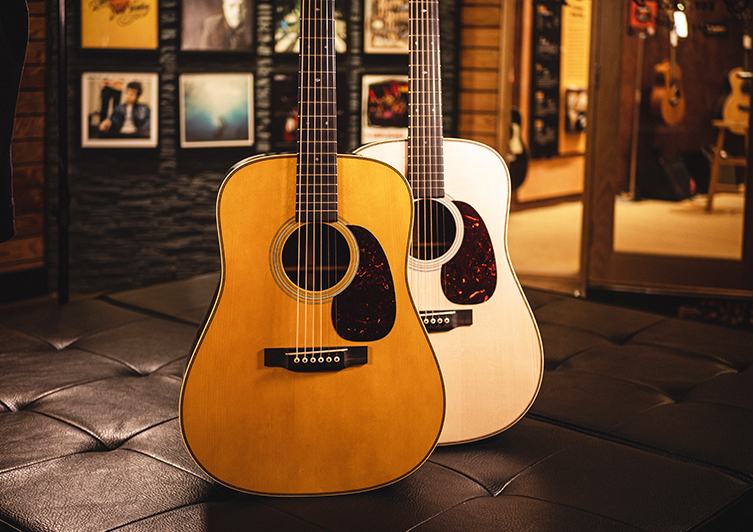
Martin didn’t actually make their own brand dreadnought until the 1930s. The Martin D-1 and D-2 guitars debuted in 1931, with the former having a rosewood body and the latter built with mahogany. Their names were quickly changed out that same year to the more familiar D-18 and D-28. These were both 12-fret models until a few years later in 1934 when they became 14-fret models. Even that quiet little innovation - shifting the neck out slightly to make the upper frets more manageable - has been copied by everybody since.
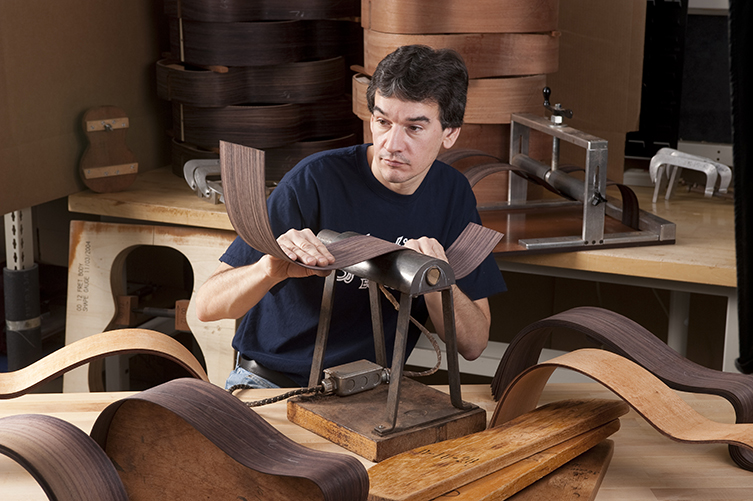
(Pic courtesy of C.F.Martin Archives)
The Golden Era
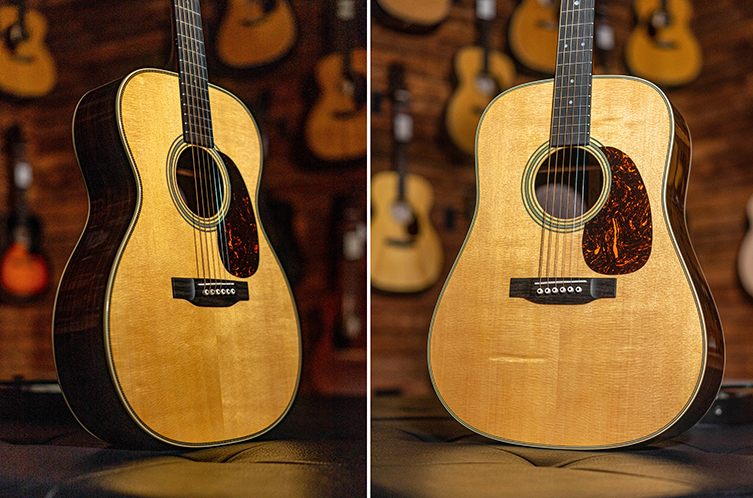
This brings us into the Golden Era, where we talk about ‘pre war’ instruments and so on. In reality, it’s where many of Martin’s most enduring designs came into being, such as the 00, 000 and the aforementioned dreadnought.
We guitarists love this time of Martin’s history because it’s when guitars familiar to us first come into focus, but also, the surviving examples from that period - almost a century ago - define what we think of as ultimate, superior acoustic guitar tone. The strident, loud, defining tonality of pre-war Martins is highly prized, to the point where modern-day acoustic builders seek to simulate this by torrefying the wood (a process to remove moisture) because the result is basically a sped-up version of what happens slowly in real life. Torrefied/roasted/caramelised spruce with varied torrefied bodies is a direct way to attain golden era Martin tone without having to actually own an heirloom antique guitar.
The Depression
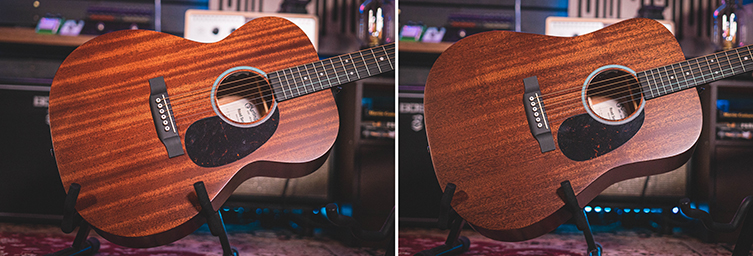
America’s 1929 Depression saw Wall Street stocks crashing and causing financial problems for most everyday Americans for years. Martin, like all companies, had to find an effective workaround in order to continue to sell instruments and survive. People still wanted their guitars, but could not afford the cost of a typical Martin guitar. The solution was something that remains with us today: the Martin 15 series.
Basically, mahogany was plentiful and cheap to buy as timber in the 1920s, certainly when compared with Indian rosewood and Sitka spruce. So, the all-mahogany 15 series of ‘brown bread’ Martin acoustics came about, and have actually never been out of production since. Thanks to a strong, warm sound and that same martin build quality, this range of guitars that were originally designed to be an affordable stopgap turned out to become a legitimate alternative in both sound and looks. Blues players loved them, folk pickers loved them, and so the 15 series prospered well after the American economy stabilised.
What is it they say? ‘Poverty is the mother of invention’?
Protest Songs
Woody Guthrie is a titanic figure for folk fans. The uncompromising folk singer of the 40s and 50s was a true iconoclast, and wrote songs such as This Land is Your Land whilst brandishing his 1936 Martin 000-18 emblazoned with a hand-applied sign reading ‘This Machine Kills Fascists’.
Several up and coming folk artists were taking note, not least Pete Seeger, Joan Baez and Bob Dylan. All of them were Martin players and ardent members of the New York (that city again) Greenwich Village folk scene of the late 50s and early 60s. A continuation of Woody Guthrie’s mission, and indeed a response to rock n roll, this new generation of folkies used Martin guitars to protest their civil rights passions, themselves making way for the flower power scene that followed in response.
Laurel Canyon
As the 60s found guitar culture moving into both folk and rock genres, the Vietnam war raged on and the Nixon administration alienated a whole generation of Americans. The protest scene continued (though Dylan was now taking the stage with a Fender Strat) and the 1967 Summer of Love saw music fans decrying violence, wearing flowers in their hair and strumming away on acoustic guitars as they sang about the incoming Age of Aquarius.
Down in Los Angeles, a different scene was becoming established in Laurel Canyon. Nestled within the Hollywood Hills, musicians such as Neil Young, Joni Mitchell, Jackson Browne and Crosby, Stills & Nash were all creating acoustic based folk-rock music that would prove to be quite immortal in its appeal. The Eagles were there, as was Carole King, the Mamas & the Papas, Love and more.
Communal ‘party houses’ in the canyon saw many of these artists writing together, collaborating, doing other things too (...) and essentially writing the musical history of LA with Martin acoustics. Indeed, Neil Young played his D-42 and D-45, Joni Mitchell invented her new tunings on her D-28 and CSN loved their D-45s. The Beach Boys were around, and whilst Brian Wilson wrote primarily on a piano, a certain fan/hanger-on by the name of Charles Manson desperately tried to be a songwriter on the scene with a D-45 stolen from the Beach Boys, before finding fame in an altogether more sinister manner.
Martin Electric Guitars
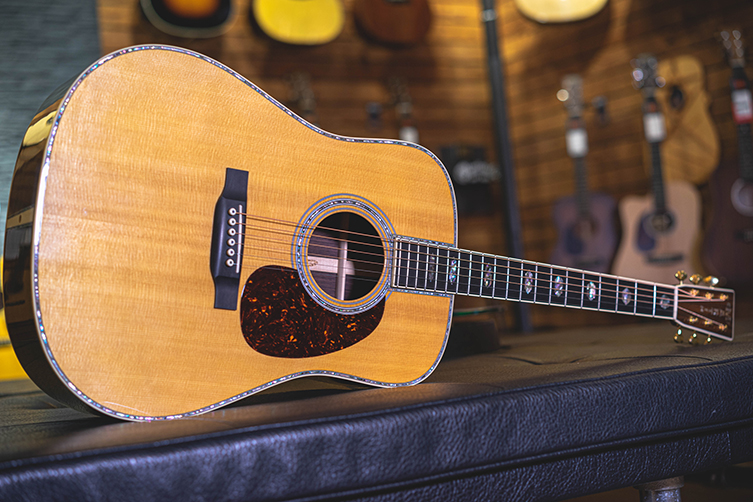
In the late 60s, Martin did try a couple of times to produce a range of electric guitars. Google ‘Martin GT-75’ or ‘EM-18’ and you’ll see some of the curiosities put out by the company back then. They sort of have a pawn-shop quality to them, mixed sometimes with an upmarket Alembic vibe, and I can see why they didn’t catch on. Each model was made in numbers of far less than a thousand, so if you see one in the wild, it may be worth further investigation. But since then, Martin have mostly stuck to what they do best: making excellent acoustics.
MTV Unplugged
I’m jumping ahead a little but now, because the 80s and 90s were perhaps of interest only to real fans of the brand. We’ve now in the age of anniversary models, tributes and reissues, so their story is perhaps for completists.
Once thing was pretty significant, though. MTV - now a matter of history since the channel is gone - was an American TV channel that began as a purely music-related option. Music videos, music documentaries and - significantly - special recorded performances were what it made its name on. MTV ruled the 80s, basically, and put a lot of non-handsome rock bands out of business when the business all of a sudden required you to look good!
In the 90s, Grunge and the Alternative Nation came along to re-address some of the 80s pomp that had preened and softened rock music. MTV noticed this early on and devised a show called ‘MTV Unplugged’. This is where Martin become historical yet again. I could mention Eric Clapton’s career-reviving MTV Unplugged performance, which made Tears in Heaven a monumental hit and sold countless 000-28 guitars. I could mention Paul McCartney’s Unplugged performance, using his D-28. These were the old guard, of course, and the format would reflect younger bands later by inviting Alice in Chains and Live to play acoustic sets. But in reality, there was one of these shows that transcended them all.
Nirvana’s iconic MTV Unplugged in New York.
The record was released after Kurt Cobain’s death in 1994, and was Nirvana’s first ever live album. Throughout the set - which included a large number of relatively obscure covers - Kurt played a rare 1959 D-18E electro acoustic, modified with multiple pickups and ‘flipped’ for the left-handed Cobain to use. There were only ever 302 of these guitars made originally, and Kurt's fetched 6 million dollars at auction in 2020, making it the most expensive guitar ever sold at the time.
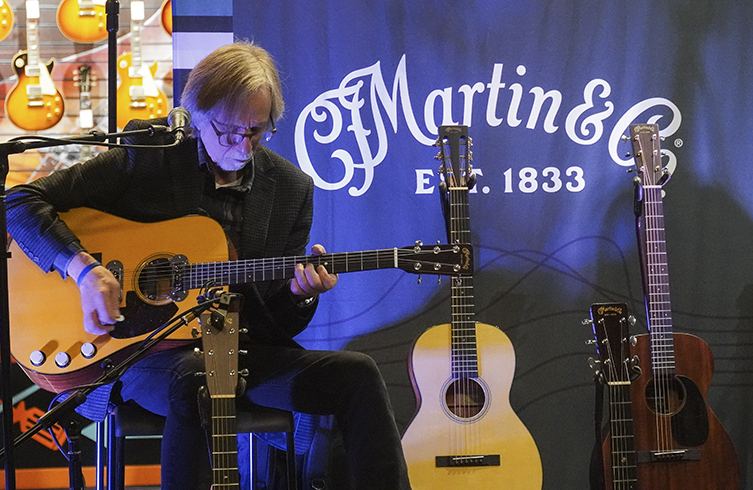
(A modern day recreation of Kurt Cobain's iconic D-18E, complete with the large control knobs)
Americana and the Return of Country
The last few years have seen country and Americana becoming more and more mainstream again. In the USA, that’s hardly worth mentioning, but over here in the UK, country acts such as Zach Bryan and Keith Urban are filling arenas and stadiums up and down the country.
As an offshoot of folk, country music is a ‘people’s music’, and whilst production tastes have changed over the years to incorporate pop and rock flavours, country music is still pretty traditional. A Martin D-18 and D-28 is still the go-to choice for the country songwriter, and Americana/alternative country artists like Jason Isbell and Molly Tuttle are using Martin guitars to record and tour with.
Martin Today
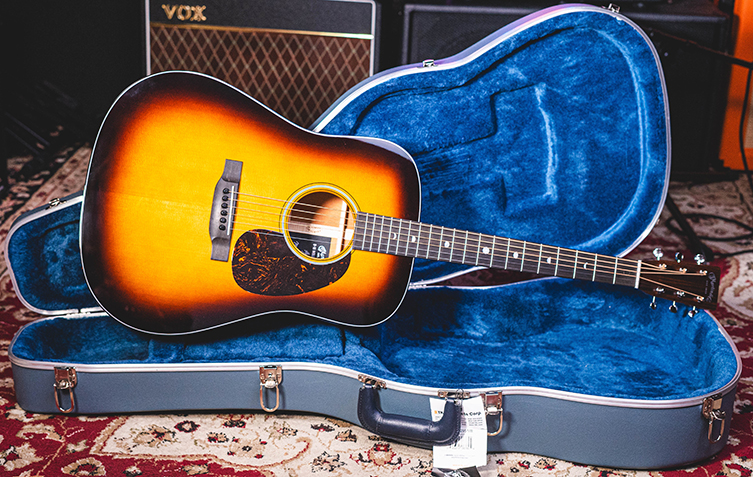
If you click through at the bottom of this article to browse our full selection of Martin guitars, you’re sure to find a huge amount of variety. Those with an appetite for classic, historic Martin acoustics will love the Authentic Series and the North Street collections, which seek to bring that ‘pre war’ richness that I mentioned earlier. Guitarists looking for the flagship Martin experience can start with the Standard (and Reimagined Standard) ranges and move from there. Players on a budget can still join the Martin family too: there is the X series and the Road series - both made in Mexico - which boast a treasure trove of classic and contemporary Martin guitar designs, all considered from a player’s point of view.
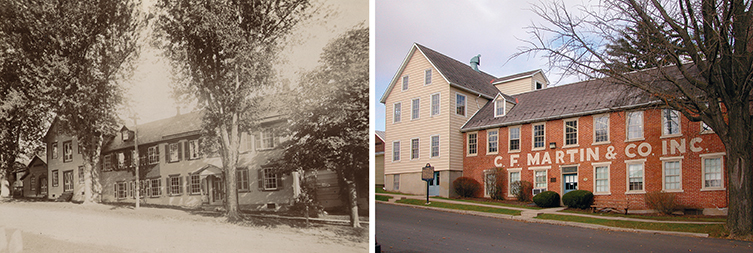
(Martin's North Street headquarters in 1900, and now)
There are lots of Martin guitars out there, so consider keeping my Martin Models Explained article handy to help you navigate the ranges and models.
Put simply, your ideal Martin is very likely to exist, and we at guitarguitar are not only exceedingly likely to have it in stock, but we also want to guide you towards it! To own a Martin acoustic guitar is to have a friend for life: a friend with more than a little history to their name. Why not find yours today?
Click to View ALL of our Martin Acoustic Guitars