Do you want to sound more interesting as a lead player? Learning guitar scales is one of the most crucial ways to level up and escape the usual tired cliches that we all tend to fall into from time to time as guitarists.
Many of us - myself included - have no formal musical education, and this tends to make us either a little wary of musical theory, or just somewhat perplexed about where to turn when the minor pentatonic starts feeling a bit stale.
This is especially true for metal guitarists. Metal is a musical landscape in which there is far more space for broader, more exotic melodies and note patterns for guitarists. Whether we are talking about riffs, solos or compositions more generally, scales have more weight in metal than they might in other adjacent musical styles like classic rock and grunge.
Today, I’d like to suggest some effective and colourful scales that you can try to incorporate into your music. I’ll reference some appropriate players or bands who make use of these scales, or simply suggest ways in which these scales might prove useful in evoking different atmospheres.
I won’t bog you down with theoretical explanations of what intervals make up the scales either: I want you to develop a feel and an ear for these as they sound, and as they sit on a guitar fingerboard. You can always do a search online for the theory if you’re intrigued!
All of today's examples are in A,because I feel like it’s useful to learn these all away from the open strings. You can extend the patterns up and down the entire fingerboard in either direction, once you’re familiar with each scale’s signature tonality and character. Learn them in other keys too, once you get these initial patterns down.
Okay, it’s time to dive in with me into the crystal clear waters of exotic scales to see how these scales can lift your own guitar playing to the next level!
Scales and Modes
One quick thing first about scales and modes. For today’s article, I’ll be talking about scales in their own context. I will use iterations of modes, but we’ll be looking at them as if they are scale patterns in their own right, which of course they are.
The wider context of how they fit together as the musical map we call ‘the modes’ is well beyond the scope of today’s info. It’s a big topic that deserves its own space, but you can still benefit from some of the trappings of what these modes offer without having to intrinsically understand their relationship in theory terms.
What I would say, though, is to think of modes as ‘moods’, because they can be incredibly evocative, and that in turn may reflect the music you wish to create.
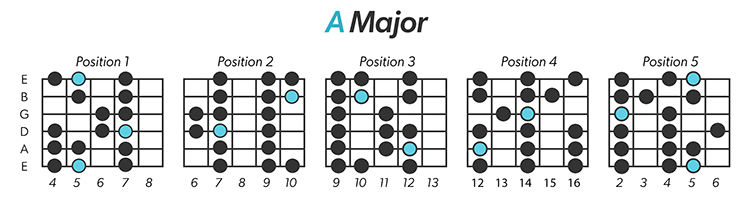
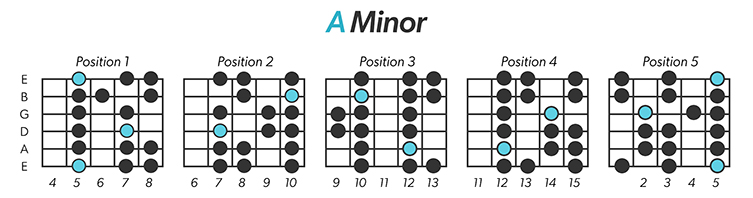
In fact, if you can already play the major and minor scales (and in case you can’t, I’ve got them directly below here for you), then you’ve been playing the Ionian mode and the Aolian modes without even knowing it!
Use this article today as your starting block for taking that modal musical pathway if you feel like it (it's great stuff to know, frankly), but the focus here is NOT about slavishly learning the modes. It’s about getting your fingers to land in cool new places on your fretboard, and for you to have an opinion on how that sounds!
Harmonic Minor
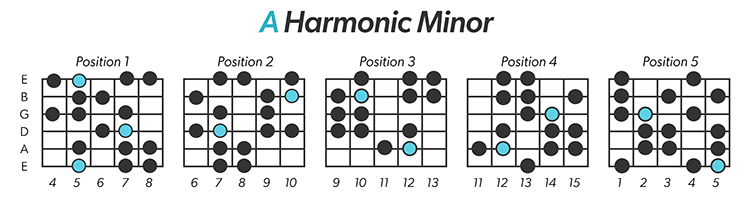
My first scale for you in the Harmonic Minor. For me, this is a fairly essential part of the metal guitarist’s toolkit. The Harmonic Minor scale is a very easy way to introduce some mediterranean and middle-eastern mystery into your music. You’ll find it in plenty of North African music, in Greek Rembetiko music, and in Egyptian classical music. Also, loads of bands use this scale, from Dream Theater to Symphony X, and it’s one of Yngwie Malmsteen’s favourite scales to use. So you’ll be in good company if you use this in your music!
It’s only one note different from a regular minor scale too, so learning it won’t be difficult, but what a difference that one note change makes!
Hirajoshi
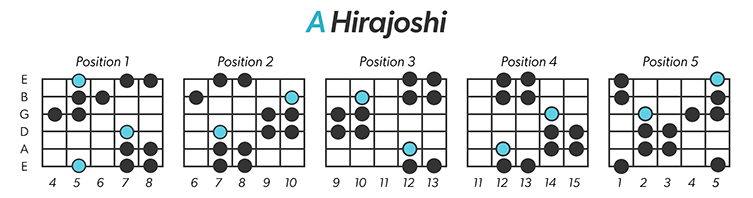
Have you ever wondered how Marty Freidman was able to play such beautifully unusual melodies with his solos? Especially during Megadeth’s Rust In Peace era? Well, this unusual scale may help illuminate things, because he loves using it!
The Hirajoshi scale is a Japanese pentatonic, and what makes it interesting is that it's a scale that has had notes removed rather than added! It’s not unlike the harmonic minor scale we just checked out, but by strictly missing out certain notes, the Hirajoshi scale obliges you to think outside of the box, and more in terms of melodies than in pattern-based shredding.
Give it a go!
Phrygian
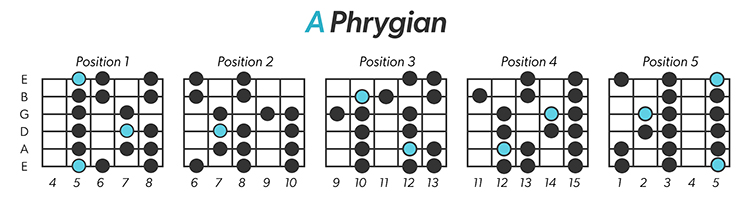
The Phrygian Mode is popular with metal bands who want a sort of exotic darkness in their music. All of the musical Modes are expressions of the Major or Minor scale, in some form or another. It’s a strange thing to get your head around, but once you do, the mystery kind of locks into place in a number of ways.
Anyway, the Phrygian is also great for Spanish and Mediterranean-sounding music, and can certainly add a bit of ‘Ancient Egyptian Curse’ to your downtuned riffs! Harvester of Sorrow by Metallica is the one that always sticks in my mind for the Phrygian mode.
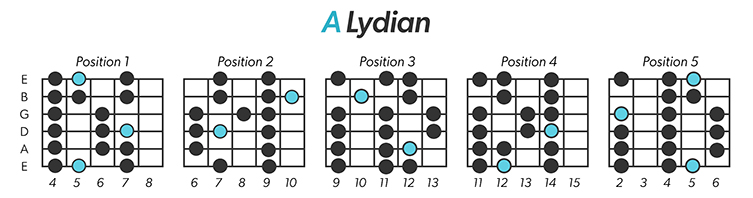
Lydian
The Lydian Mode is one of the most distinctive and non blues-sounding scales in guitar music, I think. Fans of maestros Satriani and Vai will almost certainly recognise the sound of this weirdly alien and yet weirdly uplifting scale. Also, loads of sci-fi movie scores use it, as do many of the little fanfares you hear at the start of movies when the production company logos pop up.
It’s normally a little bit too ‘positive’ sounding for use in intense metal, but if you are smart about how you use it (in other words, what’s happening harmonically underneath your playing), you can introduce some very off-kilter and progressive moments into a song. Basically, use it to play against the expectations of your listener and you can create some arresting and beautiful music.
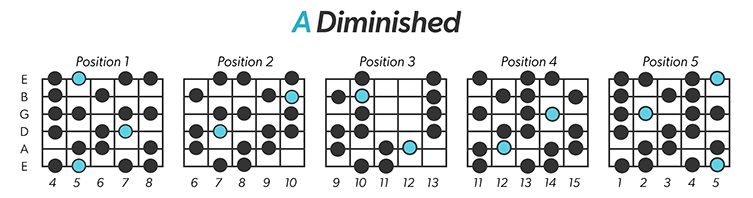
Diminished Scale
So, for this one, I encourage you to learn it more as a utility than as a bedrock for lead parts themselves. I say this because the Diminished scale sounds flat-out bizarre, and can also be somewhat tiring on your ears after a while (maybe that’s what you want?). But, as a linking device for joining separate parts of a song or even a solo - you might change key or scale mid solo, right? - then it’s very handy to call upon.
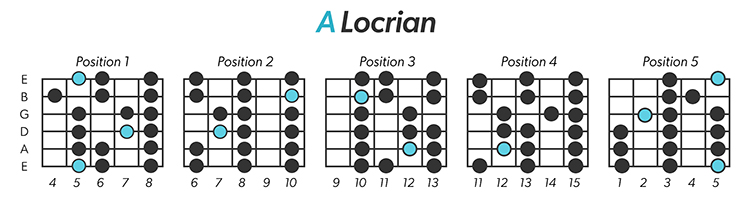
Locrian
Are you ready for some very uneasy and creepy sounding music? As in, genuinely a bit wonky and unnerving? Ok good, I’ve got something for you!
As a kid, I read an excellent interview with Steve Vai in a guitar magazine about the modes, and more importantly, how he felt about them. For example, he’d say that the Lydian mode reminded him of ‘Julie Andrews in the Sound of Music’, or that the Phrygian mode evoked ‘the sphinx and amber sun shining above the desert’.
I found that stuff really helpful: it put a romantic, artistic stamp on what were otherwise a bunch of notes and intervals. Anyway, for the Locrian mode, Vai said it reminded him of “...a diseased island. I think of Moloka’i in Hawaii, where there’s a leper colony. Scary and strange.”
Who doesn’t want to learn a scale that sounds like a diseased island? Exactly! Here it is…
Don’t Play Scales
Okay, now you’ve just learned a whole bunch of new scales. Well done!
Don’t play them.
What I mean is, scales aren’t music. Playing through a scale is an exercise in learning; in training your hands and your ear to recognise it, so that you can call upon its unique flavours and properties when you feel artistically inclined to do so.
Use these patterns to make amazing music, but realise that the patterns themselves don’t add up to much in and of themselves. You as a musician are the unquantifiable element that brings this all to life! Learn this stuff until you have it down, and then put it to the side and just play. The difference will be unbelievable.