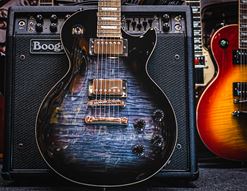
Are you of the opinion that the Les Paul is perhaps the single coolest and most beautiful electric guitar design of all time?
Good, we’re going to get along just fine, you and I. I’ve been playing Les Pauls in some form or another since I was 14 years old and got my first Epiphone. I’ve always seen them as being the number one guitar to own. They look stunning, have a deep, thick and expressive voice, and are very forgiving to play. Over the years I’ve owned lots of guitars - as you might expect, given my job - but I’m never far from a trusty Les Paul. You’d better believe I’ve played them all, from bargain beginner models to top end Gibson Custom Murphy Lab masterpieces. I’m here for them all.
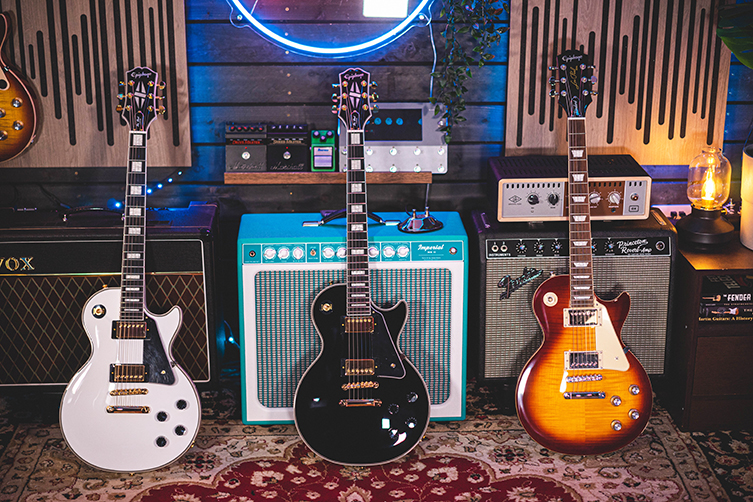
All of this puts me in a uniquely useful position for you. There are so many Les Pauls available from Epiphone today that you may be wondering what to make of all the variations. Let me help you by picking out some top solutions for a number of situations, all of which involve using and owning a Les Paul. I’ll cover affordable choices, I’ll explain slight differences, and I’ll hopefully guide you confidently towards the right Epiphone Les Paul for YOU.
If you are in the market for an Epiphone Les Paul, then you simply MUST read this article!
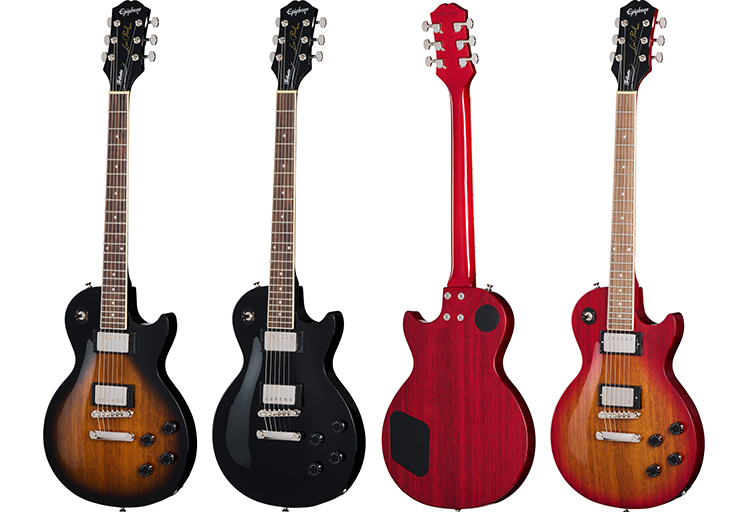
Best Affordable Epiphone Les Paul: Epiphone Les Paul Tribute
Let’s begin with a nice Les Paul that is available for a very humble asking price. The Epiphone Les Paul Tribute captures much of what makes this guitar design special, and combines those features with sensible compromises that largely retain the quality.
So, the obvious difference here is the use of a bolted-on neck. This isn’t a bad thing at all since most electric guitars are made this way, but it’s also true that the classic Les Paul build is for a glued-in - or ‘set’ - neck. This may lose the instrument a little of its famous sustain, but at this price, I think that’s perfectly acceptable.
The body and neck are both still mahogany, and the body has a carved top which helps it to look suitably ‘LP-like’. The neck itself is a 60s Slim Taper carve. We’ll run into these descriptions a fair bit today, so for rough reference: 50s style neck profiles are carved to be thicker; chunkier. 60s necks are slimmer, and both are loosely based on historical Les Paul models. There’s no better or worse - it’s all about preference - but Epiphone reckons the majority of players can get on with the thinner 60s neck, so that’s used a lot on their guitars.
This Tribute is an excellent first step into the world of the Les Paul. You get a lot for your spend, and it will remain handy as a backup instrument if and when you finally upgrade.
The Classic Choice: Epiphone Inspired By Gibson Les Paul Standard 50s
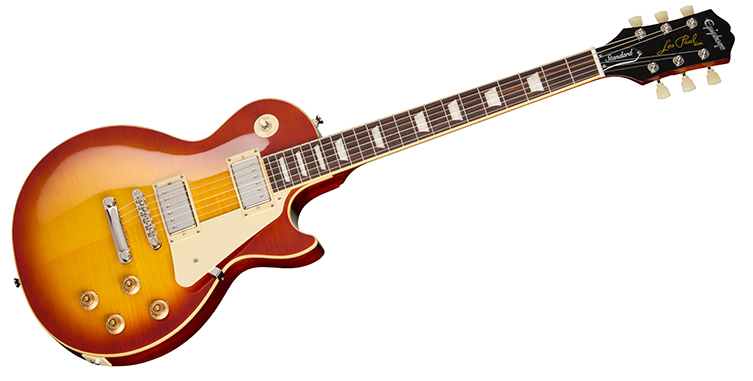
In many ways, this is where to begin on your search for an Epi Les Paul. This model is where the guitars start to appear just as you imagine them in your mind’s eye. Lightly figured maple top, binding on the body, trapezoid fingerboard inlays and chrome-covered humbuckers: it’s the stuff of legend, priced for the everyday guitarist!
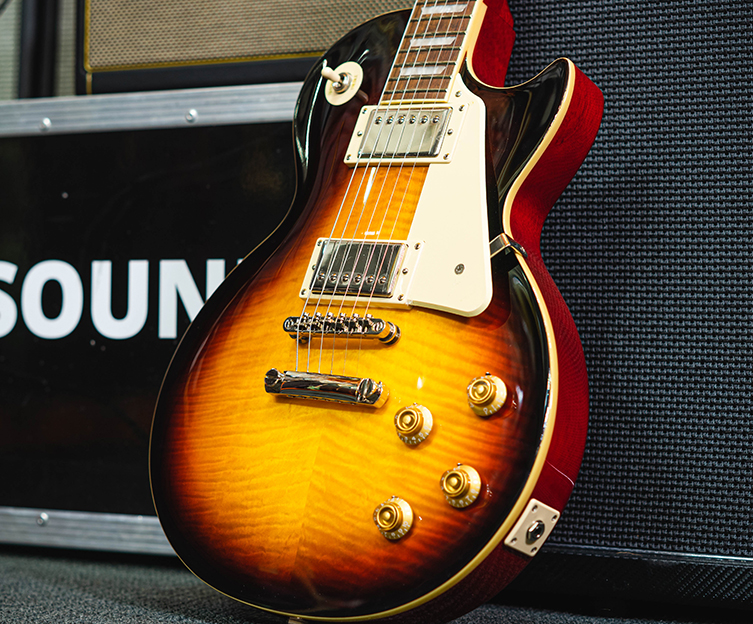
So, let’s check out the Epiphone Inspired By Gibson Les Paul Standard 50s. That’s some mouthful of a title, but what it boils down to is a classy Epi Les Paul Standard for just over £500. Available in either gold or Washed Cherry Sunburst (shown below, it's the ideal burst finish if you ask me), this is the Les Paul to choose if you want to cover it all: Jimmy Page vibes, ZZ Top moments, harder rock and blues…it's a very nice recreation of a classic guitar.
This has a set neck of course, and a full-thickness body. You get quite seriously upgraded pickups and electronics with this model, and those elements are not to be underestimated! It all adds up to deliver a convincing vintage Les Paul palette of tones.
The Best Choice for Indie Rockers: Epiphone Inspired by Gibson Custom Les Paul Special Double Cut
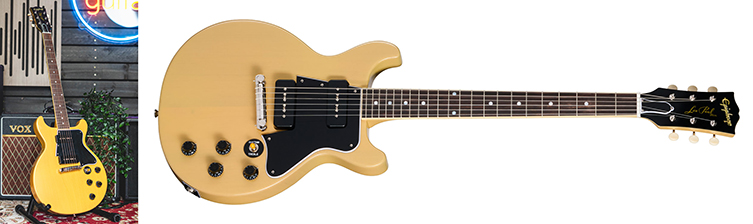
Les Pauls come in various shapes and sizes, to paraphrase Chesney Hawkes. One such is this model, which is an enduring favourite of mine. The Epiphone Inspired by Gibson Custom Les Paul Special Double Cut is a well priced and well appointed version of a counterculture classic.
The Les Paul Junior and Special were originally made as student guitars. Lacking the carving and finesse of the Standard, the Junior (one pickup) and the Special (two pickups) were slab-bodied, quick and simple to make. What they also were (and indeed are) are two complete tone machines, with mahogany and P90 pickups delivering a sound that is fatter than a Fender and rawer than a Les Paul.
Ideal for noisy rock, in other words. Punks, indie players, alternative players and experimental players of all backgrounds come to the Les Paul Special for what it delivers, and even jazzheads and blues players love them.
In short, if you haven't tried the rich tone and raw power of this style, then this LP Special Double Cut has tons of performance and vibe for the money.
Choosing Your Les Paul Custom: Inspired by Gibson VS Inspired by Gibson Custom
Okay, we both know that the Les Paul Custom is the coolest Les Paul of them all. Right? They are beautiful but also give a lovely, thick tone that is a delight for lyrical lead playing and chunky riffing alike. The Les Paul Custom is one of those guitars that makes you feel a bit special when you wear it too, and that’s not something to be ignored!
Now, Epiphone offer not one but two Customs: the Epiphone Inspired by Gibson Les Paul Custom and the Epiphone Inspired by Gibson CUSTOM Les Paul Custom. One is a good chunk more expensive than the other. So, what is the story?
Well, the news is that there aren’t actually too many factors that separate each model. Perhaps the easiest way to explain it is to cover what they both have, and then what the spendier Inspired by Gibson Custom Les Paul Custom has on top of that.
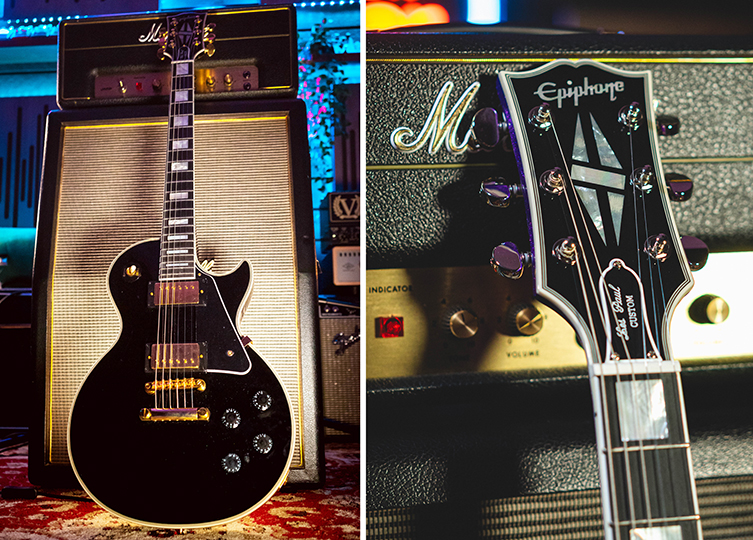
Features shared on both models:
- Solid mahogany body and neck
- Medium C neck profile (the ‘Custom Custom’ has a slightly thicker carve)
- Ebony fingerboard
- CTS potentiometers (the electronic part of the control knobs)
- Locktune bridge
- Graphtech nut
- Grover Rotomatic tuners
So, quite a high quality collection of materials here for sure! Now for the few significant upgrades to the more expensive Inspired by Gibson Custom model:
- The ‘proper’ shape ‘open-book’ headstock, the same as a Gibson guitar.
- A maple cap on the body, in addition to the solid mahogany.
- Gibson USA pickups versus Epiphone Probuckers
- More-handwiring in the circuit, with top quality parts from Mallory and Switchcraft in addition to the CTS pots.
In addition, a hardshell case is part of the package, rather than the (still very decent) gig bag that comes with the less expensive model.
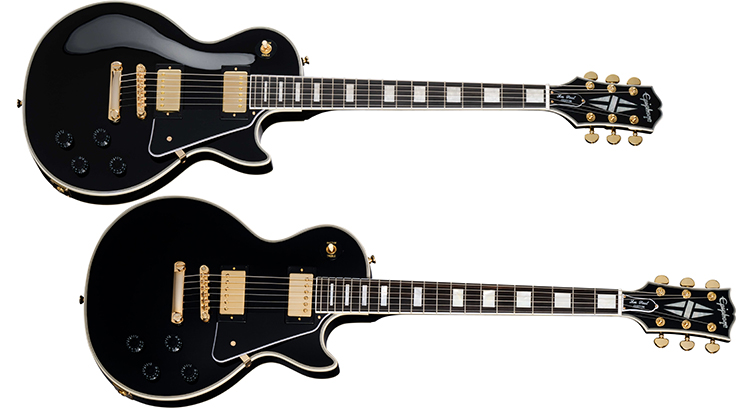
How does that sound to you? Both guitars are pretty excellent, but those upgrades on the more expensive Custom are not insignificant. My advice to you is to try both back to back, and see how those upgrades actually materialise in your own experience. I believe the Inspired by Gibson Custom model is the better guitar for feel and dynamic subtlety, but that’s my opinion. What’s certainly true is that guitarists have wanted to see the Gibson headstock shape on Epiphones for decades, so it’s great that the option now exists!
The Best Epiphone Les Paul for Hard Rockers: The Epiphone Prophecy Les Paul Baritone
This is a brand new guitar at time of writing (late October 2026) and forms part of the newly refreshed Prophecy line. Epiphone Prophecy guitars have existed in a number of iterations over the years, and are always uniquely decorated, highly-specc’d machines for hard rock and metal.
In my opinion, the new Prophecy range is this concept finally done properly. In the past, I’ve felt that the abalone purfling and lightning bolt inlays were the idea taken a little too far. Now, though, the aesthetic is perfect. Satin (dark) finishes, ebony boards, black hardware and proper mother-of-pearl block inlays make these a set of instruments that any goth, metal or industrial player would be proud to pull out of their coffin and take on stage.
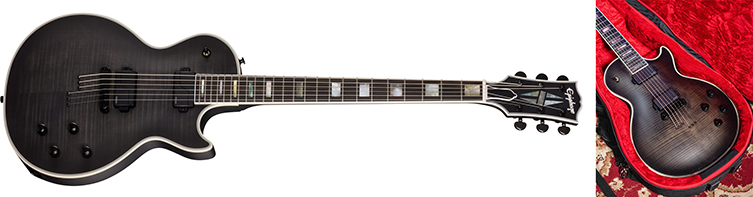
One particularly interesting point to note is that each model has a set of custom-voiced active Fishman Fluence pickups, made especially for this series. That’s quite a coup, given how ‘of the moment’ these pickups are for the heavy brigade. And you may have noticed that I chose the BARITONE Les Paul? Ohhhh yeah! This brute has a full 27” scale length for low-tuned stability and earth-shaking riff potential.
Familiar yet unique and brilliant.
The Best Epiphone Les Paul for the Blues: Epiphone Les Paul Kirk Hammett Greeny
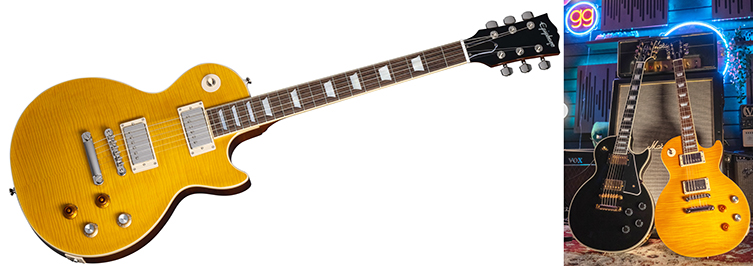
Most Les Paul fans will know the story of the original Greeny, the ‘59 Les Paul owned by Peter Green, Gary Moore and now Kirk Hammet. It’s an especially legendary guitar, since 59 LPs are already the most sought after guitars in history!
So, given that you can also buy a Gibson model (for exactly double the cost, at time of writing), how does this Epiphone Greeny Les Paul model stack up?
I’d say ‘very well indeed’, and I’d venture that you’d be hard pressed to find a better feeling, better sounding guitar of this type at the price point. You get the ‘open book’ headstock, the Gibson USA humbuckers with the crucial out-of-phase wiring for the special middle-position tone, and the same level of electronics we looked at a little earlier in the Les Paul Custom.
This guitar feels excellent. I’ve not been lucky enough to play the real Greeny, but this one has a very comfy neck feel in the hand. Add to that a set of legendary blues rock tones and juuuust the right shade of amber for the finish, and you’ve got yourself an affordable classic.
The Holy Grail: Epiphone Inspired by Gibson Custom 1959 Les Paul Standard Reissue
Late 50s Gibson Les Pauls made between 1958 and 1960 are the most valuable and sought after non-celebrity guitars in the world. The combination of looks, feel, sound and playability have long since elevated these rare instruments to ‘Holy Grail’ status. You see, there were never that many of them made in the first place, and fewer still survive out in the wild.
We’ve already looked at Epiphone’s recreation of a particularly famous one - The Greeny - but that’s not where the love for 59 Sunbursts ends!
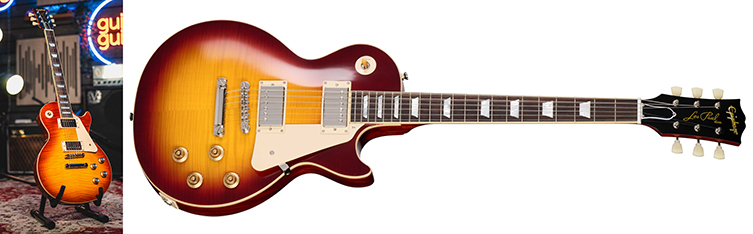
Let me present the Epiphone Inspired by Gibson Custom 1959 Les Paul Standard Reissue. Another super-long title, but at least it’s another guitar that fully justifies it! As much as is feasibly possible to recreate a priceless guitar in a production model Epiphone, this 59 reissue delivers. The famous neck carve is just the right blend of chunky and comfy; the finish has a very light patina of satin without looking ‘aged’; the weight is there, though never excessively so in the ones I’ve played; and the sound is that delicious mixture between bite and warmth, clarity and body.
In short, it’s really everything you’d want to have in a vintage Les Paul: it even has the open book headstock!
The Modern Masterpiece: The Epiphone Alex Lifeson Les Paul Custom Axcess
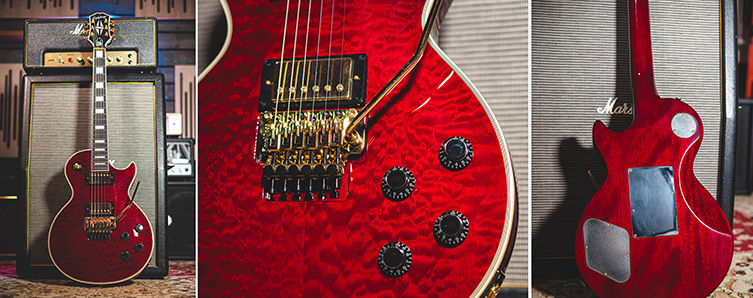
A Les Paul with a Floyd Rose locking tremolo? Oh yes, definitely! This signature model for Rush’s guitar hero Alex Lifeson is based on a design from Gibson’s Custom Shop. It’s a full-fat Les Paul, with all of that rich crunch and singing sustain, but the ‘Axcess’ element refers to a heavily sculpted neck heel. Now you can really zoom up to those high frets unhindered by the body.
The Epiphone Alex Lifeson Les Paul Custom Axcess is a beautiful looking beast with a AAAA grade quilted maple top and gold hardware. The tremolo itself is a good quality Floyd Rose 1000 series model, so your inevitable divebomb frenzies will not shock the instrument out of tune!
For the more adventurous player who still needs a classy - and classic - electric, this Alex Lifeson model is a great shout.
Which Epiphone is Best For You?
Okay, there are eight pretty different Les Pauls from Epiphone for you. There’s classic replicas, affordable workhorses and really rather fancy heavy-hitters here, all from the same stable.
I believe the time of Epiphone has come. Actually, it came years ago, and ever since, they’ve been quietly and confidently putting out knock-out guitars with authentic Les Paul DNA and all the right curves. Buying American is always going to oblige a significantly higher spend, and on the evidence of these particular guitars, there is less and less reason not to make your statement with an awesome Epiphone.