British tone. Us guitarists hear that term all the time. British tone or American tone. What do those things mean to you?
Does it depend on whether the sound in question is clean or distorted? I suppose it must, because ‘American tone’ can be a Fender Twin or it can be a MESA/Boogie Dual Rectifier, can’t it? Those two default examples are about as far away from each other as it’s possible to get.
Today’s article, though, is about British tone. British guitar tone, and what that actually means. I’ll let you in on a secret: it’s more than just Marshall! So, guitar tonehounds, let’s talk about British tone…
Jim Marshall
The story of British amps begins with…Fender. Yes, when it comes to blueprints for amplifiers, it really comes down to the Fender Bassman and a certain book called An Approach to Audio Frequency Amplifier Design. This was produced by GEC (General Electric Company), the company who made valves. Basically, they told you how to use the valves by including 17 complete vacuum tube amp designs, and this is where a lot of relatively early amp designers learned how to build their circuits and handle the electrical loads.
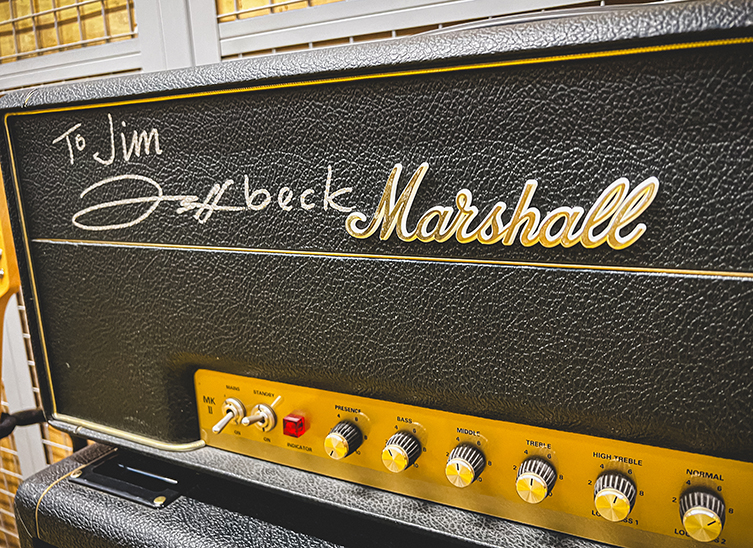
Between that reference guide (released in 1957) and Fender’s original amp models, all subsequent amps emerged. I cite the Bassman model in particular, because that was what a certain Jim Marshall sought to emulate when he created his first JTM amplifier in 1962.
It was a case of recognising a need for guitar amps, noting that imported American-made amps were prohibitively expensive, and setting up production in the UK in order to solve the problem.
The JTM45 was created in 1962 by Jim, his son Terry (hence JTM: Jim and Terry Marshall) engineer Ken Bran and designer Dudley Craven. Whilst the goal was to recreate the Bassman, locally available parts in a still recovering post-war Britain meant that they had to change out certain parts. The resulting tone was immediately different: more distorted and aggressive compared to the Fender. It was immediately seen as a good thing!
This was the beginning of the British tone, and I’d say that it still, in many ways, defines what lots of people associate with the term: loud, aggressive, overdriven tone that is rich in midrange and in harmonics.
Marshall Today
Marshall are one of the most famous and significant amp builders in the world. Their logo is so recognisable that it is worn on merchandise and accessories by people who aren’t even musicians, let alone guitarists. The classic Marshall black and gold livery is a warmly familiar backline sight in venues across the planet, for classic rockers, metal maniacs and seasoned blues players alike. Marshall amps such as the 1962 ‘Bluesbreaker’, the JCM800 and the 1959 Super Lead ‘Plexi’ are rightly revered as classics, and are widely copied by other amp brands.
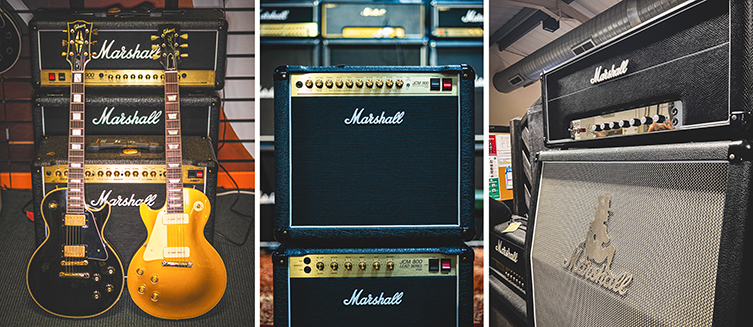
Interestingly, these Marshall models don’t all sound the same. The Bluesbreaker is a fairly vintage sounding combo, perfect for (as the nickname suggests) early British Invasion electric blues lead tones. The JCM800 and 900 are definitive thrash metal amps, and the Plexi (so-called due to the plexiglass front panel) is the holy grail for classic rock and Van Halen fans.
Marshall OWNS the sound of rock music, from Anthrax to Guns n Roses, Hendrix to Page. Other amps are great, but every rock player knows that a Marshall will do the job impressively, with a timeless bark and crunch that works over and over.
Vox
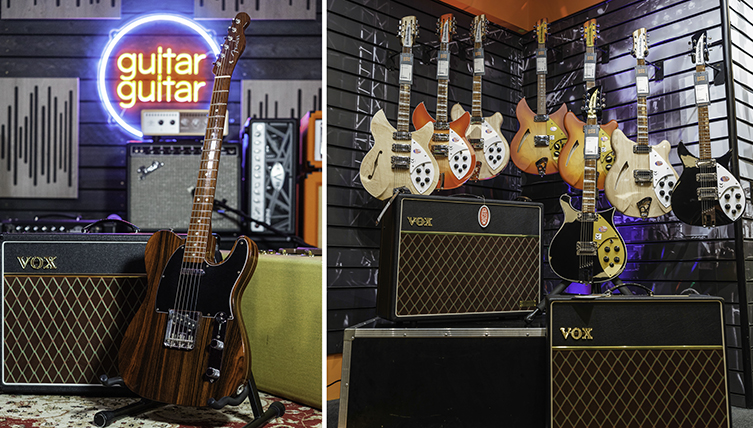
What do the Beatles, Queen and U2 have in common? Plenty of things, probably, but in this context, it’s their continued use of Vox amps. Vox is another classic, heritage amp maker from the UK, whose defining sound is a mix between chime and crunch.
The Vox AC30 Top Boost is surely the amp everybody thinks of for this brand. Initially, they were famed for their jangly clean tones, thanks to the Fab Four and Hank Marvin, who favoured them during the Shadows’ heyday.
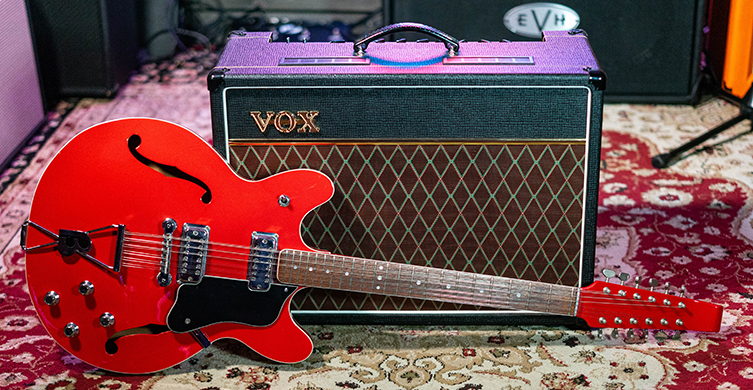
During the British Invasion and then into the 70s, guitarists started turning the volume up, utilising the Top Boost function (a treble boost which pushed the amp into overdrive) and enjoying the harmonically rich distorted sound that occurred. They found the Vox had a midrange that was similar in some respects to the Marshall sound and yet distinct. Less overtly overdriven, it could still be coaxed into some pretty heavy rock thanks to an additional gain stage from a treble booster, as Brian May capably showed the world.
Countless bands have employed the famously dynamic sound of the Vox over the years, from Radiohead to Anna Calvi. It’s the full range of pristine to broken up that appeals, with the addition of built in tremolo, reverb and a tone cut knob (a backwards tone control, basically) adding depth and inspiration. And that’s just the AC30! There are many Vox amps available today, and some -such as the unusual Super Beatle amps built for Lennon and co - that are sometimes released in smaller 'fun-forms' or indeed consigned to history’s curiosity pages. All of them helped put Vox on the map as British classics.
Laney
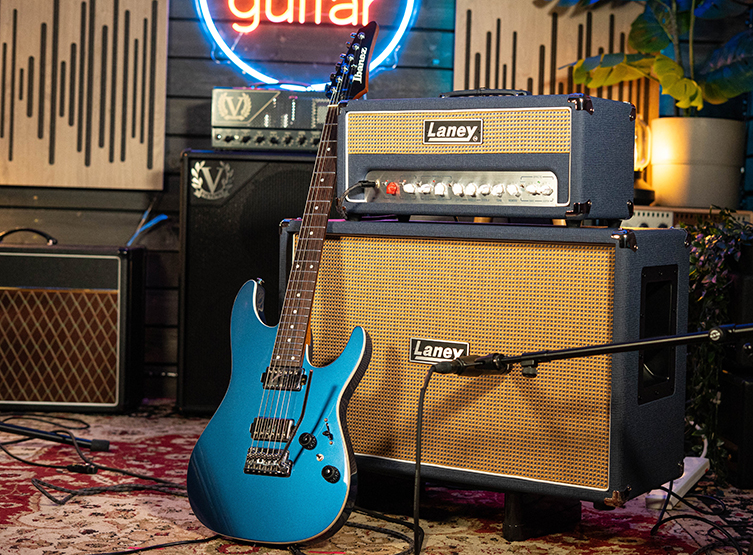
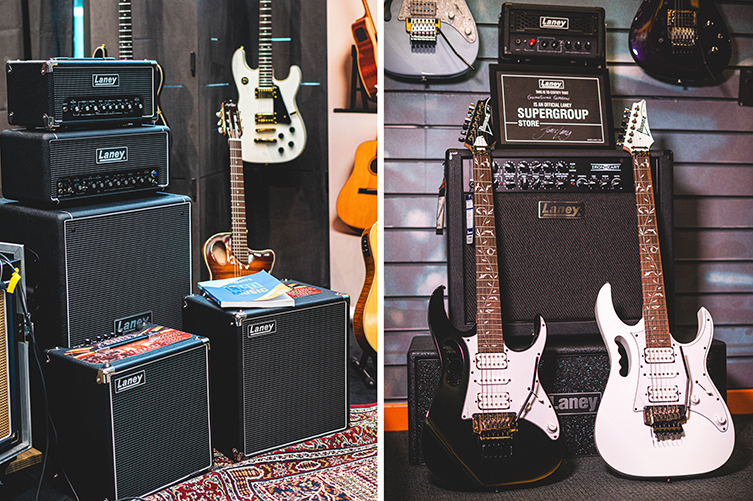
If the sound of rock is arguably Marshall - and who can reasonably say it’s not - then the sound of British metal is undoubtedly Laney. Fellow Birmingham natives Black Sabbath are the main reason for this, since pioneering guitarist Tony Iommi has stuck with the brand throughout his long, game-changing career.
An early tagline for Laney’s Supergroup amps was ‘King of Cleans’, thanks to its huge power rating and levels of headroom. This was great for many players, but hardly what was required for Black Sabbath! Iommi was another user of the treble boost pedal to coax more distorted filth from his amps, but Laney soon started developing higher gain circuits to match the requirements of metal-hungry musicians.
Over the years, Laney have kept their feet in the amp market, specialising mostly in analog amp circuits over the onslaught of digital modelers. A new generation of Laney fans have come around in recent years, too. Corey Wong uses a Laney Lionheart amp for his clean funk, Guthrie Govan often uses Laney for his spectacular playing, and Billy Corgan has long used a modded Supergroup amp as part of his Smashing Pumpkins multi-amp setup. He even has a signature pedal with them, the Supergrace amp-in-a-pedal. Though perhaps in the shadow of Marshall, Laney are British legends through and through.
Orange
Orange are perhaps the most distinctive looking amp brand in the business. How could they not be, with bright orange cabinets and black speakers? They look the business, but it’s all about the sound: a large, textured, thickly distorted sound that is distinctly their own.
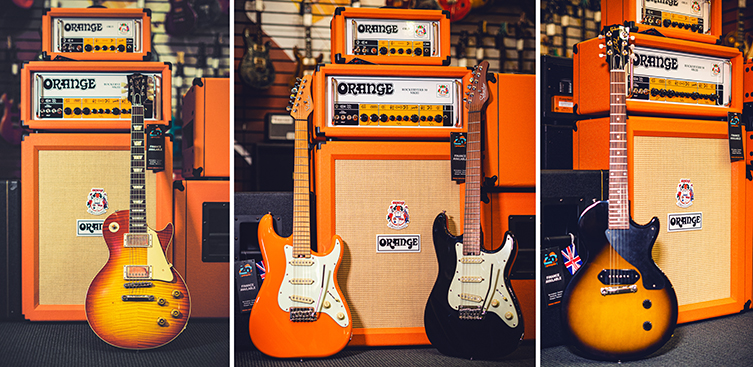
Orange have been around since the 60s, as their logo and front panel icons clearly suggest. Like the other British amp brands we’ve already checked out today, their original amplifier designs were more about clean headroom than world-ending distortion, but ever since Orange released the Rockerverb range in 2003 (and the MkII version in 2010), they’ve been a pretty unstoppable force in the world of heavy music. From Mastodon to Slipknot, Limp Bizkit to Nine Inch Nails, the Rockerverb has been a major voice in highly articulated aggression.
That said, it’s not just the downtuned brigade who love what Orange do. Plenty of more classically-flavoured rock and indie fans swear by these very same amps (with maybe slightly less on the gain dial) because they simply sound great. You’ll see Billy Gibbons using them, and you’ll see Noel Gallagher using them.
What is British Amp Tone?
So, those are the main players in this game of British amplifier tone. There’s also HiWatt, Victory and Blackstar of course, as well as some legendary amp makers who are no longer around, such as Cornford and Carlsbro. But I do believe that Marshall, Laney, Orange and Vox sum up the experience of British guitar tone.
But what is British amp tone? If these brands all have different signature sounds, then how can there even be such a thing?
Well, firstly, I’d say it does apply to overdriven sounds over clean tones. There’s a debate there, I’m sure, but I feel that most guitarists are referring to distorted sounds when they describe amps as sounding ‘British’, more than anything else. And so my conclusion is this: mids. Midrange. Presence in a mix. The opposite of a ‘scooped’ sound, if you like.
The British sound, for me, is an aggressively distorted sound that is harmonically rich and has plenty of midrange and upper midrange punch. You could call it ‘grind’ or use any other adjective, but it’s that in-your-face, almost brutal element, which can be coaxed into sweet, three-dimensional sonic bliss. It’s like pizza: there are many subtle flavour differences between one pizzeria’s style and the next, but they all taste like pizza. So it is with these amp brands: they all create their own flavour of British amp tone. It’s just a matter of which flavour you prefer.
Can some American amps do this too? Sure, but they’re just copying the British amps!
And the British amps started out by copying an American one. In a highly British way!
Click to Browse our Entire Amplifier Selection