Nu Metal: what a time for guitarists! Low-tuned, distorted riffing was at the top of the charts and all over MTV, and heavy music was on top of the world. It was a new type of guitar playing, which emphasised rhythm and texture over leads and solos.
Nu metal also brought about the real renaissance of the 7-string as a musical force. Although the concept existed prior to this, it took pioneers like Korn to actively write the rulebook on just what was possible with that extra low B string, especially when it was tuned ever lower like they did!
So, today I’d like to celebrate some of the most notable and memorable players from this colourful era, particularly as new generations of guitarists are beginning to find, evaluate and enjoy this music. I’ve picked ten players here: some of them are the obvious main players, some are the underrated & overlooked worthy contenders, and a few are great musicians who are perhaps only debatably ‘Nu metal’ in the first place! I feel like they all belong here, so have a read and see if you agree!
Korn: Head & Munky
Let me begin with the two inarguable pioneers of the Nu metal sound: Brian ‘Head’ Welch and James ‘Munky’ Schaffer of Korn. I’ve said it before and I’ll say it again, but the musical vocabulary developed by these two players is simultaneously the most influential sound in Nu metal and one that’s proven impossible to properly copy. Idiosyncratic to the extreme and bludgeoningly heavy, what Head & Munky did was make heaviness accessible and relatable to a 90s audience who knew about hip-hop and had lived through the end of grunge.
Setting the tone for the genre, neither player particularly takes a solo within any Korn sound: both guitarists instead weave together a tapestry of murky and unorthodox textures more akin to horror movie sound design than traditional guitar playing. Both also unleash masses of rhinoceros-sized riffs, and when you listen closely, you can often hear each musician playing something slightly different in order to create an ensemble effect.
The originals, and probably also the best.
Head & Munky’s Guitars
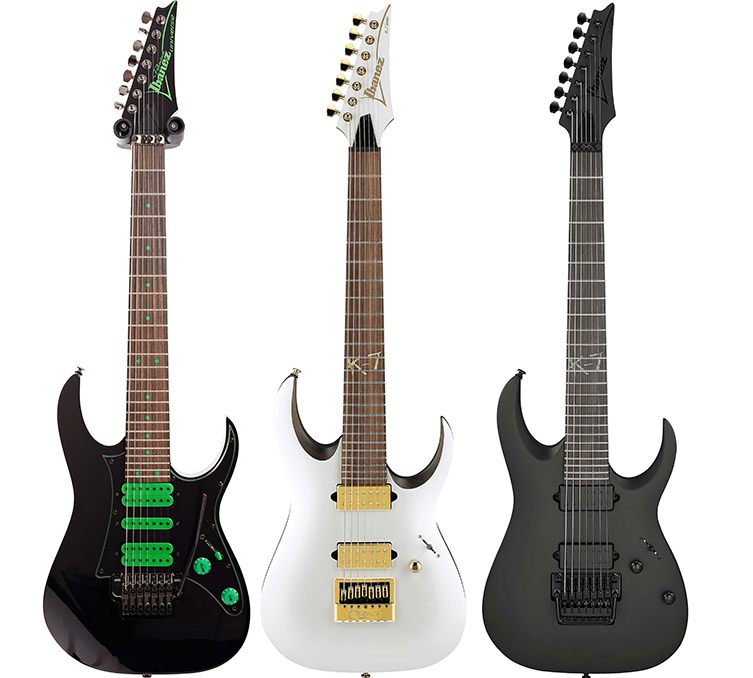
The Korn duo famously saved up their cash and bought Ibanez Universe guitars, which were not only expensive but somewhat out of fashion by 1993. In fact, the guitar was discontinued in 1994 (just before Korn’s debut album was released, d’oh!) until 1996 when it was clear that the world wanted more!
For Munky, he has always stuck with Ibanez, using a succession of signature models over the years. Head had a stay over at ESP for a while but returned to the fold, and the pair now have their own signature K7 models, dubbed ‘Yin’ and ‘Yang’ which is about as appropriate as it gets.
Korn tune their 7-strings to A standard.
Limp Bizkit: Wes Borland
If you don’t immediately picture Head & Munky when somebody says ‘Nu metal’, then I bet you’re picturing this guy instead. Limp Bizkit became the band with the most-viewed videos and accrued column inches in the whole Nu metal scene, but that might’ve been more to do with frontman Fred Dursat’s frequent spats with…a lot of people.
What’s always been pretty obvious though, is how consistently and inspiringly creative guitarist Wes Borland has been. From their early days, Borland committed to expressing himself visually with costumes, makeup, hand-painted guitar cabinets and custom guitars. He created how he wanted to look, how he wanted to sound and how he wanted to behave, and is for most people the enduring image of the band. Indeed, this distinctiveness may well have been an issue for Durst too, given how visually appealing Borland’s custom costumes always were.
And that’s before I even mention his enormous sound and inventive playing! Several of his riffs are flat-out iconic (who else has used a whammy bar as effectively in riff terms?), and his effected-atmospheric parts show influence from both composer Danny Elfman and electronic act The Future Sound of London. He pulls off that difficult trick of being a team player and a focal point simultaneously. The only thing predictable about Wes Borland is the high quality levels he holds himself to.
Wes Borland’s Guitars
Early Bizkit saw Wes using an Ibanez Universe (sorted through his association with tourmates Korn), which he tuned to C# with two unison high strings. Soon enough, he moved to PRS Custom 24 guitars alongside a number of home made and specially modded 4 string guitars (tuned to F#-F#=B-E) for songs like Nookie and Full Nelson.
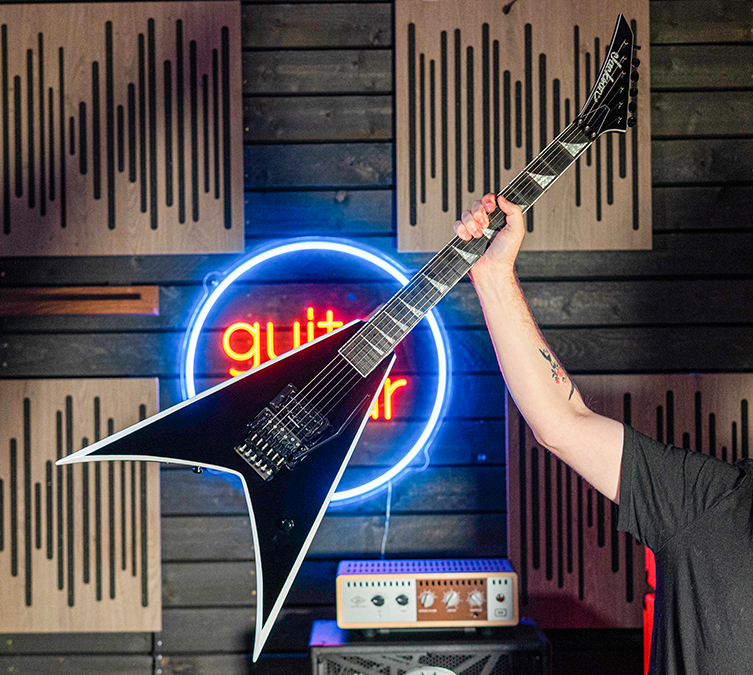
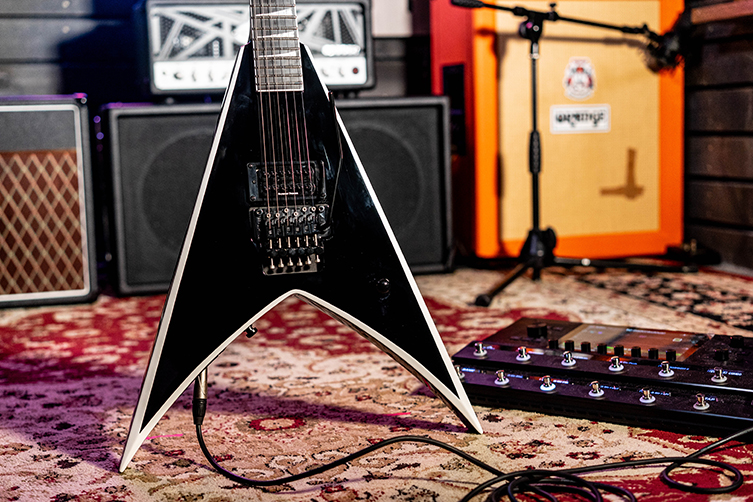
Yamaha later made him a fantastically eccentric semi hollow signature guitar, the CV820WB, before he moved across to Jackson, whom he’s been with since. He’s used a number of V, Warrior and Rhoads guitars over the years as well as some Superstrats from sister company Charvel. Earlier this year, Jackson released a signature Wes Borland King V guitar, which is closely based on a left-handed model he acquired, flipped and modified.
Slipknot: Jim Root and Mick Thomson
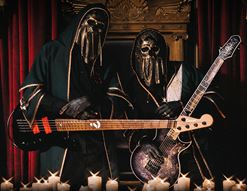
Slipknot’s masked guitarists have delivered raging low-tuned riffs for over 25 years. Despite their obvious talent, did anyone really think the whole concept of 9 masked and boiler-suited musos playing high-energy, high-angst metal would last anything like as long as it has? It’s a testament to the music behind the concept: these guys really know how to make effective, molten metal!
Jim Root (the kind of Michael Myers one) and Mick Thomson (I’d go with ‘angry metal scarecrow’) supply the six-string firepower to one of Nu metal’s biggest success stories, and it is most definitely a six-string story: neither player ever opted for a 7-string, despite the low tunings that have been used on their music.
Slipknot are one of the world’s biggest metal bands, and for many are one of the definitive Nu metal bands since they combine hard riffing with often rap-style vocals. I wouldn’t say that hip hop is present in their music that way it might be in Korn (slowed breakbeats, subsonic bass), they deliver a flavour of metal that includes hip hop in an entirely different way.
Read our Exclusive Interview with Jim Root
The Guitars of Slipknot
Mick Thomson’s guitar choices are more overtly ‘metal’ than Jim Root’s, I’d say. Mick has had a signature BC Rich Warlock - easily the most ‘metal’ guitar shape there is - and was also a Jackson endorsee for a long time, and then an Ibanez artist. He’s now an ESP endorsee with a signature superstrat - the ESP LTD MT-1 - which has a single Fishman Fluence Mick Thompson signature pickup.
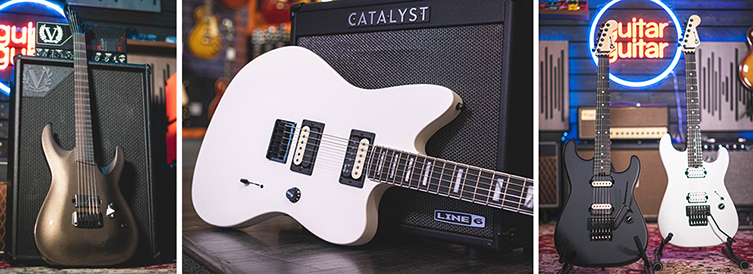
As for Jim, he’s a very established Fender player. His run of signature models have proven to be enormously successful, and they all share the same monotone look and utilitarian spec. He’s put out a Tele, a Strat and a Jazzmaster over the years, along with a great Squier Tele and a couple of Charvels for his Floyd-Rose tremolo needs. Both players are mainly in Drop B tuning (C# standard when not dropped down) and use active pickups in their guitars.
Deftones: Stef Carpenter
Now, this is the first one of my ‘are they NU metal?’ bands. I know that Deftones don’t consider themselves to be a Nu metal band, but that isn’t necessarily how they are seen by their fanbase. In a lot of ways, Deftones tick many Nu metal boxes: downtuned metal riffing, a band member who (at least in the early days) used DJ decks as an instrument, and even just their coming to prominence during the late 90s. I’d maybe say that they are more than Nu metal, but that they are also of Nu metal, if that adds up to anyone?
Anyway, what they definitely do is rock supremely hard, and guitarist Stef Carpenter is a complete riff monster. It’s clear that the band are made up of musicians with disparate tastes, and that he is the one bringing the heavy. His simple and direct style - and eschewing of guitar solos - also provides similarities to Nu metal’s finest. Carpenter’s riffs are huge, monolithic monsters that dominate the landscape of each Deftones song, in a most magnificent way.
Stef Carpenter Guitars
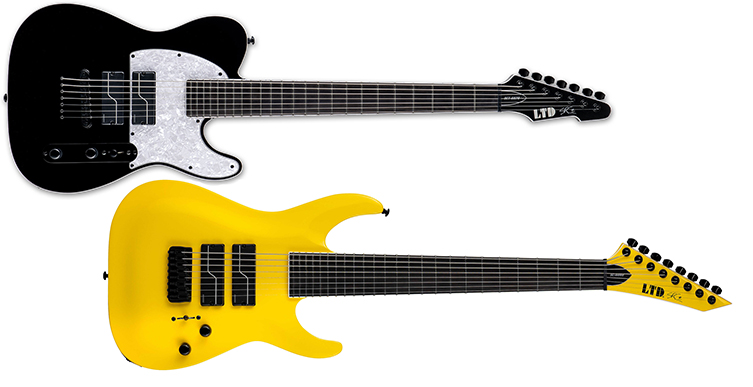
The interesting thing about Stef Carpenter is his linear progression. Adrenaline-era Deftones was a standard-tuned 6-string ESP guitar. White Pony was Drop-C, and the Self -titled follow up so him utilising 7-strings. These got tuned lower for Saturday Night Wrist, before he ended up on an 8-string for Diamond Eyes. That’s where he has since remained, settling on the instrument’s F# standard tuning for the most part, and sometimes going as low as drop-E tuning.
That is the same pitch as a bass, okay?
Stef has always been a loyal ESP user,and has issued several signature models with them over the years on both their ESP and LTD brands. Recently, he signed up with Keisel and has a signature headless 8-string model, but this is in tandem with ESP.
System of a Down: Daron Malakian
Here’s another ‘are they?’ bands who kind of slip free of the Nu metal mantle, despite also being one of the genre’s biggest bands. In reality, none of the big Nu metal bands sound like each other at all, and indeed nobody in the world sounds like System of a Down.
How do you even explain their sound to somebody who hasn’t heard them? Polka-metal? Jaunty/theatrical metal that uses humour and absurdity to readily discuss war & genocide? They are a tricky band to pin down, but there’s no denying how powerful and appealing their music is.
Guitarist Daron Malakian seems to be the chief music-writer, and shares vocals with frontman Serj Tankian. Together, they make a compelling ying-yang, while Malakian’s downtuned riffs pummell with a fury that out-heavies many of the more self-consciously ‘metal’ bands of their peer group.
System of a Down Guitars
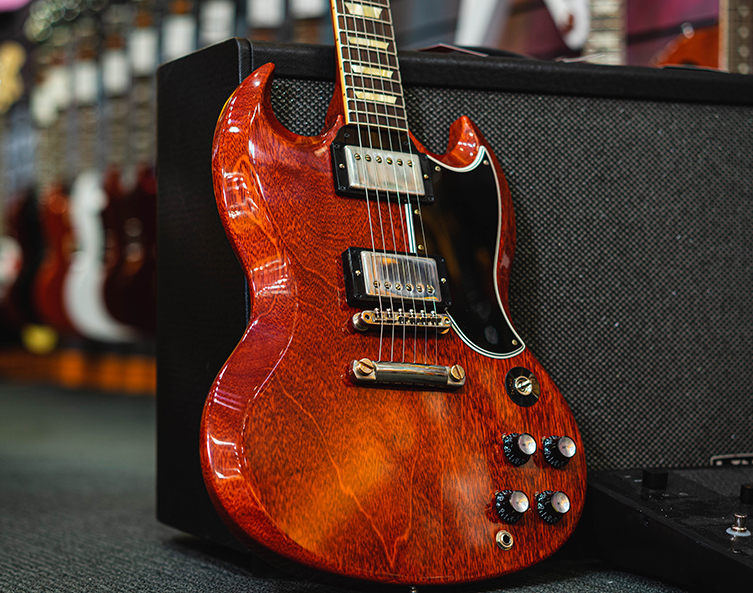
The guitar most associated with Daron Malakian is probably the Ibanez Iceman. He’s used them since the beginning of the band, and has had signature editions over the years. On top of that, he is also partial to a Gibson SG 61 reissue, and all of these are tuned to D standard or Drop-C.
Linkin Park: Brad Delson
The guy with the headphones? Yup, Linkin Park were the photogenic poster boys for Nu metal; the mainstream ‘safe’ band who were reluctant to use swear words in an era when Fred Durst once famously boasted/rapped about dropping the F-bomb 46 times in one song.
But still, Nu metal they most certainly were, and there’s no denying the catchiness of their angst-ridden hit songs.
Guitarist Brad Delson isn’t perhaps the most showy player in metal, but the riffs are still heard in rock clubs across the world, and provided an initial inspiration for thousands for guitar fans. Delson is actually as much a producer as he is a musician, and fulfilled those duties even from the earliest Linkin Park days.
Linkin Park Guitars
Static-X: Wayne Static
Everybody remembers Wayne Static. Even if you didn’t know the music, his gravity-defying hair was one of the most recognisable things on MTV2 in the early 00s. Static-X were more of an industrial metal thing than anything else, but like a few bands today, they are included here thanks to their proximity and their significance.
Although Static X are considered a Los Angeles band, Wayne moved there after spending years playing in the Chicago scene. In fact, a pre-Smashing Pumpkins Billy Corgan actually played a few shows with Wayne in an earlier band! Wayne Static had a massively aggressive guitar sound to match his appealingly hostile vocals. He passed away in 2014 at the age of 48. The band regrouped in 2019 with Edsel Dope standing in for the departed Wayne Static, and even wearing a robot-like mask and hairpiece to resemble a ‘cyber-Wayne’.
Another guitarist who wasn’t a lead player, Wayne nonetheless provided a huge inspiration to a lot of players.
Static X Guitars
Wayne Static was a V guy for sure. Throughout his career, you’d hardly ever see him without his signature ESP LDT Static 600V. When he wasn’t playing that, he’d be on his LTD EX model. Both of these had steel treadplate fronts and Seymour Duncan distortion pickups. Wayne mostly tuned to C standard and drop Bb.
His first signature guitar was actually an Epiphone Flying V, prior to his time with ESP. Towards the end, he moved to Dean, who made him a special ML model called the Modifier. They all had a single pickup and a hard tail.
Incubus: Mike Einziger
Were Incubus Nu metal? To begin with, at least, I’d say yes. Their sound branched out a lot and softened as they grew older, but records like S.C.I.E.N.C.E. are touchstones for the Nu Metal sound. Incubus are an impressive ensemble, with interesting things coming from each player. Not least is guitarist Mike Einziger, who adds a lot of colourful light and shade with his inventive ideas.
Incubus Guitars
In the early days, Mike was a PRS guy, favouring a McCarty model, a sparkly Standard and a Hollowbody. After a few years of that, though, he changed up his entire rig, choosing instead a Fender Jazzmaster and then a Fender Thinline Telecaster. In terms of tunings, Incubus are perhaps the only band on today’s list who stick to regular E standard tuning, and drop D.
Fear Factory: Dino Cazares
Okay, I’ll ask once more: are Fear Factory new metal? I’d say they actually made their mark before then, with their enormous second album Demanufacture in 1995. Korn’s debut was a few months before, but this was not FF’s first record, after all, and in metal terms they were widely different sounding.
Fear Factory were certainly ahead of their time, and their futuristic-dystopian sound has actually aged very well indeed. Their production was excellent, and Dino Cazares’ chainsaw riffing was in a league of its own. Still is!
Fear Factory Guitars
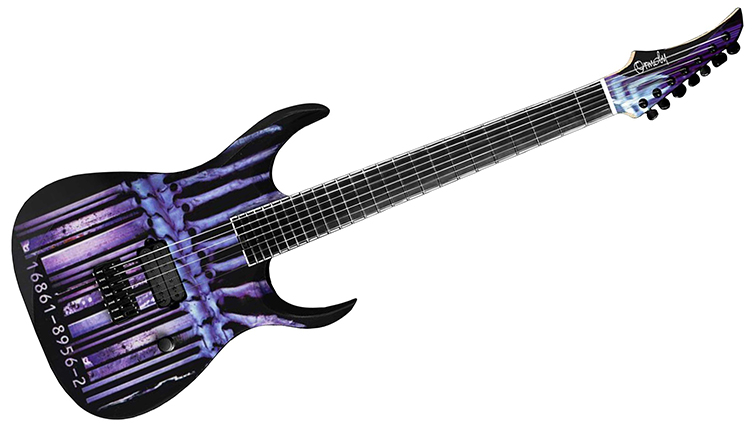
Early FF stuff was played on a 6-string ESP LA Custom guitar tuned to B standard when literally nobody did such a thing. When he was able to, Cazares moved to a bunch of Ibanez 7 string models, and has since had signature guitars with them, and also Ormsby and now Keisel, too. Dino uses both 7 and 8 string guitars depending on the era of songs he’s playing, but tends to keep the tunings standard to each instrument. So, 7 strings are in B standard and 8 strings are in F# standard.
Mudvayne: Greg Tribbett
My last choice for Nu metal players today may seem like a slightly deeper cut, but Mudvayne were a big band during Nu metal’s heyday. Listening back to them today, they almost have more of a Tool-influenced sound than anything that came out of Bakersfield or Jacksonville. Mudvayne definitely played up to the Wes Borland school of theatrical makeup, and delivered a sound that still has an edge today. Led by mohawked frontman Chad Gray, Mudvayne’s video for Dig was a familiar sight around the time of the millennium.
Guitarist Greg Tribbett is another team player who didn’t scream for the limelight, but all you have to do is try a few of his guitar parts for yourself to realise how inventive he was.
Mudvyane Guitars
Greg Tribbett liked a good Gibson Flying V in Mudvayne’s early videos. He then went with Washburn, who made his signature WV66GT model. More recent years have seen him playing with the reformed band, and using a signature Legator GT model and a signature Dean Flying V with EMG pickups.
Nu Metal - Old Metal - Nu Metal
So, what even IS Nu metal anyway? It was new in the late 90s, which is now 30 years ago. Now it’s new again, so I guess it’s forever Nu? Nu metal is an important part of the whole fabric of modern guitar music. It’s one of the last times that guitars were front and centre in a completely new way, rejecting the sounds and styles of what came before and pushing sound forwards into the future.
Each of the players in today’s articles has contributed something exciting and meaningful to the form, and played a role in what was (and is) a cultural and musical zeitgeist moment. Heads are turning back towards the Nu metal scene again, and the distinctive sounds of the genre are sounding ever fresher amid the current musical climate, so all I have to say to you now is: AAAARE YOOOU READDDY????