Do you like blissing out to a synthwave playlist? Does that warm, glowing retro vibe of analogue synths, neon lights and palm trees help relax you and bring you to a happy, relaxed place?
If so, you’ll no doubt have dabbled in making something similar yourself, right? After all, with so much affordable equipment out there these days, it’s definitely not the preserve of only the well-heeled: everybody can afford to make gorgeous layers of ambient synths, with a steady pulse of classic drum machine driving it casually along.
Synthwave is the sound of the future that never was: an early 80s view on futurism that was centered on optimism, laid back grooves and lots of colourful sonic timbres. It calls on a range of actual 80s influences from Tangerine Dream to Miami Vice, and it offers us the sound of a retro past that didn’t ever quite happen like that. It’s a postcard from an alternate-universe 80s, where John Carpenter was THE movie guy, Giogio Moroder RULED the dancefloor, the DX7 was cutting edge and gated reverb was the only snare sound that mattered.
Happily, there are lots of digital and analog instruments today that can summon those halcyon tones, often with more control and versatility than the original units. It’s never been a better time to make some synthwave!
So, turn off your Gunship record for just a second, grab a cool refreshing beverage, find a deck chair or sunlounger, and read up on all of the great gear YOU can use to create your own synthwave songs.
Why Use Hardware Synths?
The most fun element in synthwave gear is easily hardware synths. Because so many pieces of synth software exist today, it’s more than possible to create an entire album’s worth of synth music without ever touching a physical synthesizer.
But where’s the fun in that?
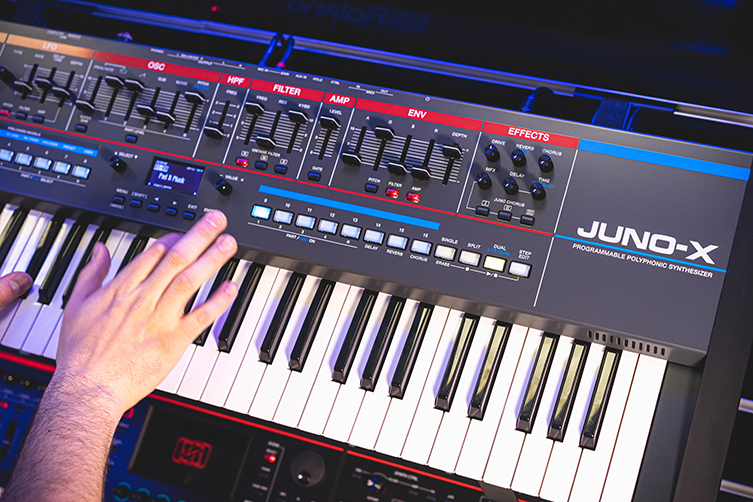
Using a hardware synth allows you to get stuck in straight away, turning knobs and finding the sweet spots in the sounds that give you the best results. Every synth has a sweet spot, and it’s great to get to know a synth as a tangible, ‘malleable’ instrument. I find it so much more satisfying as a musician to control things like filter cutoff, resonance and LFO options when they are directly at my fingertips, and with no prior requirement to assign functions to a controller keyboard.
Hardware Synths for Synthwave
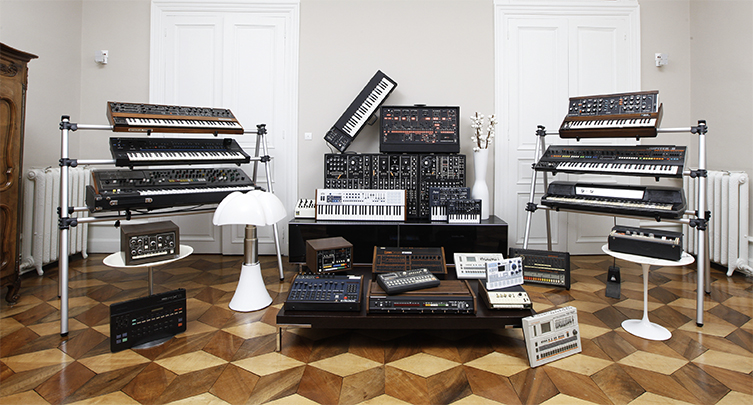
There are many acknowledged classic synthesizers that exist, and most of them are perfect for playing synthwave. Stars include analog subtractive synths such as the Minimoog, the Roland Juno 6 & 106, the Roland Jupiter 8, Yamaha CS80, Sequential Circuits Prophet 5 and the Minikorg 700. The 80s saw some excellent digital synths coming in too, including the immortal Yamaha DX-7, whose FM (frequency modulation) synthesis allowed a whole new vocabulary of sounds.
This combination - analog subtractive synthesis and digital FM - are probably going to give you the most mileage in terms of synthwave music. Wavetable synthesis is another source of interesting, period-correct tones that I definitely recommend having a look at.
In terms of what’s available today, you can have pretty much anything you want, sound-wise, in a hardware synth. Every big brand has a selection of synths that meet the required criteria. Roland and Korg have so many new synth models that either reference their historical keyboards or (more or less) directly reissue them. Outside the big names, newer synth brands like ASM and Arturia offer innovative new synths that combine several types of synth architecture to bring both well-loved sounds and exciting new timbres to your music.
Here, then, are a few recommendations from me to you of new/current hardware synthesizers that are excellent for creating and playing synthwave music.
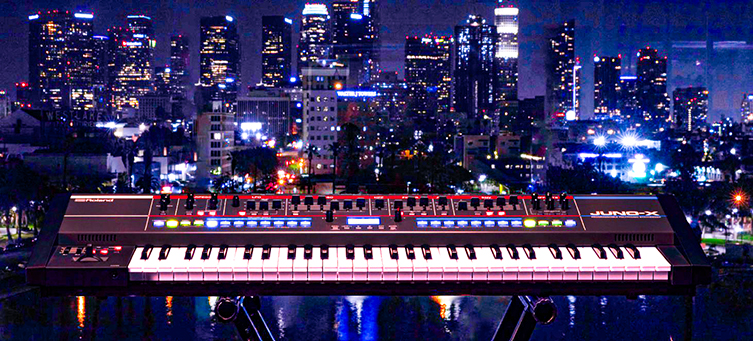
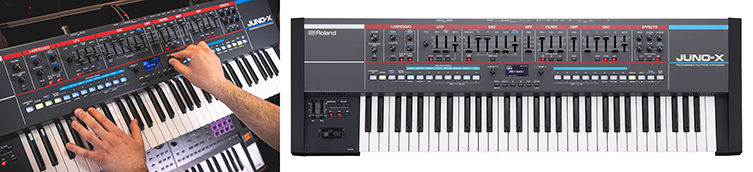
Roland Juno-X: This is an example of a Roland reissue that captures the spirit of the original, and doesn’t go over the top in modernising every last function. You get the visual styling, the sliders (yay!) and opens up the palette with PCM samples that cover all of the basic pianos etc that the real Junos never did back in the day. It’s worth noting that this is fully digital, so it’s an analog modelling synth (using Roland’s ZEN-Core technology), so purists may feel disappointed. My advice? Check it out using your ears, and so if it still disappoints. I’d be surprised if it does!
Korg MS-20 Mini: Although synthwave generally requires polyphony for the lush chords, I still think a good monosynth can be worth its weight on gold. Alongside basslines and lead, you can get so many excellent ‘special textures’ from the MS-20, one of Korg’s all-time great synths. Just listen to what the late-great William Orbit was able to get out of his original model on Madonna’s Ray of Light album! This slightly shrunken model (86% of full-size) uses mini-jack patch cables, but everything else is true and accurate to the original, including THAT filter!
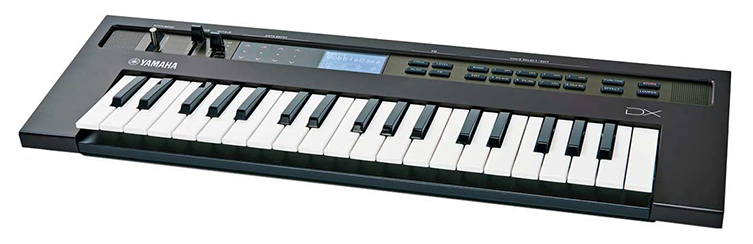
Yamaha Reface DX: The original Yamaha DX-7 has appeared on about as many recordings as the Fender Precision bass, so having access to that iconic synth’s sounds in any context is essential for synthwave artists. Why not go for this extremely portable, highly useful mini rendition? The whole Reface range is worth closer investigation, but the specific FM tones of the Reface DX is where I’d be focussing my attention.
Korg Volca FM: Now, if you need your FM synth sounds to be even more portable, then get yourself one of these. Korg’s Volca range is a collection of literally pocket-sized synths that are powerful, connectable and cheap.
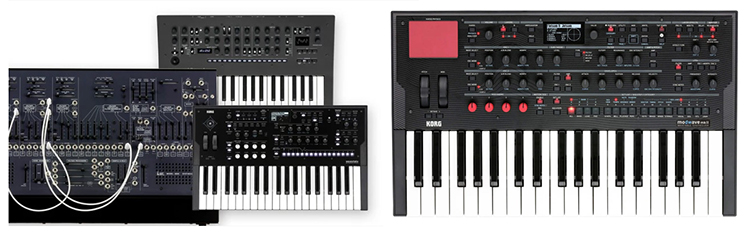
ASM Hydrasynth: New brand on the block Ashun Sound Machines instantly impress with their affordable and powerful hardware synths. The sound design elements are ace, but the real fun is in the hardware itself: with polyphonic aftertouch keys and a full-on RIBBON CONTROLLER(!!!!), you can be extremely expressive with your sounds. Did anyone say ‘Blade Runner’?
Korg Wavestate MKII/Modwave MKII: I’m putting these two great synths together because they share certain similarities. Both use wavetable synthesis to create their sounds, both are roughly the same size & price, and of course they both come from Korg. Which one should you go for? Well, the Wavestate MKII has a joystick and a pretty unique approach to real-time changes in sequencing. The Modwave has an X/Y pad for Kaoss Pad-style sound squelching and a huge amount of polyphony, so there are enough differences to merit buying both, obviously! But seriously, they are similar on paper but really quite separate in practice, so try them both out and see which one resonates best with you.
Drum Machines
Drum machines are another area where hardware can be really inspiring. Here, I believe it’s more a case of the limitations inspiring creativity rather than having a surplus of options that can prove distracting.
The king of all vintage drum machines is obviously the Roland TR-808, no matter what genre you aim your focus at. Now, they don’t have it anymore of course, but recent years have seen a few ‘beatboxes’ from Roland that have attempted to recapture that 808 magic. Firstly there was the Aira TR-8, followed by the current TR-8S. This is intuitive, fun, easy to work with and now includes sampling which to me is an opportunity for pure expression.
Best of all from Roland, though, is the TR-1000.
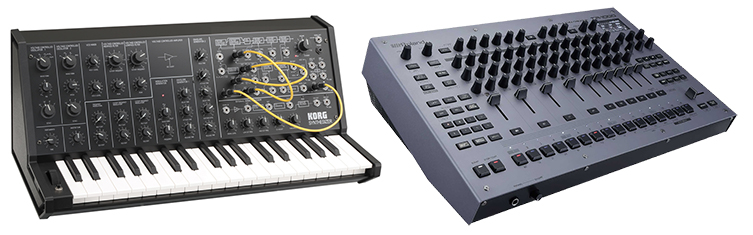
Released last year, the TR-1000 is a powerful, comprehensive and creative instrument that allows unprecedented physical potential for building, sequencing, contorting and effecting rhythms. Featuring circuit-bent kits, tons of effects, multiple paths for sequencing and sound design, an onboard sampler and loads more, it’s a dream box for digital drum sounds.
Roland certainly rule the roost when it comes to drum machines, but they are not the only guests invited to the party. Here are some other drum machines that will be great for adding vibey 80s beats to your synthwave tracks.
Arturia Drumbrute Impact: this excellent hardware drum machine from French innovators Arturia is great for industrial strength thumps, but tame it a little and you’ll have a very controllable, satisfying beat machine that’s not going to break the bank.
Korg Volca Beats: If you’re keeping costs down, why not check out Korg’s Volca Beats? It’s by no means a simple gimmick, and in fact has a meaty kick that will add some attitude to your tunes at very little cost.
Alesis SR-16: this is a classic, and don’t let anybody tell you otherwise. It’s not cool, it’s not particularly hands-on, but it has a sound that has made it onto countless hit songs, and it’s as dependable as your favourite hammer or wrench.
Portable Instruments
In this little section, I’ll highlight some synthwave-friendly devices that can easily fit into a backpack or laptop bag. In truth, most of the gear covered in today’s article can be called portable, save for a few of the bigger keyboard synths. We’ve seen a few of these already in this article, so I won’t go over them again, but I’ve held some great bits back for here, too! All of these are capable of delivering pro synthwave performance in a highly portable form.
Korg MicroKorg: Yes, the modern classic itself! My hardware synths section was getting a little Korg-heavy, so I saved this belter back for here. The MicroKorg is a small, versatile digital modelling synth that was released over 20 years ago now. It caused a sensation upon its release, and whilst there have been subsequent models released, the original one is still in production! That says it all, really. It’s such a fun piece of gear, and has made its worth known on professional recordings all over the world. The MicroKorg has had one of the longest production runs in history, of any synthesizer. Consider that!
Yamaha Refaces: We saw the DX model earlier, and for synthwave I’d at the CS model too. It has a powerful sound, effective controls and it works well with effects. It’s not a CS-80, but those cost forty thousand quid, right?
Roland JD-Xi: A clever little portable synth workstation with built-in beats, Roland have managed to make the small JD-Xi musically comprehensive without overcomplicating the user interface. Make up entire songs (there’s a sequencer built in too) in one hardware box with classic Roland synth tones.
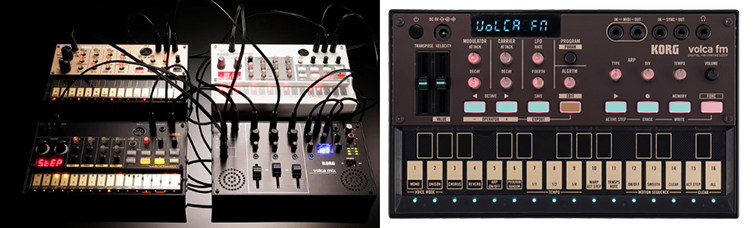
Korg Volcas: as portable as a useful piece of digital music-making gear can reasonably be, Korg’s Volca range offers one dedicated type of sound of intention per unit. So, you can have one for Beats, another that’s a Sampler, and that excellent FM Volca we checked out before.
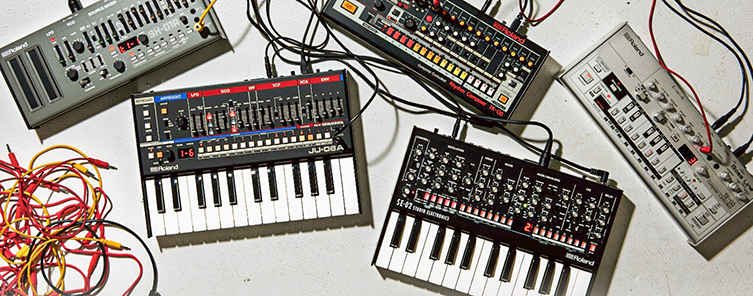
Roland Boutique: reissues of classic Roland gear (including the TB-303 and SH-101, you ravers!) in small desktop modules. These are very fun, collectable and cool, but they are also powerful, serious bits of equipment in their own right. They are handy as portable synth ‘brains’, but are also very cool to use as custom, semi-modular rigs. For synthwave sounds, my money is on the JU-06 (if you can find one!), the JX-08 and the more 90s-coded but still appropriate JD-08.
Inside the Box: DAWS, Plugins & Controllers
There’s no denying how powerful and convenient software is. I use it all the time, and no matter how much I love hardware (and I really do), it’s a wonderful thing to have an army of synths, samples, sequencers and effects available to me at all times, simply by switching on my laptop.
DAW: Digital Audio Workstation
If you use software to make music, then you’ll be doing that with one of the main DAWs that exist. DAW software is like an integrated mixing desk and recording apparatus, filled with effects, virtual instruments (which we mainly call plugins) and other digital devices to allow us to be professional producers.
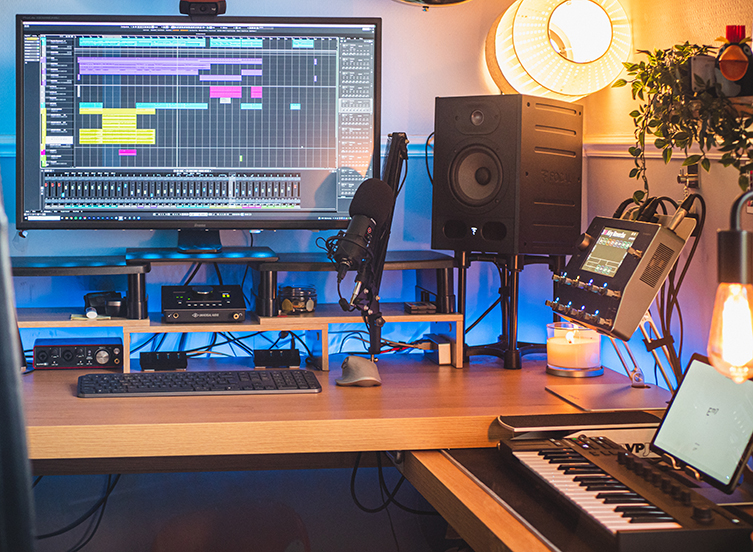
There are a lot of different DAWs out there these days, and I have to say, you can get great results from any of them. Simply choose one that looks promising and get learning! They all have benefits and drawbacks, so I won’t recommend any particular DAW format to you today, since your working methods and priorities may be very different to mine. What I will say on the subject is that Ableton Live is able to do performance-related things that the other DAWs are not convincingly able to achieve, and that’s one of the main reasons I personally chose that software.
Plugins
As for plugins, the sky is literally the limit for you. Honestly, you can buy a different synth plugin every day for a year and still not know everything that’s out there. Let me make this easier and narrow it down then, shall I?
The Arturia V-Collection is basically essential. It’s a collection of virtual recreations of some of the most lusted-after synths in history. Each one is captured pretty perfectly, both in terms of sound and in the control panels & features. For a couple of hundred quid, you can have a museum’s worth of priceless synth gear, all of which provide essential voices for synthwave music. I wasn’t kidding when I said that vintage Yamaha CS80s go for 40 grand!
Controllers
If you are using plugins, then you will need at least one controller to navigate the software and utilise it in a musical way. Mostly, these controllers come in the form of a keyboard with additional pads, knobs and switches which are all assigned functions by you. It can be a time consuming process, but once it’s done it’s done, and you can effectively use them in the same way as you would a hardware synth.
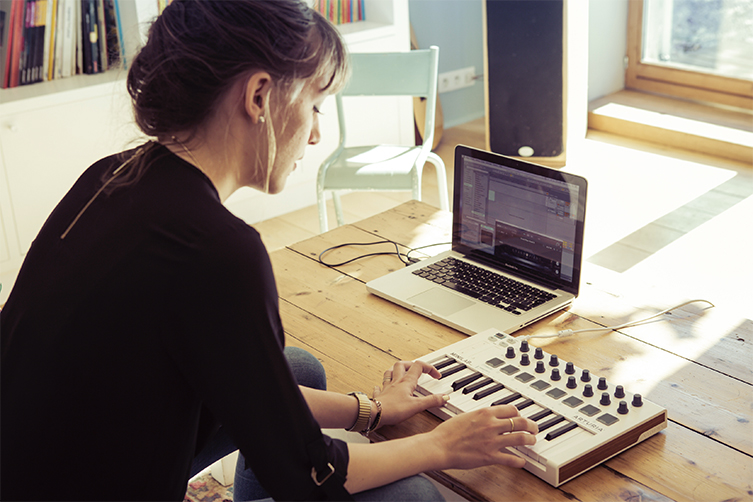
Controllers can be small, portable units such as the Akai MPK Mini Play Mk3 or the M-Audio Oxygen Pro Mini. They can be larger controller keyboards like the Arturia Keylab MK3 88 and the Korg Keystage 61. Each brand has its own combination of pads and switches, so what you choose should reflect your workflow.
Other controllers have no traditional keyboards at all. Fender recently bought and rebranded PreSonus, so check out the Fender Motion controllers for pad-based units that operate as instruments and mixers.
It’s worth maybe saying that many modern synths can double up as hardware controllers, too. Their own sounds can be bypassed in favour of your plugins, in much the same manner as you’d do with a MIDI controller. Each option will get results, so just go with your own flow here!
Vapourize Yourself
Synthwave is all about taking the sounds of the early-mid 80s, and earnestly recreating them in a nostalgic, cinematic way. It’s about a semi-fictional past of endless sunsets, neon grids and convertible cars. It’s a futuristic sound from the past, which is simultaneously anachronistic and deeply familiar.
When choosing equipment for synthwave music, the tools and sounds you need are so built into modern gear that you’ll have success with most of what’s out there. It’s more a matter of avoiding sounds that belong too much in musical worlds that didn’t exist in the 80s such as IDM, EDM, drum & bass, dubstep and happy hardcore.
Basically, if you can’t imagine Don Johnson driving his Ferrari along a digital coastal sunset to your sounds, then they are not the right sounds! The gear choices today will all get you there though, so put the roof down, don a pair of neon shades and get creating some synthwave!