Ibanez fans, are you curious about the brand’s GIO range of guitars and basses? Have you seen them on our site or hanging in your local guitarguitar store and are wondering what their story is?
Well, today, I’ll dive deep into the world of Ibanez GIO and hopefully answer your questions. I’m an Ibanez fan, and have sold a great many over the years from GIO models right up to J Custom masterpieces. In addition, I’ve been lucky enough to chat to Ibanez artists like Steve Vai and Joe Satriani on numerous occasions, so my knowledge on the brand is hopefully pretty good. I’ll collect some of the more popular questions about the GIO instruments and answer them straight, with no bias. That’s what you need to make an informed decision, and that’s what I aim to give you!
Whether you’re new to Ibanez GIO instruments or have used them in the past, let’s take a trip into that world right now!
What is the Ibanez GIO Series?
The Ibanez GIO Series is an affordable subrange of electric guitars and basses from Ibanez. They are affordable entry-level instruments that offer much of the same look and aesthetic as more expensive Ibanez instruments, but at very low prices.
People have often asked me in the past what ‘GIO’ actually means or stands for. The answer is…it doesn’t mean anything! Well, put it this way: I’ve never been able to find out anything about any meaning, nor any phrase that it could be an acronym of. I’ve asked everybody I know at Ibanez too, and nobody has a definitive answer, so I think there simply isn’t one.
Who Plays Ibanez GIO Instruments?
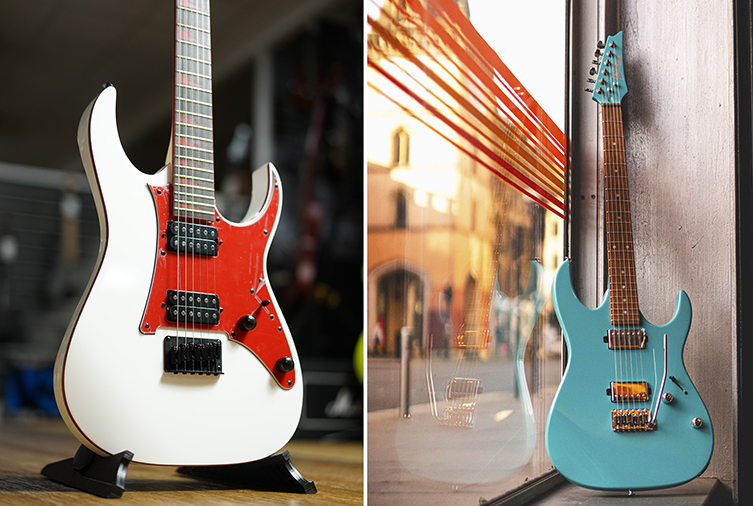
Ibanez GIO are a collection of affordably-priced guitars designed for beginners, students and indeed more experienced players on a budget. Their guitar and bass models share the same designs as more expensive Ibanez guitars, such as the RG (known as the GRG in GIO terms) and the SR bass (known as the GSR).
Style wise, there is a strong connection to rock, metal and adjacent genres for these guitars. Of course, lots of players from all kinds of stylistic backgrounds gravitate to Ibanez GIO guitars simply because they are nicely put together and represent particularly good value for money.
Are Ibanez GIO Instruments Good?
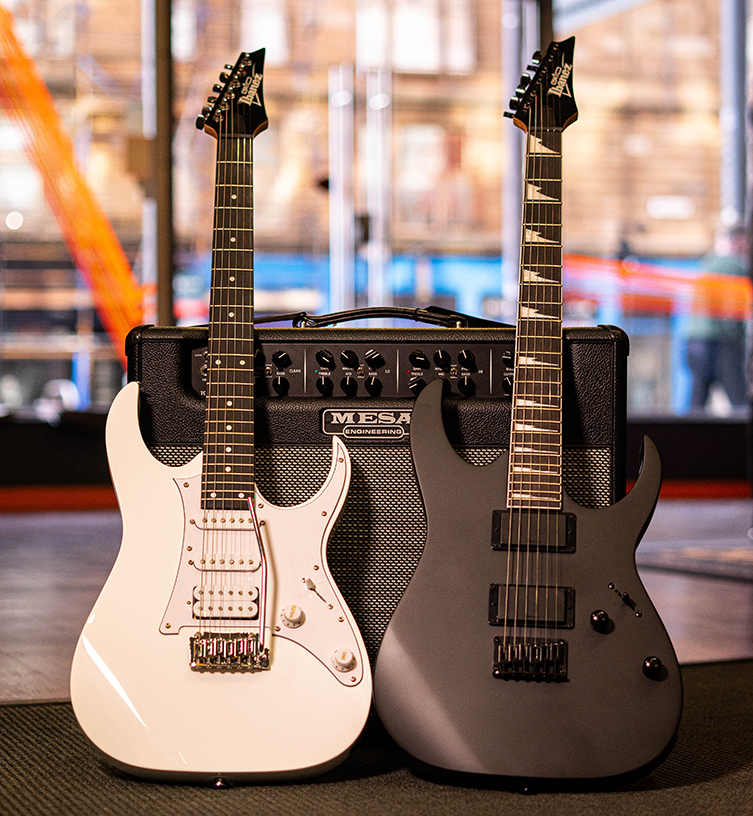
Yes, Ibanez GIO guitars and basses have a reputation for being amongst the best instruments in their price range. This is down to Ibanez’s famous brand commitment to quality, which extends from their top-priced J Custom & Prestige instruments right down to these entry-level GIO guitars. GIO are obviously not comparable to the top-end guitars, but that same attitude of offering more than the price ticket suggests prevails throughout.
In short, they are affordable but meticulous. This is also one reason why Ibanez GIO guitars are popular as modding platforms: players enjoy the feel of the necks, the light weight of the instruments, and look forward to swapping out and replacing other elements to create a one-off ‘custom’ guitar of their own, for a very reasonable cost.
What are the Differences Between Ibanez GIO and Ibanez Standard Guitars?
The differences between GIO guitars and Ibanez’s Standard range are mainly materials. GIO instruments use cheaper and more plentiful woods, and models which seem to have figured maple tops tend to actually have graphic prints that resemble quilted or flamed wood rather than genuine figured timber. At this price, I think that’s not only fine but expected, and it allows the instruments to still have a more upmarket look.
Aside from the woods, hardware is often made to a certain ‘non-professional-level’ grade, so things like the bridges and tuners will be absolutely fine for home playing, but are maybe not suitable for international tours and the like. Again, these guitars are not designed for such use, so I think that these concessions are more than acceptable. Whammy bar bridges are made from softer metals, and pressed in less sophisticated ways, so their performance is similar - but less tough and hard-wearing - than more expensive variants.
Where the GIO range is similar to higher priced Ibanez guitars is in things like the body shapes, the neck carves, visual styling, headstock logo (there is a ‘GIO’ label, but they all still say IBANEZ in big, bold letters!), pickup layouts and, most importantly, the final checks and inspections. Ibanez earn their reputation here with quality control checks in place to make sure even the humblest GIO guitar or bass is ready to pick up, play and enjoy. Each guitar is fussed over, and this makes a difference to you and I when we choose one of these in the store for a play.
What Different Models Make Up the GIO Range?
Ibanez GIO guitars and basses mostly take their stylistic cues from existing ranges within the Ibanez fraternity. Here’s what I mean:
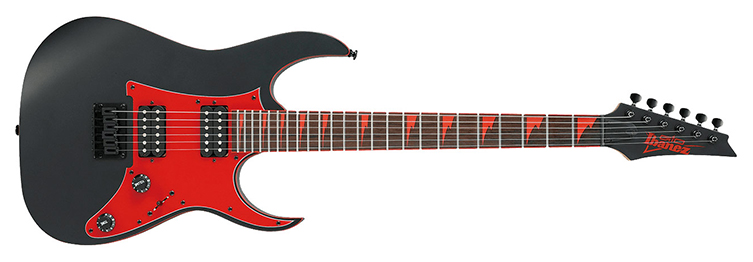
Ibanez GIO GRG - based on the famous Ibanez RG range, which itself is taken from the Steve Vai JEM models. These are what the majority of GIO electrics are based on.
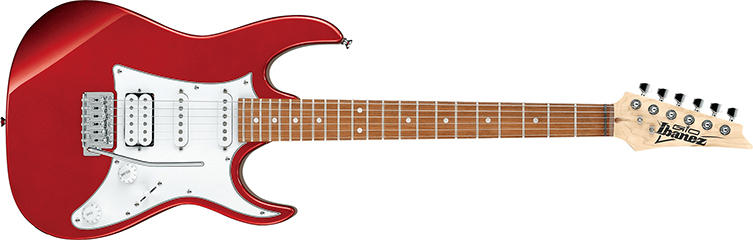
Ibanez GRX - based directly on Ibanez RX guitars, which ran from the mid 90s until last year. They are similar to the RG but with a different silhouette and more of a ‘Stratty’ look, often with a pickguard. Lots of affordable GRX guitars exist, and are popular thanks to their less specifically ‘rock’ appearance.
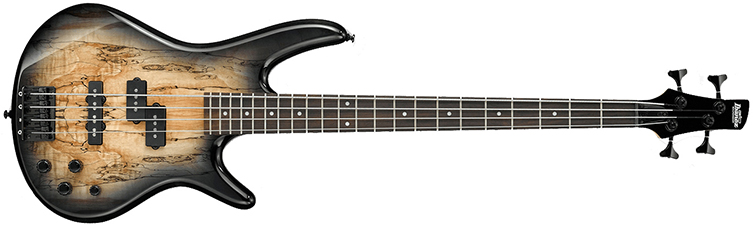
Ibanez GSR - affordable takes on the Ibanez SR bass series. The GSR models are some of the most popular basses that we sell, largely due to their good solid build and playable feel.
Ibanez GIO
So those are the main points I wanted to cover with you regarding Ibanez GIO guitars and basses. They are an Ibanez brand, with proper Ibanez styling and shapes. They are made to fit an affordable price bracket, and they are built to out-perform other guitars in their price range.
Ibanez want to capture the market at this end, so that players will enjoy using their instruments and stick with them as they progress into more sophisticated, upmarket guitars. Given that Ibanez make consistently excellent instruments, and have some of the world’s greatest players using them, I’d say there’s a whole lot of good sense there. Try an Ibanez GIO guitar or bass if you haven’t already, and see how they measure up to other similarly-priced equivalents. I think you’ll be impressed.
Click to View our Ibanez GIO Guitars and Basses