Have you been hovering around these insanely affordable Jackson JS guitars? Have you been tempted, but have stopped yourself from buying because they look too good to be true?
As a teenage metalhead, I longed for a Jackson King V so that I could be like Dave Mustaine. I know, but when you’re 12, these people are demigods, and in all honesty, I still feel an allegiance to pointy metal axes with inappropriately delicate ‘jaggy bits’. If my love for Megadeth quickly moved across to Metallica and Sepultura, then my love for Jacksons stayed right where it was.
I’ve always liked them, so when this impressively low-cost range of models arrived a number of years ago, I paid attention. It’s hard for me to justify throwing lots of cash at a fancy Japanese or Mexican Jackson since I don’t use those sorts of guitars live, but one of these? At this price?
I mean…it would be rude not to!
Now, today is my honest, in-depth assessment of a number of these models. I did buy one many moons ago, and I’ve played on a number of them since in order to give them my critical eye. From one mosher to another, I’ll give you the truth on whether these are a great budget buy, or a broken dream that’s not worth your time or money. Despite my childhood love for Jackson, I owe the brand nothing: to you, I owe the truth.
With that promise intact, let us descend into the pit…
Which Jackson JS Guitars Am I Looking At?
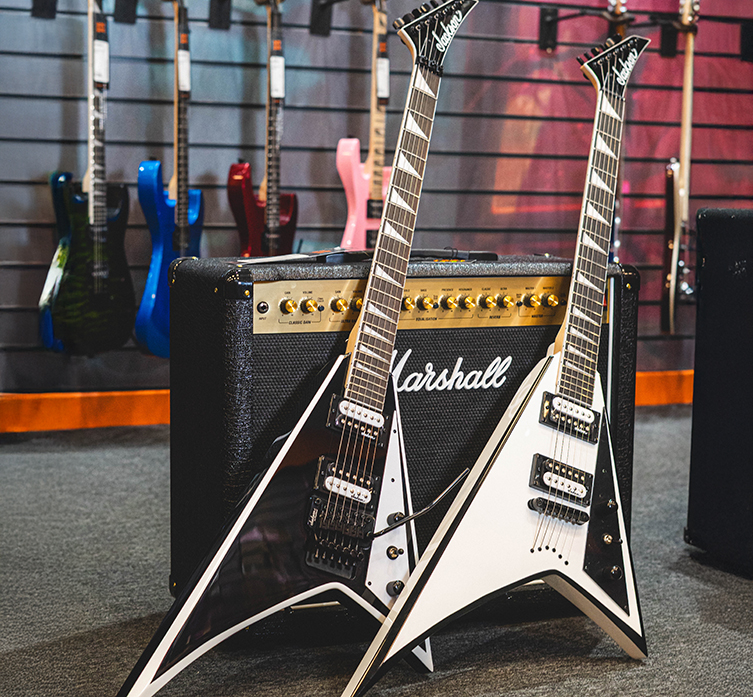
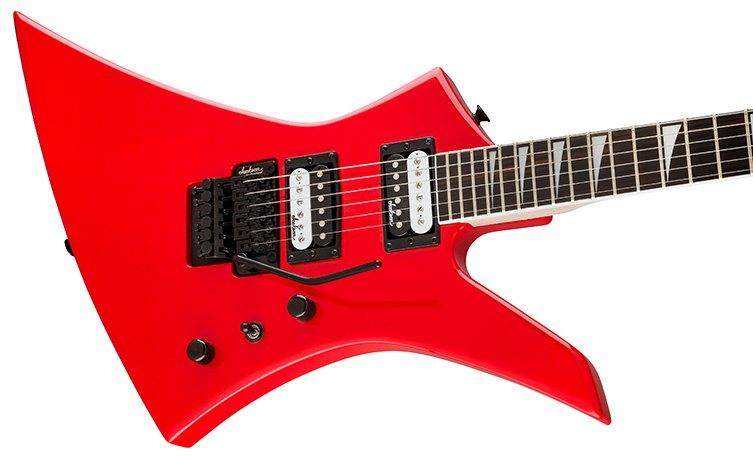
For this particular deep dive, I’m going to spend time with two Jackson guitars from the JS range. Here they are:
Jackson JS Series Dinky Archtop JS22-7
I went for these because - within the oeuvre of Jackon - these represent two distinct ends of the spectrum. One is a 7-string with a longer scale length and a hard tail, and the other is an ‘extreme shape’ guitar with a locking tremolo. Together, I feel like they represent all of the main trademarks and identifiers of the Jackson brand. If you like the Jackson brand, then it’s likely you’ll want to see the pointy headstock, the sharkfin inlays and so on. Jackson obviously understand this, because they’ve included as much of this as the lean price point allows.
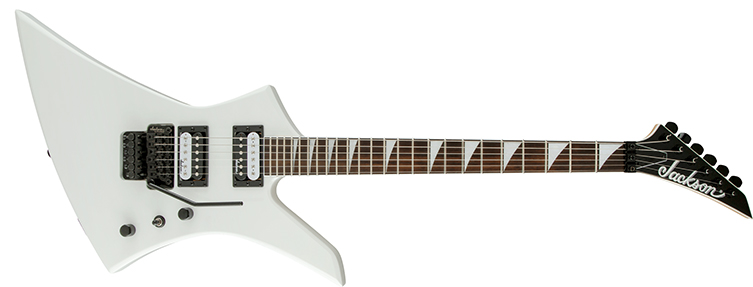
Also, I wanted a ‘shape’ Jackson here in direct salutation to my younger metalhead self, who would never have chosen a mere superstrat over a mighty Kelly if he had the opportunity! I think metal maniacs of all ages are likely to agree on that one, and so the Kelly it is!
Features Relative to Both Guitars
Briefly, there is plenty to differentiate these two Jacksons, but also a surprising amount shared in common. Here’s what both guitars have:
- Poplar Body with polyurethane finishes (gloss on the Kelly, satin on the Dinky)
- Maple neck, bolted on
- Amaranth fingerboard with 24 jumbo frets and a compound 12-16” radius
- Ceramic, high output Jackson branded humbuckers
- Sealed gear tuners
Aside from these factors, the guitars have their own specific specs. What I’ll do is take you through some finer points, and then talk about how I got on with the guitars themselves.
The Woods
Okay, let’s talk a little about the timbers used to make these Jacksons. We have maple for the necks, which I hardly need to mention, right? Strong, reliable, used for a huge amount of guitar neck builds thanks to its ready availability and dense strength. What IS worth mentioning here is that, even at this price point, Jackson are using graphite reinforcement rods inside the necks to keep them straight and reliable. This is a premium feature - and in fact, something that many expensive guitars don’t have - so this is an impressive thing in such a low cost guitar.
Fine, all good. Now, how about the Amaranth fingerboards? So, Amaranth is also known as purpleheart, and it is actually a pretty excellent wood for fingerboards. It’s a really hard, dense and heavy wood that’s found in the Central American rainforests, so it’s plentiful. I don’t do woodwork myself but I understand that purpleheart/Amaranth can be tricky to work with, though in instrument terms this wood should hold its shape well and not warp or expand much at all.
Under the fingers it feels more to me like ebony than anything else. That’s perfect in my opinion, because the smooth, dense grain provides an excellent playing surface. In practice, these Jacksons have jumbo frets anyway, which minimises actual fingerboard contact in my experience. Still, the smooth, rigid stability of Amaranth makes it a worthy wood, not to be sniffed at.
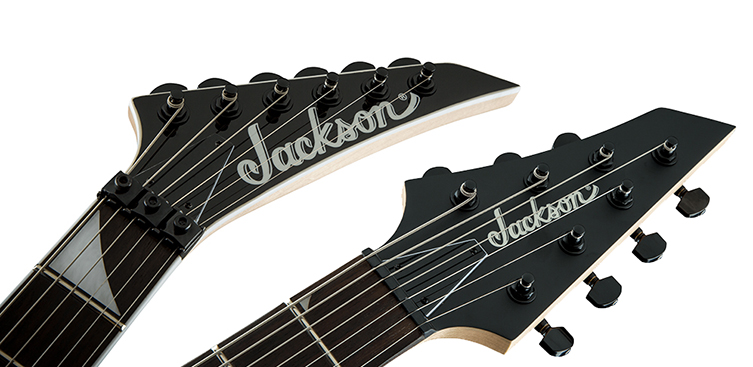
Now, the poplar. Poplar is definitely on the cheap end of the timber scales, and there are reasons for that. It’s not the most beautiful looking wood, so guitars with poplar bodies tend to have solid finishes. Also, poplar is pretty malleable, and that is both good and bad for guitars: it’s easy to cut and shape, but it’s also easy to dent and ding. The polyurethane finishes of these guitars will definitely offer some protection - that’s the whole point of such finishes - but that’s why cheaper guitars use poplar.
The sonic properties are totally fine - it’s by no means a dead sounding wood - and so you can expect a fair amount of versatility here.
The Hardware, Electronics and Pickups
In this price bracket, hardware is often the problem area. This is where manufacturers cheap out by spending very little on the bridge & tuners, and even less on the electronics. Is this what Jackson have done here?
Firstly, the Dinky. It’s a simpler build all round here, and that includes the bridge, tuners and pickups. Everything here works to a fully acceptable standard, particularly given the price point. The tuners turn well and don’t seem to slip; the guitar controls operate well (they don’t just go from 0-10) and the bridge is a no-frills functional unit. There’s nothing hugely impressive, but it’s all solid stuff.
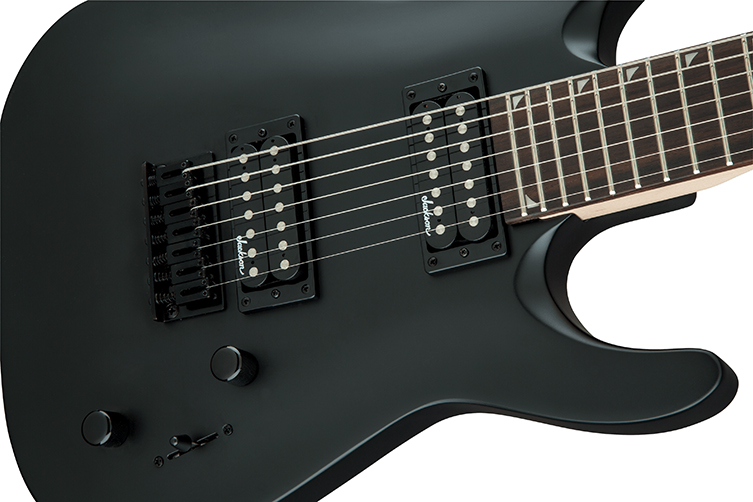
Pickup-wise, it’s a set of high output ceramic humbuckers. When I say high output, I’m talking about 16k Ohms DC resistance, which is very much ‘in the red’, if you get me. For crunchy metal and searing leads, these are ideal. What they aren’t great for are vintage tones or spanking clean sounds, but I feel like it’s a little bit absurd to expect some sounds from these fire-breathing rock axes. They are designed for hard rock, and hard rock is what they do!
Now, back to the hardware, the Kelly shares much of the same parts as the Dinky, as you’d no doubt expect. The one area in which it diverges is the bridge. The bridge on here is a licensed Floyd Rose locking tremolo, but not all Floyds are born equal. Now, before I say anything else, let’s once again pull some perspective into focus here. At time of writing (May 2026), this entire guitar costs £339. Keep that figure in mind, because Floyd Rose tremolos ON THEIR OWN can cost this much.
I’ll briefly explain this, because it can cause confusion. Floyd Rose designed the tremolo system and offers it for sale in a number of ‘builds’, from lower budget models to highly-priced versions. They all look very similar and operate in the same way, but the more spendy Floyds are made with far tougher metals, properly machined pieces and a high degree of precision-fit parts. Lower cost models use softer metals than wear out quicker, and have parts that are stamped from a mould to save time and money.
Floyd Rose also licence their design to third parties, so there are other companies making ‘Floyd Rose’ tremolos in addition to FR themselves. Now, if it looks like one of these trems, then it will be either licensed or a genuine Floyd Rose, but the practical difference can be significant. A licensed bridge can cost as little as £60, and a real-deal Floyd Rose Original 1984 Tremolo is nearly £500. Okay, now you know!
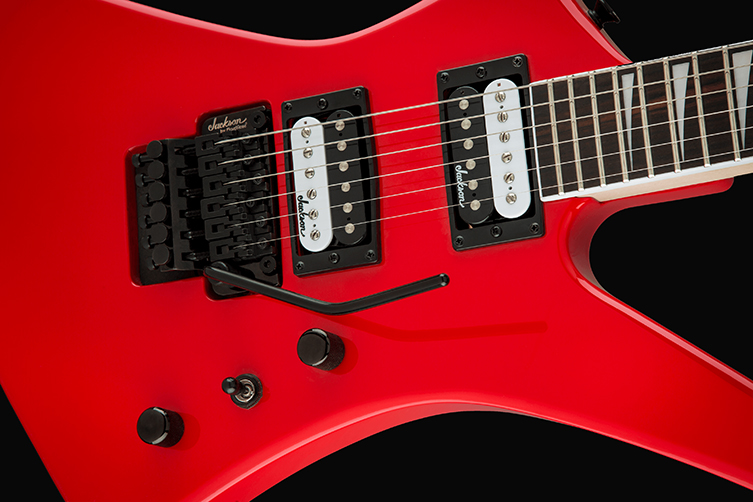
So, this Jackson guitar has an inexpensive, licensed Floyd Rose tremolo with a Jackson logo. In operation, it works just fine, and is a lot of fun. The bridge returns to its proper neutral position with no issues, and so superficially I’m impressed. What I will say, though, is that I have had a lot of experience with such bridges, and I happen to know that certain areas on these cheaper bridges (locking nut screws, fine tuners, saddles and knife-edge points) very often wear out in a couple of years. This means poorer performance and a lack of tuning stability. Now, that’s not something I’ve encountered from playing this brand new guitar of course, but I offer the info as lived experience. Replacing these parts is of course very possible, but there’s a cost involved. As it stands, it’s great value, but I can see where that value manifests.
Hands On
Okay, it’s time to get my hands on these guitars and see how they perform. Each in turn, with my own thoughts and findings…
The 7-string Dinky is pretty comfy for an extended range guitar with a wider neck. There’s a slight tightness to the feel that isn’t to my taste, but a setup tweak may sort that. Certainly, tuning down a half step brought a far more playable guitar to my hands. The overall feel is very acceptable, and though it hardly compares to a Mayones or similar, it’s definitely punching hard for its price.
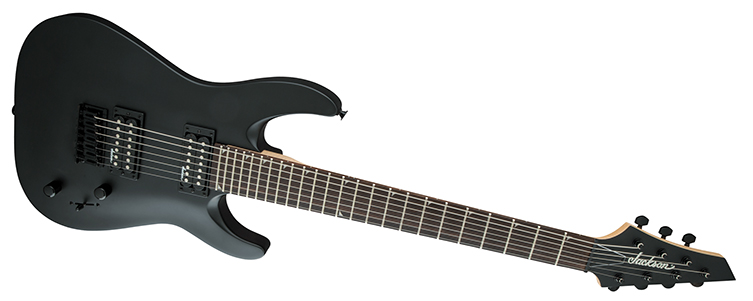
The weight is light, and I actually think some extra heft wouldn’t go amiss here. Still, that’s a matter of personal opinion and taste, and maybe I've been playing heavier guitars for so long that anything less feels lacking. Still, I do notice the lightness.
The guitar definitely sounds good with some distortion involved. I would actualy think twice before automatically upgrading the pickups, if all you want is crushing metal tones. This will deliver those, though versatility is not on the cards. They are not the most detailed sounding pickups, and a set of premium pickups would bring benefits, but again, it depends on your ambitions for the instrument.
As an entry into the world of 7-strings, it’s a dependable choice from a recognisable name. As a backup to your pricier first choice 7-string, it’s also a sound choice, as long as it’s only metal on the agenda for you. Given that it’s a satin black Jackson 7-string, that’s probably a safe assumption, right?
Time for the Kelly now. The JS32 Kelly is perhaps more in line with the classic 80s Jackson axes beloved by thrash metallers. This low-cost model is mostly an impressive instrument for the money. The neck feels good and similar to Jackson’s signature profile, which is a sort of D-ish shape in my opinion. I always feel extra heft in the top and bottom of the neck’s length, and some flatness across the middle. That’s here in a fairly recognisable form. The rest of the neck delivers: big well-sat frets, a flat (and then even flatter) compound radius fingerboard and those iconic sharkfin inlays all add up to a high-performance feel that once again belies the price.
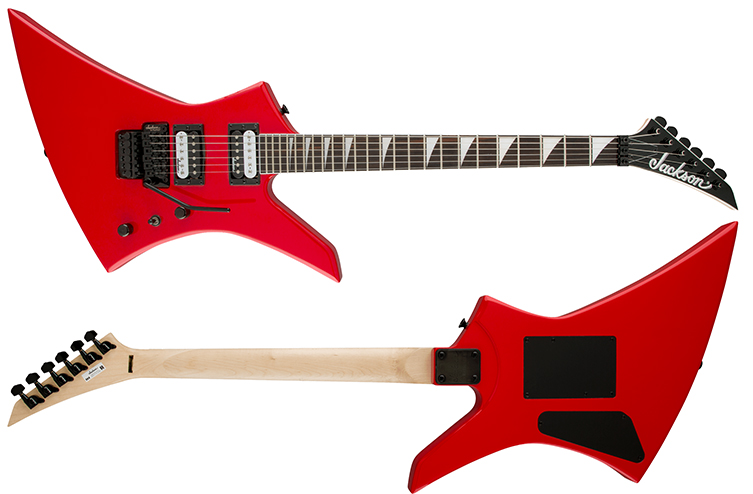
Please see above for my thoughts on the tremolo, but in short, it acquits itself well, whilst not feeling as sturdy and responsive as a full-fat Floyd.
Those hot ceramics deliver plenty of shred-tastic output, so your pinched harmonics and dive bombs will sound as intended. I said it earlier, but these are not subtle sounding pickups, but again, they are living inside a heavy metal guitar that is pointy and aggressive looking, so I doubt too many guitarists will be trying to get Hank Marvin tones from this!
How Do These Guitars Compare to Other Jackson Ranges?
Now, I don’t think it’s fair to put a relatively cheap guitar in competition against a dearer one from the same company. They exist to meet different price points - and therefore exist for different reasons - but my question here is slightly different. What I wonder is: if you spend more, do you get a significantly better guitar?
Going on spec alone, the Jackson X Series Kelly - the next price up for a Kelly - doesn't at first glance seem like twice the guitar. The hardware is very similar, as are the woods. Both have neck & headstock binding, and Jackson branded ceramic pickups. So what are the differences?
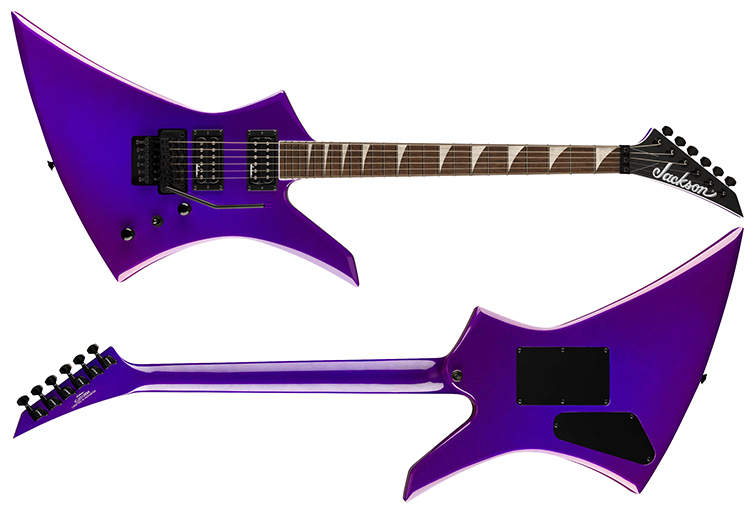
The significant one is the neck join. This X series Kelly has thru-body construction, which improves the feel and sound, in my opinion. You get a sleek feel with better upper fret access, and you get more sustain from the improved body resonance. Through-body necks just vibrate better!
Aside form this, I see more detailed contouring on the body itself, making the guitars appearance more upmarket. Aside from these main details, the X series has a laurel fingerboard, which I find to be that neither better nor worse than amaranth, so that’s a non-subject for me.
The bridge is a Floyd Rose tremolo (instead of a Jackson-branded licensed model), but it’s a Floyd Rose Special, which to my experience isn’t a different ballpark from the cheaper licensed option.
So, overall, it's double the cash but with some pretty great upgrades. Do you need them though? That’s not for me to answer, but value for both is good. I should add that the JS model is Chinese and the X Series is Indonesian. Both countries make great guitars these days, but it’s worth me noting the facts for you.
For the Dinky, the next model up in the range is the Jackson DKAF7. Also double the price of the JS22 Dinky, this guitar is also significantly different. The obvious thing is the use of a multiscale neck, which offers better intonation and relative pitch across the fingerboard. This also means fanned frets, which is a cool thing, but also an extra expense to build. But if you are playing to tune lower than B standard, though, I think you’ll enjoy that extra tension allowed by the multiscale 25.5” - 27” neck.
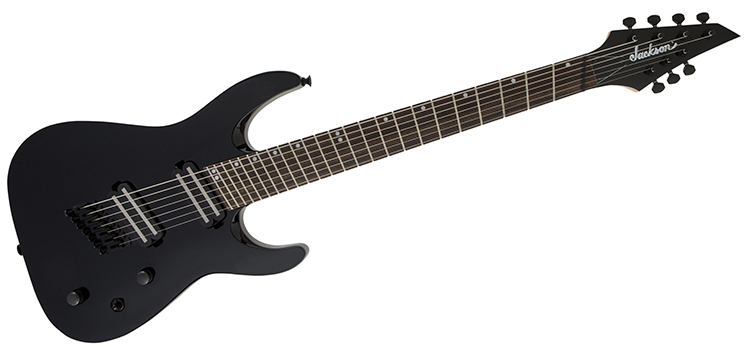
Also, this guitar has a proper mahogany body (significant for resonance and toughness) and a set of ‘blade’ humbuckers. These are still Jackson-made units, but they deliver a more even electrical response, and are therefore an upgrade in my book.
So, to sum up: Jackson’s next models up in the price chain both exhibit some very worthwhile upgrades, and if your spendability allows it, I’d pay close attention to the more pricey models, since you do get more.
Summing Up
Both Jackson JS guitars are clearly built to a price, and I wanted to be conscious of that during my deep dive. Neither guitar is going to compete with Jackson Pro Series guitars, which are flat out awesome. What is surprising though is how closely the JS32 Kelly shone against the X Series equivalent, to the point where I’d recommend trying both before buying either. The JS32 Kelly played well and looks very cool. I have my reservations about the cheap tremolo and limited pickups, but if all you want to do is rock, then the stock pickups deliver a reasonable set of chunky rock sounds. Most significantly, this is a comfortable guitar to play and allows you to really let rip.
The JS22 Dinky 7-string is a decent, no-nonsense riff machine that feels solid if not substantial. Whilst maybe a little uninspiring as it was, I found that a tweak or two to the string height and general setup improved things. Given how much you pay for one of these, it’s a more than acceptable instrument, and has the pride factor of having the Jackson name of the headstock. However, the next guitar up in Jackson’s catalogue - the DKAF7 - is a significant step up, which I suppose makes sense given the extra cost.
So, in brief summation. It’s amazing what a few hundred quid will buy you today, and Jackson are a great example of this. Both guitars offer a good experience and an authentic set of rock tones for the price, along with style details that one would normally expect to have to pay more for. I also admire how Jackson aren’t qualifying these as some subsection of a brand like Squier, PRS SE or Epiphone. Like Ibanez, they simply put their name on the headstock, and I applaud it.
So, if you are starting out, or are on a tight budget, then with a few caveats, I can definitely recommend taking the Jackson JS range out for a spin, based on these two examples.