Music Man have one of the most interesting backstories in modern guitar building. The US boutique builders occupy a relatively unique niche in the industry, and they’ve been the brand of choice for such luminaries as John Petrucci and Eddie Van Halen, so they are obviously doing quite a few things right!
Today, I’m going to reveal the tale behind Music Man. There are several pretty significant characters from the world of guitaring in here. If you’re a fan of the brand and want the story - or if you’re just curious about the subject - then read on!
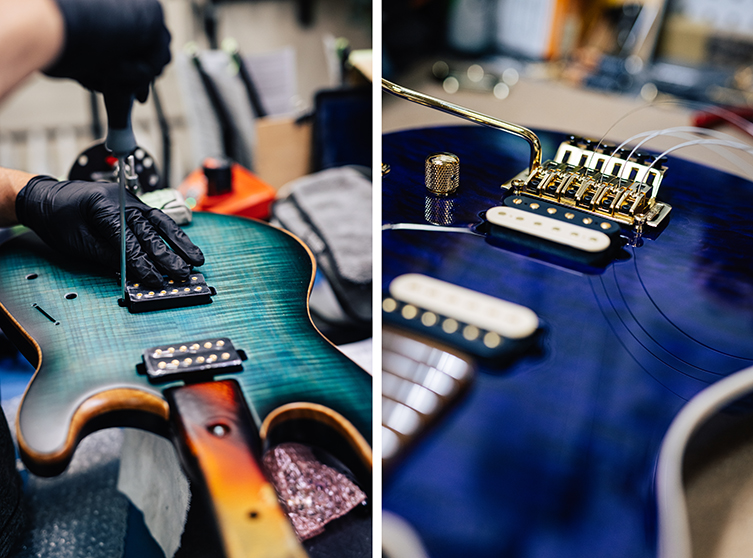
Ernie Ball, Briefly
Any history of Music Man has to inevitably include Ernie Ball, since they bought the company in 1984. So, here’s a brief look at how that came to be…
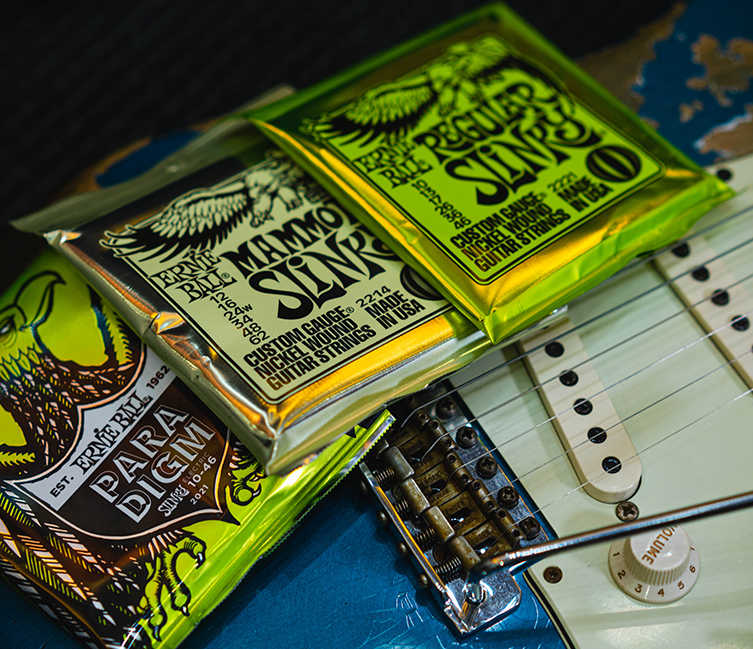
Ernie Ball (real name Roland Sherwood Ball) was a studio musician and teacher who ended up owning a string (sorry) of guitar shops in the late 1950s. When rock took off, he noticed the rafts of new guitar students having problems with Fender’s regular gauge 10 strings (actually a good deal heavier back then: a G was a .028” and wound, as opposed to today’s unwound .017”) so set about changing things. He had custom string gauges made and displayed in his stores, encouraging guitarists to experiment with different string gauges.
Nobody was doing this back then!
His original Slinky string set came to being when he noticed musicians ‘slack stringing’, which was when they discarded the low E, moved every string down one, and replaced the now-missing high E with a light banjo string. Ball approached both Fender and Gibson about creating a new custom set, and both companies declined to be involved, so he went ahead on his own.
The Ernie Ball company became a guitar string giant, and moved in various directions with the industry throughout the 60s and 70s. Those stories don’t relate to Music Man so much, so I won’t recount them here. What I will mention is that Ernie’s son Sterling was a large part of the business, and from 1975 onwards was in full day-to-day control of the business. He relocated the company to San Luis Obispo in 1979, and I’ll come back to him in a little while. First: the beginning of Music Man…
1971 - Tri-Sonix, CLF and Leo
Music Man began in 1971, started by two ex-Fender employees, Forrest White & Tom Walker. In fact, the company they started was called Tri-Sonix, but thanks to the creative intervention of a silent partner - a certain Leo Fender - that name quickly changed to Music Man.
Leo was a silent advisor due to his no-competition clause when he sold Fender to CBS in the mid-60s. He would begin his tenure with Music Man as a behind-the-scenes man, though an immensely influential one.
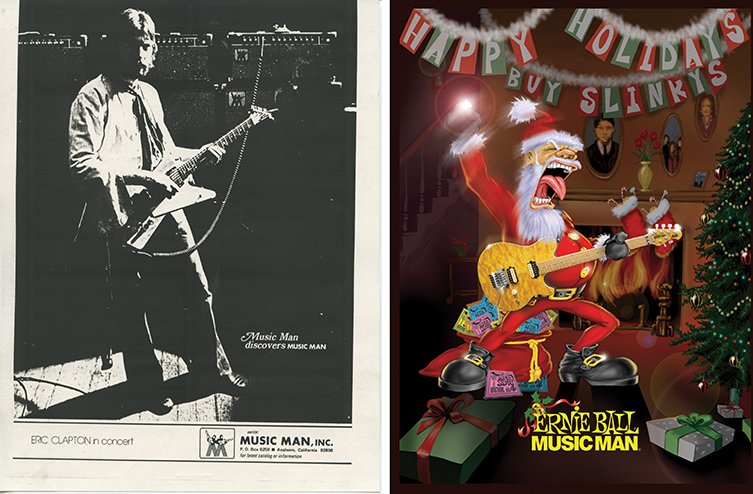
Music Man began by producing amplifiers, actually. Their initial models were solid state combos called ‘Sixty Five’ and you can see these in The Band’s famous Last Waltz concert movie. Music Man were actually more like two companies: there was Music Man itself, led by Tommy Walker, who were largely looking after the amp building. Then there was also CLF, which was Leo Fender’s company. They built instruments and it was they who developed Music Man’s most famous bass…
The StingRay
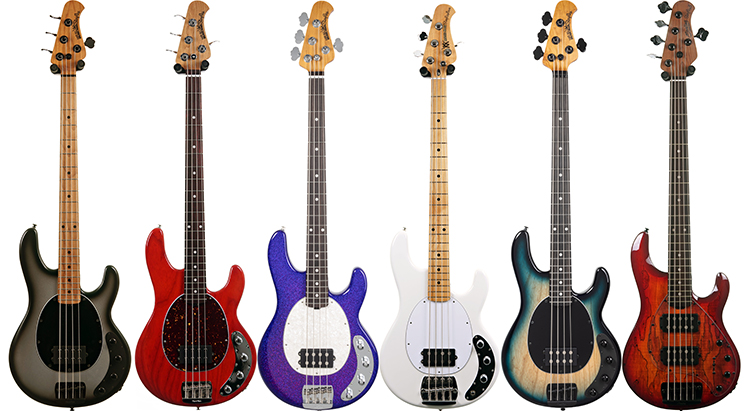
Yes, the StingRay. A modern classic if ever there was one, the StingRay is perhaps the most essential bass after Fender’s Precision and Jazz basses. In 1974, Leo Fender became president of Music Man (the non-compete clause had expired by this point) and in 1976, the StingRay was released.
It was a collaboration between Leo Fender and Tom Walker, with some play testing and input from none other than Sterling Ball. The inclusion of a powerful humbucker and an active EQ put the StingRay into its own league as an instrument, with a sound unable to be achieved by any other bass guitar. It was a pretty immediate hit, and has been a consistent best-seller ever since.
Earthwood, George Fullerton, Ernie Ball Buyout
So, as you’re beginning to see, there are a few twisting lines of stories all coalescing around the Music Man brand. Ex- Fender employees founded the company, Leo Fender himself was a silent partner and then president, and now we’ll see that another significant Fender person becomes part of the story…
George Fullarton, Vice President of Production and effectively Leo’s right hand man. He’d been collaborating with Ernie Ball on an electro-acoustic bass called the Earthwood. That project had been running into problems - again, a story for another day - but it brought Fullerton back into Leo Fender’s orbit.
By this point, the situation between Music Man and CLF had become fractious, to say the least. CLF handled the actual instrument making, and then passed them over to Music Man for quality control. The problem was, Music Man rejected a high number of the instruments as being below par, which began to cost both companies (they were actually one company, let’s not forget!) a lot of money. A rift occurred between CLF and Music Man (actual fist fights in the office between Tom and Leo over who was to blame for upside down truss rods!), production slowed down, and eventually lawsuits emerged. Leo Fender called time and left the company in 1979, starting G&L with his old Fender buddy George Fullerton.
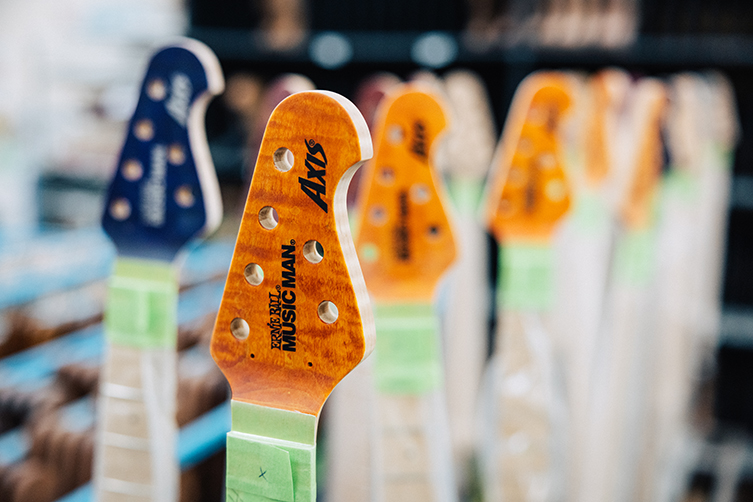
Sterling Ball, however, saw an opportunity to be involved in Music Man. In 1984, he and his father Ernie made an offer and bought the company. The name, trademarks, inventory, the whole bit. What wasn’t included was a factory, so Ball built one in San Luis Obispo, which is where Music Man guitars and basses have been made since 1985.
For more on the Music Man factory, why not dive into this article that talks about our trip out there? Click to read Ernie Ball Music Man: San Luis Obispo Trip.
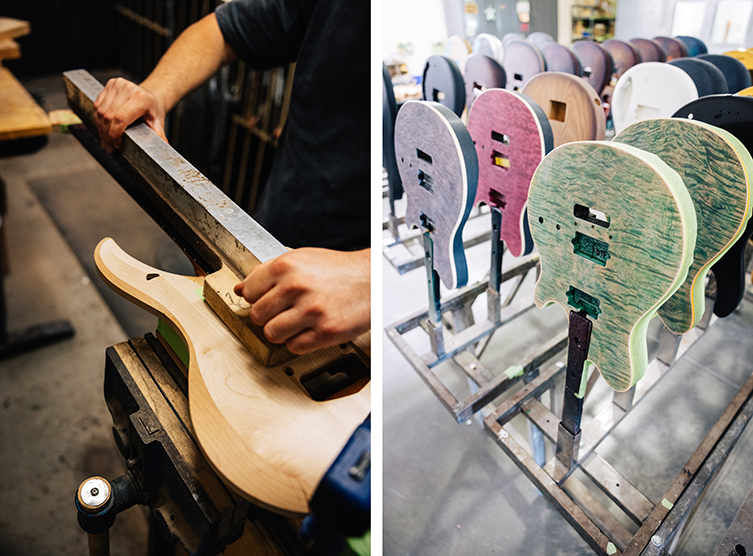
Player’s Guitars
Ever since Ernie Ball bought Music Man, the ethos behind the company has been to create player’s guitars. First and foremost, they were designed, spec’d and built to perform, and that’s something they’re known for today. This attitude has in turn attracted a number of the world’s top players to the brand, including these luminaries:
- Eddie Van Halen
- John Petrucci
- Steve Lukather
- St Vincent
- Albert Lee
- Steve Morse
Throughout their history, it has been artist visibility - and musician word of mouth - that has helped Music Man’s message reach such a wide audience. Other initiatives, such as having Ernie Ball sponsor a Battle of the Bands at the famous Vans Warped Tour., helped add visibility to Music Man, who enjoyed co-top billing above the stage. Getting involved in this grass roots way - whilst still operating at a high level - has benefited both Ernie Ball Music Man and the artists on the stage.
Originality
Looking at the historical Music Man guitars instruments and the wide variety that’s available today, what strikes me is how original they are. Considering they are a legitimate ‘Leo Fender Company’, they’ve never overtly tried to encroach on any of those famous Fender designs. Indeed, they are in many ways the next step ahead: lots of Music Man guitars feature a similar approach in terms of construction and so on, but innovate in terms of features, comfort, feel and finishes.
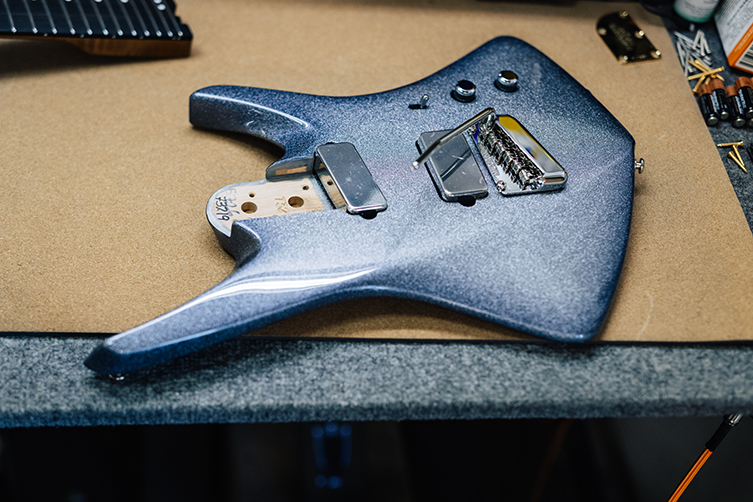
Affordable Music Man Instruments
During the 1990s, it became clear that there was an entire market of players out there who were not in the position to find the money required to purchase a new Californian Music Man guitar. Ernie Ball was aware of this, and made moves to bring their unique designs to those who wanted to get in on the fun.
The first round of these guitars came around in the late 90s. Made by various Far Eastern factories, they were collected under the name OLP, Officially Licensed Products. OLP created versions of the Silhouette, the StingRay and the Axis amongst others. Quality levels rose or dipped depending on the place of manufacture, and the line lasted until around 2009.
Not long after (and running alongside the OLOP line) was the SUB range. Originally styled as S.U.B. (which stood for Sports Utility Bass for reasons that I cannot deduce), the big difference here was that these were USA-made instruments. They had cost-saving design elements such as slab bodies, textured paint (so lacquer required, so less stages of finishing and less time taken to turn them around) and simplified decorative elements, but the actual essentials were all ‘proper’ Music Man.
In 2009, these ranges were both retired in favour of Sterling by Music Man. This range continues to this day, with directly licensed Music Man guitar and bass designs being built in Asia (Indonesia in particular) in order to offer a much more affordable guitar. The Sterling by Music Man brand has been expanded and refined over the years, and is now a major part of the Music Man vision.
Music Man Today
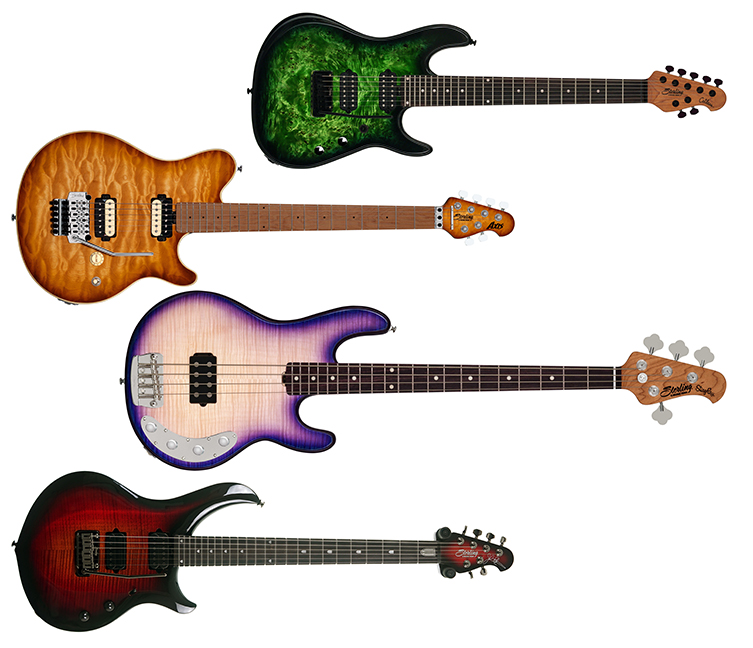
In 2026, Music Man (or Ernie Ball Music Man if I’m being strict about it) are one of the top electric guitar and bass brands in the world. They build in San Luis Obispo, they still make some pretty unusual guitars (the Kaizen, the St Vincent) alongside some more straightforward instruments (Cutlass, Axis) and they’ve never let their commitment to quality drop by even an inch in all of these years.
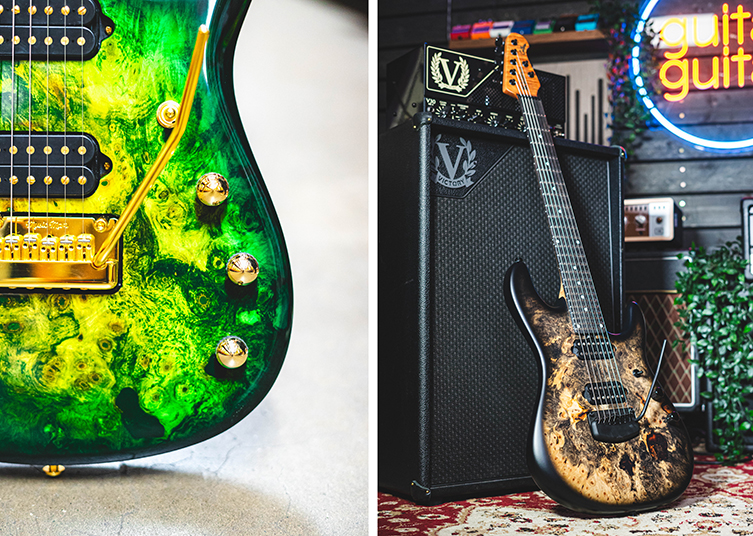
They have long term artists (Steve Lukather, Albert Lee, John Petrucci, Steve Morse) and more recent stars (Jason Richardson, Joe Dart, Omar Rodriguez-Lopez) who all swear by their instruments. They are an obvious professional choice, and they are an aspirational brand for those who are emerging in one way or another.
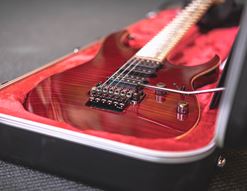
Music Man occupy a space that is relatively unique to them: they are both a high end builder and a boutique custom shop, but there’s no distinction between those terms in their case. Music Man guitars are both at the same time, unlike brands who offer ranges of increasingly exclusive instruments and THEN their custom shop efforts. True, Music Man have their BFR range (Ball Family Reserve) which are ultra-exclusive, limited runs of very special instruments, but those aren’t necessarily built to a ‘better’ standard.
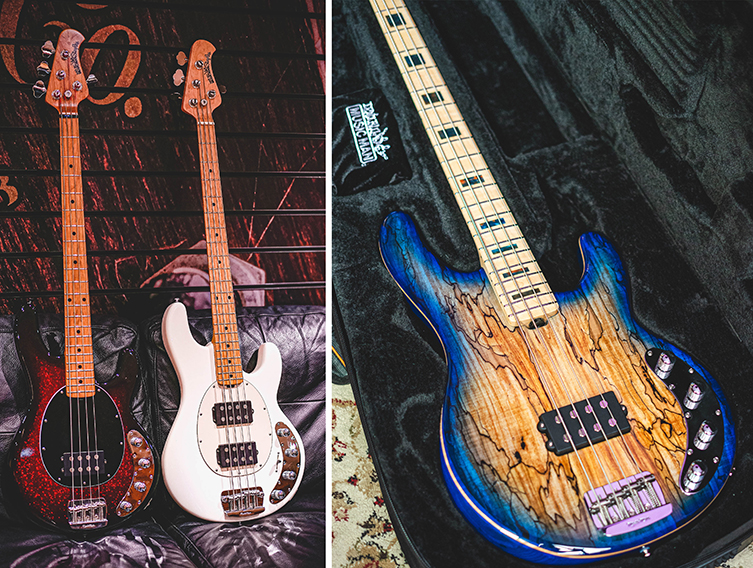
The fact is, the ‘regular’ production Music Man guitars are about as good as guitars can be built already, and that’s something you can find out for yourself when you try a Music Man guitar at any guitarguitar store. We’ve been dealers since we started, and we’re one of the few who have been chosen to stock BFR instruments, too. If you are interested in Music Man guitars, there’s only one place to visit.