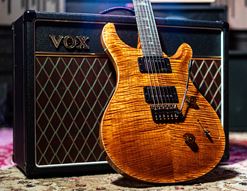
Are you into custom guitars? Have you noticed titles and descriptions here on the guitarguitar site that mention ‘guitarguitar exclusive’, ‘Made 2 Measure’ and ‘FSR’?
Did you ever wonder what the story is behind all of those terms?
Here at guitarguitar, we work hard to bring unique and appealing guitars to you. We obviously want to cover all of the top bases from all of the major companies and boutique builders out there, but our passion runs even deeper than that. We’re always interested in offering you something a little different, and hopefully special. Something great that nobody else has to offer.
So we work on ideas for custom builds and special runs of guitars and basses, with lots of major manufacturers and small-build companies alike. The idea is to make something you’d definitely want to own, and that you can only get from us. So, custom orders are part and parcel of the guitarguitar experience, and I thought it might be interesting to you if I lifted the lid a little on what actually happens to make these beautiful things exist. Sound intriguing?
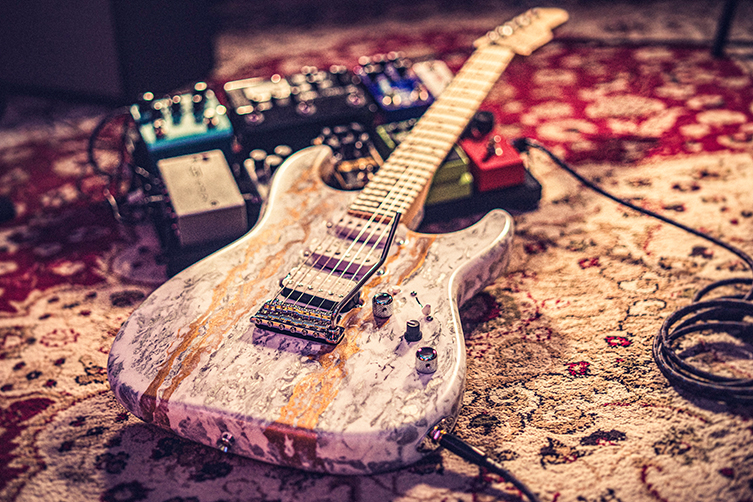
What I’ll do, in order to keep things readable and easy to follow, is relate the different ways in which these custom built instruments happen, rather than going from brand to brand, since many processes will be the same for several makers. But there’s a few ways that we achieve our results, and today I’ll explain a little bit about those processes, without bogging you down with too many dry details.
If you ever wondered how we went about spec’ing, selecting, and generally creating custom built guitars, then this is the article for you!
What is a Custom Build?
So, let’s get our understandings together. What is a custom build? It can be a number of things, but in short, it’s any new guitar that isn’t available in a company’s standard production line catalogue. Whether it is an altered take on an existing production model, or a fully customised one-off, they are all what we’d refer to as a ‘custom build’. More affordable examples will be low-number runs made on the production line, but of course most ‘custom’ guitars are carefully made to order, and often one-off single instruments.
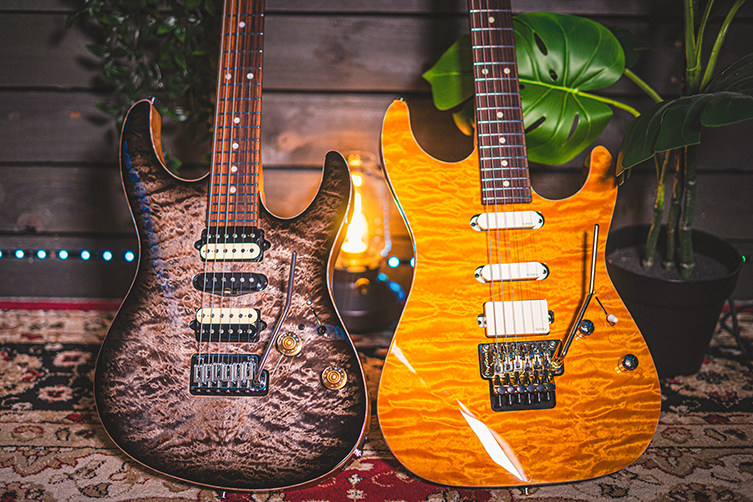
So, there are some terms that float around the world of custom guitars. I’ll list a few here and explain what they mean…
- Made 2 Measure: a Gibson Custom Shop term for guitars that have lots of customised options, from woods (and weight relief), to pickups, neck profiles and of course finishes.
- Gibson Dealer Select: similar to the above, except this is only available to certain selected dealers, such as ourselves. This is where we are occasionally able to go to Nashville to pick out woods and so on.
- Wood Library: a PRS thing, where you can choose non-standard wood combinations from their comprehensive stocks, and make relatively unusual PRS guitars.
- FSR: Fender Special Run. This is when we take an existing product line and modify it for a limited run. More on this later.
- guitarguitar Exclusive: a general term we use for limited runs of production guitars that have special features selected by us. This is similar to the Fender FSR situation, but applies to non-Fender guitars.
Custom Builds from Bigger Companies
So, custom guitars. Firstly, there are custom built guitars from places such as the Fender Custom Shop and Gibson Custom. This is what we typically think of as ‘Custom Shop’ guitars, and they’re meticulously spec’d up by us (and indeed yourself if you don’t mind the humongous wait for them…) in a number of ways. They can be pretty close vintage replicas of golden era guitars, or they can have certain anachronistic qualities (like a Floyd Rose tremolo on a 50s-style guitar etc) or finishes that aren’t available otherwise.
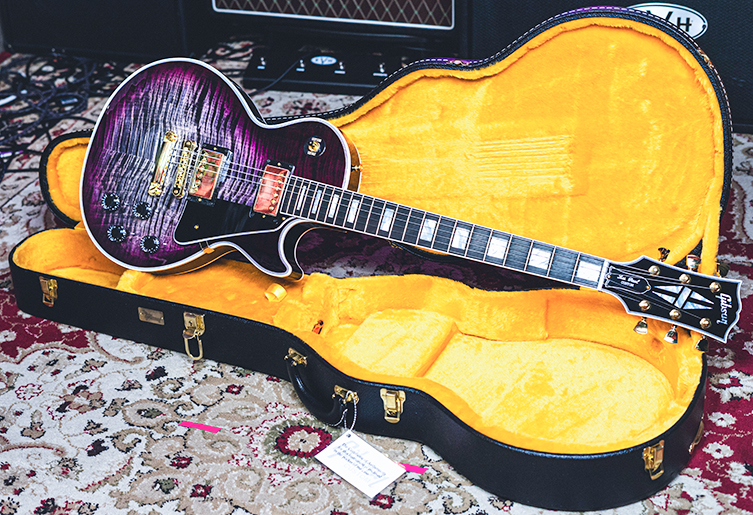
This is also the case with custom orders from PRS, whom I’d say are a big brand these days. In fact, this is how we order from the smaller boutique brands too (Tyler, Suhr etc) but more on that later…
On certain occasions, brands such as PRS, Gibson Custom or Fender Custom Shop will take it upon themselves to create a small run of certain guitars with a special couple of features or a new finish, and then offer it out to dealers like us as limited edition guitars.This is an occasional thing, and it’s simply a matter of making a decision about whether we think these guitars will be popular, and then either buying them or passing on them. We don’t have any real input on those, but we recognise their uniqueness in the market, and act accordingly.
Most of the time, though, we are actively involved in the process, as outlined above. We choose the basic model (say, a 59 Les Paul) in order to get relevant choices to make: neck profile, fret size, pickups, extra detailing, aging, finish, etc etc. How we decide on this is outlined later on, so keep reading!
Also, there is the world of sort of ‘unofficial tributes’ or replicas. Do you know that famous book The Beauty of the Burst, which shows lush photos of as many genuine 1958-60 Les Paul Standards as the author could locate? Well, that’s a great reference for making requests from Gibson Custom. It gives them specifics to work to, and from our point of view, expectations of both results and price. Plus, we can build that into the guitar’s story and it adds more fun and value to the eventual owner. Most of us are not going to be owning an actual ‘59 Les Paul, but some of us can scrimp and save for a Gibson Custom Shop Made 2 Measure Murphy Lab 50 Les Paul that is infinitesimally close to the original.
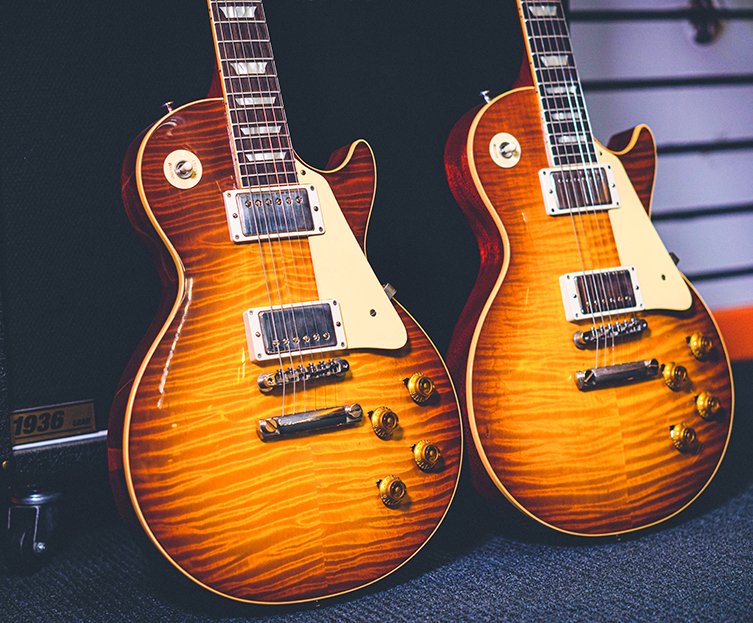
Other tribute-type guitars happen now and then, and it’s normally relatively obvious who we’re paying tribute towards: a fiesta red 50s Strat with gold hardware is always going to appeal to fans of a certain guitarist who casts a large shadow, if you catch my drift. The same goes for a particular type of black Strat (with cream or white pickups) which could be said to be the same colour as the dark side of the moon…
So, these sorts of custom orders take a few paths in the creative process, and have different destinations, but that’s the starting point for many of them.
Boutique Builders
Since day one, guitarguitar have been involved with some of the world’s greatest boutique builders. Tyler, Suhr, Music Man and other top makers all build us a range of top instruments, both ‘production line’ and custom. In reality, at this level, all of their guitars are built to an obscenely high standard, so going custom is more about choices and specs than any implied upgrade in the instrument itself. They are already incredible, but maybe you want a specific colour or feature? That’s more what happens here.
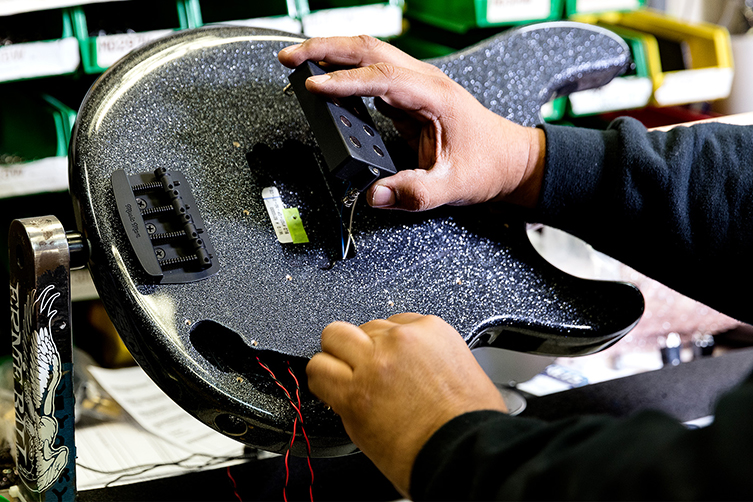
With these builders, we are sometimes lucky enough to send staff across on trips to actually hand select timbers, choose special colours (sometimes even get brand new colours mixed for us!) and generally be right there in the centre of the process when decisions are made. From the fantastic Music Man factory in San Luis Obispo to Taylor’s Custom shop in El Cajon, our staff have made the pilgrimages to make sure that what we are ordering up is the best it can possibly be. This is real hands-on stuff, not pointing to a page and saying ‘I want this’.
Non-Custom Shop Customs: Affordable Special Runs
Whilst lots of the instruments in this article are understandably expensive, the guitarguitar custom build experience incorporates lots of much more affordable instruments, too. Certain manufacturers are open to special orders of certain production models with hardware or finish changes, as long as we can agree on a minimum order. This automatically makes them a special short run, and thus of interest to collectors and fans of the brand, as well as players looking for something a little different.
Fender FSR guitars are a good example of this process. They are specially ordered and exclusive to us, but they are not redesigned from the ground up. These are existing models from existing ranges (like the Player II series or the Ultra Series) that we take and add some special features to. Our exclusive guitarguitar Roasted Player guitars are a great expression of this. We’ve done a bunch of these for a few years: Strats, Teles and also Jazzmasters now and again, all with a special twist in the spec to make them different.
Take the Roasted Player II Telecaster. Using the blueprint of a Player II Tele, we’ve added some amazing sounding Fender Custom Shop pickups - including a neck humbucker, which you cannot otherwise get in this range - and given it a special non-catalogue colour, in this case Charcoal Frost Metallic. Significantly, this model also has a roasted maple neck (hence Roasted Player), which is achieved through a process called torrefaction.
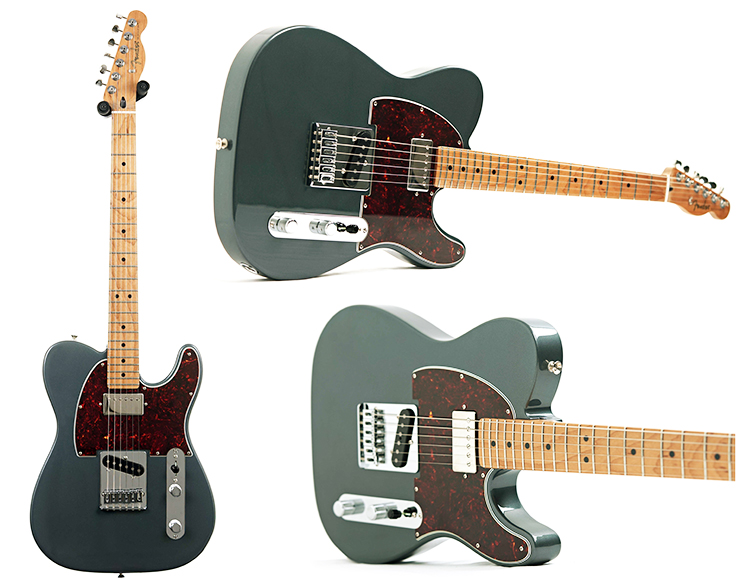
For a quick recap: torrefaction is where the wood is dried out at high temperatures, and changes colour as it strengthens, making it an excellent, stable neck. The rest of the guitar is the already-great Player II Tele that you know, but now it’s even better thanks to those upgrades and exclusive finish.
We do this sort of thing with USA Fender guitars, Mexican stuff, and even Squier. They are always limited runs, and they are always spec’d to offer something new, fun and worthwhile.
Individuality: Hand-picked Woods
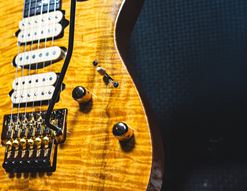
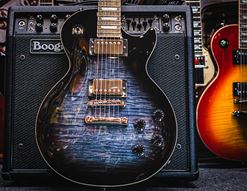
Les Paul said it best: ‘audiences listen with their eyes’. We all want our guitars to look as amazing as possible, right? Why wouldn’t we? This is why at guitarguitar, we individually photograph all and every guitar that has a figured top or other uniquely unrepeatable feature. You want the guitar you see in the picture, not one that’s similar. We get that. So we photograph every individual Les Paul Standard, for example, so that you get to choose the exact one you prefer.
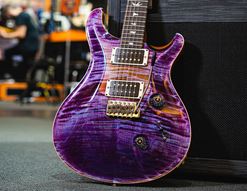
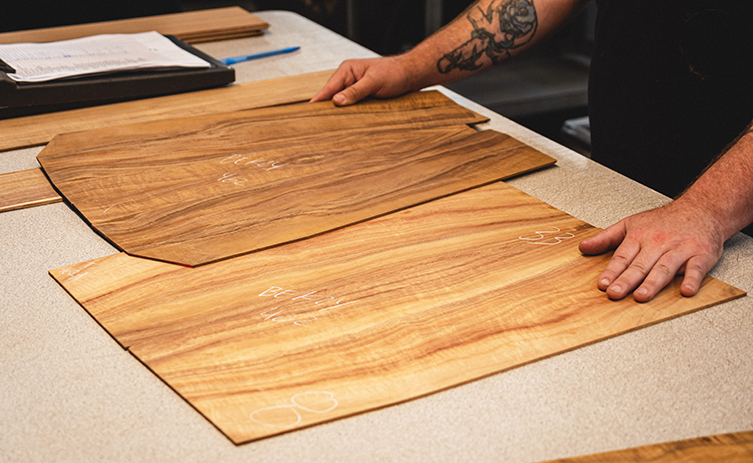
This leads me to my next point. We really only want to get the nicest looking figured maple tops for the guitars we sell, so when we’re able to (in other words, when we order custom made guitars), we have staff members physically look through hundreds of maple ‘blanks’ (pre-chopped slices of wood) to find the best, most dramatic looking flames and curls. We do this with PRS, we do this with Gibson Custom and we do this with Music Man, whenever we are able to.
Finishes are often selected based on how well they show off the particular timber, or indeed chosen for something like those Beauty of the Burst tributes I mentioned. Basically, getting personally involved in this part of the process reaps rewards, as we don’t then end up with bland, unimpressive looking tops for the guitars we order. Who wants that?
What We Consider Before We Order
How do we actually decide on what we want to have in a custom guitar then? It’s hard to remove personal taste from these sorts of decisions, when it comes to spec’ing up custom guitars. After all, our purchasing department have the jobs they have because they’ve been successful at predicting or indeed reflecting the taste of lots of players. Still, it’s not so much about ‘us’ as it is ‘what do people want?’ and there are a few ways that we can establish that.
When I spoke to my colleagues, they kept coming back to a few salient points:
Is it cool? It’s the most important question, and one that can be impossible to articulate beyond ‘yes it is’ or ‘no, it’s not’. Let’s be honest with each other here: coolness is something that everybody wants, so when you sense it, you tend to go after it.
Will it be popular? That’s something we can make more educated assessments on, based on previous sales of similar items. That’s not to say we don't take risks (we definitely do), but we aren’t a museum who wants to hang onto the guitars forever: they are bought by us to put into your hands. Custom orders that hang around long enough to get dusty on their hangars in-store do not tend to be re-ordered.
Can it actually be made? This is a great question, because lots of even custom manufacturers have limitations to what they are prepared to offer. Just because I can conceive of a particular guitar, doesn’t mean that it’ll be able to get made. For example (and I’m being flippant here), I can’t see Gibson Custom doing a neon green Tree of Life inlay on a splatter finish ES-355, for example.
Which is a real shame, now that I’ve just invented it.
Anway, we need to ask questions of the builder to make sure certain options are doable, and that can be as simple as a colour choice or a timber combination, or it can be a technical quandary: ‘can this bridge even fit on that guitar’ and so on. Every company has things they won’t agree to do, and so we simply work around those factors until we land on something that works.
Does it offer value for money? That’s an important question. Whilst it’s clear that much of the custom guitar world is top-priced, that’s hardly the full story, as I’ve shown you today. Creating an FSR Fender Strat by taking an existing model, introducing a new colour that can’t be had in the range, and adding a set of Custom Shop pickups, for example, is for us a meaningful way to offer something special that doesn’t cost loads more than the standard item. It’s a little bit more expensive, but we think the benefits and the exclusivity justify this. If it doesn’t offer value in one way or another, then we question the validity of the idea.
What is trending? Do you think about trends with guitar buying? I expect you probably just go with what you are drawn to, but our buyers do see patterns emerging from time to time, and act upon those if it’s appropriate.
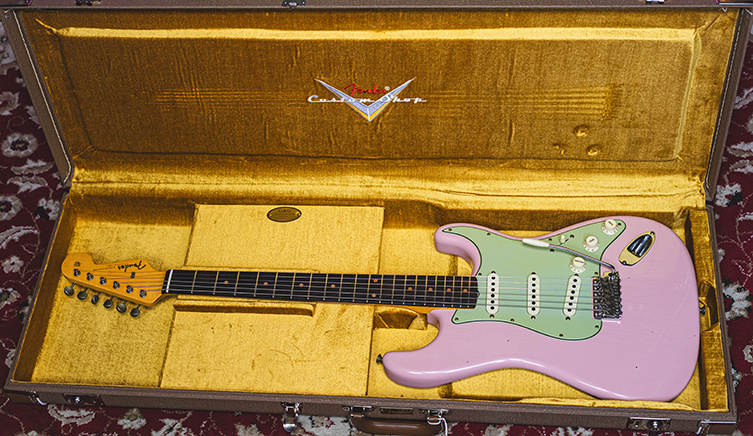
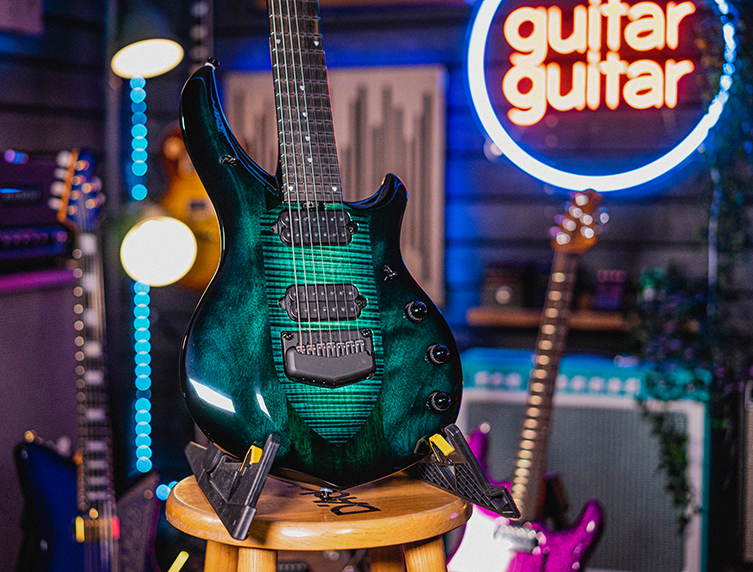
For example, a few years ago, there was a noticeable demand for Shell Pink as a colour. This was not just on the expected Fenders, but also Gibson guitars (a Shell Pink ES-335 happened for us, and that’s pretty rare!), and some of the more shreddy, 80s-facing guitars too. It was a trend, and recognising that allowed us to offer special guitars that were in line with what people were actually buying. Right now, our purchasing team are noticing that green is a popular colour, and also one that’s relatively rare for guitars in general. There’s a little tip for you!
Custom Guitars for Everyone
So, that’s a little look behind the curtain for you. A peek at some of the processes we follow when navigating the exciting world of custom guitar ordering. Every company is a little different in their approach, but when they all match our passion for guitars - and for unique offerings - then we tend to quickly find common ground.
It’s exciting for us to dream up these custom designs, see if we can have them made, and then finally offer them to you. Sometimes they can be created in a few months, and other times we’ll be waiting for years, but it’s always worth it in the end.
I hope you find lots to love in these custom one-offs, limited runs and special editions, too. After all, you’re as passionate about guitars as we are, and you are always on our site checking out the latest additions. We want you to be excited at seeing cool new guitars that are out of the ordinary, and you’ll hopefully want to add them to your guitar playing life!
Click to View All of Our Custom Built for guitarguitar Instruments