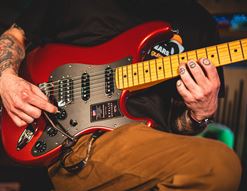
MESA/Boogie is a legendary amp brand, there’s no two ways about it. They changed the game completely with several innovative approaches to tone, and they’ve been chosen by many of the world’s greatest players as the basis for their sound. And that’s across genres and decades too, proving that MESA/Boogie are one of the defining amplifier choices in music.
Today, I want to share my decades of experience with the brand, and help you figure out which Boogie is right for you. I’ve played a bunch, owned a few and also spoken with MESA’s R&D head Doug West about the brand, so I’m hopefully in a position of experience. I think you deserve to sound amazing every time you plug into an amp, so it’s my aim today to guide you towards some of the best tools for that job!
I’ll briefly detail how the company got started, but the main thrust of this article is to look at different types of guitar tones and styles, and advise on how you might best achieve them with Boogie amps. I’ll show you some classics, and some newer models, and hopefully I’ll introduce you to some amps that will change your playing game for the better!
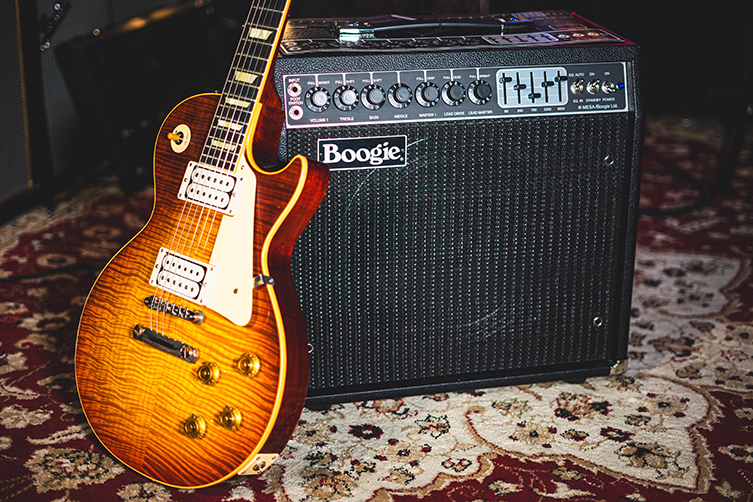
The Brief Backstory
MESA/Boogie started out as part-hobby and part-joke, weirdly enough! Company founder Randall Smith co-owned a music shop in Mill Valley, CA called Prune Music, which was frequented by various name players of the 70s.
One customer, Barry Belton, wanted more volume from his Fender Princeton amp, and so Smith wanted to surprise him with something special. Removing the ‘guts’ of the combo, he replaced them with those of a Fender Bassman amp, and replaced the 10” speaker with a 12” one. All of a sudden, this diminutive combo was a 100w monster, just what Melton asked for!
The outer appearance of the amp hadn’t changed at all, so to test the effectiveness of the job, Smith asked famous shop customer Carlos Santana to test out the amp one day when he was visiting.
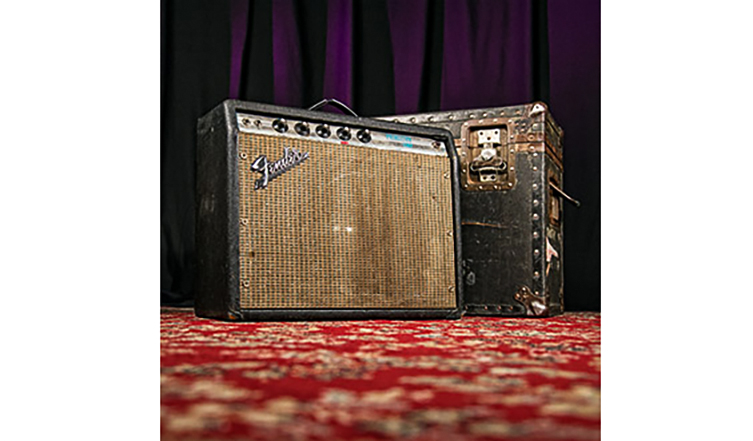
(Pic courtesy of MESA/Boogie)
You’ll know this bit. Upon playing a few notes, the skeptical guitar legend blurted out ‘Man, that amp really boogies!’, and unwittingly coined half of the company’s name. Smith created around 200 of these hot-rodded Princetons before deciding to make things official and start on his own full designs. The ‘Mesa’ part of the name was chosen randomly (though their location in the Marin mountains may have influenced that!), and Mesa Engineering was born.
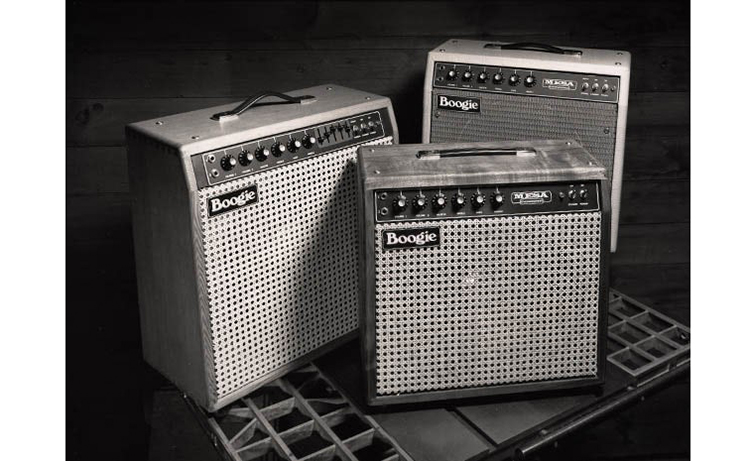
(Pic courtesy of MESA/Boogie)
There’s much more to the tale of course, but that will have to wait for another day, because today is all about finding the right Boogie amp for YOU!
MESA Engineering or MESA/Boogie?
One thing I should clear up first is the confusion over the name. Are these amps Mesa Engineering or MESA/Boogie? Well, as we’ve just learned, the company was and is called Mesa Engineering, and the Mark Series amps all have the ‘Boogie’ nameplate on them, as well as some other models from the 80s. So, the company has never actually been called ‘MESA/Boogie’, only some of the amps. Still, that’s the name that everybody knows, so I can’t see anybody correcting you for referring to these amps as ‘MESA/Boogie’ or indeed ‘Boogies’. In fact, I’ll often do that myself within this article!
Choosing a MESA Amp
Right, we’re nearly ready to start discussing the different amp models offered by Mesa. Often, when I’m advising customers on amplifiers, I find that it's a good idea to get them to think about the sounds they actually want to achieve and work backwards from there. For example, those who want classic 60s and 70s British rock and roll would do well to start their search either with the obvious (Marshall) or modern equivalents such as Friedman. Those amps will offer that type of sound specifically, and it cuts out a lot of irrelevant options.
Somebody looking for the best clean tones in the business is still well advised to focus on Fender amps, and simply consider power ratings and headroom in order to achieve the glassy, crystalline sounds that they desire.
But when it comes to MESA/Boogie, things aren’t so simple. It is a fact that early Boogies were hot-rodded Fender amps, and that such amps proved the basis for early MESA amp circuits. But it’s also true that they are responsible for perhaps THE most famous heavy metal high gain sound in the business, and these are clearly two different things. So, can MESA/Boogie amps appeal to players who want both of these things, and everything in between?
Actually, yes, but there is a trade-off. As you and I shall discover today, you can have your cake and eat it, so to speak, with Boogie amps, but there will be a learning curve involved with that. The more features you buy, the more complex the operation of the amp will be. These are certainly not ‘plug n play’ amplifiers, so I’ll try to guide you toward a Boogie that will work for you sonically AND practically today.
Are you with me? We’re nearly there, I just need to clarify some things with you…
Things to Know Going Ahead
Each MESA/Boogie amplifier will become a significant and integral part of your overall guitar sound, and so there are a couple of points I feel are appropriate to share with you before we look at some amp models. Here they are…
Interactive Tone Stack: each control on a Boogie has an effect on how some of the other controls subsequently work. It’s an organic, living thing, so it ISN’T a situation where turning down the mids only turns down the mids. Every change has a knock-on effect: some can be subtle, and others play more of a significant change in your tone. This may explain why it pays to adjust Boogies in small increments, and play a little in between adjustments. This is true for pretty much all of their amps, and it makes them very powerful tone creators, but it’s also why they can be tricky to use if you aren’t used to it.
Switchable Power Per Channel: many Boogies allow you to use a separate power rating for each channel. This means you can run a clean channel at, say 50w for lots of clean power and headroom, while the drive channel can be switched to, say, 20w for more clipping and natural compression. It makes a lot of sense and is well worth getting to grips with.
The Graphic EQ is a Godsend: if you’ve never used the footswitchable 5-band EQ on the front panel of certain MESA/Boogie amps, you may not appreciate just how ridiculously useful it inevitably is. It can act either as a final ‘global EQ’ or you can use it as an extra boost or stage in your sound. You’ll miss it on every amp that doesn’t have one!
The ‘MESA/Boogie sound’: in reality, the signature high gain Boogie distortion sound is not a very fair or accurate summation of the brand. It’s one particular sound (or set of sounds, actually) from one corner of their offerings. The company excels at a lot more than this one sound, no matter how great they are at doing it.
Heavy in More Ways Than One: don’t let this put you off owning a MESA/Boogie, but do factor in the fact that they are all pretty heavy to lift. In full disclosure, I’ve had friends fall out with me over being asked to carry 50 watt Boogie combos just that little bit too far! So consider how you’re going to get from A to B with one. It’s worth it!
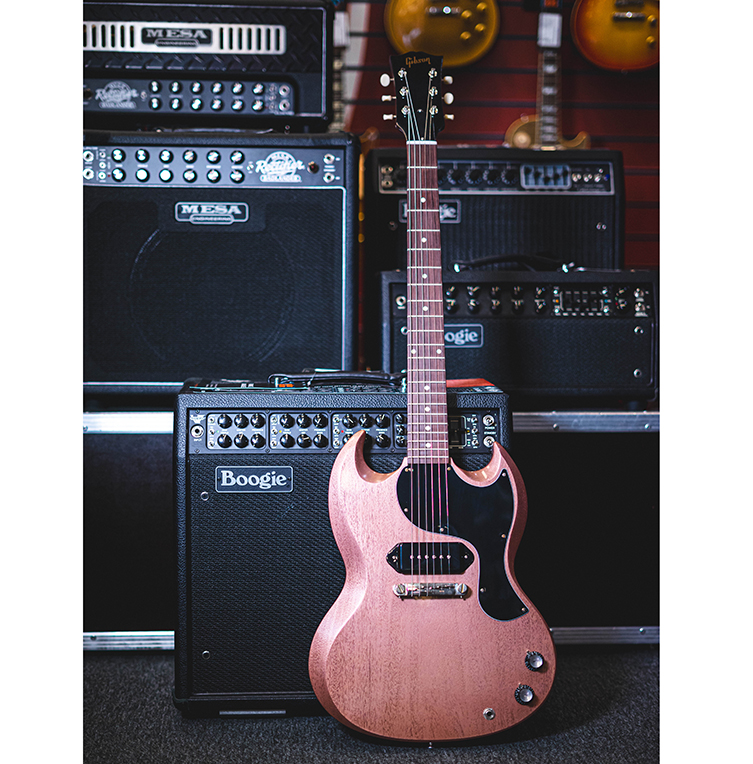
Okay, I think we are now ready to check out some amps!
Classic Tones: MESA/Boogie California Tweed 6V6
Firstly, let’s deal with the more classic, golden-age sounds. Boogies can absolutely achieve these, and in fact are amongst the world’s best at it. To illustrate this, I’ve chosen two amps which I think represent an excellent cross section: one is very clean, and the other excels at more pushed tones. Let me introduce you..
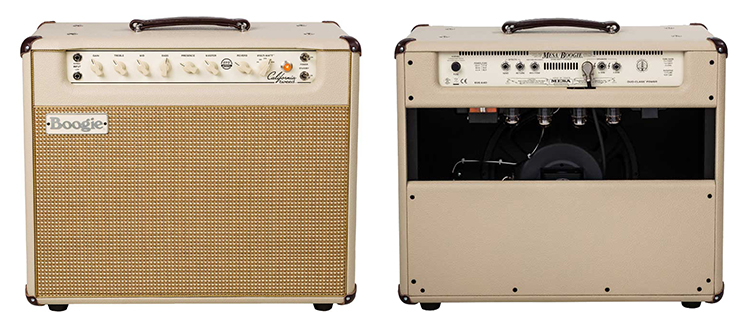
First up is the MESA/Boogie California Tweed 6V6. It’s a popular one, and we often sell through, so keep your eyes peeled for this one returning to stock if it isn’t listed at the moment. It’s worth the wait! Basically, this is a masterful take on those wonderful old tweed combos from the 50s and 60s, with enough power on tap to fill a room with beautiful vintage tone.
This is a single channel affair, as I feel you’d expect in this context, and you get low or high inputs as well as a built-in tube reverb. It’s old-school on the front, but you still get some trademark MESA functionality round the back, including a tube-driven FX loop, so all of your boutique delays will sound positively gorgeous through this amp.
Who is the MESA/Boogie California Tweed 6V6 for?
- Fans of pure, classic tube tone that is clean and dynamic.
- Pedal users who want one of the best bases to work their magic from.
- Lovers of vintage tweed amps who still want some modern features.
MESA/Boogie Fillmore 25
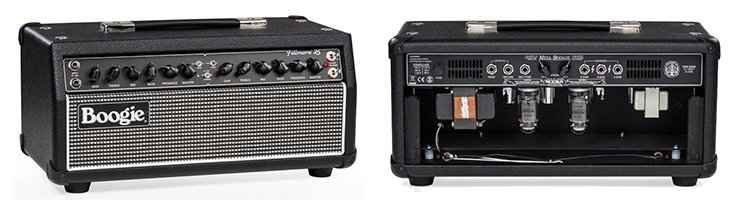
This next choice is a great one for all classic rock, blues and jazz players. The MESA/Boogie Fillmore 25 is a simple (for MESA at least) 25 head (also available as a combo with a 12” speaker). The size and the power are just right to let you push the amp into beautiful, natural overdrive that feels nuanced and detailed.
This is the amp for those of you who want to hear the characteristics of their guitar, with a dash of tube-driven reverb added to taste. It’s two identical channels with three modes, so you can have what you like, how you like it.
Now, this isn’t an amp for the metal fans: for that, please keep reading! But for fans of lyrical and expressive lead lines, and evocative, organic tones, the Fillmore 25 may just be the ticket to your best ever sound.
Who is the MESA/Boogie Fillmore 25 For?
- Classic rock, blues and roots players.
- Lovers of vintage tone and classic amps, who want a more organic relationship with their sound.
- Gigging players who want their best ‘pushed’ tones to come from an amp, with a good degree of control.
I should also add that guitarists looking for some of MESA/Boogie’s best clean sounds should also check out the Mark Series. I’ll be looking at the Mark VII amp later in this guide, so take it as read that these amps pretty much do everything brilliantly!
Okay, now for those of you who seek the high gain sounds…
Heavy Tones to Die For: The Dual Rec and More
If MESA/Boogie have an instant reputation amongst guitarists, then that reputation is based mostly on their Dual Rectifier amp. Ask ten players what the definitive Boogie sound is, and I expect all ten will talk about the ferocious bark of a highly distorted Dual Rec. Given that the company started off as modded Fender amps, and that they had an initial reputation as a bit of an ex-hippie brand, it’s kind of strange that they are known as the boutique metal guys.
But they are, and the Dual Rectifier is why! Plug into one and you’ll immediately understand why, as well. Digital modelling has captured loads of amps amazingly over the years, but I feel like it’s only REALLY recently that the somewhat idiosyncratic sound of the Dual Rec has been appropriately captured. I’m not sure why that is, but when you connect with the real deal (and use something with humbuckers when you do so, please!), it’s a glorious moment you won’t forget any time soon.
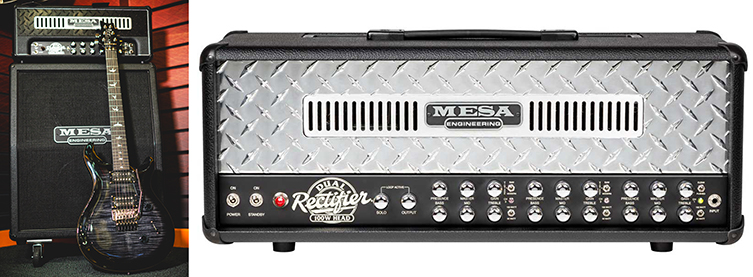
This thing positively rages, and there are three channels to play with, so you can have a decent clean tone and a fabulous light crunch tone in addition to the ultimate crunch of the red channel. If you play rock music that relates to the last 30 years rather than the last 60 years, then this amp will give you a sound that you’ll be grinning about for weeks.
Who is the MESA/Boogie Dual Rectifier head for?
- Literally every guitarist who enjoys distortion.
- Any player who plays rock that’s even slightly on the ‘modern’ end of the scale.
- People who appreciate the singular sound of valves cooking and blasting out three-dimensional distorted sound.
- Fans of Millennial music in all of its varieties.
The Dual Rectifier has been around since 1991, and whilst it owns its own corner of the guitar tone map, there are other amps you can look at for supreme heaviness. I’ll go ahead and recommend the relatively new Badlander series here, and in particular, the 50w 1x12. Here’s why.
MESA/Boogie Badlander 50 1x12
My next choice for superb high gain is a combo instead of a head. Combos just work better for a lot of musicians, and even if they are on the heavy side like this one (to say the least!), they take up less room, require less cabling, and if they are made like this, they pack a superb punch. I’ve opted for the 50w model for two reasons: I find that high gain sounds generally need more volume to actually compete with clean tones (seems like a contradiction, but those are my experiences!); and the slightly larger 12” speaker delivers significantly more ‘chunk’ in the gain tones, which isn’t something any pedal in the world is going to fix for you if the amp doesn’t inherently have it.
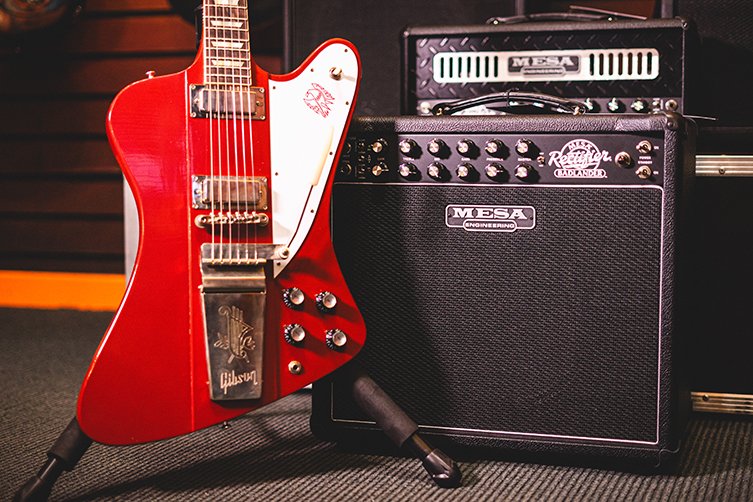
So, what you get with the Badlander 50 1x12 is a pretty convincing version of the ‘turbo gain’ we just met with the Dual Rec, but in this iteration it has a little less oomph and slightly more of a cut to it. This may actually work better for your ensemble sound, when you aren’t jostling for those bass and low-mids as much. It’s two channels here, each with three models (so it’s like a lot of Boogies!) and offers a good mixture of versatility with ease of use. Basically, if you are a modern rock player who wants to get the MESA/Boogie sound in a combo, this is where I think you should start.
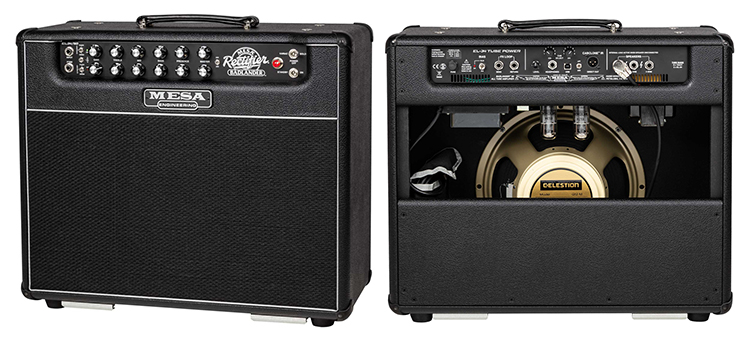
Who is the MESA/Boogie Bandlander 50w 1x12 For?
- Alternative rockers who want that immense Dual Rectifier-style distorted sound in a combo, but still need other tones too.
- Hard rock and metal players who want a rugged, US-built combo for gigging with.
- Guitarists who need to cover a number of bases with quality tone, all from one amp.
MESA/Boogie Triple Crown 50 1x12
MESA do tend to make a lot of amps that seem pretty similar on the surface, but I want to highlight this one for you today. The MESA/Boogie Triple Crown 50 a 3-channel high gain combo, but this one has a distinctly different voice to the amps we just looked at. Calling a spade a spade, this to me is Boogie’s take on the Marshall sound, and that includes the plexi and JCM sounds.
It’s a ferocious sounding amp with a lot of flexibility, and I can see this being something that lots of 80s hard rock and hair metal fans will absolutely adore. It has cool features like the ability to use different power amp tubes in it, in order to change up the tightness and response of the sound. With its 3 channels - each with their own EQ and switching - I reckon this will meet the needs of lots of guitarists. British tone from a Boogie? Absolutely.
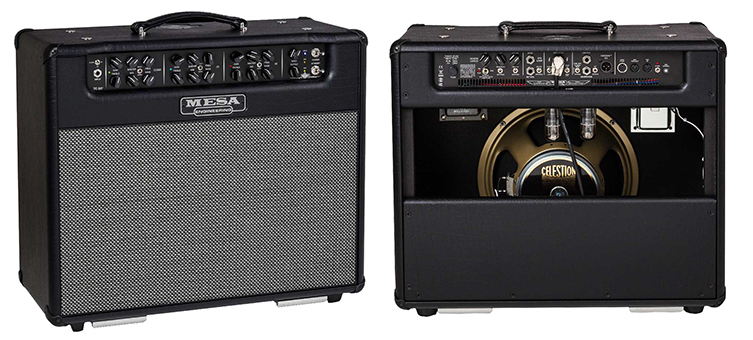
Who is the MESA/Boogie Triple Crown 50 1x12 For?
- Rockers who want a more ‘British’ type of high gain in a quality amp build.
- Players who want three great sounding channels in one combo.
- Boogie fans who require a different flavour of distortion from their signature ‘US’ sound.
Versatility: The Full-on Boogie Experience
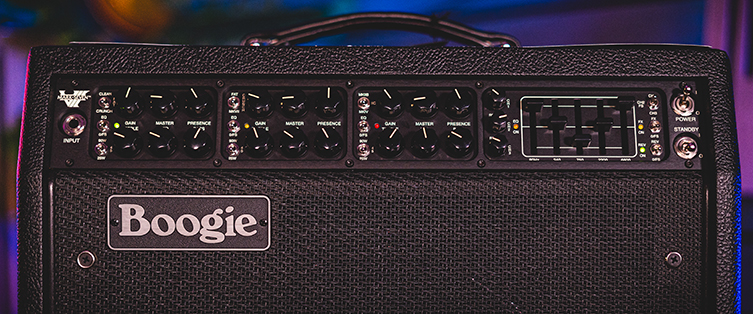
Now, if you are the type to dive right in at the deep end and learn by doing, then the best MESA/Boogie range for you is the Mark Range. These amps are the most feature-packed, the most diallable and the most tweakable of them all. They are resolutely NOT simple boxes to plug into and automatically sound like a genius on: these are highly interactive, responsive amplifiers-as-instruments, and you will need to spend a little time learning how to work with the controls, channels, EQ and power levels in order to get to the undeniably superlative sounds that lie within.
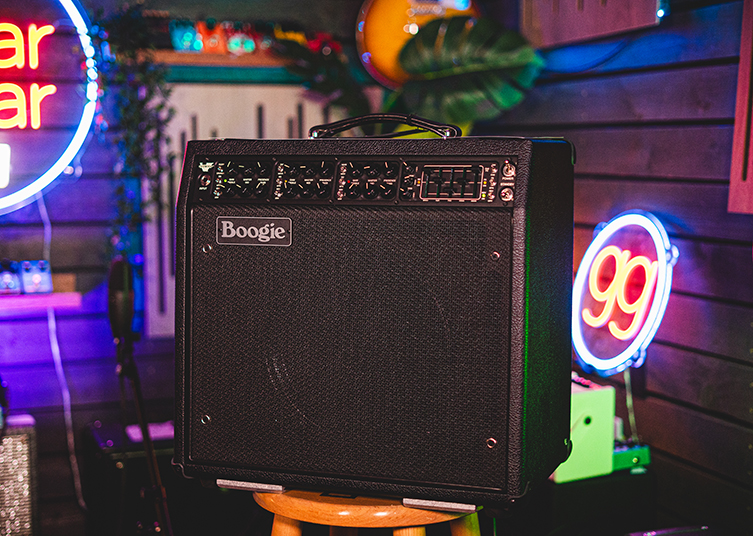
We’re now at the 7th iteration of the Mark series, so it makes sense to begin there with the MESA/Boogie Mark VII 1x12. Each successive model in the series tends to replace the one before it (think of it as a constant revision), though certain well-loved models such as the famous MkIIC+ amp have been reissued due to enduring popularity.
But back to the Mark VII. Why do I recommend this? Well, it’s MESA’s flagship amp, so you could say it’s a culmination of everything they’ve been working to achieve for 50 years. Where the Mark IIC+ is a single channel amp with some switches and a graphic EQ (and the ability to ‘cascade’ the gain via the input volume), the Mark VII has the following happening, in brief:
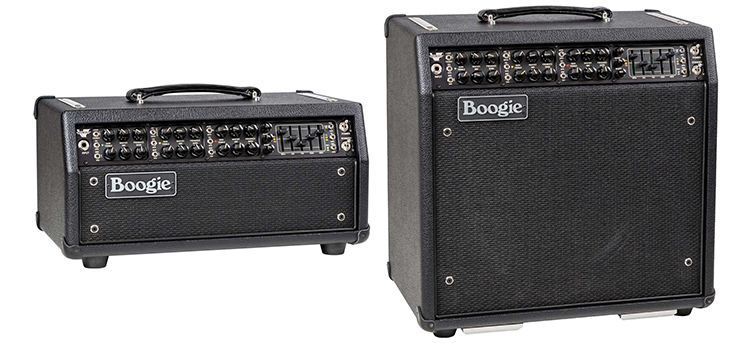
- 3 independent channels
- 9 modes including clean, fat, crunch & Mark IV in addition to Mark VII
- One entire channel is a recreation of the famous IIC+ amp
- 5-band physical Graphic EQ, which is footswitchable
- Cab Clone impulse responses for DI gigging or recording
- 90 watts of power
- Simpler control interface than previous Mark series Boogies
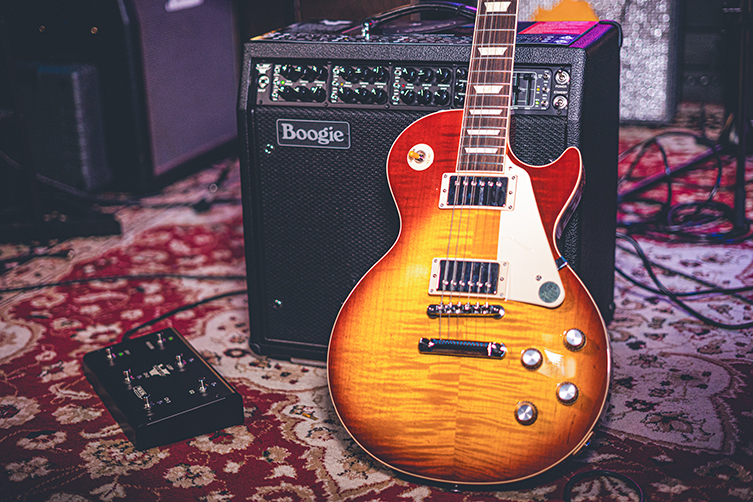
That’s mostly what’s happening here with the MkVII, but the most significant comment I could perhaps make here is that this is an amp that allows you to control, shape, sculpt and create the exact tonal palette you require, and it does that with point-to-point hand-wired circuitry and valves, instead of digital processing or modelling. It’s a hugely creative instrument that just happens to be an amplifier. It’s maybe not for the faint-hearted, but for those who are willing to invest both time and money into their sound, the rewards will be both ample and inspiring.
Who is the MESA/Boogie Mk VII Amplifier for?
- People who want the best quality, with no compromises to the circuitry or the build.
- Any player who appreciates boutique valve tone and understands that an amp is an instrument.
- Guitarists who want genuinely legendary tones, created for real.
- Players who need a wide selection of footswitchable tones that are unsurpassed in quality.
- It’s very nearly - in real terms - an amp that can do everything, and do it really well.
MESA/Boogie: The Amplifier is an Instrument
Those were my recommendations for when it comes to choosing a MESA/Boogie amp. As you’ve now seen, MESA are so much more than just the Dual Rectifier guys, even though that glorious tone is one that most guitar players want to at least try out at one point or another!
In terms of which Boogie is right for you, that’s a trickier question. I’ve tried to highlight a number of worthy examples today - and I believe I’ve delivered a fair cross-section of what the company offers - but they have a LOT of amps to choose from, even in terms of power and speaker sizes. What’s right for you depends on a number of factors, but I will say this: if budget allows it, then the Mark VII - in whichever guise you’d prefer to have it - is one of the most impressive amps I’ve ever plugged into. Not many amps can go from Buddy Holly to Metallica’s Black Album with the same level of absolute authority, whilst hitting every tonal point in between. It’s not cheap, but it’s a long-time investment that I doubt you will ever regret.
As Doug West told me himself, MESA/Boogie amplifiers are instruments themselves. I agree with that, and feel like they deserve to be seen and treated as that. If you’re ready to step up to a Boogie, you’ll know what I mean pretty soon. Enjoy!