Have you seen the term ‘¾ guitar’ around and want to know what that means? You’ve found the correct blog! I’ll tell you about them, and why you might be interested in them! I’ve played guitar for over 30 years and worked with guitarguitar for about 18 of those, so I’ve been in the game for a while. You can trust me to give you accurate info from a place of experience!
What is a ¾ Guitar?
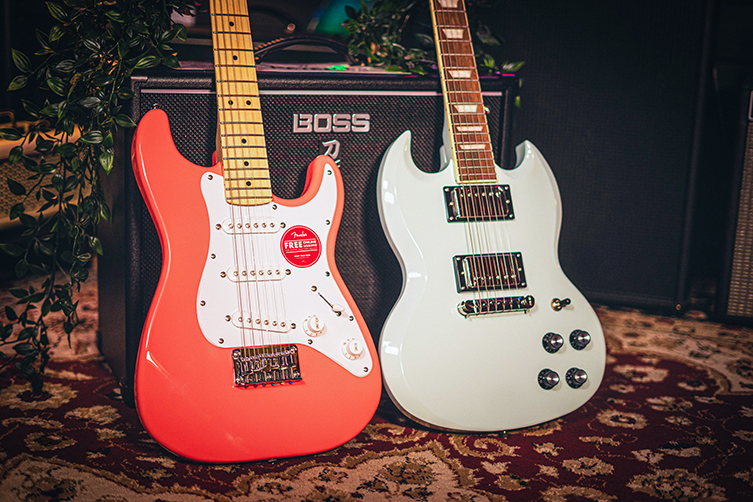
A ¾ guitar - also written as ‘three quarter guitar’ - is a guitar which is smaller than usual. The three-quarter part does not refer to the entire guitar, a common misconception. In fact, it means that the guitar’s fingerboard adheres to a scale length that is ¾ of the size of a regular, full-sized guitar.
I’ll explain what ‘scale length’ means in just a second, don’t worry! Whilst the ¾ reference doesn’t directly relate to the overall size of the guitar per se, it’s almost always true to say that ¾ guitars are smaller than normal guitars, it’s just not necessarily ¾ the size!
What Does ‘Scale Length’ Mean?
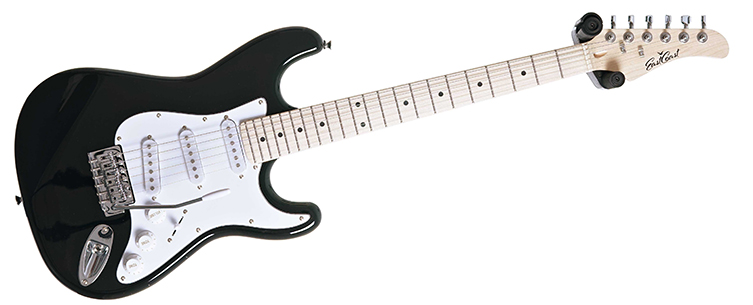
Scale length, when referring to guitars, is a measurement of the ‘playable distance’ there is on the strings. You can’t play the strings up past the neck where they wind around the tuners, and you can’t play them past the bridge either. The length that is available to strum and fret is the scale length and we measure that from the nut to the bridge.
What is a Normal Scale Length?
There is actually no such thing as a ‘normal’ scale length for guitars, but there are some very popular choices used throughout the industry.
- Short scale guitars: 24”
- ‘Gibson regular’: 24.75”
- ‘Fender regular’: 25.5”
Certain guitar styles use other measurements (PRS use 25”, and baritone guitars can use 28” scales and even more), but the vast majority of electric guitars (and most acoustics) use scale lengths between 24.75” and 25.5”.
What Does a ¾ Scale Guitar Sound Like?
A ¾ scale guitar sounds exactly the same as any other guitar! The shorter neck makes it easier and more comfortable for smaller people to play, that’s all, really. There is no difference in sound.
Are Three Quarter Scale Guitars Easier to Play?
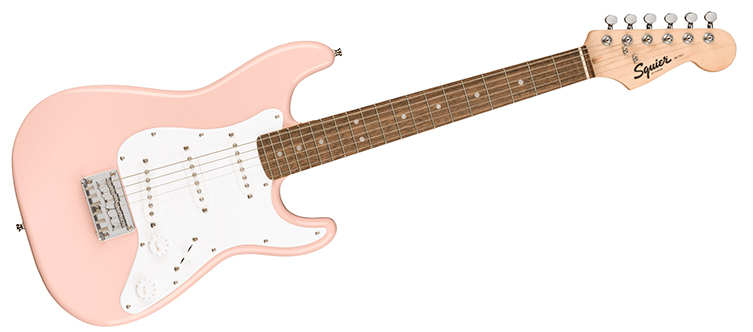
Generally speaking, ¾ guitars are easier to play than full-sized ones. This is because the slightly shorter neck means that there is less tension in the strings, and so less effort is required to hold them down. The frets will be a little closer together too, and that may prove easier for beginners, particularly younger or smaller people.
Are ¾ Guitars only for Young People and Beginners?
No, I’d say that ¾ sized guitars are for anybody who wants to use them! It’s true that they are generally marketed towards beginners and younger/smaller people, but there’s no reason at all why players of any age, size or experience level can’t enjoy using one.
In fact, three-quarter scale guitars make very handy ‘travel guitars’, because they are so portable. Their smaller size makes them easy to carry, easy to stash away on public transport or in a car boot without taking up too much room, and will allow you to have a guitar close by at all times. Essential!
It’s likely that most players will graduate to a regular sized guitar at some point, but as I say, there’s no automatic reason why you have to!
Try a ¾ Guitar Today!
If you think a three-quarter sized guitar might be the right choice for you, I’d encourage you to pay a visit to your nearest guitarguitar store and give one a go. There’s nothing like seeing (and feeling) for yourself, and you’ll also be able to compare with a 4/4 sized guitar too!
Remember: whatever feels right to you IS right. It’s not about other people; it’s about you and your own guitar journey. Have fun!
Click to View our Selection of ¾ Guitars