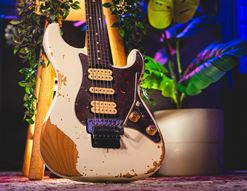
The Fender Stratocaster is the world’s favourite electric guitar. The Strat, as we all affectionately know it, is the most recognised, most used and most iconic guitar design of them all. Amazingly, in 2026, we are still playing the Strat in a form that has remained virtually unchanged since its debut in the 1950s. Imagine that was the case for cars?!
Today, I’ll guide you through a brief but hopefully informative history of Fender’s greatest creation, and I’ll bring some notable artists into the story as we go along, because what is a guitar’s history without the context? The Strat has made musical history, so some of that’ll be included here.
Okay you Strat fanatics and Fender aficionados, let’s learn the story of the Stratocaster!
In The Beginning - The 1950s
Fender’s story doesn’t begin with the Stratocaster. Indeed, it doesn’t even begin in the fifties! Leo Fender first set up shop in 1946 in Fullerton CA, fixing radios and building electrical gear. His guitar designs were created to solve practical problems and provide solutions for musicians, which is why his first mass-produced guitar - the Broadcaster - was so utilitarian and bereft of decoration. Leo and his design partners wanted an instrument that was easy to repair, with parts that were replaceable. It was something of a gamble, since musical instruments - particularly guitars - were very informed by classical instruments such as the cello, so their designs tended to be very boujee and traditional. Fender’s guitar design - a flat slab body with a bolted on neck - was not that!
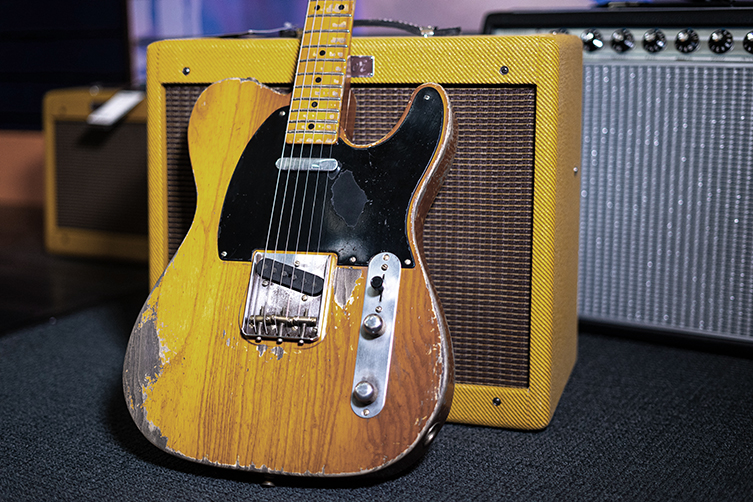
Their gamble paid off, of course. The Broadcaster - which quickly became known as the Telecaster after a legal telling-off from Gretsch - and the Precision Bass both became instant game-changers in the world of music. If the Telecaster was not the first ever electric guitar (there are numerous claims to that particular crown, including from Rickenbacker), it was the first mass-produced electric guitar to actually do business and establish itself.
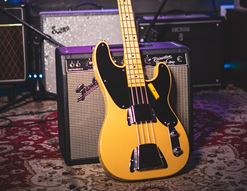
The same was true of the P-Bass, which built on the previous ideas of small-scale builders and refined them into an instrument that could be easily manufactured. Like the Tele, it’s a design that has lasted from 1950 (brought to market in 1951) until today, a monolithic icon in popular music.
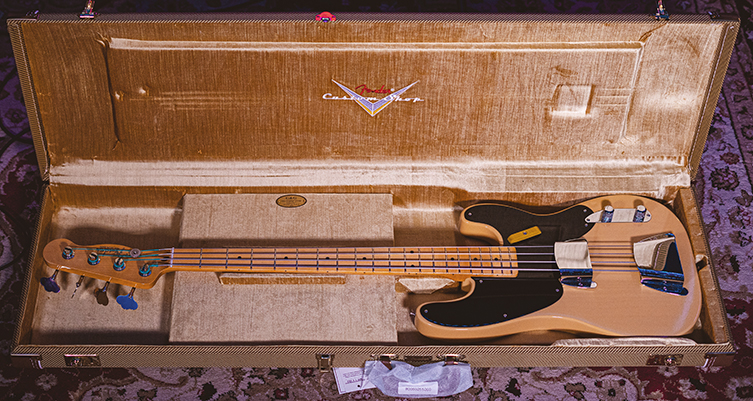
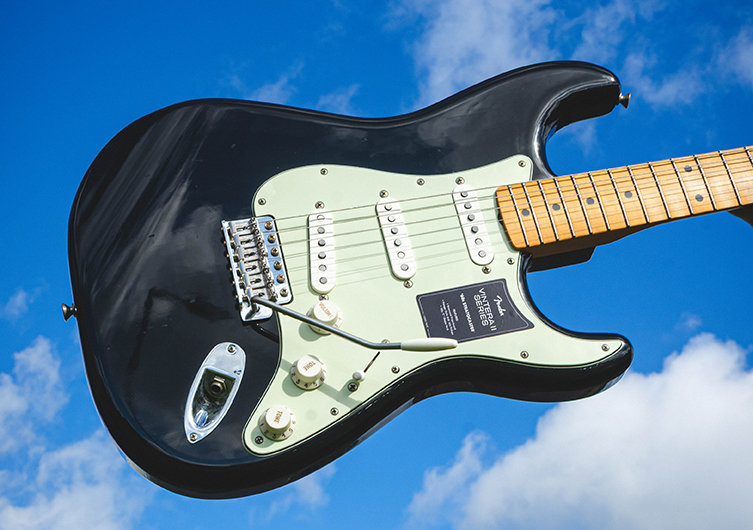
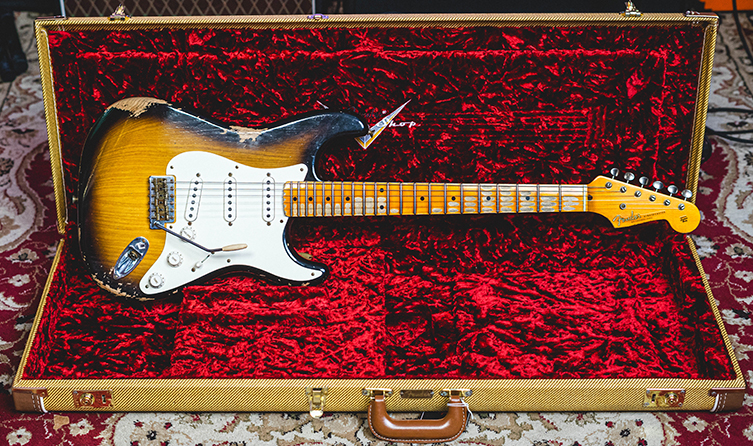
So it is with the Stratocaster. Today, you can walk into your nearest guitarguitar store and find several 1950s reissue Stratocasters - from Vintera models to Custom Shop Strats - which are almost exactly the same as those from the golden era of the fifties. There’s a lot more choice with options and variations today, but I’ll get to that.
The Stratocaster was released in 1954, four years after the Broadcaster/Telecaster. It was designed to be a more futuristic guitar than the Telecaster, with a sleeker, curvier shape that took inspiration from both surf culture and hot-rodded fifties Cadillacs. The Strat upped the ante on the Tele by featuring a third pickup and, significantly, the ‘synchronised tremolo’. This invention was famously wrongly titled: the device which we mostly call a whammy bar nowadays alters pitch - which would make it a ‘vibrato’ - and not tremolo, which refers to volume fluctuations. This decision has caused a lifetime of confusion amongst guitarists! At any rate, the tremolo gave the Strat extra individuality on the market, and contributed significantly to the guitar’s signature sound.
The Stratocaster was designed by Leo Fender, Bill Carson and George Fullerton. It was marketed as a superior upgrade to the Telecaster, with its contours and advanced circuitry, and released in a finish that we’d call Two-Tone Sunburst today. Early examples had an ash body and a maple neck with the fingerboard incorporated into it, rather than separate pieces of wood.
One question I’ve always wondered about was the name ‘Stratocaster’. Where did that actually come from? Step forward Don Randall, the Head of Sales at Fender and, yes, the creator of Randall amps later on in life (for all of you Dimebag Darrell fans!). Randall was the one who came up with the names for the Esquire (the single pickup version of the Telecaster, also released in 1950), the Precision Bass, Telecaster, Bassman, Twin Reverb and other Fender products. He was an ideas guy by the sounds of it, and knew the temperature of the times: the Telecaster referred to the recent introduction of television (as did its previous name) and so the Stratocaster name was intended to capture public excitement about the space race. Even before that notion officially began in 1955, the public consciousness was looking up beyond the clouds and into the stratosphere, with all of the post-WWII optimism of a planet looking for a brighter future.
The Stratocaster encapsulated those futuristic, space-age hopes and dreams. If it wasn’t immediately popular, it also wasn’t long before the Strat found its way into the arms of 50s rock stars (another new thing for the decade) like Buddy Holly:
Over on this side of the pond, home grown legends such as Cliff Richard and his backing band The Shadows were also making Stratocaster history. As the story goes, Cliff actually bought Hank Marvin the very first Strat to enter the UK! A custom order, Hank wanted Fiesta Red (or was it Flamingo Pink? Let’s not get started…). This colour wasn’t offered as standard by Fender until 1960, one year after Cliff put in his order for Hank, who also specified gold hardware. The fact that the colour was introduced to the range a year later tells you how popular Hank’s Strat was with the public! Everyone wanted his twangy, echo-laden sound, and the red Strat was the guitar for it.
The Stratocaster in the 1950s
- Released in 1954
- Available in Sunburst only (custom colours were painted on top of the Sunburst finish, using DuPont car spraypaint)
- 21 fret maple necks
- 3-way pickup selector switch
- Played by early guitar heroes such as Buddy Holly and Hank Marvin
Revolution and Expression - The 1960s
For many music fans, the 1960s is perhaps the most potent era for greatness, not to mention new ideas. That decade saw the emergence of rock music as a multi-faceted vehicle for expression, with joy, protest and rebellion all included in the job description. Post-war Britain had become affluent and aspirational, as had the US, but the Cold War and Vietnam war added drama that heightened the senses, in addition to drug culture and civil rights movements.
It was all happening in the 60s, and the soundtrack to it was full of Strats. By the mid-to-late sixties, the electric guitar was becoming a defining force in culture, and the Strat was beginning to shine through as the primary tool in that force. Bob Dylan famously ‘went electric’ in 1965 to heckles and accusations of being ‘Judas’. In 1969, the epoch-defining Woodstock festival in upstate New York marked the zenith of hippie culture and saw a certain James Marshall Hendrix evoke a full-on Vietnam protest via his howling, feedback-drenched Strat. A new language for the guitar was forged, and is still being developed today.
By the 60s, the Stratocaster itself had changed a little bit. 1959 saw the introduction of the Jazzmaster, an idiosyncratic new guitar designed to be a successor to the Strat. In fact, it proved divisive due to its complex switching systems, so the Strat remained most guitarists’ first choice. The Jazzmaster did have a little bit of influence on the Strat’s 60s appearance though. The obvious change was the rosewood fingerboard, which occurred in 1959 with the release of the Jazzmaster. Also, alder was being used on some bodies since 1956, but it was now made the norm.
The neck itself lost the soft ‘V’ profile in favour of a rounder ‘C’ shape, and was slightly slimmer all round. Crucially, the pickups were also wound to a generally hotter output, resulting in a warmer sound that was less ‘bell’ or ‘glass’ like. For the impending blues, rock and psychedelia that was coming, a hotter Strat sound was perfect. Finally, the pickguard changed from a single-ply style to a 3-ply style. Hardly an astronomical leap, but it's these subtle refinements that we all look for!
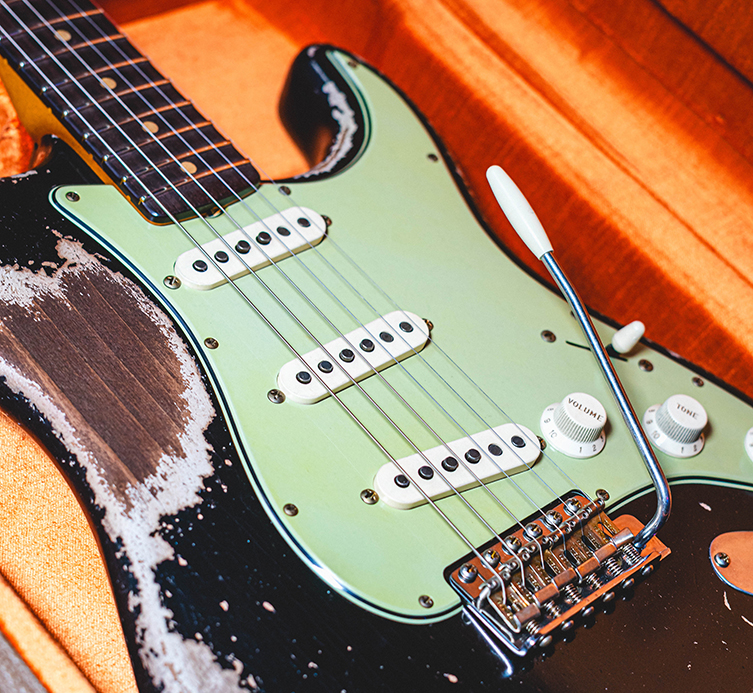
Interestingly, the pickup selector was still a 3-way blade. Guitarists were beginning to notice the in-between ‘quack’ sound achieved by balancing their selectors in between settings, but Fender didn’t get the memo and introduce a 5-way blade until 1977, believe it or not!
In 1965, Leo and his associates sold the Fender company to TV production empire CBS. We tend to think of ‘CBS-era’ Strats as a 1970s thing, but it’s not the case. More on that next!
The Stratocaster in the 1960s
- Alder body
- Hotter pickups (higher number of windings on each coil for a warmer sound)
- Rosewood fingerboard
- C-shape neck, slimmer in general than 50s Strat necks
- 3-ply pickguard
The CBS-Era 1970s
The 70s saw the biggest changes to the Stratocaster since its inception. CBS’ takeover in the mid-60s eventually meant that profits mattered above quality, and processes were put in place that ultimately brought quality levels lower than expected.
That said, some changes to the design and build of the Strat have since become more appreciated, and today you can buy 70s reissue Strats that feature things like a three screw neck join (with ‘Micro Tilt’ adjustment for doing away with neck shims), a ‘bullet’ truss rod (the end of the rod was shaped like a bullet and stuck out at the headstock) and so on. Some of these were welcome changes, some weren’t, but by the early 80s, most Fender Strats had dispensed with these features.
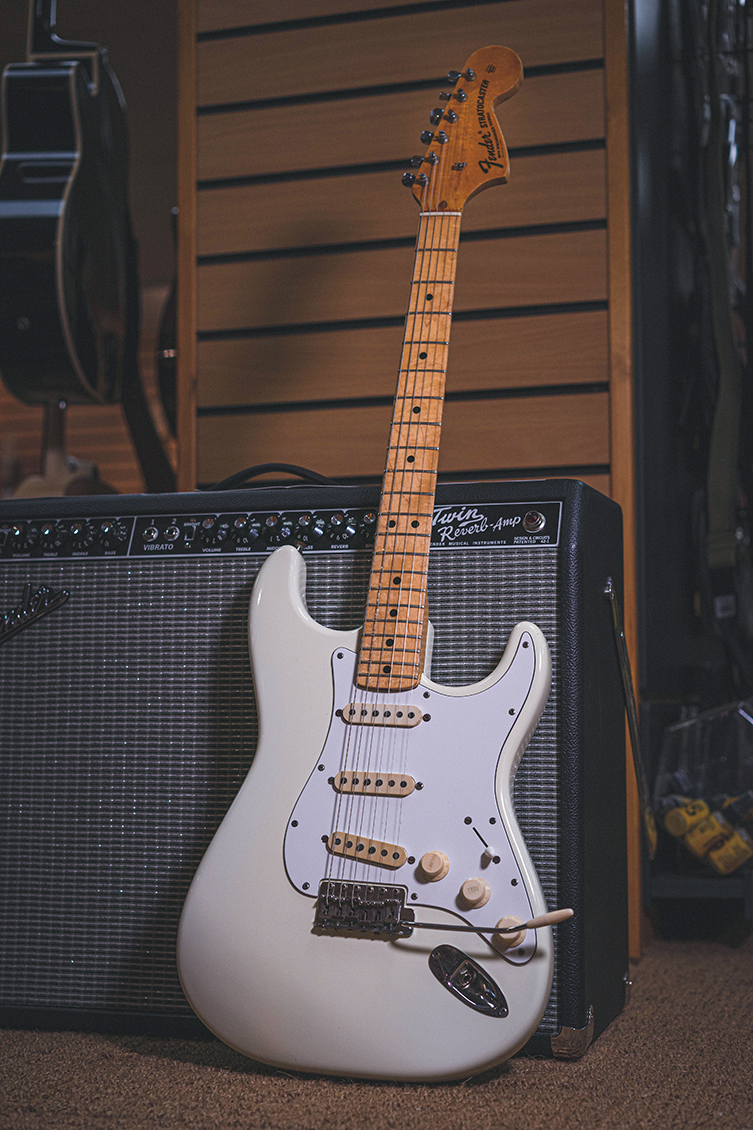
The Strat itself was flying high in the 1970s. Though Hendrix had sadly passed on and the era of Flower Power had receded, guitars were still dominant and hard rock ruled the airwaves. The age of the guitar hero was more potent than ever, and Strat-toting stars such as Rory Gallagher, David Gilmour, Uli Jon Roth and Ritchie Blackmore wielded their axes in innovative new ways. Indeed, for those who think that vintage radius Strats are not for shredding on, this gentleman would like to have a quiet word…
The Fender Stratocaster in the 1970s
- Multi-piece bodies (more than usual), disguised with thick paint
- Polyurethane finishes instead of traditional nitrocellulose
- Large headstock (in order to facilitate a larger logo, believe it or not!)
- ‘Bullet’ truss rod adjuster, as opposed to removing the neck altogether for adjustments
- 3-bolt neck join, often with ‘Micro-Tilt’ adjuster
- Heavier weight
Fender Find Themselves - 1980s
Fender’s CBS-owned period ended in 1985 when a group of Fender employees grouped together and bought the company back. Now called Fender Musical Instruments Corporation (FMIC, as it remains today), the company set about raising the quality of their product to the levels that the copycats - particularly those in Japan - had been building. In fact, the quality had increased as far back as 1982, when a model unofficially known as the ‘Smith Strat’ (spearheaded by Dan Smith, who came over from Yamaha) brought back traditional elements like a 4-bolt neck plate, the smaller headstock and the usual body-side truss rod.
1982 also saw the first ever vintage reissue Strats. Taking pains to recreate 1957 and 1962 era Strats, Fender at last showed that they understood what had once made them great. Collectors note: these are well worth hunting for: not only are they rare and valuable, they are exceptionally nice Strats!
When CBS sold Fender, they didn’t sell the Fullarton premises. This is how Leo Fender and George Fullerton were able to go there to create the late G&L brand guitars, and why Fender now build in Corona, California.
Back to the 80s, and for the Strat, the early post CBS era meant the inauguration of the American Standard Stratocaster, the company’s new flagship model. Bridging modernity with tradition, this Strat (designed by Smith and George Balanda) brought a flatter 9.5” fingerboard radius, an improved 2-point tremolo (instead of 6 points connecting with the body), and a better neck pocket for a great feel. This model was the foundation for all modern Stratocasters.
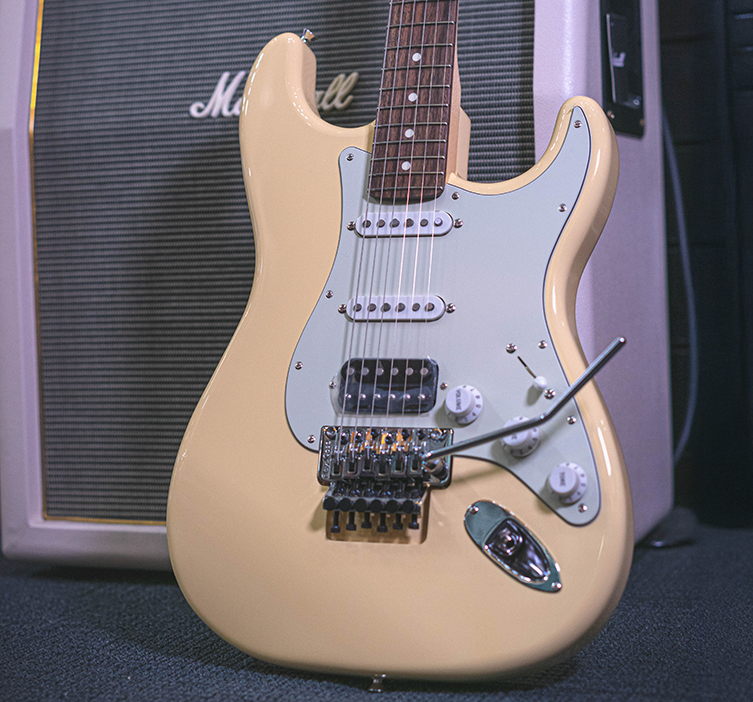
Artist-wise, lots of guitarists souped up their Strats with humbuckers and locking tremolos in order to capture some of that shred-tastic Van Halen/Vai/Satriani style. Strat style guitars were hotter than ever, but not in the traditional sense: these had to have jumbo frets, a flat radius and a locking Floyd Rose tremolo. Fender caught up eventually, but it was mostly brands like Charvel and Jackson who led the charge here, brands which - ironically enough - are now owned by Fender!
Still, people like Eric Clapton, Mark Knopfler, Yngwie Malmsteen and some chap called Stevie Ray Vaughan flew the flag for mostly traditional Stratocasters throughout the 80s.
Fender Custom Shop - 1987
1987 was a pretty good year for Fender! In addition to the American Standard Strat, they also created the Fender Custom Shop. You all know what that’s about, but the entire concept of building very specific, high quality instruments for artists and as vintage recreations was not a normal thing back then.
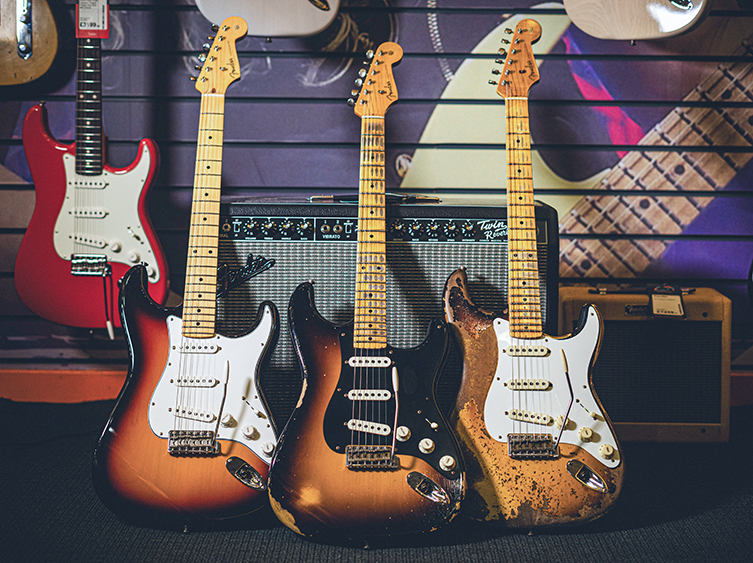
In fact, some artists like Yngwie Malmsteen and Eric Clapton were already having prototypes made for artist signature guitars, another first for Fender. Some articles will say that Clapton’s was first, but Yngwie told me himself that he had the first signature Strat! Read about that here in my Yngwie Malmsteen interview.
Anyway, the Custom Shop has gone from strength to strength ever since: a dreamland for Fender aficionados and all lovers of guitars. Their order books are generally filled years in advance, so do check out what we’ve ordered up in advance and now have in stock from the Fender Custom Shop.
Post-Comeback Years: Maintaining the Legend - 1990s and Onwards
The 1990s brought a lot of musical diversification, from Grunge and Britpop to post-hardcore and all kinds of electronic and urban genres. In terms of guitars, Kurt Cobain basically slew the gunslinging 80s shredders with one strum of his left-handed Stratocaster.
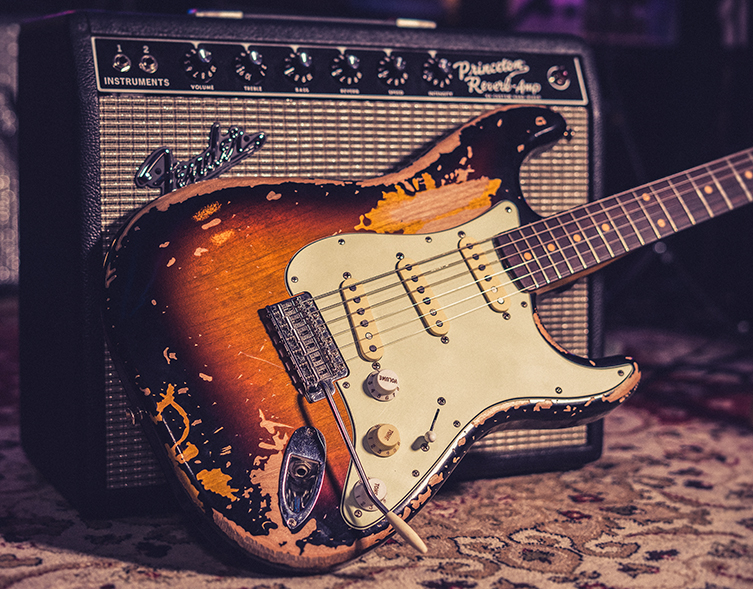
Pearl Jam’s Mike McCready swore by his battered 60s Strat, too, and Smashing Pumpkins’ Billy Corgan utilised a very defaced ‘57 reissue Strat (yes, those ones I mentioned a bit earlier) for his bands’ biggest albums. If alternative rock was about jaguars and Jazzmasters, then some of the biggest records still contained Strats!
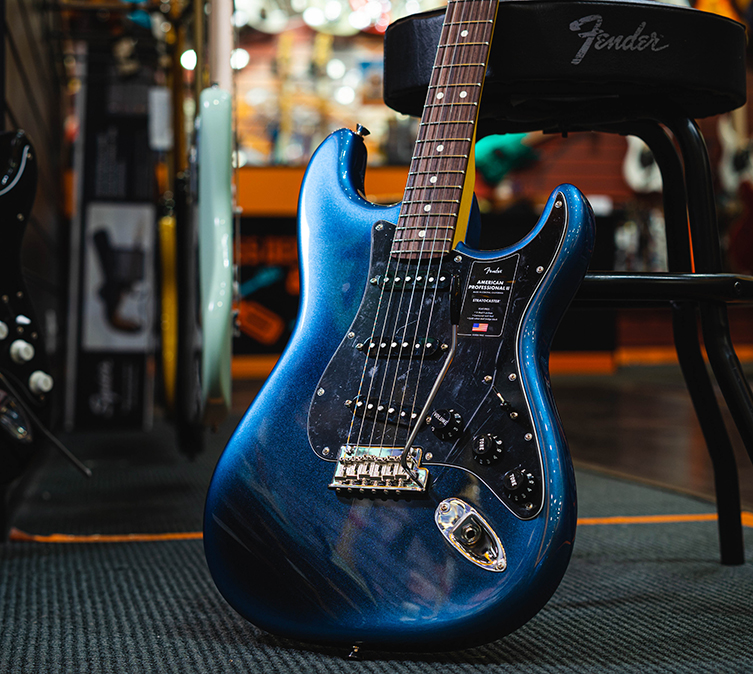
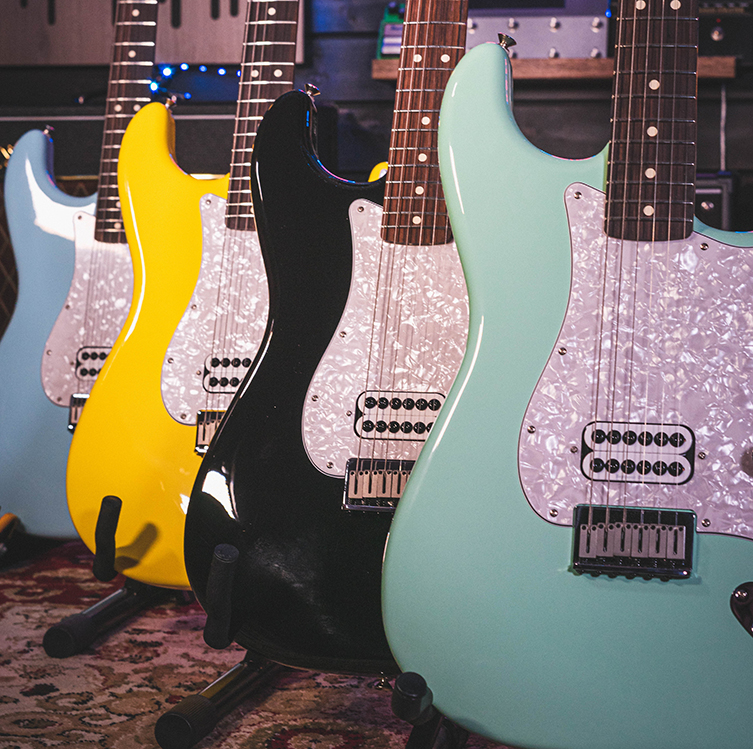
After the millennium, the Strat has continued to spiral into a whole kaleidoscope of ranges, options and variations. Traditionalists can have a Fender Vintera Strat or an American Ultra Luxe Vintage, whilst players who favour a twist of modernity can choose a Strat - with or without humbuckers - from several ranges like Player II Modified, Ultra and several limited edition ranges. And the best place to begin is undoubtedly with the Fender American Pro II Strat, which is today's flagship model and update of the previous American Standard model. Phew! Did you get all that?
The Strat has remained a popular instrument across the genres, too. Biffy Clyro’s Simon Neill is a huge fan; Tom DeLonge and Tash Sultana have even had signature models. People still love the old guard, so you can buy signature Strats for Jeff Beck, Clapton, Robert Cray, SRV and many more classic guitar heroes. There is no ‘house style’, since the Fender Stratocaster seems to appeal to most players.
The Eternal Strat
So, here in 2026, you can buy a new Strat that is as close to a fifties original as possible, and you can also buy one that incorporates 70 years of innovation and development. You can buy one for just under £500, or one that costs over ten times’ that amount. The best thing? That are all genuine Strats, and recognisably so. Any time-warped player from the 50s would see these and instantly make the connection.
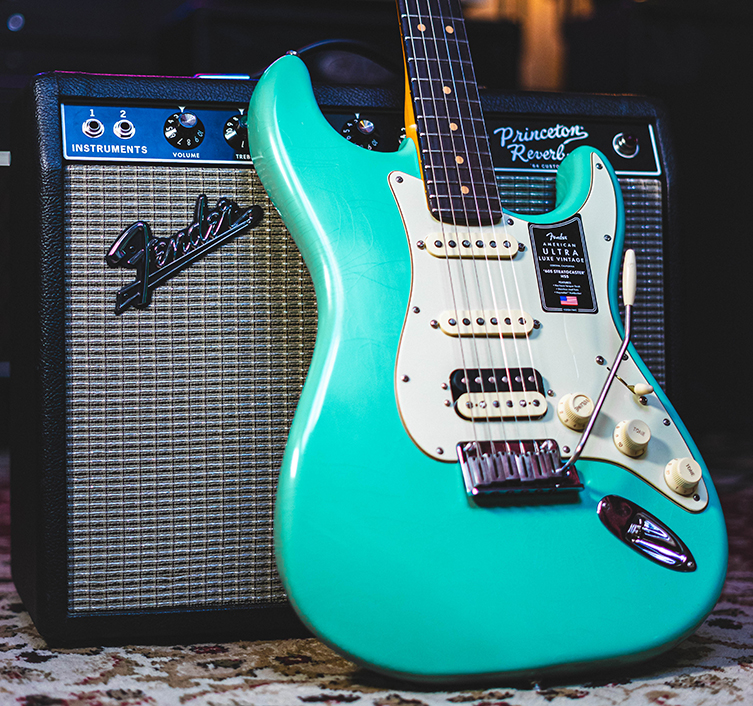
The Strat has developed, but only in the areas that were natural (truss rod access, pickup strength, neck pockets etc), and only for those who wanted those advances. For others, the original blueprint Strat from 1954 is as perfect as an electric guitar ever needs to be, and what’s great is that they can have exactly what they want. And so can you!
Please click below to browse all of the Strats we have in stock, and be sure to read my Fender Ranges Guide blog so that you’re well informed of all the available series. Enjoy finding your perfect Strat!
Click to Browse our Entire Selection of Fender Stratocasters