Do you have questions about the classical guitar? Are you wondering if it’s right for you? Well, you’re in the right place!
Today, I hope to answer the most often asked questions about classical guitars, in a simple and straightforward manner. As a guitarist of three decades’ experience - including plenty of time owning and using classical guitars - I feel I’m a dependable source on this subject. Check out the contents before to see if your questions are there, or simply read through the entire blog to get the full lowdown!
What is a Classical Guitar?
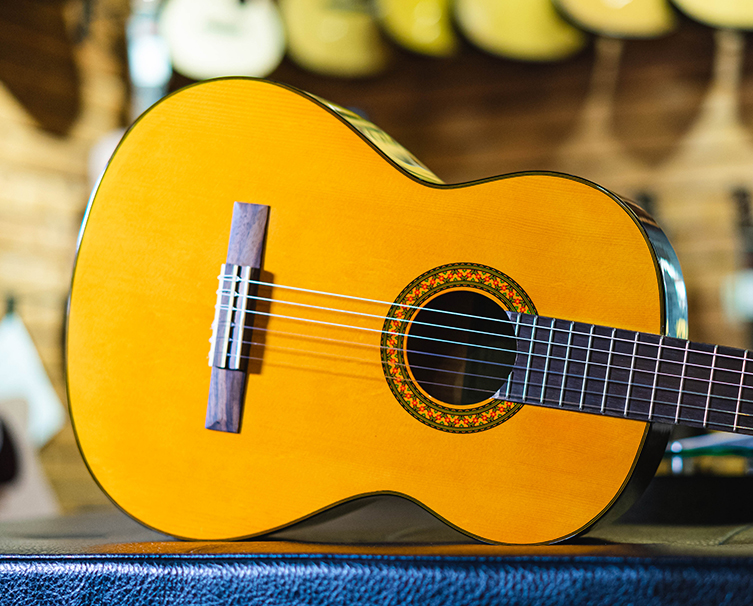
A Classical guitar is an acoustic guitar that is strung with nylon strings. It’s a traditional Spanish design from hundreds of years ago, and is the forebearer to the acoustic guitars we all know about today.
Nobody knows exactly how old the classical guitar is, because it developed gradually from other similar stringed instruments found across the Mediterranean.
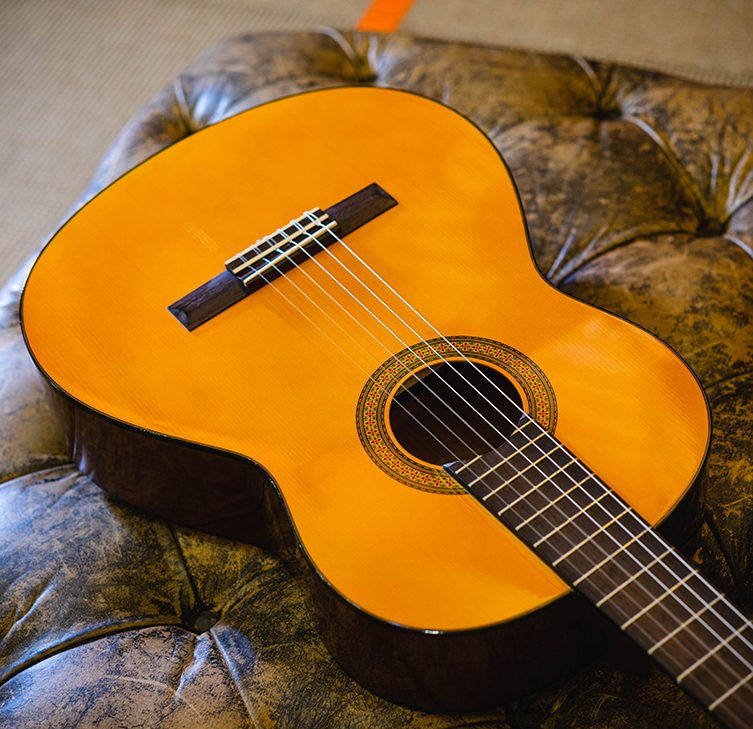
The classical guitar features a hollow body and 6 nylon strings. Classical guitars tend to look very traditional, and most often have a natural wood look without fancy colours.
Is a Classical Guitar Different to a Normal Acoustic Guitar?
A classical guitar is indeed different from a regular acoustic guitar. The main difference is the use of nylon strings instead of steel strings. This changes the sound and feel of a classical guitar: it has a softer sound and an easier feel on your fingers because nylon strings don’t exert much tension.
Classical guitars are built slightly differently too, although that isn’t obvious from a player’s perspective. What’s important to know is that classical guitars must have nylon strings: fitting a set of steel strings is guaranteed to break the guitar, since the neck is not strong enough to support the much higher tension.
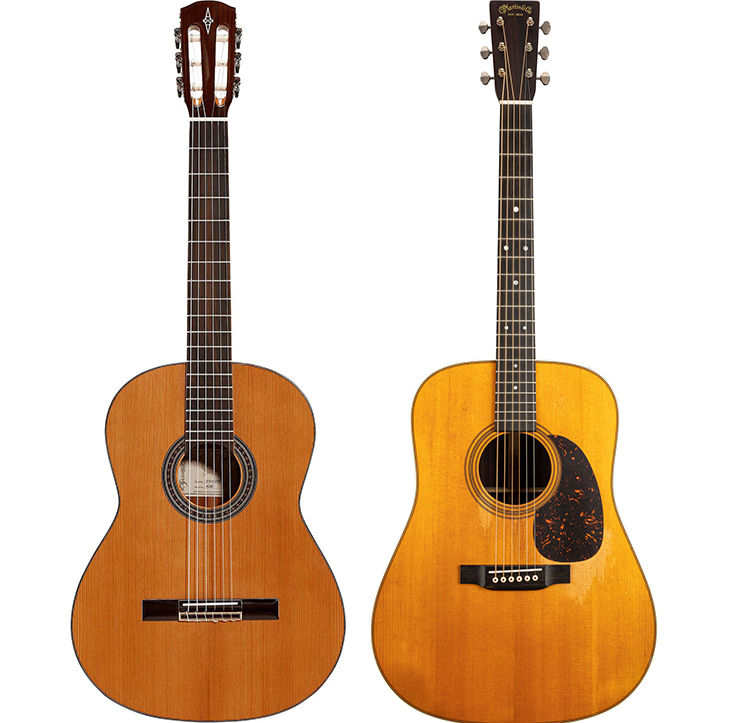
On the left is a classical guitar; and on the right is a typical steel string guitar (a Martin dreadnought)
What do Classical Guitars Sound LIke?
Classical guitars have a very distinctive and specific sound. It is noticeably different from a steel string acoustic guitar in that it is softer, rounder, warmer and has less sustain. There is a percussive quality to a classical guitar, but it is a different sort of percussion that you’ll get from a dreadnought or folk guitar.
Classical guitars are almost always played with fingers, so that influences the sound too.
Here is an example of the sound of a classical guitar, played by master guitarist Ana Vidovic...
Are Classical Guitars Easy to Play?
Are classical guitars easy to play? It’s difficult to be definitive here, since in some ways they are and in other ways they aren’t. For example, the strings themselves are much easier on your fingers: they are softer so they don’t dig into your fingertips so much. On the other hand, the necks themselves tend to be thicker than with other guitars, so they can be harder for your left hand to move around.
In simple terms, I’d say that once you are used to the neck shape, classical guitars are easy to play.
How Do I Play a Classical Guitar?
Traditionally speaking, a classical guitar is played using a fingerstyle playing technique. This means that you use the fingers of your right hand to pluck the strings. There are several different ways to approach this, but one of the most popular is the ‘pima’ method.
The ‘pima’ method uses the PIMA acronym for certain fingers, like this:
- P - pulgar finger (thumb)
- I - indice finger (index or pointing finger)
- M - medio finger (middle finger)
- A - anular finger (ring finger)
With the PIMA method, the thumb takes care of the three lowest sounding (thickest) strings, then the index, middle and ring fingers each take one of the three lighter strings. This is a technique worth practising, because not only is it great for classical guitar playing, it can also be used on all types of guitars with many musical styles.
What Music Can I Play on a Classical Guitar?
The short answer is this: you can play any style of music that you like on a classical guitar. It is tuned to the same notes as any other guitar, and you play it in the same way. Whatever you want to play, you’ll be able to play it on a classical guitar.
That said, there are certain styles of music that are particularly suited to the classical guitar. The obvious example is classical music, for which there is a whole repertoire for the guitar. On top of that, flamenco, calypso and other exotic styles work really well on a classical guitar. This is because classical guitars are found in every country on earth, and can be very inexpensive to buy. This means that lots of music is created with them.
Are Flamenco Guitars the Same as Classical Guitars?
Flamenco guitars are more of less the same as classical guitars, though there are often a few subtle differences. Flamenco guitars often have ever-so-slightly longer necks (we call this a longer scale length), they have slightly thinner tops (the wood on top is thinner to make the guitar louder) and the action - the height of the strings above the frets - is lower on flamenco guitars. The lower action allows the flamenco player to play with greater speed. The downside is a slightly ‘buzzy sound, but that is regarded as part of the sound of flamenco.
What’s important to know is that you can play either style on either type of guitar.
Can I Use a Plectrum With a Classical Guitar?
Yes, you can absolutely use a plectrum with a classical guitar. Why not? Whilst formal classical technique frowns upon it, there are plenty of musical styles from around the world that have guitarists playing classical guitars with plectrums/picks.
A great example of this would be the world famous Buena Vista Social Club album. There is a wealth of incredible ensemble playing to be enjoyed on this record, and guitarists Compay Segundo and Eliades Ocha are often seen playing their nylon string classical guitars with plectrums, in addition to using fingerstyle techniques.
Jazz fusion legend Al Di Meola is another player who does this, and he is an exceptional player. Another is the amazing Todd Kreuzberg.
That’s just three examples. It’s certainly not the commonly done thing, but there is no reason why you can’t use a plectrum with a classical guitar.
Can I Put Steel Strings on a Classical Guitar?
This is something you cannot do. Let me make this really clear and plain to understand: putting steel strings on a classical guitar will destroy the instrument. Use nylon strings only! When we talk about nylon strings, the three heaviest strings will have metal wraps around the nylon cores, but they are still considered to be nylon strings. Steel strings - the type you’d fit on a dreadnought or a jumbo, for example - are absolutely not to be fitted to a classical guitar.
Why? Inside many guitar necks are long metal rods called truss rods. Truss rods serve a few purposes, one of the main ones being a source of extra strength to counteract the pull of tension from the steel strings as they tighten and tune. Without a truss rod, acoustic and electric guitar necks would snap. Classical guitars almost never have truss rods. There isn’t enough tension in the nylon strings to require one, and so to put steel strings onto a classical guitar is a really, really bad idea.
What is a Good Beginner’s Classical Guitar?
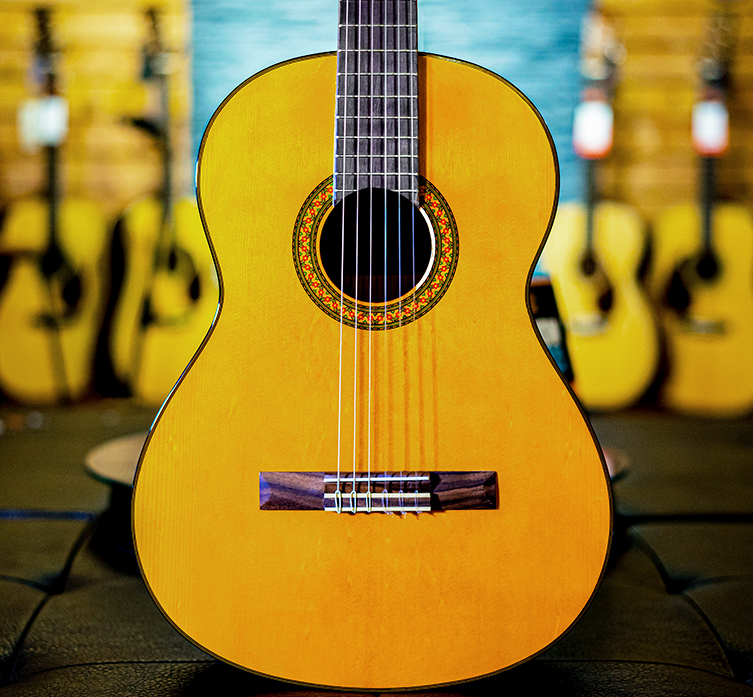
Nowadays, you can buy a good beginner classical guitar for a relatively low amount of money. There isn’t anything in particular to look out for when you’re starting, apart from getting the size right. Full size, half-size and three-quarter sized classical guitars are all available today, so maybe try even holding a couple in your lap and hopefully the right size will reveal itself to you.
As for brands and such, I can say that you will always be in good hands with Yamaha. The C40 model is a bit of a classic for beginners, so I’d have that on my shortlist if I were you. Super-affordable instruments from brands like Valencia, EastCoast and Cort are also well worth beginning on, and then upgrading to something nicer like an Alvarez when your skills improve.
Good luck with your classical guitar journey! Don’t forget, our staff are always here to help with guidance and advice, so give us a holler if you need us!