Where would we all be without the Fender Telecaster? It’s the first mass-produced electric guitar, and still one of the most popular. To some, there’s no point even looking at any other guitar styles, since the Tele nails so many of them. It’s a singular thing, an iconic invention, and a triumph of practical, common sense.
But what’s the story? Where did it come from, and how did it get to being so universally loved? Why do people still clamour after them, 75 years after their introduction?
That’s what I’ll be looking at answering today as we embark on our little trip down Tele-memory lane. You’re coming with me, right? Good. Now, sit tight, because you and I are heading nearly 80 years into the misty past…
The 1940s
The story of the Fender Telecaster is, in many ways, lots of stories. It’s the story of Leo Fender, the story of rock n roll and the story of the 20th and 21st centuries. To understand the significance of the Telecaster, we need to trace its path through the decades, but we also need to pay attention to those decades themselves, at least to some degree, otherwise the story isn’t a story at all, but a list of dates.
And who wants to read that?
So, our tale begins in a post World War II California, in the late 1940s. The war has changed the world and everybody in it, but there is at least now a new optimism for what might lie ahead. Cars are getting longer, surf boards more colourful and music louder. Music that is pushing ahead, desperate to break free from the Big Band sounds of the 30s and 40s. Something is on the horizon, but it needs a push.
Leo Fender’s just the man to give it that push. Leo Fender, the man who is so important to guitar culture, isn’t even a musician. He fixes radios and other electronics out of his workshop in Fullerton, California. As the 1920s progress into the 30s and 40s, there’s an increasing demand from guitarists to get something better than the little contact mics and soundhole pickups that they’ve been fitting to their hollow archtop guitars and then sticking through PA speakers. The results are inconsistent and sonically below par. Somebody is required to problem-solve this one.
In fact, many already had by that point, including one Lester Polfuss, whose ‘log’ prototype was turned down by Gibson, Epiphone and numerous other brands. But even he wasn’t the first. Rickenbacker’s many attempts - including the famous Frying Pan - dated back to the early 1930s, and even Gibson had created hollowbody models with ‘Charlie Christian’ pickups attached, but these were all essentially modifications and reworkings.
The world was ready for a new type of guitar.
The Snakehead
Leo Fender and business partner Clayton Kauffman developed their electric guitar design in 1943, believe it or not. It was a pretty crude piece of functional wood and wire, tested out by country players and deemed to be bright sounding. They came back and asked to borrow it for gigs, noticing for the first time what a difference the biting tone and sustain made to their music.
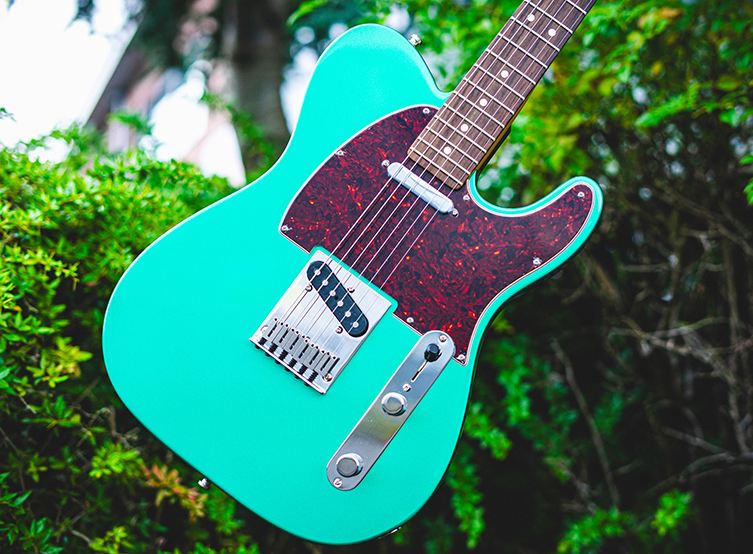
This brought Fender into building lap steel guitars for the Hawaiian music craze of the 40s, elements of which would follow on to his next project in 1949. Yes, a solid body guitar! Solid body guitars had never caught on particularly in the past, and so it was a gamble to have another stab at it. Fender’s priority for fixability and adjustability (home-fixing was a big motivator) guided his technical drawing pencils, and the result was a guitar we now refer to as the Snakehead. It’s pretty much the blonde Tele we know today, apart from a three-a-side headstock that some thought resembled a snake.
This prototype was never officially released, but the later refinement - or, I should say, refinements - did make it to market the following year, and they made history.
1950 - The Broadcaster and the Esquire
Here’s where the timeline really begins for the Telecaster. The single pickup Fender Esquire was introduced to the market in 1950. Research suggests there were actually less than 50 of these built and sold, and since there was no truss rod in the neck, many of those were returned and replaced due to bent necks.
The Fender Broadcaster was introduced later in the year, looking just as we’d see it today and sporting that all important second pickup. It also had a truss rod built into its neck to enhance strength and stability, something that all subsequent Fender models had.
Fender sales rep Don Randall coined the term ‘Broadcaster’ since televisions were the huge cultural entity sweeping through American households. It was a zeitgeist guitar for a zeitgeist moment. It was the world’s first mass-produced solid body electric guitar.
1951 - The Telecaster
Not everybody was happy about it, though. Gretsch already had a product available (a drum kit, in fact) called the Broadkaster and threatened legal action. In response, the builders at the Fender factory simply cut out the word ‘Broadcaster’ from the headstock decal and fitted them saying ‘Fender’ only. These are the rare guitars we today refer to as Nocasters.
1951 saw the return of the single pickup Esquire model, and later in the year, the Broadcaster was renamed Telecaster, a play on the original idea, and again thought of by Don Randall.
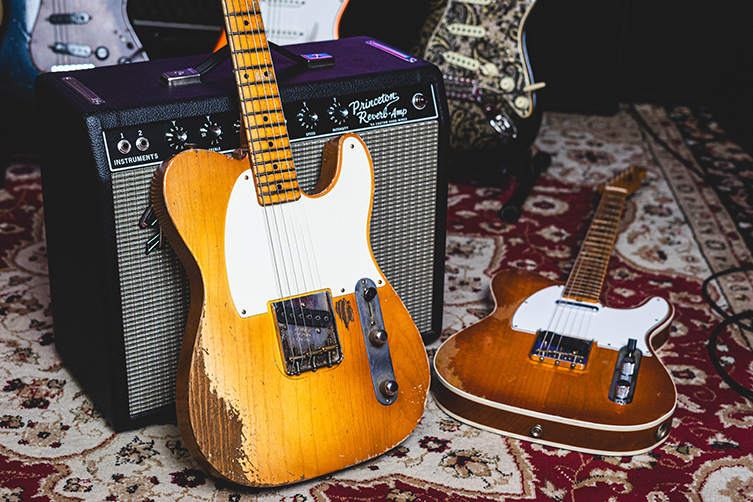
These early Teles were made with ash bodies (pine was used on prototypes and on a small number of production guitars, it seems) and maple necks. You could have any colour you liked as long as it was blonde, and it came with a single ply black bakelite pickguard. Such guitars are well known as ‘Blackguard’ models, and the style has continued ever since. Indeed, Butterscotch Blonde remains the most popular finish by quite a margin.
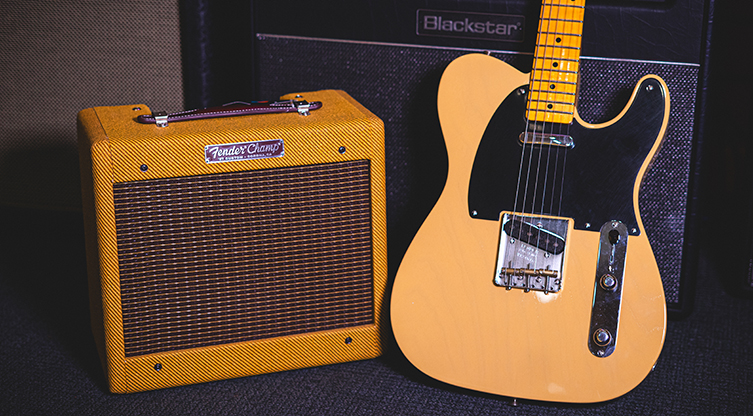
So, the Telecaster is the world’s first commercially successful solid body electric guitar. How come? What did Leo Fender do differently? Well, the way I see it, he did lots of things differently, and every change was aimed at making life easy on the user, as well as keeping production costs to a minimum. Here’s a rundown of some details that I believe are significant:
- The parts were made from simple slabs of wood, sawn and routed quickly. No luthiery required: no contours to shape, so very quick and easy to make.
- The bolt-on neck (not actually bolts of course, but screws) was crude and simple, but very effective and very fixable/replaceable.
- Circuitry was very simple, with easy access to repair (no f-holes to work through!).
- Narrow headstock design meant straight string pull, and allowed the entire neck to be made with one piece of maple (including the fingerboard).
- Parts are ‘modular’ in the sense that they are easily replaceable.
- Everything is adjustable, from the neck to the bridge to the saddles and pickups. The player can make the guitar perfect for them.
- The bright, sustaining tone was a byproduct of the build, not necessarily the goal.
Rock 'n' Roll
The Telecaster slightly pre-dated rock 'n' roll music, and was actually used by country and swing artists initially. By the time rock ‘n’ roll landed in the world, though, the Tele was there front and centre. Dale Hawkins’ hit Suzie Q was a sensation, and featured a certain James Burton on his Tele…
Teles could be seen on tour with artists like Little Richard (Ray Montrell was the guitarist) and Gene Vincent, whose sideman Russell Willaford brandished his own fifties Tele.
Fifties Teles
So, a few things you might want to know about the fifties Telecaster before we move ahead…
From launch in 1950 (as the Broadcaster) until some point in 1952, the guitar had what’s known as a ‘dark circuit’. Some people also refer to this as the ‘mudcaster’ sound, which is a little less charitable! Anyway, this all refers to the sound of the neck pickup, which was made to sound deliberately dull and bassy in order to mimic the sound of the Precision Bass. The P-Bass had just been released too, and was not something that all bands instantly had. The neck pickup position on the Tele had a preset treble roll-off to approximate a more bassy tone, so that two guitarists could each have a Tele and perform guitar and quasi-bass duties.
The ‘Blackguard’ tele (butterscotch blonde with a black pickguard) was the exclusive finish option until 1955, when other colour choices were added to the catalogue. Fender had released the Stratocaster in 1954, fully expecting it to replace the Tele, but the Telecaster remained popular. Presumably, this popularity earned it some new colours as a refresh after the Strat was launched.
The Tele in the 50s had a larger neck profile, a 7.25” fingerboard radius and an ash body. We think of this now as the timeless blueprint to the Telecaster, but changes occurred as early as the next decade…
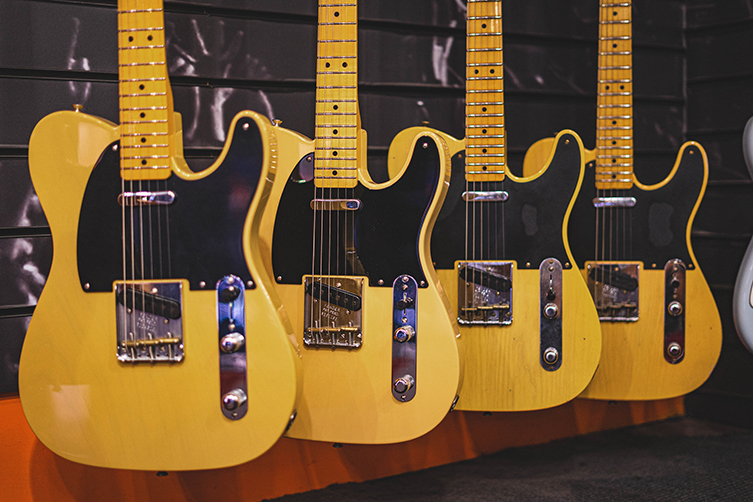
Modern Takes on the 50s Telecaster
1960s Telecasters
Nowadays, when we talk about 60s Teles, it’s often informed by Fender’s own reissues. We see the rosewood fingerboards and different finishes and presume that that’s what happened in the 60s.
To a point, that’s correct, of course! But these things were more gradual. One of my favourite Teles - the Sunburst Tele Custom, with the double-binding on the body - was actually released in 1959, for example!
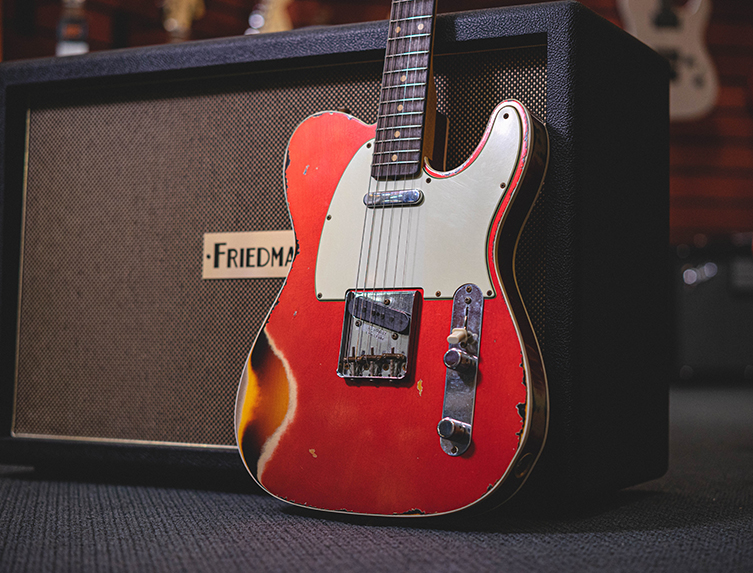
In the 60s, Fender made changes to the Telecaster that were in step with the Stratocaster’s 60s iteration. Here’s a brief rundown of the main differences…
- Mostly alder bodies now, instead of ash (which was still occasionally used)
- Neck profile slimmer and more C-shaped, fingerboard radius remained 7.25”
- Slightly hotter pickups due to more winds of copper wire around the alnico V magnets
- More colour options as standard instead of special builds.
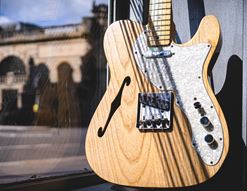
So, in general, 60s Teles had a slightly higher output and a warmer, punchier tone thanks to the pickups and body wood. In addition, the late 60s saw the introduction of the first Thinline Telecaster, a semi hollow body model which featured an f-hole and new pickguard design.
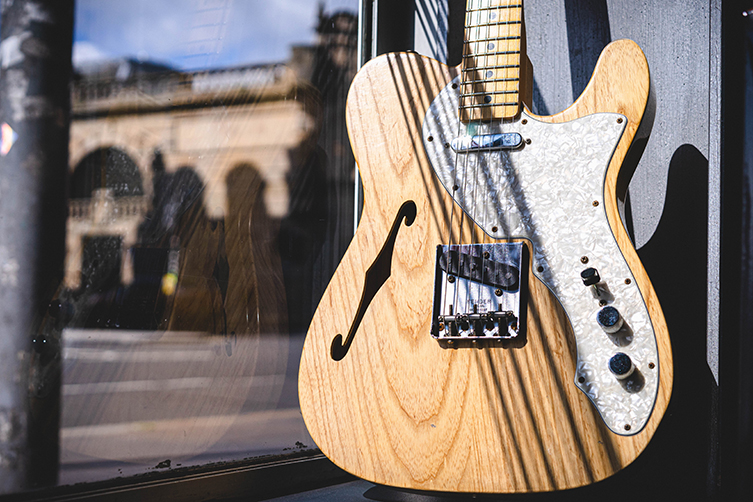
Modern Reissues of 60s Telecasters
Rock Music & More
The 60s were of course the pre-eminent time for rock music. From psychedelia to the British invasion, guitars were front and centre within mainstream culture, which itself was changing at a rapid pace. In London alone, you could see Pink Floyd’s Syd Barrett with his mirror-encrusted Telecaster, then the Yardbirds with Jeff Beck and his, which he gave to fellow session guitarist Jimmy Page, who also added mirrors to his Tele before using it to make history with Led Zeppelin.
If the Stratocaster was making a name for itself as the wild sounding lead guitar, then its sibling the Tele was the choice of the rhythm player or ensemble guitarist. George Harrison was onto the Tele vibe by 1965, Keith Richards began his lifelong connection to them in the 60s, and Bob Dylan ditched his Strat in favour of a Tele, perhaps due to the influence of his bandmate Robbie Robertson, who went on to form The Band.
1970s
During the mid 60s, Leo Fender and his associates sold the Fender guitar company to CBS, the television production company. Though we tend to think of the ‘CBS era’ as being the 70s, that’s just what most of the changes were noticed! Leo was out of the Fender picture half way through the 60s.
So, what happened to the Telecaster in the 70s? Plenty! Just like the Stratocaster, CBS’ cost-cutting measures combined with some interesting and worthwhile ideas. The best thing was possibly the introduction of the Wide Range humbucker, designed by Seth Lover (who invented the PAF humbucker for Gibson), which gave the Tele a thicker, tougher sound.
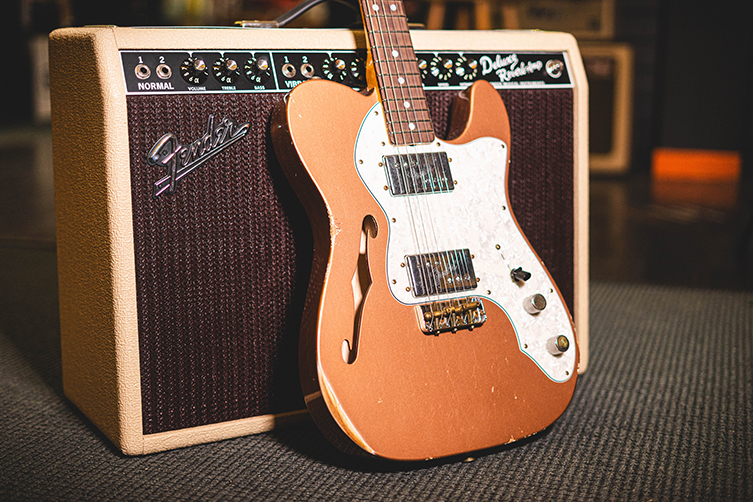
Wide Range humbuckers have an entirely different design than standard humbuckers (magnets threaded with copper wire and acting as polepieces, rather than copper wound around a bar magnet), and are clearer and sharper than a typical humbucker. So, more like a beefed up Tele than anything else. This has become a highly sought-after pickup!
As well as this, 70s Teles saw other changes. I’ll round them up here:
- Cheaper, heavier wood for the bodies
- ‘Bullet’ truss rod adjustor at headstock
- Block logo, easier seen from a distance
- Polyurethane finish, which is hardier but limits resonance.
- 3-bolt neck join, often with ‘Microtilt’ adjustment in place.
- Wide Range humbuckers on some models
- Introduction of Gibson-inspired models, the Custom and Deluxe.
Telecaster Custom and Telecaster Deluxe
In addition to the above changes, three new models arrived in the 70s. The Telecaster Custom - which we say earlier in the 60s with double binding - now became a vastly different guitar. It had Les Paul-style switching and control knobs, plus a bridge single coil and neck Wide Range pickup. Keith Richards spent a lot of the 70s with one of these! It was released in 1972, alongside the Telecaster Deluxe. This one moved even farther away from the blueprint, with two Wide Range humbuckers and a large Strat-style headstock.
Relatively popular at the time, these two guitars found themselves massively back in style again around 20 years ago, and have stayed a popular choice since. Another update was the 1972 Thinline Telecaster, similar to its 60s counterpart but with a pair of Wide Range humbuckers, a slightly different pickguard and those other changes from the box above. This guitar has been a popular choice ever since, and is reissued often.
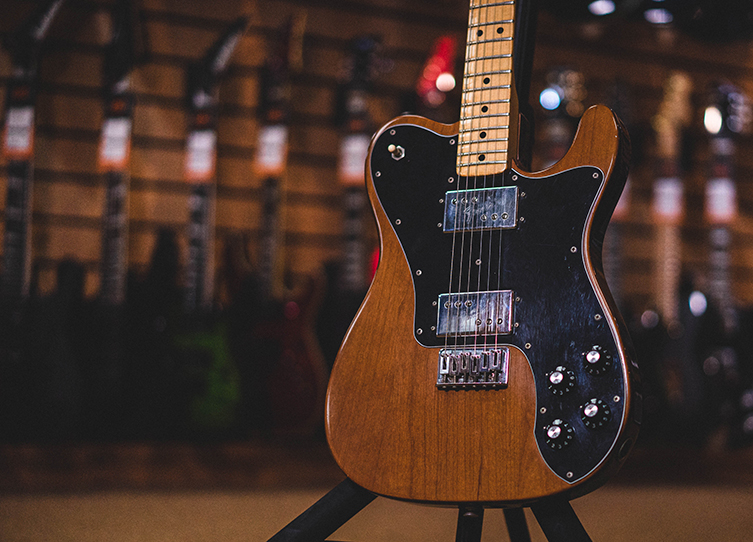
Modern Versions of 70s Telecasters
The 80s, Dan Smith and FMIC
You may already know that Fender’s employees put together a consortium and bought the company back from CBS? This was in 1985, 20 years after CBS bought the company from Leo and Co. During that time, quality control had dropped, and overseas copycat companies were arguably making better Fenders than Fender. Once control had returned to people who cared about the brand, things improved dramatically.
Actually, check that and go back a couple of years. It’s worth talking about Dan Smith, who was brought onboard to redesign the Fender line with less budget and less options. Somehow, he managed to ace it and produce a line of Fenders in 1982 that were excellent, and often forgotten.
Here’s an example for you. Telecaster lovers, how many of you like Jeff Buckley? More than a few? Well, the blonde Tele that he famously used for most of his career was one such model. Made in 1983, his showed off Dan Smith’s special specs, which were intended to appeal to a harder-rocking crowd than usual Tele players. It had a wider than normal neck (over 43mm at the nut), a 12” radius fingerboard and a slim C-shaped neck profile. The body had slightly rounded edges, and the bridge was a ‘top loader’, so the strings never went through the body.
Buckley’s guitar then had further mods - a Carvin-made chrome (not mirrored) pickguard and a Seymour Duncan Hot Stack bridge pickup - but those stock specs tell you plenty. It was a different era and a different type of Telecaster.
Once Fender were rolling again as FMIC, reissues began to be made (this was when the ‘52 Tele’ became a thing), Artist guitars began to happen (James Burton was an early and appropriate Tele signature artist) and the company basically got its mojo back.
The 80s saw the introduction of the Fender Custom Shop, a department within the Californian factory which is now almost as famous as Fender itself. Great care and attention is paid to the instruments from the Custom Shop, and of course this is where ‘relic’ guitars started. Was it really Keith Richards (him again) who unwittingly invented the concept by ordering some touring Teles and then requested them to be bashed up? It’s one story, let me put it that way!
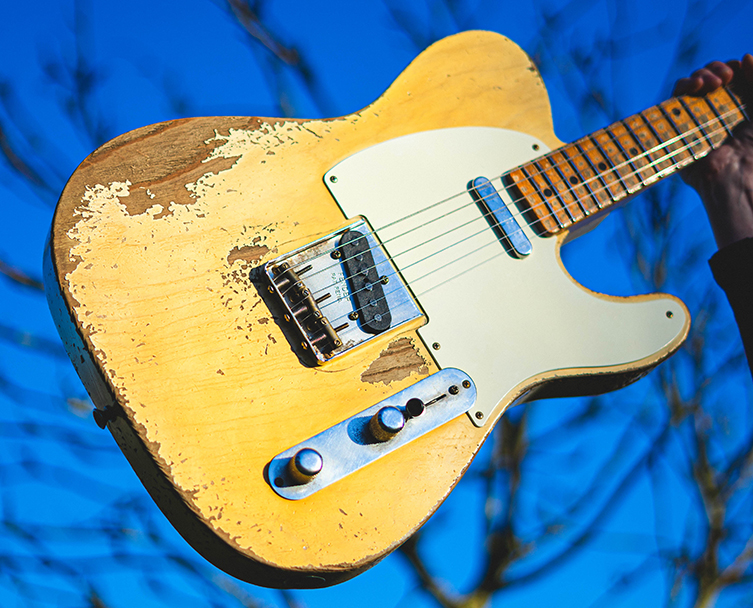
Modern Era Telecasters
Today’s market is broad and rich when it comes to Fender Telecasters. You can currently buy over 20 different versions of a new Tele from Fender. You can have it as retro as possible (as we’ve already seen) or you can opt for an Ultra Luxe Tele, which adds heaps of modern touches to the classic blueprint.
You can have USA-made guitars, Mexican-made guitars and now Indonesian models. You can have Squier Teles that are arguably better than some historical instruments that they’re tributes to. You can mod your Tele more than ever, too, so if you really want a Jonny Greenwood-style Tele Plus (a 90s model which is as rare now as the proverbial hen’s teeth), then it’s not difficult to obtain the parts and retrofit to your heart’s content.
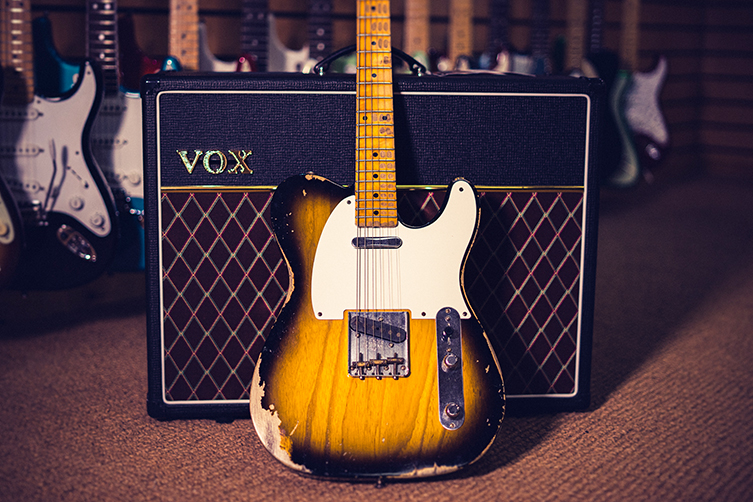
You can have a Fender Custom Shop Tele that is a perfect analogue to its 50 origins except it has jumbo frets or some other element changed for playability. The sky is very much the limit, and you’ll get a Tele for pretty much all wallets.
The good news? They all get pretty close to that ephemeral idea of what a Telecaster even is, which will be different for us all, hence the choice.
The bad news? Yeah, there is a ton of choice, to the point where you might get lost. If I may recommend a course of action, I’d say: start with the American Pro II Telecaster, because it’s the company’s flagship guitar, and it’s frankly excellent. Read my Fender Electric Guitars: The Ranges Explained guide and let that help navigate you through today’s Fender output.
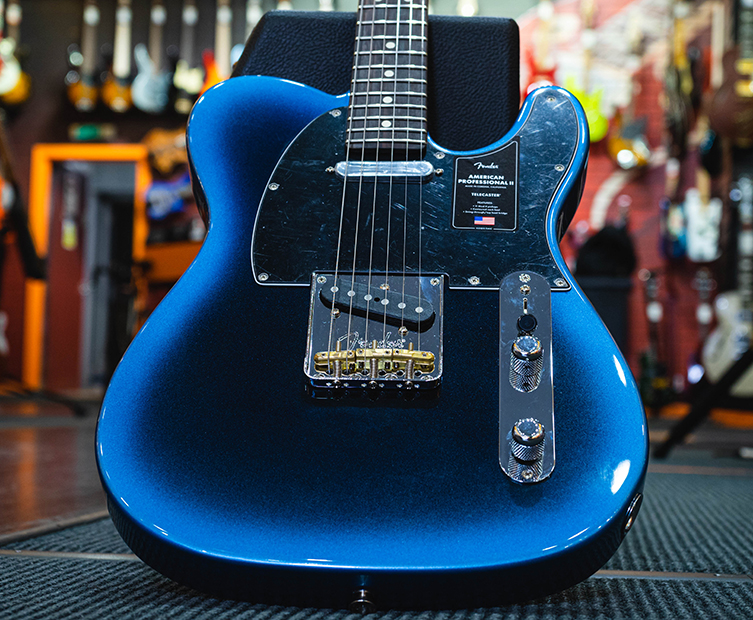
Contemporary Teles
The True Icon
The Fender Telecaster is an iconic instrument. Its sibling may be the most popular electric of all time, but if I had to choose between them, it’s the Tele for me every time. Why? Well, I feel that its utilitarian design doesn’t impose any ideas on me: I’m left to simply play my ideas. It’s a distinctive sounding guitar, but less-so than the Strat. It’s tougher, but not as tough sounding as a Les Paul. It has everything an electric guitar needs, with a tactility that I’ve never been able to find on another guitar. It’s a guitar that encourages you to explore, but it doesn’t dictate the nature of that exploration.
In a word, it’s the greatest guitar ever made. 75 years young, and I get the feeling that the Fender Telecaster is only getting started.
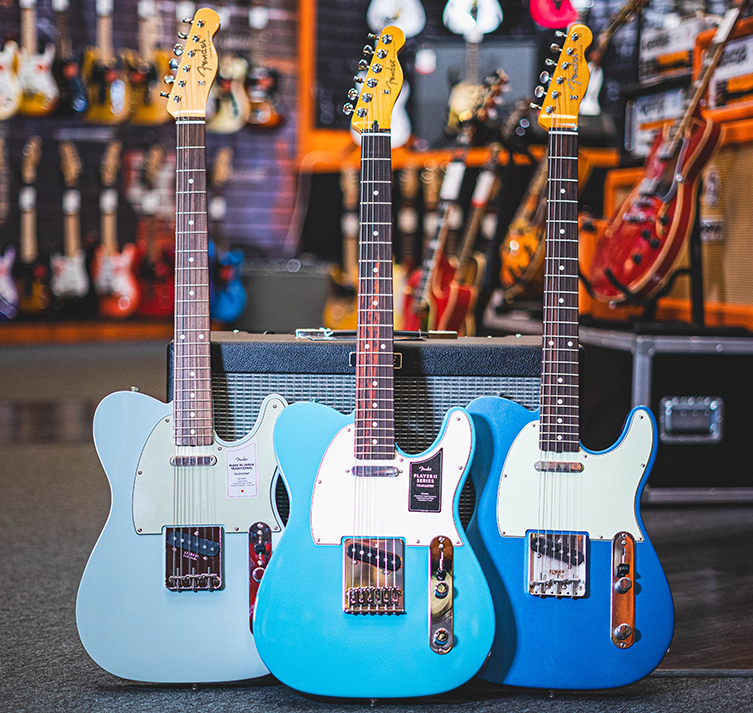
Click to View our Fender Telecasters