Do you play a lot of blues music on your acoustic guitar? In many ways it’s the perfect instrument for the style. Acoustic guitar was one of the first instruments used to develop blues music, after purely vocal songs of course.
We talk a lot about acoustic guitars at guitarguitar, but not often about acoustic blues, so that’s what today is all about! I’ll check out some of the more blues-appropriate guitars, the tunings used, and some pioneering acoustic blues artists. Think of this as a general introduction to the subject, and an overview from which you can continue your blues journey!
What is Acoustic Blues?
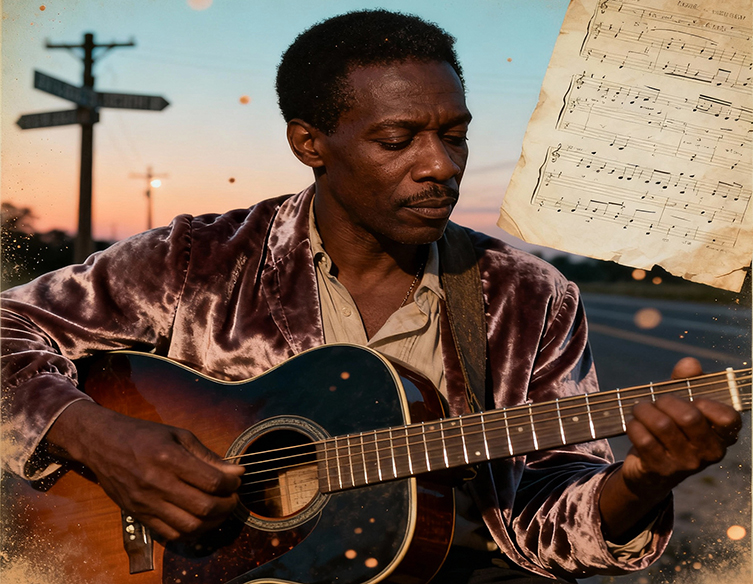
In simple terms, acoustic blues is simply blues genre music where the primary accompaniment is the acoustic guitar. Going back a century or so, there was of course no such thing as an electric guitar. After blues music began from workers singing in fields, it advanced into bars and homes, where the singers either played guitar themselves or were accompanied by a guitarist.
Acoustic Blues does tend to stick to the blueprint of 12 bar blues music, because this is where that form originated!
Acoustic Blues Guitar Playing
As I mentioned, most acoustic blues guitar playing centres around the traditional 12-bar blues routine. Every artist and performer has their own spin on it: their own licks, their own turnarounds and their own identifying markers. This is what makes blues music so universal: it has a simple and reliable formula, but you put yourself into it and make it yours.
Acoustic blues music can be strummed, but it’s most often fingerpicked. This is to allow basslines and lead melodies to be picked out simultaneously, something that electric blues styles don’t really have to consider doing.
Acoustic Blues Guitar Tuning and Slide Playing
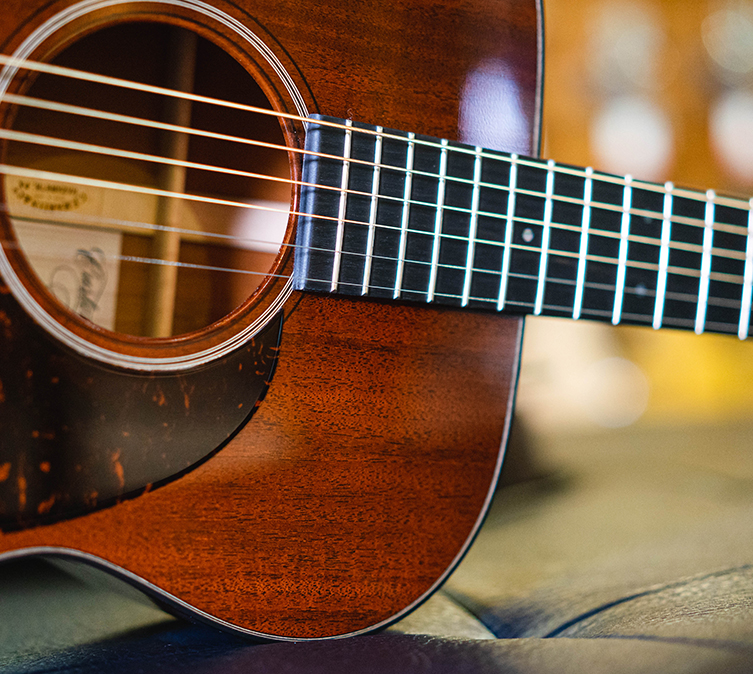
Lots of acoustic blues music is played on a guitar tuned to regular Standard Tuning. This is particularly the case if the player is using a fully fingerpicked style, in other words, if they are not using a slide.
Slide playing is fairly integral to many forms of blues, including acoustic blues. Traditionally, a slide would be either made from glass or literally taken from the neck of a broken bottle. Medicine jars were good slides too, and you can buy replicas like that today.
For slide playing, an open tuning is preferable. Popular choices include open D, open G (which still has a D on the bottom) and D minor tuning, though simpler compromises like drop-D tuning can also be really effective. A tuning like open D allows you to catch some very ‘bluesy’ notes with your slide as you employ it up the fingerboard.
Acoustic Guitar Slide Tips
- Use heavy gauge strings (at least 13s)
- Use a high action if possible (swap out your saddle for a higher one)
- Tune to an open tuning such as Open D or Open G
- Use a glass slide for authentic Delta tone
- Wear the slide on your index or pinky finger
- Learn to mute strings with your index and middle fingers
- Play rhythms and riffs with index and middle fingers
- For the right hand, try fingerstyle only: no picks to begin with!
- Consider slide vibrato: how fast should it be? Listen to great slide players and copy what you hear.
What Type of Acoustic Guitar is Used for Blues?
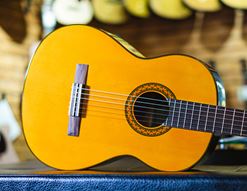
So what type of acoustic guitar should you use for blues playing? Well, speaking plainly, absolutely any style of acoustic will do a great job. Use whatever you have to hand, because the attitude you play with is more important than using a hugely specific guitar.
That said, if you are looking to get that authentic delta blues sound, there’s a few things you can look at, followed by a few specific guitar recommendations…
- Small bodied guitars were popular back in the day for blues playing
- Resonators were often used for bottleneck slide blues
- Heritage brands like Martin, Gibson and Gretsch offer authentic styles
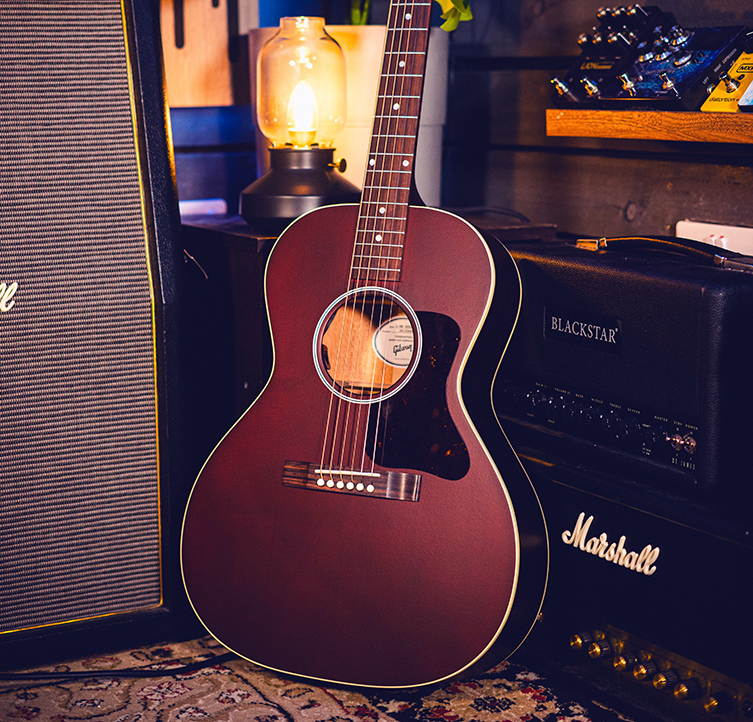
Gibson L-00 Vintage Sunburst
This is a wonderfully authentic choice for any acoustic blues aficionado. The Gibson L-00 is a smaller bodied guitar with a strident voice, making it perfect for picked blues licks and runs. Visually, it sums up visions of players travelling the Mississippi Delta, stopping in a bar and performing for drinks money and a bed for the night. There’s a lot of blues mythology here, and sonically it has an excellent palette.
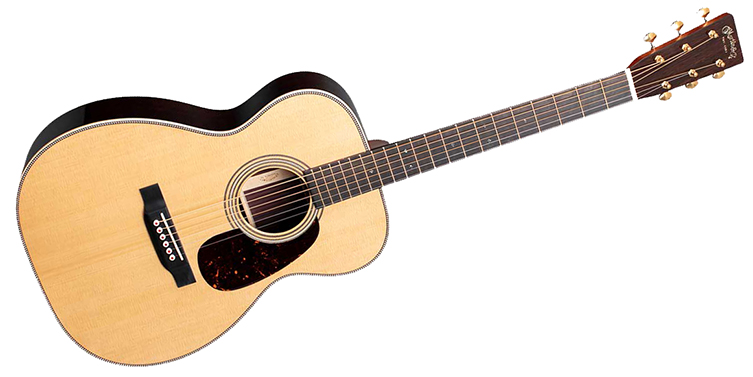
Martin 00-18
The Martin 00-18 is a similarly-sized but entirely different guitar to the Gibson. These two are the giants of acoustic blues playing, and you’ll fit right in with the vibe with either choice. I love the 00-18 because the shorter scale makes it easier to nail those all-important ¼ tone bends. It’s small and punchy sounding, not big and warm. To me, blues needs punch and attitude, because that’s what sells the sound.
Gretsch Jim Dandy
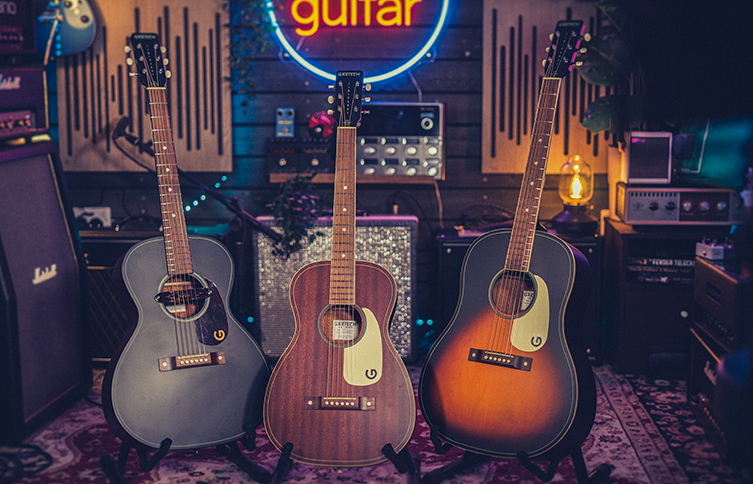
Those who aren’t so well-heeled can still enjoy an authentic acoustic blues experience with the Gretsch Jim Dandy range. These are super cool, very affordable and give a similarly tight and punchy sound to those dearer guitars, with perhaps less finesse.
I have to say though, I find this slightly thinner sound to be just the ticket for some bottleneck slide playing, and so I happily recommend these stylish and affordable acoustics to all blues players. They have a sound and a vibe, and I don’t think you should overlook them in favour of something more expensive. In fact, I think you should just have one available: why not put it into a blues tuning and keep it at the ready?
Who Are Some Great Acoustic Blues Players?
Playing acoustic blues isn’t merely a case of transporting what you normally do on an electric to the acoustic. It’s a different art, even if lots of the phrasing is similar. The best way to learn the style - and significantly, the feel of the style - is to dunk yourself headfirst into some of the best acoustic blues that already exists out there.
You go and have a look for yourself - and report back - but here’s some starting points that are guaranteed to hit the mark…
Robert Johnson
The myth, the legend, the whole thing is right here. So evocative, so far away and yet so timeless, Robert Johnson is the first stop on the journey for any acoustic blues disciple. Learn a number of his songs, and realise that you are following in some hallowed footsteps. Appreciate his attitude to metre, when he does and doesn’t toe the line with his rhythm work and realise that it’s all quite deliberate.
Blind Lemon Jefferson
Another mystical blues titan, Blind Lemon Jefferson has almost as much myth surrounding him as Robert Johnson. In his 36 years on Earth, Texas native Jefferson advanced the art of fast acoustic picking, and wrote classics like Matchbox Blues that was covered by The Beatles!
Jefferson’s voice was high-pitched and, to my ears, pretty haunting to hear. That may also be influenced by song titles such as See That My Grave is Kept Clean, which adds loads to that ‘doomed bluesman’ image that we all kind of love.
Keb’ Mo’
I’m jumping a good few decades forward now. Keb’ Mo’ is a current blues artist, who has spiritual and stylistic links to those first Delta bluesmen of the past. He’s a living link to the source, a wonderful performer with both charm and authority, and he toes that fine line that marks tradition and modernity. Keb’ Mo’ blends in other styles to his work, but there’s no doubt about his authenticity and command of the blues language.
As you’d expect, this subject is bigger than this blog, so let me add a few names to throw into your journey, all of whom come personally recommended…
Great Acoustic Blues Artists
- Son House
- Taj Mahal
- Bill Bill Broonzy
- Charley Patton
- Reverend Gary Davies
- Mississippi John Hurt
Acoustic Blues Today
Blues music is eternal. It is timeless and it appeals to generation after generation of music fan and player alike. Anybody who seeks rudimentary truths will find themselves at home within that sonic and geographical landscape of those five notes.
Every year, more artists appear to carry on the torch of acoustic blues: I’ve introduced you to Keb’ Mo’ already, but there’s other faces on the scene such as Samantha Fish and Kingfish, who both include superlative acoustic material on their albums.
Not only that, but Hollywood has remembered the timeless romance, darkness and mythology of the blues. 2025 saw surprise smash hit move Sinners being released. Directed by Ryan Coogler and starring Michael B Jordan in a dual role, it’s a super-atmospheric tale of the supernatural with Depression-era acoustic blues culture at the very heart of the story. You’ll love it, and if you don’t, you’ll at least love the music!