Led Zeppelin. Genuine titans of hard rock. “A gift from on high”, said Jimmy Page, who of course was a member of the band. He’s not wrong though: Led Zep were a special band who've far outlasted their years as a functioning unit. Every subsequent generation since has picked up on their uniquely expansive, colourful and mystical hard rock.
There’s no band like Led Zeppelin.
But it’s not like they just formed out of thin air! They were a group of 4 musicians just like most bands, and they had their influences, just like most bands. As they went on to inspire countless future musicians, so they also at one point were looking for inspiration in the music around them.
Today’s blog is about those influences. Who did the members of Led Zep love, revere and slyly borrow ideas from? Keep reading and find out!
Muddy Waters
The Chicago blues titan was a strong influence on Led Zeppelin. Muddy’s style of taking blues licks and turning them into riffs was a trademark of his that the band absolutely borrowed. On top of that, Muddy Waters’ dominating stage presence was something that both Page and singer Robert Plant paid careful attention to. Those things, and a sense of dynamic power, were what the Zep took from Muddy Waters.
Howlin’ Wolf
Blues fans will definitely hear the influence of Howlin’ Wolf in Led Zeppelin’s music. Wolf’s distinctive vocal phrasing is evident in several Robert Plant performances, not least Since I’ve Been Loving You and the Lemon Song, which is pretty similar to Howlin’ Wolf’s Killing Floor.
Sonny Boy Williamson II
Sonny Boy Williamson II’s song Bring It On Home was directly adapted by Led Zep as a homage on their second album. The tune is credited to Led Zep, and indeed the riffy middle section is an original piece of writing, but the start and the outro are very close to the source.
Robert Johnson
Everybody who has dabbled in blues guitar music owes something to Robert Johnson, of course! The King of the Delta blues himself, Johnson is not only one of the first recorded innovators of the blues guitar, but he’s also the source of great mystery and legend. I’d say that this side of things was as influential on the musicians in Led Zeppelin as his pioneering slide guitar playing.
Jimmy Reed
Mississippi bluesman Jimmy Reed was a pioneering influence on subsequent legendary musicians such as Elvis Presley, Bob Dylan, Neil Young and the Rolling Stones - basically all of the 1960s rock brigade!
The reason he was so popular is that Jimmy Reed’s style was both upbeat and accessible, bringing a laid back shuffle vibe to his songs that lent a swagger which everybody wanted to copy in their own tunes. This swagger is all over Led Zeppelin’s music, on every record. That upbeat take on the blues was a clear gateway to the British Invasion players and then, naturally, Led Zep too.
Contemporaries (Yardbirds and Bluesbreakers)
I mentioned the British Invasion there, and it can’t be underestimated how significant the London scene in the 60s was for the nascent Led Zeppelin. Page and Jones were seasoned session players around the capital, and were familiar faces to other scene players such as Eric Clapton, Peter Green and Jeff Beck. The atmosphere for friendly competition and direct inspiration would’ve been hugely present, and significant in the lives of all of these musicians.
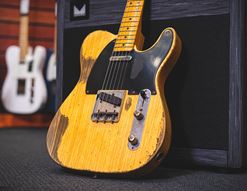
Indeed, Jeff Beck and Page had a special relationship, with the two men crossing career paths with the Yardbirds, and Jeff famously gifting Page the 1959 Telecaster that would be put to use as the main recording guitar for all of Led Zeppelin I & II!

Plus, there’s the crazy fact that the band were initially going to call themselves The New Yardbirds, which says it all really! Their local scene was a potent one, and incredibly important to them.
Bert Jansch & John Renbourn
Bert Jansch and John Renbourn were two exceptional folk guitarists from the 60s. Together, they played in the band Pentangle, who had a similar level of mysticism as Led Zep, though in a more specifically ‘Arthurian’ flavour.
They were both clear influences on Jimmy Page, who took on the open tunings, modal scales and celtic-inflected folk played by these two in both Pentangle and on their own solo records. That whole side of Led Zeppelin’s music wouldn’t be the same without this direct inspiration.
JRR Tolkien
Whilst Tolkien wasn’t exactly renowned for cranking out huge blues riffs, he was still an enormous influence on bands like Led Zeppelin. Their whole vibe owes a debt to the fantasy of Middle-Earth, from the flute-like Mellotron sounds on Stairway to Heaven, to the large numbers of folk-based acoustic songs, and (mostly) unplugged epics like The Rain Song. Immigrant Song could have been a theme tune for the Riders of Rohan, and in fact Plant directly references both Gollum and Mordor in his lyrics for Ramble On.
Then you have the extended ‘fantasy sequences’ of the tour film/movie/thing The Song Remains The Same, which goes the hardest in illustrating Led Zeppelin’s debt to all things Tolkien.
Aleister Crowley
My last suggestion today is another non-musical one, but how many Led Zep fans don’t know about Aleister Crowley? For many, the band’s music and references to him are their introduction to the whole subject, and a vast subject it is!
I’ve addressed Crowley in more detail in another blog, so please have a read of A Brief Guide to Aleister Crowley & Witchcraft in Music if you want more, but here’s some related tidbits…
Jimmy Page in particular was fascinated by magician, philosopher, poet, mountaineer and ‘wickedest man in the world’ Crowley from a young age, reading his books on ceremonial magic and demonology. By the time he was making decent moolah, Page opened an occult bookshop in London (the long-closed Equinox, which sold rare out-of-print occult texts) and even bought Crowley’s old house up at Loch Ness. Boleskine House, as it is called, is said to be haunted by rogue spirits evoked by Crowley and left to manifest.
Interestingly, the four symbols used on Led Zep IV for each member (you know the ones…Zoso and so on) may be tied up in some deep occult lore, too. John and Bonzo’s symbols came from illustrations in a book, Plant’s came from either his imagination or another book of symbols, but Page’s? He’s not telling. In 2001, he commented to writer Mick Wall “My symbol was about invoking and being invocative. That’s all I’m going to say about it.”
The mystery deepens.
Everything’s An Influence
These are just some of the things that influenced the art and music of Led Zeppelin. There is no doubt lots more: for example, there are loads of blues artists from the first half of the 20th century who deeply inspired the band. I named a few in today’s blog but could’ve added Blind Willie Johnson, John Lee Hooker, Willie DIxon and many more.
Still, influences are a natural part of how we all create music. Nobody makes music without looking both around them at what’s going on, and behind them at what came before. The important thing, I suppose, is to make something new with it, instead of just copying what you’ve heard. Led Zeppelin have some very clear reference points in what music they loved as they came together, and whilst it’s easy enough to identify them, what’s great is the music they built from those influences. That music is immortal, glorious stuff that has already stood the test of time.
"It's been a long time since I rock and rolled..."