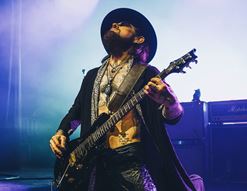
What is ‘worship music’ in 2025?
It’s a lot of things of course, all across the world in different areas with different faiths. But what is worship music like now, compared to the cliches that abound? Is it all ‘happy-clappy Christians’, strumming an acoustic guitar wholesomely next to an open fire? Is it serious faces at church on Sunday, singing Psalms as if they were death-dirges?
I had a feeling that this maybe wasn’t an accurate picture. Back when I was a salesman on the shop floor, I’d often have customers come in for equipment for their church gigs and worship groups. I became intrigued about it all, so I did what I do: I reached out to chat to somebody on the inside…
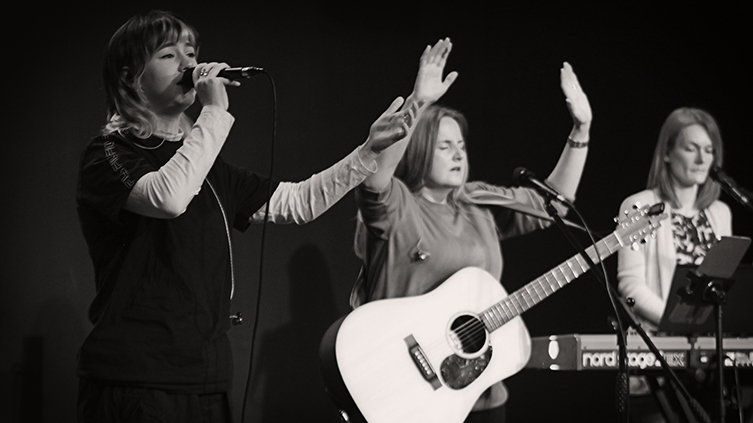
Church and Music
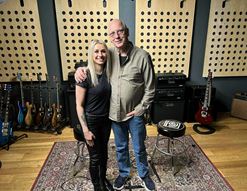
I spoke to my friend and colleague Adam Pomphrett, a regular churchgoer and a musician of several decades’ experience. What follows is our wide ranging conversation about the scene, the styles, the challenges and the equipment and techniques required to put on a modern day worship gig like a professional. We started the conversation generally, about how his dual worlds of music and faith met.
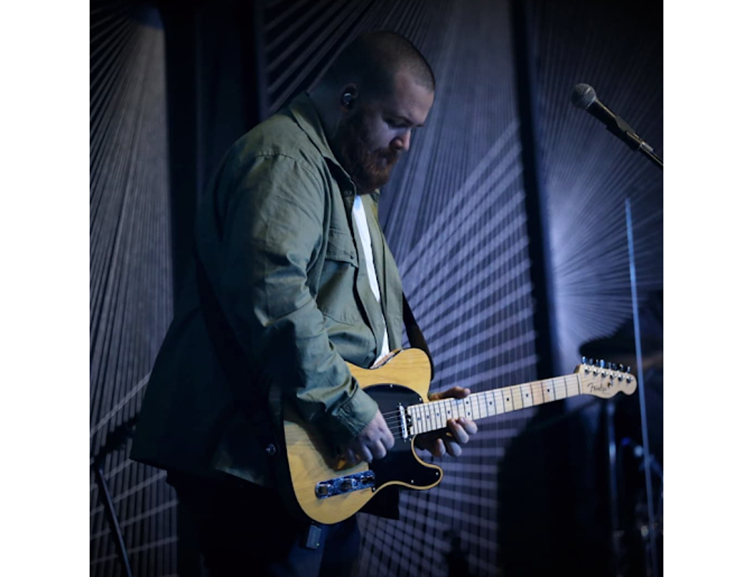
“When I started going to church, those were the kinds of people I connected with. The musicians invited me along when they were rehearsing. I’d come from playing in bands, so I had a lot of that experience - that musicality - and so I made good friends and started playing with them.
It would be on rotation: there would be loads of different singers, different drummers, different everything. The best way to think about it is if you went to an 'old-timey’ church, you’d have Sister Mary sitting there (laughs), playing the organ. Essentially, instead of that, we’d be the band. Over the other side of the pond, where larger churches are far more commonplace, there’ll often be some musicians that are on staff at the church, whereas here it tends to be volunteers, so availability is often a factor.”
How the Performance Works
I wondered about how the music was threaded into the overall service, given that there would be a minister or similar figure delivering a sermon too. Did they have any say in what the band did?
“Yeah! A lot of the time, there will be a particular theme, or something will be used to support what’s being said. The repertoire…I mean, I played at an event recently with a 37 song set! But within that, it’s so free-flowing. You’re not playing it as start-to-finish for all 37 songs: there’ll be choruses, bridges or whatever. It’s far more fluid in that respect. It’s not stop/start, stop/start. There are some songs that you’ll just do as per the track, but a lot of the time it’s more free.”
Do you create your own music or do you choose from existing songs?
“It’s normally a mixture. There will be songs that have been written in-house - or bridges or choruses that have been written in-house - but nationally and internationally there are a lot of great songs that get written. They’ll get used congregationally. It’s not about the songs, it’s not about ‘so-and-so’s written an incredible song’; it’s more about what it’s speaking to. It’s essentially an expression of faith, of hope, of love, of whatever. If someone in Canada or Australia or Madrid has written a great song, why would someone not want to use that elsewhere? It’s like resourcing other places and using what you need and what’s best.”
So is there a network of sources? Like, if you knew you had to reflect a particular message in an upcoming performance, are there places you would look to in order to fill in the song material that you need?
“It’s now at the point where everything is so prominent and so well-known. You know, there was an evolution from your hymns and your early 90s happy-clappy stuff, whereas now, some of the best songs, if you were to change the words, anyone could listen and say ‘that’s an absolute banger of a song!’ Nowadays, the songs are written by people who are so switched-on in terms of songwriting, and some of these guys are writing for huge artists as well, so it’s evolved from being something that’s could be perceived as slightly cringey to being something with great songs that, as a musician and as an artist, you’re like ‘these are great songs’. It’s not just: ‘I need to lead the congregation’. There are some great songwriters in Scotland, in the UK and beyond. That’s what they’re doing: they’re writing really good songs.”
And are they putting them out just as any other artist would do?
“Yeah, just putting them out there, and they are there for people to use.”
Forgive my ignorance, but is there a biblical narrative to some of the songs?
“Yeah, often it’ll be from certain experiences that they’ve had, or understandings or interpretations of scripture, portraying particular characteristics, those kinds of things. Often, the song will speak to a particular aspect of our faith, which is why, when a particular sermon is being framed with a narrative, it’s really important to be sensitive to that. If you’re speaking a message of hope in difficult moments, maybe it’s not the moment to do song A, B or C because it doesn’t necessarily support that. It's not that those songs aren’t valid or that they don’t carry truth, but it’s not the right one for that moment. Think of a conversation with a friend: if they’re going through a difficult time, there are certain things you don’t say to them, but if they are in a really high jubilation moment, you don’t bring a mournful, soft thing to them.”
Both of those messages are equally useful but not at the same time.
“Yeah, and that’s where it goes from being an artist to actually shaping the message. There are times when I’ve had setlists and I’ve knocked songs out of it because they weren’t the right songs for the flow, for the moment. Or I’ve skipped songs completely because, congregationally, when you’re leading people in that moment, it’s not even about you, what you’re doing or them appreciating what you’re doing: if anything, it’s about you keeping them centred on what’s important.”
The Role of the Musical Director
It’s a flippant analogy, but it sounds kind of like being a DJ?
“It’s not a million miles off, in some ways, because just like a DJ, the worst thing you can do is kill a moment! I often work in the role of the musical director (MD) so I’m instructing the whole band and directing where it all goes.”
How did things progress from you joining the band to becoming MD?
“That was a role that would exist any time the band were playing together. How that role looked would look different depending on who was doing it, because you’d have different levels of skill set as an MD. You’d also have a range of different skill levels that you’d be playing with. You’d seldom get a band of equally skilled musicians. As MD, I might have to drop a song, or change order, or switch from this to that, which can be a challenge for some players. As an MD, I go for big things, but it’s all about knowing the people that you’re in with. If I’ve got a new drummer, I’m probably gonna be more attentive to them, to make sure that they’re in sync with what we’re doing - I’m gonna be sensitive about calling in major changes to what they’ve prepped. I’ve always just done that since I’ve been involved, because musicality is such a strong thing for me.”
So, how would you do that in the middle of a performance? Are you all on IEMs (in-ear monitors)?
“Yeah, we’re all on IEMs. I’ll have a mic and often, depending on where I’m playing, it’ll be different cues that I’ll give them. I’ll just call out different progressions, and this has taught me to be very strong on things like Nashville numbers, knowing how chord progressions can turn, and just knowing what works and what doesn’t.”
Are you telling them I, IV, V or just G, C, D?
“I, IV, V. Because you’ll have a keys player, a bassist, two electric guitars and two acoustics, quite often it’ll be that one of the acoustics will be capo’ed, and quite possibly the other electric too. So, rather than me giving conflicting calls, if I just give everyone: ‘We’ll go I, IV, bVII, VI’ or something like that, they can do it relative to what they’re doing. It’s just clear communication.
It is quite uncommon for the electric guitarist to be the one who is MD’ing. Often it would be the keys player or bassist, just from a support perspective. But for me, I do it when I play electric, bass and acoustic, so the MD happens irrespective of what I’m playing on.”
What other responsibilities do you have as MD?
“Working on transitions, how to flow from one song to the next - this has been really useful when prepping for other gigs and festivals that I’ve played, as it’s not something that lots of musicians necessarily think about. Coming from that environment of having a 20 minute section at the start of a service, to having a four hour set like I had last Friday night, it’s about knowing how to get from one song to the next song without it being start/stop or there being a sudden dip in the atmosphere. That stuff is important, so when I apply that to the other bands that I play with - and they see the difference the flow makes - it just lifts the whole level of it.”
Worship Nights & The Broader Scene
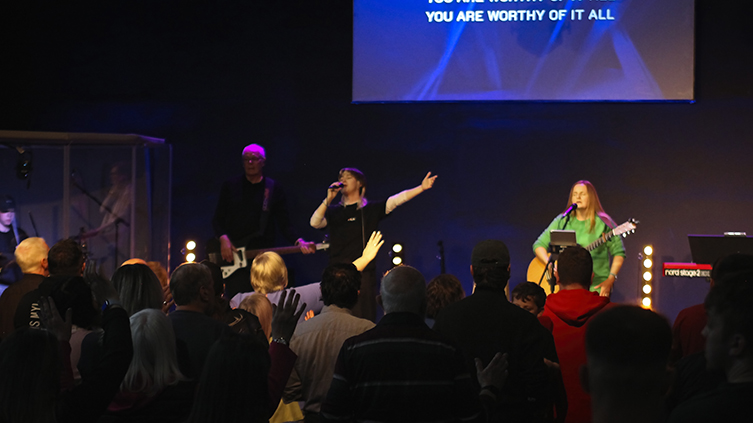
“Over the past year or so, I’ve been involved with regular worship nights taking place in the Glasgow area, which have been great - I’ve also been involved in ones happening outside of the city, in Edinburgh etc, which has been a lot of fun.
These are a bit different from what most people would experience in their churches on a Sunday - there’s more time and space to worship. It’s less structured than a 60–90 minute service. You’re not moving between different parts of a programme. It’s simply space to breathe, to play, to worship.
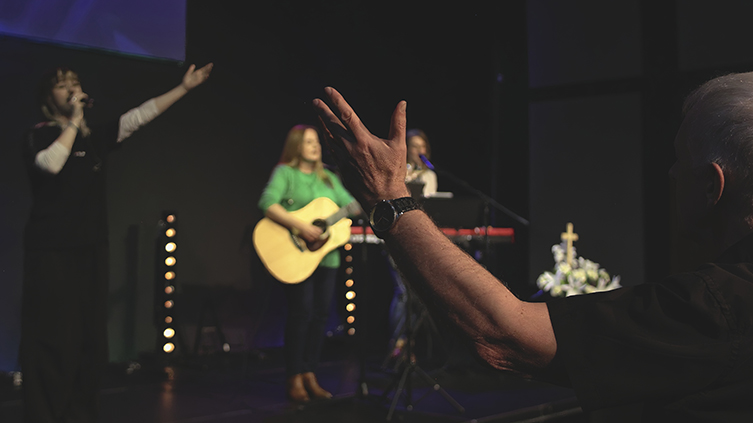
In recent times, there have been hundreds and hundreds of people gathered together, and it’s been a fantastic night of faith and music - not campfire “Kumbaya” kind of thing, but real expression and energy, and a great atmosphere in the room. There’s been a bit of a shift happening over the last period of time, with more and more great musicians getting involved and being a part of these nights, from churches all over Scotland.
It’s great to see the churches come together and contribute to these nights - this is not instead of their involvement in church, it’s a great thing that goes hand-in-hand with their faith journey and being rooted in their local church, seeing how they can channel their own creativity and how they express it.”
Do you think some of the people who come to those performances are not hugely religious?
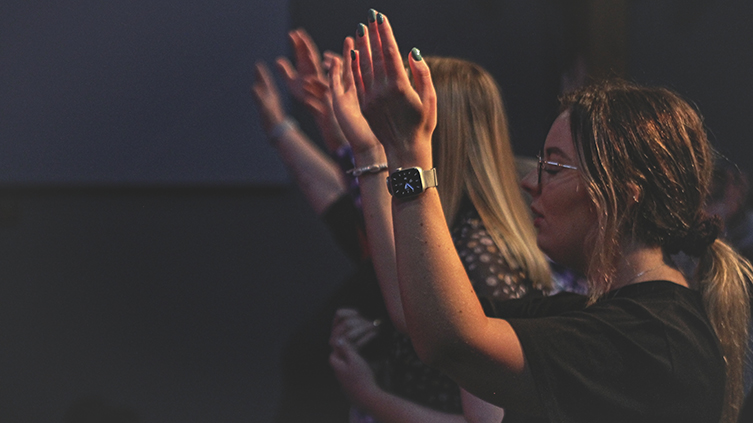
“Yeah, I would say that anyone who was to come along to these nights would enjoy them, irrespective of what their faith stance is. It’s a bunch of people having a great time, with really good songs - songs of love, hope, joy and faith. They are songs that speak of good things!”
So this isn’t a Sunday service with a sermon flanked by music, is it?
“No, this is a worship night with music. It’s all about spending time in that environment, and giving people the space to experience it.”
And how do they experience it?
“A lot of the time it can be reflective. Depending on the songs we’re doing, it can be a release of joy, thankfulness, gratitude”.
Is there a lot of movement?
“Yeah, yeah there’s lots of movement. Not anything weird but just free and expressive.”
Like, a safe place to respond and express?
“Yeah. I think a lot of churches, especially in Scotland…there’s a desire for them to be more creative in their expression, but in some pockets there’s still that belief or a viewpoint that says : ‘You can’t have drums in church!’ Well, I’m sorry but the gifting I was given doesn’t include me standing behind a piano! I have a guitar in my hand and I should use it!”
Do you find an audience crossover between the typical church services and the evening worship nights?
“These worship events and gatherings will take place midweek - these are not to take away from what churches are doing, but to give people another space to be expressive in their worship, with more space and time to do it than they’d perhaps have on a Sunday.
It’s been great to see so many new faces at these kinds of nights, whether it’s been in Glasgow, Edinburgh or elsewhere in the country. You can see how much people love being in the environment, and it’s great to see people expressing themselves through music like this.
Whether it’s on a Sunday in church, or at one of these events, it’s great to see people opening up and becoming more expressive as they get more comfortable in the environment and a big part of that comes from being sensitive to what we are playing, dynamics etc.
The Logistics of a Performance
I’m always interested in the nuts and bolts of a live performance, and with Adam’s multi-instrumental MD approach, he’s a good person to ask about how these worship nights are handled. I understand that they tend to work out of non-traditional spaces (not old churches, basically), so I asked him to describe their typical situation.
“My church is based in a converted warehouse, where we have our Sunday services, but often the worship nights that I’m playing at occur in different venues and locations. For most general church services, there’s one guitar. Quite often there’ll be an acoustic, bass, keys and a drummer. Pretty standard rock band stuff. One or two key vocals and then usually a couple of supporting vocals.”
Do the audience participate in singing?
“Yeah, very much. And looking at the songs that we do, it’s all about stuff that’s gonna be easy for the congregation to relate to but also to sing. Going back to my duties as MD, looking at song choice, looking at keys, you’re not gonna do five high energy songs in a row, because you’re gonna need breath, you’re gonna need space. You need it to land in the right place for when you hand it over to whoever’s preaching or whoever’s doing the next part of the service. It’s about being able to read that moment.”
So you have IEMs. What about things like iPads?
“Yeah, I always resource everyone with charts and depending on what they need - whether it’s numbers or chords for their specific key - they’ll have that. It isn’t a memory competition: it’s a different kind of performance. Where you wouldn’t turn up at TRNSMT with an iPad in front of you, people aren’t turning up to see the band perform as much as have an experience prompted by the band.”
I understand. And the charts are helpful to know where to jump off from or back into. You know what this reminds me of? The amount of times I’ve spoken to someone who’s played with the Cirque du Soleil, and if somebody misses a beat or a trick, the band has to continue that measure of music longer to tie in the narrative. So you’re giving real time instructions?
“Yeah, exactly, I speak into my mic and they get me in their IEMs”.
Excellent. And in terms of backline?
“A lot of the time just now I’m running direct. I haven’t played anywhere in a worship environment where there’s been any amps at all for years! It’ll typically be modellers, Fractal stuff, the Quad Cortex, ToneX, Helix, HX Stomp etc. Everybody tends to do it. It’s become the big thing because everyone’s on IEMs now, the concept of having an amp is a bit moot in a lot of respects. It means they get that easy, quick plug n play, because you’re not having to spend time dialling in the right level for the room and all that kind of stuff.
With the worship nights on the Friday nights, we play in the round so we don’t have the space to put amps there anyway! And we have a sound engineer too.”
And it may or may not matter much, but I wondered about the guitars themselves. What do you call upon for these performances?
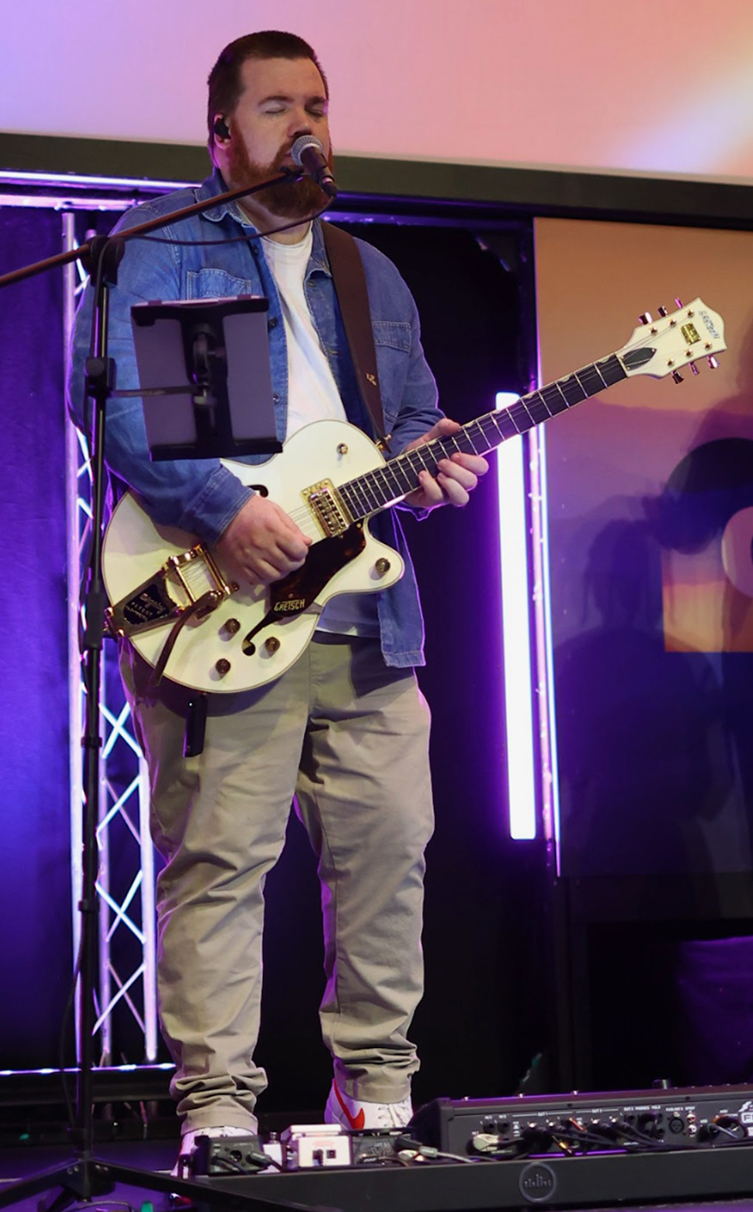
“My go-to is a combo of a Tele and some form of Gretsch. Mostly the tele gives you that real bite for what you’re playing, and the Gretsch is just so versatile. I find I can get so much room from it, because as the electric guitarist in these environments, it’s less about chasing the big lead parts as it is about filling spaces, big swells, little motifs, those kinds of things. So, to have something that can cover those bases and give you that real gritty sound when you need it, or that big soaring lead part, is great. It can also translate to a really nice sensitive sound too.
I’m so heavily post-rock influenced, so it’s about having lots of layers, lots of building on top of things, getting somewhere over a period of time. Those guitars really do that for me, and that’s where the Fractal really comes into its own, with all the big wet effects that you can get on it. Lots of ambience!
My setup is my Fractal FM9, an expression pedal and a MIDI clock pedal. This helps me as MD because I’m not having to tap dance in order to set any tempos. I can just program a set list with the specific BPMs and then tap for the next one. With the MIDI out, it’ll just send that to the Fractal. I just have one patch, and within that I’ve got three or four gain stages, different wet effects, choruses, tremolos, the lot. It just means there’s no unnecessary gaps or faffing about!"
Community
In preparing for this piece, the one word I kept going back to was ‘community’. We’ve all seen local church congregations of our elders, who may have all sorts of different ideas on what the bible is saying to them, but they come together as much for the communal, companionship element as anything, in my view. They have this world that is important to them. With that in mind, I asked Adam what he got out of it all, in terms of experience.
“So, for me in those kinds of environments, I just get so encouraged, to be honest. Seeing other people with the same kind of passion; seeing other people with the same expression of their faith…yeah, you have the generations gone by that may see this is being not the right way to do it. They might see it as ‘You’re becoming just like the world’, but actually no, it’s just that times have changed!”
Adam then shows me two videos on his phone. One dated the 6th September 2024 - roughly a year earlier than our conversation - and shows a small, committed gathering of people. Maybe thirty or forty in total. The second video fast forwards a year to the most recent event, and it’s an entirely different situation. There is literally no space left in the room. There must be 350 people in there. I asked Adam squarely: how did he account for that?
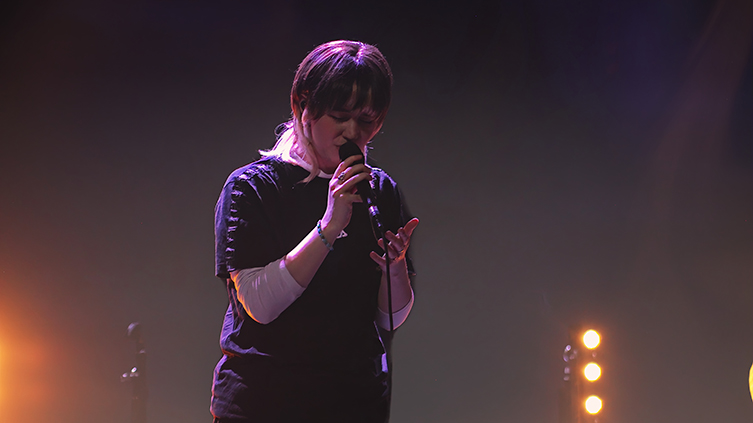
“These events are incredible because they’ve built a space for people to come and just be free in their worship. There are so many churches represented there, but it’s not about church, it’s just about a space for free expression. The calibre of musicians that I play with there are incredible: there’s no one on that team that I would replace with someone else. That’s the thing that makes the difference. In that scene, it’s the best of the people that you could put together.”
And when they started, did they just find each other?
“That first video? That was their first night. My wife and I went along, and within a couple of months of getting to know them, they asked me to start playing and I’ve been playing with them several times since.
There’s a new generation of these electric guitarists coming through, and what's happening in a lot of churches now is they’re seeing that this stuff is actually really good: they’re getting good sound systems and good equipment. It’s not a frivolous thing, it’s actually there to engage a congregation. It’s getting beyond ‘we need to make do with the overhead projector that we’ve had for 40 years’. The tide’s turning with that, and having great musicians is key to that. It takes it from something cringe to being a genuine expression of faith."
“It’s been great to see the growth in these events - there are so many churches represented, so much creativity in one room, and the calibre of musician that I’m playing with is incredible. Knowing that these people have a shared faith and a shared passion for music, it makes it so much fun to play with them as well.
There’s a new generation of these electric guitarists coming through, and it’s so encouraging to see more and more people on the likes of Instagram and TikTok sharing their own videos of them playing in churches - it’s such a huge space to be able to share ideas and encourage each other, ask questions, get tips etc.
Whether it’s happening in churches on a Sunday, or at these kinds of regular gatherings, there’s something great happening. There’s great songs being written and shared, and great musicians and singers getting the opportunity to channel their creativity and express their faith through music. Churches and faith groups are investing in the right equipment, and giving people a space to get involved, and to grow not only in their faith but in their musicianship as well."
The New Punk Rock
So, what did I make of all of this, after learning first hand about how these events came about, what they achieve and how they operate? Well, something struck me a few times as I worked on this article... This is a scene that has been created and developed far away from mainstream music culture & typical pub/club venues, by people who are devoted to a purpose. They have sought out like-minded people to collaborate, put on self-motivated events, and are playing exactly the type music they want to play, on their own terms, without looking for or asking for permission from any scene gatekeepers. In fact, their whole attitude of inclusivity is quite at odds with lots of grassroots music scenes.
Whilst musically there’s no relation here really at all, what I feel like I was hearing about was nothing less than the equivalent of an independent punk rock scene, filled with outsiders who want to break away from the shackles of a very conformist musical climate.
I’m seeing people who are in it for the passion of the performance and the building of a collective experience. Whether one is inclined towards the overall religious/spiritual message is perhaps beside the point: there's an energy being created and worked with that is potent, legitimate and for the forces of good. It’s making everyone involved feel excited about attending a live music performance, and those performances are carried out like a professional show. Yeah, I’m actually not being facetious nor am I being ironic when I see this Worship scene as absolutely following the spirit of punk rock at its most subversively optimistic.
At the request of the organisers, I’ve omitted info about the group/event organisers themselves, but I’d encourage you to seek out what might be happening locally to you, if you’ve a mind to. I thank Adam Pomphrett for his time and candor. And, as always, thank you for reaching the end of another exclusive and original article for guitarguitar!