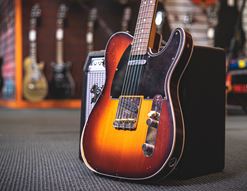
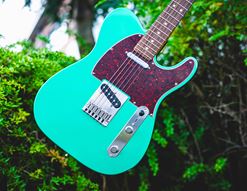
When was the last time you played a guitar that was built in Indonesia? That exotic archipelago between Asia and Australia is responsible for some of the most beautiful and playable guitars in the world, not to mention some of the best-priced.
Maybe you don’t even notice the country of manufacture these days? We currently live in an era when fantastic quality guitars are being created in many parts of the world. It’s no longer automatically a case of America being the best, then Japan, then a hierarchy of perceived quality after that. The playing field is more level than it ever has been, and that means that some particularly affordable guitars are on a par, quality-wise, with those that cost many times more.
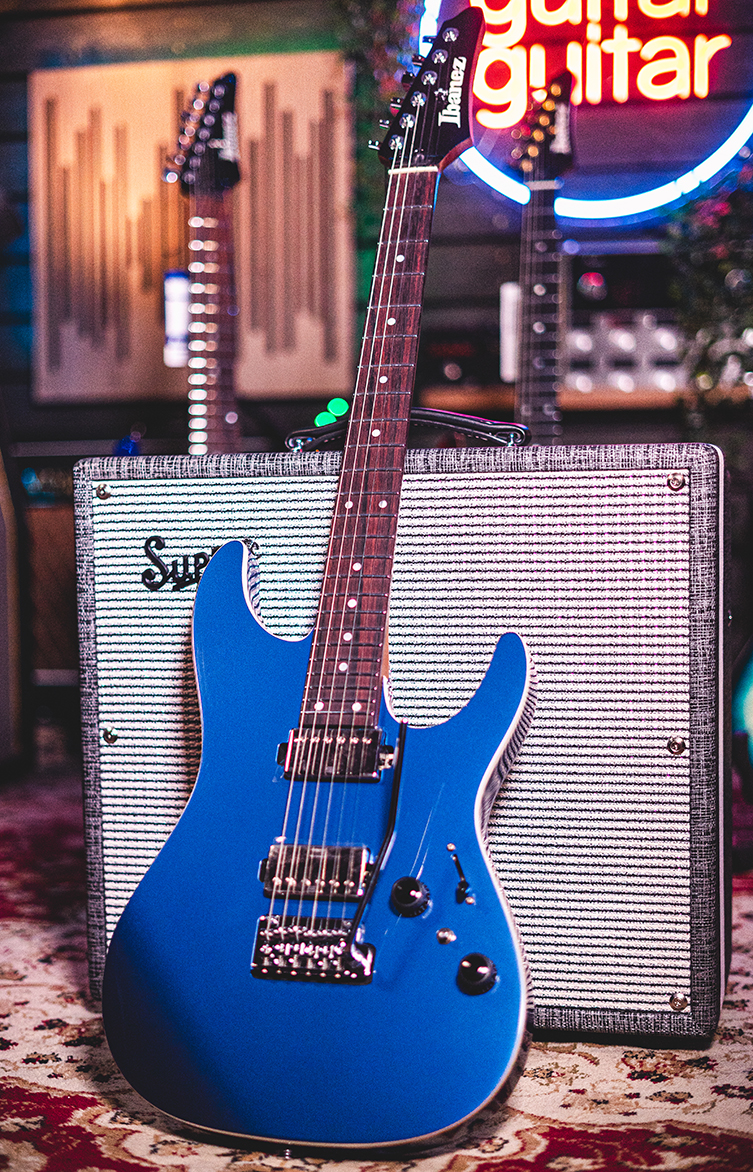
In today’s blog, I’d like to highlight some of the best guitars I’ve seen coming from Indonesia. I’ll order them roughly from ‘beginner to pro’, but just take the list as you want: I think all of these guitars are good enough to satisfy a seasoned player.
What Started This
So, why am I looking at Indonesian guitars today? It’s a simple thing, really. In all of my years playing guitar, I’ve owned instruments from across the planet: USA, Canada, Japan, China, Korea, France and Indonesia. I’ve tended to buy based on my needs, desires and budget, and I’ve found good and not-so-good guitars from each of these countries of manufacture.
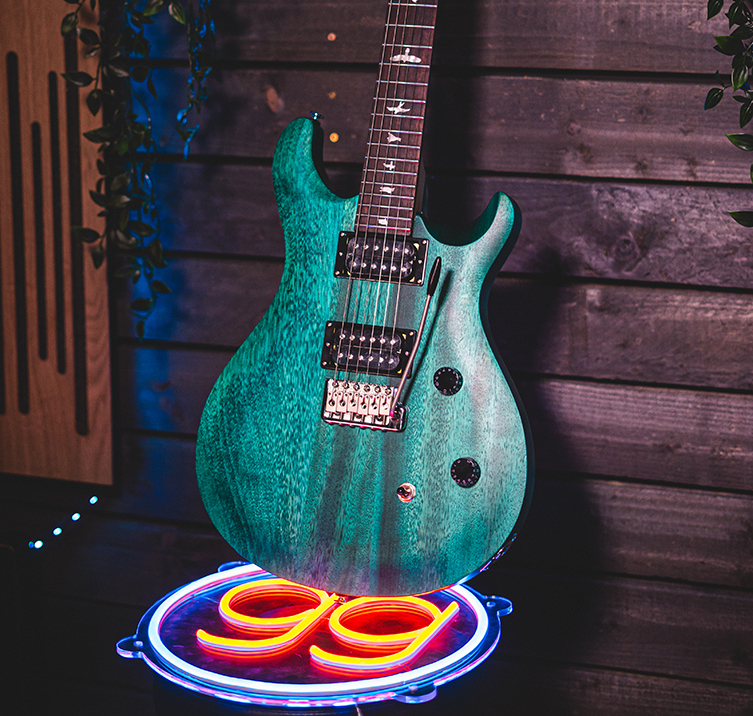
Anyway, about a year ago, I bought an Indonesian PRS guitar as an affordable workhorse for taking to gigs. You can read all about that in the blog My Favourite PRS Guitar Costs Under £500, but the point here is that it compared well to my fancy, expensive American & Japanese guitars.
I was very happy about this, and raved about it to anyone who’d listen. It has also made me pay closer attention to guitars coming from Indonesia - both electric and acoustic - and my consistent findings are that they are particularly good. Not ‘good for the money’, though that’s also true, but just flat-out good.
For that reason, from one guitarist to another, I want you to know about some other excellent guitars that hail from Indonesia. You can have very good quality instruments for less than you might think. Trust me.
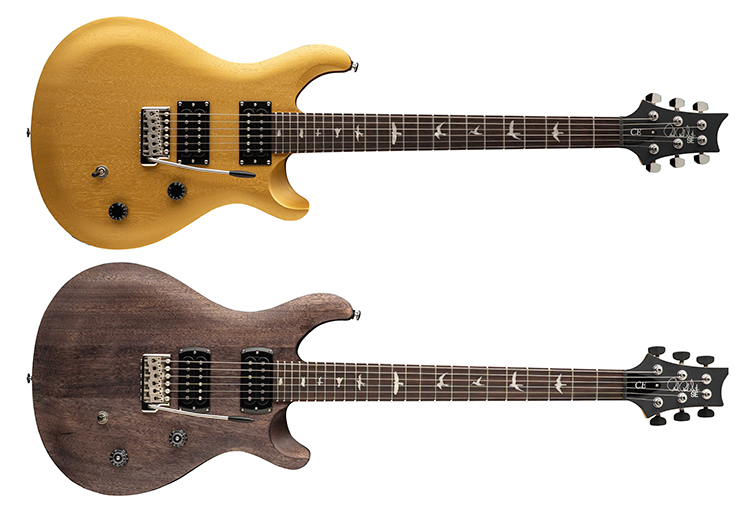
PRS SE CE24 Standard Satin
If you’ve read my blog on this then you can skip ahead, but if not, let me explain a little of why I was so impressed with the SE CE24 Standard Satin last year. It’s one of those guitars that doesn’t have preconceptions about it (so you play like YOU, basically), but everything you do throw at it, it can absolutely handle.
What you get for your £4-500 (the price is staggering) is a utilitarian PRS guitar with a thin, resonant finish over its solid mahogany body. You get a great neck with 24 medium jumbo frets and, impressively, the Bird inlays. You get the famous PRS body outline, the useful PRS tremolo and a set of decent sounding pickups that tap very nicely into convincing single coil tones. Looking deeper, you get a treble bleed on the volume control, which I didn’t expect at this price point.
Speaking to Paul Reed Smith about these guitars, it’s clear that he is as passionate about hitting the mark on the affordable models as he is on his Maryland-made Core guitars. What this means for you is that this pretty cheap guitar contains 40 years’ worth of questing for perfection, taught to a team of Indonesian builders who make guitars for PRS only (it’s a specific part of the Cor-Tek facility that’s dedicated exclusively to PRS building), and who are proud to have the Cor-Tek name on the headstock right next to PRS.
Try one and see for yourself, basically. The proof is in the tasting!
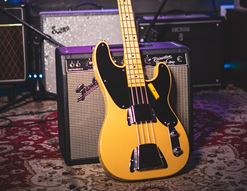
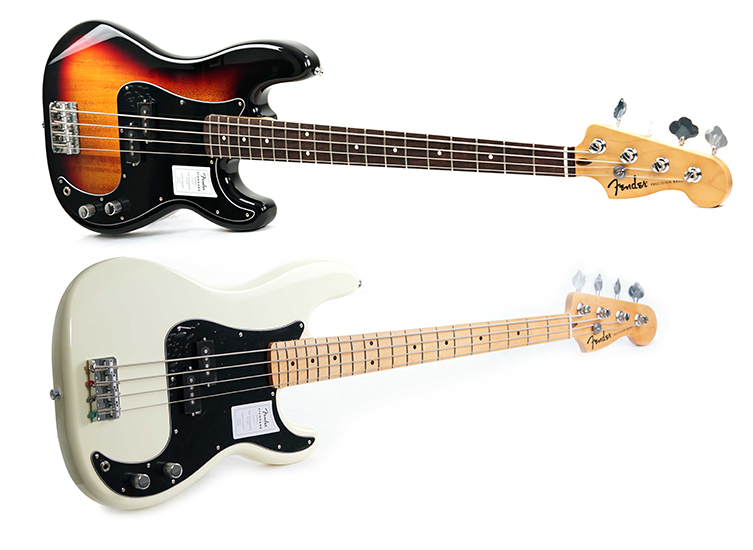
Fender Standard Precision Bass
Fender recently began making ‘F’-branded instruments in Indonesia, after years of Squier production, and it’s no small thing. This is about Fender-named instruments being available for (mostly) under £500, which is an important thing to have in the market. There are Strats and Teles in the range, but what got my attention were the basses.
The Fender Standard Precision Bass in particular seems to be a success. The main reason for me is that the ceramic magnets in all of these Standard Series instruments maybe suit the primeval growl of the P-bass better than the other ones. It’s a hot-sounding bass with plenty of power, and that’s pretty much what I want from my four-strings!
In all other ways, Fender wisely don’t mess with the formula: this is a straightforward, contemporary take (thin neck, frets that aren’t tiny) on a genuine classic. A success, and a great buy for any musician who is yet to add Fender’s greatest other-other invention to their guitarmoury.
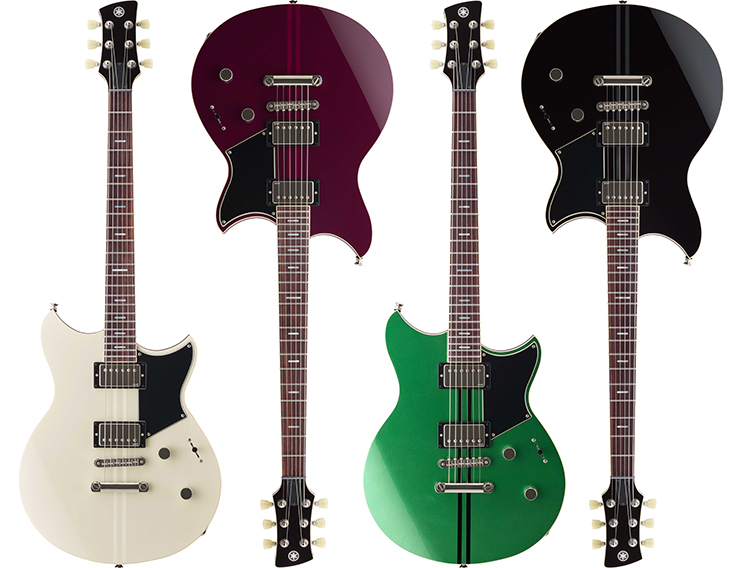
Yamaha Revstar RSS20
Yamaha’s newest original-design electric is now a decade old, proving that it has some real staying power. Read about the Revstar’s inception in my Yamaha Revstar blog, and in the meantime, check out this gorgeous Revstar RSS20 model.
Revstars are made in three different places, depending on the tier: top models are Japanese, entry level guitars are Indonesian and Chinese, and middle models like this one are purely Indonesian. They’ve dialled in the elements perfectly here, from the slightly chunky neck (always welcome) to the vintage-with-a-bite voice of the pickups. It’s a highly satisfying guitar to play, and a legitimate alternative to the established mahogany/humbucker styles we see so often. Excellent colour choice too!
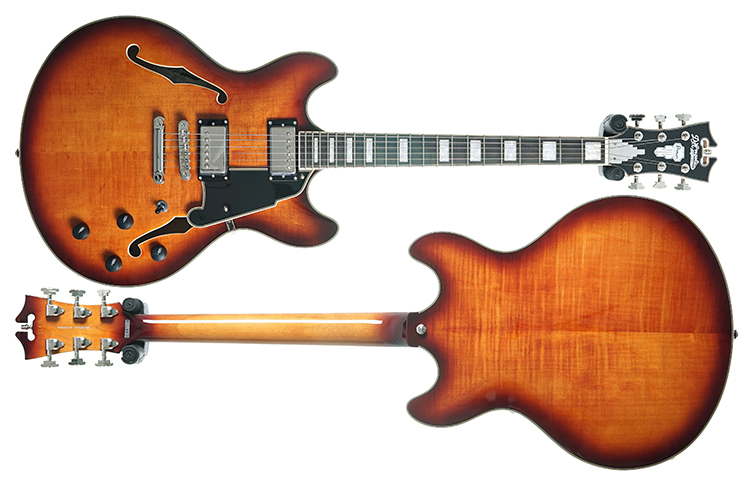
D’Angelico Premier DC Stop Bar
D’Angelico has been a favourite brand of ours at guitarguitar for years, and it’s for two pretty simple reasons. Firstly, their extra decorative detail puts them into their own league away from the usual semis and hollowbodies; and secondly, they are built really well. They always feel great, and whenever I pick one up, I’m always looking for excuses not to put it back down again. If that’s not the sign of a good guitar, then I don’t know what is!
I’ve chosen the Premier DC Stop Bar today, because it reflects the brand well. Put next to a similar thinline semi from other makers, I think you’d notice the hand feel of the neck, the weight distribution, the mature collection of tones and just the general air of a quality product. D’Angelico have some more unorthodox designs should you feel the need to make a statement, but their more traditional fare hits the mark well, and still has a hint of the eccentric.
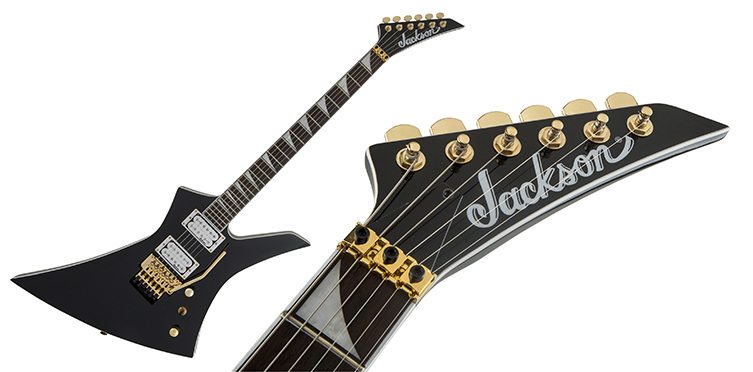
Jackson X Series Kelly KEX
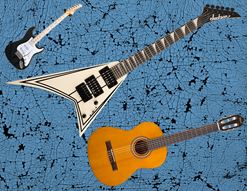
I cannot have a blog without at least one pointy-shaped guitar, can I? This time I’m happy to include a personal favourite, the Jackson Kelly. I think this is one of the brand’s most successful designs, and with Megadeth touring their final album, it seems appropriate to include something that those guys were known to use in their heyday.
This Jackson X Series Kelly KEX is Indonesian of course, and sits within Jackson’s catalogue between the JS range and the Pro Series. This is a great place to be, because players can enjoy great craftsmanship and good parts & hardware at a price that is not terrifying. It has a Floyd Rose Special tremolo and Jackson-branded humbuckers, which means filthy ceramic metal tones aplenty. I adore the almost-posh black/cream/gold colourway: it is extremely 80s in an Adrian Smith sort of way!
Jackson are currently building guitars all over the world: China, Indonesia, Mexico and the United States. For performance and bang-for-buck, this Indonesian Kelly impresses.
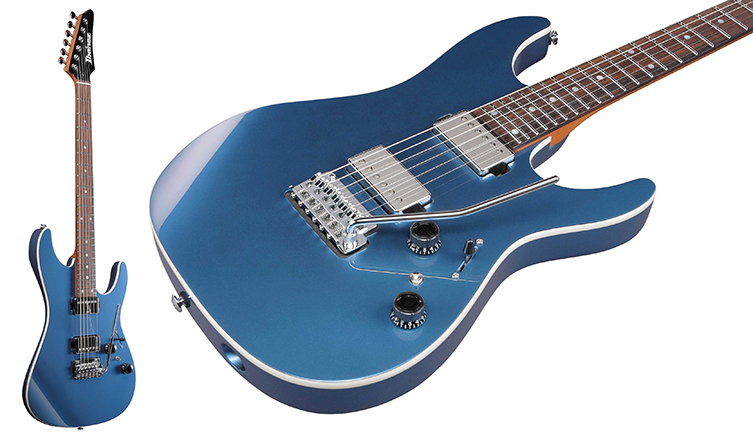
Ibanez AZ242P1
Fans of our YouTube channel will have seen this Ibanez AZ242P1 often popping up in videos. That’s not because Ibanez asked us to include it, but because we’ve all just kind of fallen in love with it and want to use it as much as possible!
Truly a Swiss Army Knife of a guitar, this lovely AZ met our unassuming expectations and blew them away with a feel, a sound, a vibe and a level of versatility that impresses us still. It’s true that the hardware is GREAT (Gotoh tremolo and locking tuners, Seymour Duncan Hyperion pickups), but the real reason why this guitar has become a gg office favourite is how it feels. It’s so familiar and friendly to the hand, it’s like you’ve always owned it. It’s the type of guitar that gives you the benefit of the doubt, if you get me? You are spurred on by its great response to try some risky fretboard maneuvers, and you realise after a while that you accomplished those tricky bits thanks to the quality of the instrument in your hands. That says it all, really. It’s an Indonesian Ibanez and it’s one of our (and my) favourite guitars of recent years.
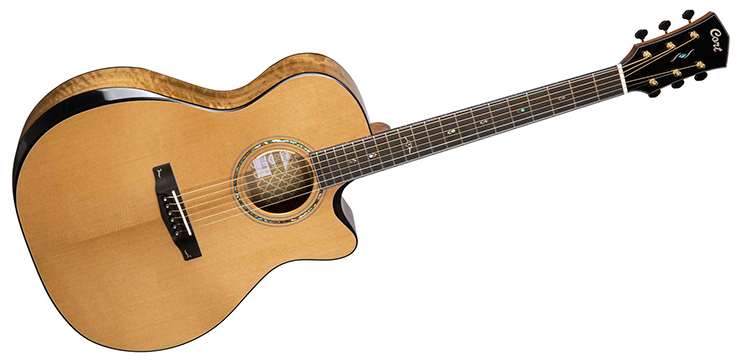
Cort Gold Edge Natural
There is a huge amount of guitar built into the price of this Cort Gold Edge Natural. It’s a wonderfully designed contemporary acoustic with innovation to match the beauty. You’ll notice the multiple ebony bevels on the body, of which there are three. It’s a quietly bold move which increases not only the beauty but the comfort and tone, too. The build quality here is quite exquisite, using top grade materials such as torrefied spruce, ebony and solid flamed myrtlewood.
At time of writing, this guitar is available for a chunk under £1500, which seems like a bit of a bargain, considering what you’re getting for your money. There’s even an LR Baggs pickup!
Vintage aficionados are unlikely to be tempted, but then this guitar isn’t for them. This is a contemporary piece of luthiery, designed with consideration and sophistication, and built with finesse and an eye for detail. More to the point, you give it a strum and you hear where the expertise really lies.
Indonesian Guitars
Seven Indonesian-made guitars. Some acoustic action, some bass, some metal and some classic choices. It’s all there, and the thing they all have in common is excellent quality. There’s no particular sacrifice with any of these instruments, as they have been designed to come in at a certain price, rather than be stripped of features until they hit a particular cost bracket.
Have I been strategic in my choices? Maybe a little, but only to illustrate the market. For example, I don’t massively love the pickups that Fender put into the Standard Series Strat or Tele (they are fine, but the Player pickups are noticeably better), but the P-Bass suited its pickups much better and so it became my choice here.
For the PRS, it’s true that if you want the figured top and translucent gloss finish then you’ll have to pay hundreds more for all that. But I selected the best examples that I felt were out there to be had: they are all available right now and are pretty tremendous purchases, if you ask me. I happen to like the satin colours of the CE24 Standard more than the flashier gloss SE CE24’s and so on, so that helps my argument for value, but the value is there regardless of your own preferences there.
I said it at the beginning and I’ll say it again: we are living in great times, as far as new instruments are concerned. The market just won’t allow bad guitars to exist, because the competition is so fierce. Whatever you spend your hard-earned readies on, you’ll be getting good stuff. If you choose Indonesian-made guitars, well, maybe you’ll just get a little bit more for your cash.