Do you primarily play jazz styles on guitar? If so, you’ll have a different set of priorities in regards to what you need from a guitar, compared to rock players, for example. Warmth of tone is one thing, whilst still allowing expression and precision. You’ll want a fingerboard that is wide enough for the chords you want to make, and whilst string bending may not be so high on your agenda, fast, linear legato and staccato notes will be. The guitars you use to create your music need to reflect these needs and cater for them, all whilst looking stylish and mature.
Today, I’d like to show you some guitars that we currently stock, all of which cover different angles for the jazz guitarist. Whether you’re a trad fan, a contemporary jazzer or someone who treads both paths, I think you’ll find some pieces to enjoy here!
Yamaha SA2200
For traditional, beautiful looks and exceptional build quality, it’s hard to beat the Yamaha SA2200. It’s Yamaha’s flagship hollowbody, and I’d say that the fit and finish on display here actually rivals the custom shop efforts of other companies. Gotoh hardware across the board? Yes, and an ebony board, bone nut and other top-tier features.
The SA2200 is a versatile guitar for sure, but there’s a distinct jazz flavour to the styling, with sumptuous figured maple and gold hardware on display. Sonically, we have alnico V pickups, and whilst that may first strike you as a bright-sounding choice for jazz, they warm up very nicely with a little tone control dialling. The voice remains clear but with added smoothness, which makes this guitar a classy contender for any jazz aficionado.
Gibson ES-335
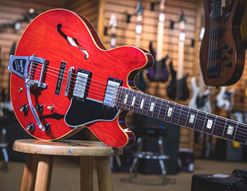
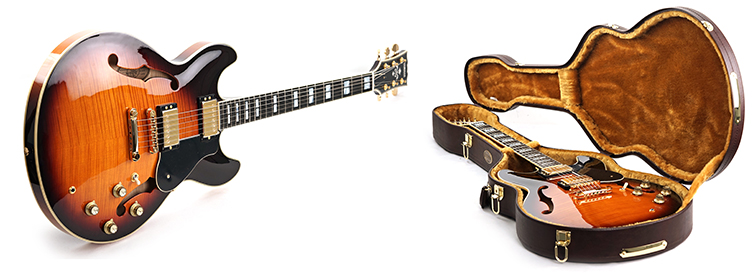
The Gibson ES-335 (in Vintage Burst, naturally) is a traditional choice for all jazz types. The slightly reedier, more resonant tone of the 335 makes it a great choice for a ‘lead voice’ in jazz ensembles. Like a Les Paul but less brutish (to some ears), the ES-335’s signature note bloom is something that jazz players can take real advantage of.
This current iteration of the timeless ES335 has T-Type pickups, which are a recent take on those wonderful ‘T-Top’ units from the 1970s. Not too harsh, not too high-output. Otherwise, it’s a dot neck with a chunky rounded C profile, which is strongly similar to original late 50s example. Gibson have some stiff competition from Yamaha here, but the 335 is a classic for a reason, and it may well be your ultimate guitar.
Epiphone Broadway
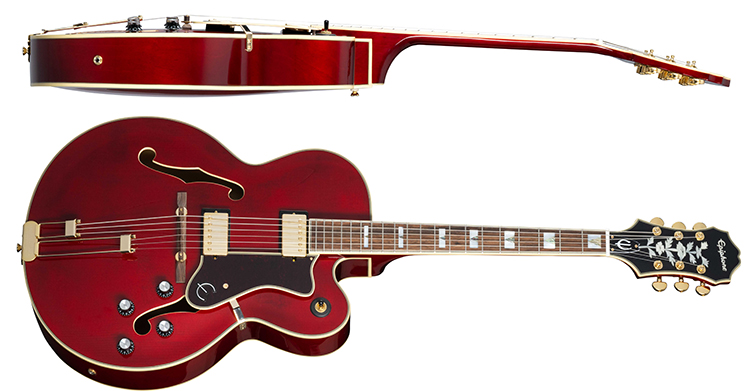
Epiphone offer several lovely original-design guitars, and one such is this delightful archtop jazz box. The Epiphone Broadway offers a deep, thick hollow body, arched on both sides; it has a floating bridge and a characteristic Frequensator tailpiece bringing some old-school charm.
Also, I love the details here that are shared with the Epiphone Sheraton: the vine headstock inlays and the block inlays with the inverted pyramids, pure class, especially on this large-bodied guitar which can house such details without the aesthetic becoming too crowded.
Alnico PAF Pro pickups are the choice here, and I believe those are the correct units for vamps, chordal runs and leads. The Epiphone Broadway is not a ‘cheap’ instrument, but I think it displays considerable value.
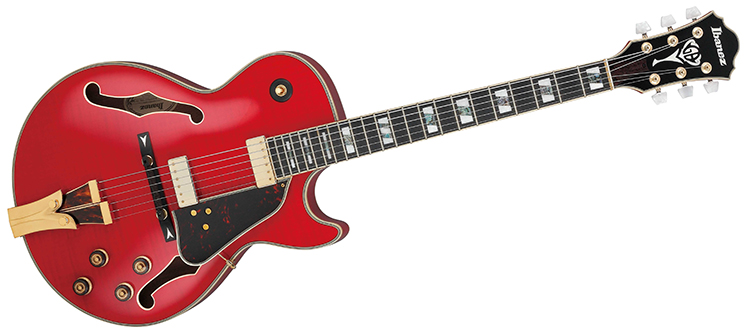
Ibanez GB10SEFM
Here’s a classic George Benson model in delicious Sapphire! It’s an Ibanez GB10SEFM, and it may not be immediately obvious to see, but this guitar is covered in flamed maple! It’s a stunning instrument, both visually and as a platform for your playing. A nice wide 43mm nut width and an ebony fingerboard mean that complex chord shapes never feel cramped, and a pair of floating mini humbuckers deliver a focused sound that has no wooliness and no feedback.
This guitar is a head-turner for sure, and delivers the goods on all fronts, not just the visuals.
PRS McCarty Yellow Tiger
PRS make a delicious line of Hollowbody models that are excellent for jazz playing, but I actually haven’t chosen one of them today. Jazz doesn’t have to be about hollow or semi-hollow guitars: solid body guitars are just as capable of delivering smooth, warm tones suitable for both lead and accompaniment, and this one is a doozy!
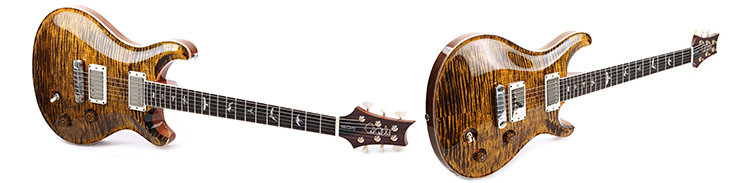
I’ve gone for the PRS McCarty, which is the company’s slightly more traditional-leaning model. By that, I mean the specs and measurements are slightly more ‘Gibson’ than PRS’s usual fare, and I believe that lends this guitar a more authentic jazz voice.
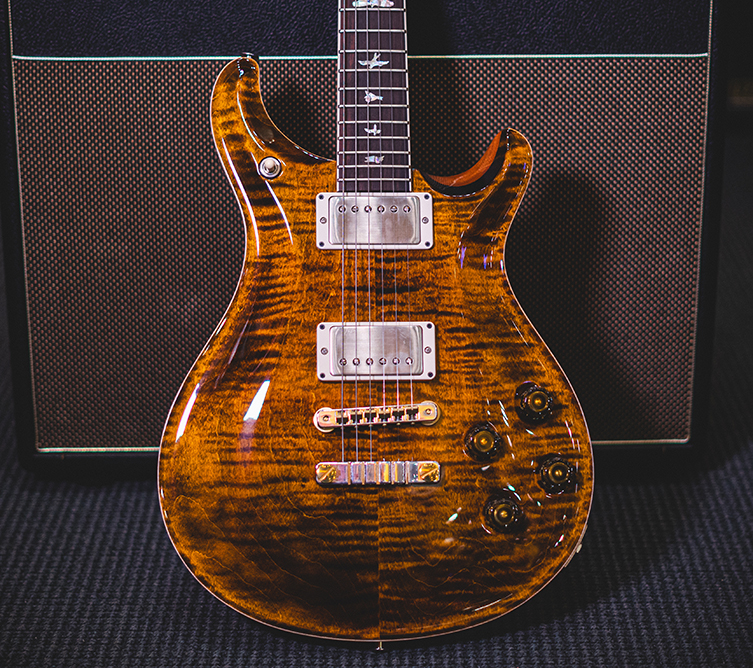
Paul Reed Smith certainly involves a lot of research and R&D into his process, and the PRS McCarty - a tip of the hat to his mentor (and ex-Gibson President) Ted McCarty - displays lots of that consideration. There’s a thicker than usual neck for one thing, which I find to be one of the company’s best. Given how good the Wide Fat and the Pattern Regular necks are, that’s saying something!
A stop tailpiece with brass inserts is an innovation, too. You get more signal because there is more contact between the strings, the bridge and the body. Special McCarty pickups with low turns - that is, less windings of copper wire around the magnets - open up the voice of this guitar further. It’s both a real collector’s piece and a real player’s guitar, and has a beautiful palette of tones available, over and above the superlative jazz sounds.
Tools of Expression
Each guitar choice today demonstrates both the tradition and the creativity of jazz. I sought to bring you a selection of guitars that could amply meet expectations on covering repertoire, but also represent the wider contemporary jazz scene. Whilst I understand that all guitars can be used for jazz, some - like those I’ve shown you today - are particularly suited to those expressive and complex note clusters.
Try one or more of these out next time you visit us, and see if you agree that these are some of the best jazz guitars out there!