Fender, creator of the Stratocaster, Precision Bass and more, are the biggest guitar company in the world. They’ve dominated the world of electric guitars and amps since the beginning back in the late 1940s.
But what of the acoustic guitar world? How do Fender fare in that realm? And what’s the story? Read on to get the whistle-stop tour of Fender acoustic guitars…
The Beginning
Fender began back in 1946, with the legendary Clarence Leonidas ‘Leo’ Fender starting out by repairing radios and other electronics. The guitars began in 1950, with the Broadcaster, which was of course renamed the Telecaster after a stern telling off from Gretsch over their drum kit, the Broadkaster.
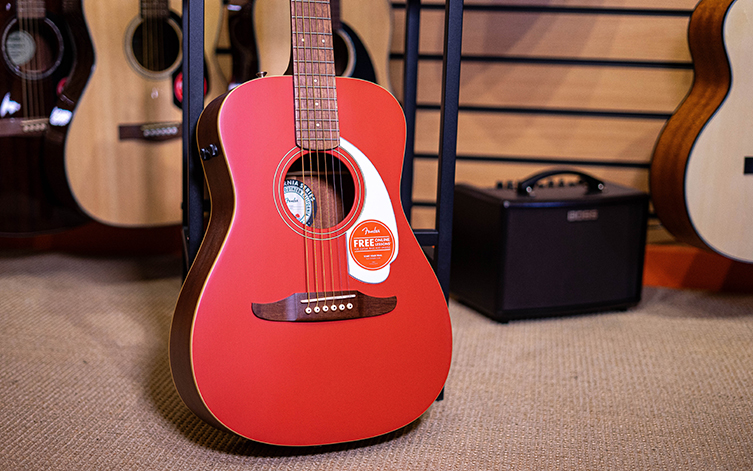
Anyway, in terms of acoustics, Fender entered the game in 1963. At the time, Fender were considered a very modernist brand, which makes sense if you compare a sleek Stratocaster to, say, a hollow body jazz guitar. This fresh modern spin was something that Fender wanted to try out on the acoustic world, and so drafted in designer Roger Rossmeisl to create a line of acoustics that echoed the brand’s growing ‘surf and sun’ image.
Early models included the Malibu and the Newporter, names which you may be familiar with from modern Fender acoustics. There was also the flagship guitar called the King, which is nowadays called the Kingman. The identifying features of these guitars were bolt-on necks (very unusual for acoustics of the time) and Strat-style 6-in-line headstocks, which was more or less a unique design motif for an acoustic guitar!

Not only that, there was a totally unique bracing system inside the guitars, made from aircraft-grade aluminium! Another unusual detail was the bolted-on pickguard, a very ‘Fender’ addition which ultimately made the guitars heavier.
According to Fender’s own website, several top players used Fender acoustics, including the following:
Fender Acoustic Users
- Johnny Cash
- Elvis Presley
- Robbie Robertson
- George Jones
- Buck Owens
- Tex Ritter
- Ray Davies
- Wanda Jackson
- Charley Pride
CBS & Decline
These fun-loving designs were available from 1963 until roughly 1971, as far as I can gather. Sadly, when TV production company CBS bought over the entire Fender brand, there was a general decline in quality as CBS sought to maximise profits over production value. Fender’s iconoclastic acoustic guitar models had always struggled to gain widespread acceptance from the acoustic community, and so as the seventies ticked around, the Fender acoustics began to disappear from the marketplace.

The 80s and 90s Return
Fender managed to ditch CBS in 1985, after employees formed a group and bought the brand. Now officially known as Fender Musical Instruments Corporation (FMIC) - which is how they are still known - they began the mission of bringing quality back to the company’s output. This included a return to their famously idiosyncratic acoustic guitars. The Strat-headed acoustics were back!
The 90s saw more of this, including similar models from Squier. In 1995, Fender took over Guild, a well-respected, historical guitar brand. This definitely informed the quality improvements that were to follow with Fender acoustics.
Modern Era & Acoustasonics
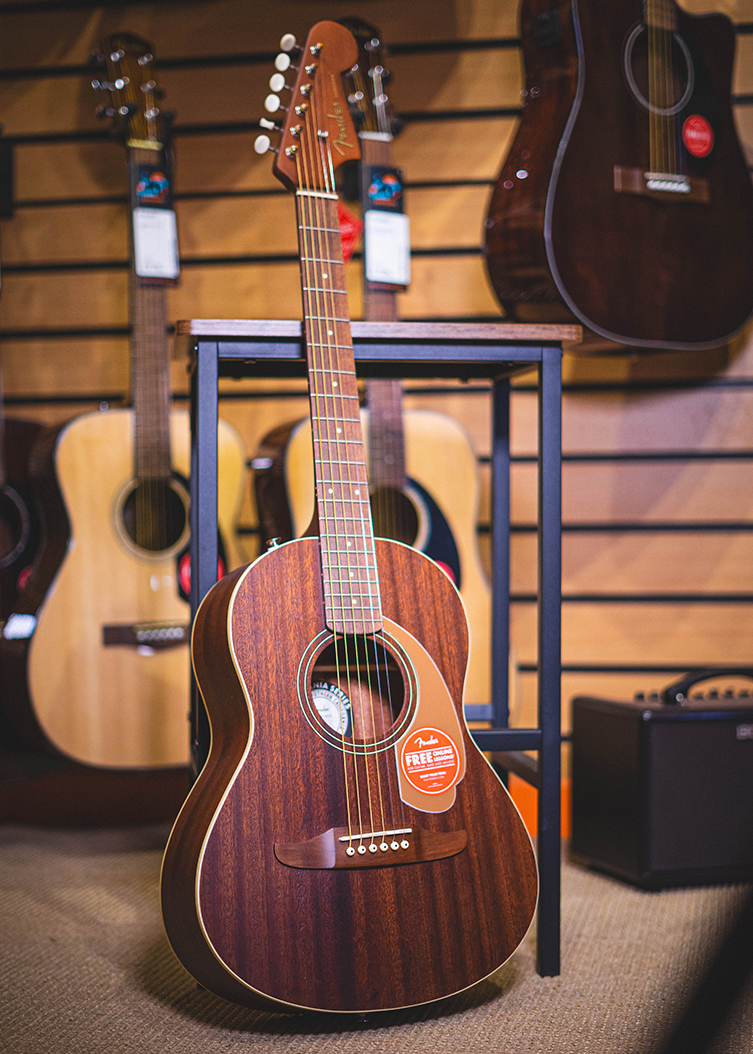
It seems to me that Fender have never been overly interested in trying to compete with Gibson and Martin in the acoustic world. Whilst their electric guitars and basses cover every price point from beginner to Bruce Wayne, Fender acoustics have always been more about offering good quality, distinctive guitars for people to take out and enjoy, rather than creating heirloom museum pieces.
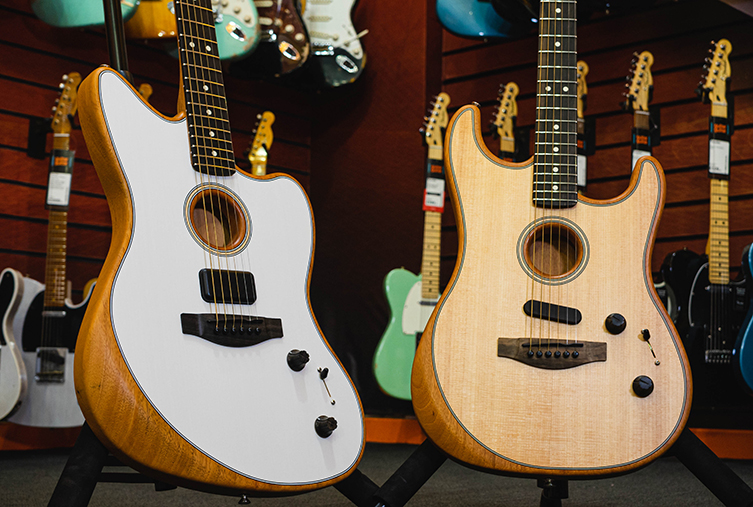
This attitude has extended to the Acoustasonic range. One of the modern era's most bold and successful new ideas, the Acoustasonic series bridges the worlds of electric and acoustic guitar, in a way which, for once, actually works. Acoustasonics take a classic Fender electric guitar outline, and build an acoustic guitar with a special ‘waterfall’ soundhole and proprietary Fender/Fishman electronics to give players an instrument that mixes both worlds. Choose from a Jazzmaster, Telecaster or Stratocaster style, and enjoy convincing acoustic and electric guitar sounds from the one instrument. It’s strung with acoustic strings and you can create sounds that are a mixture of acoustic and electric tones. For gigging players, these have been a real and genuine hit.
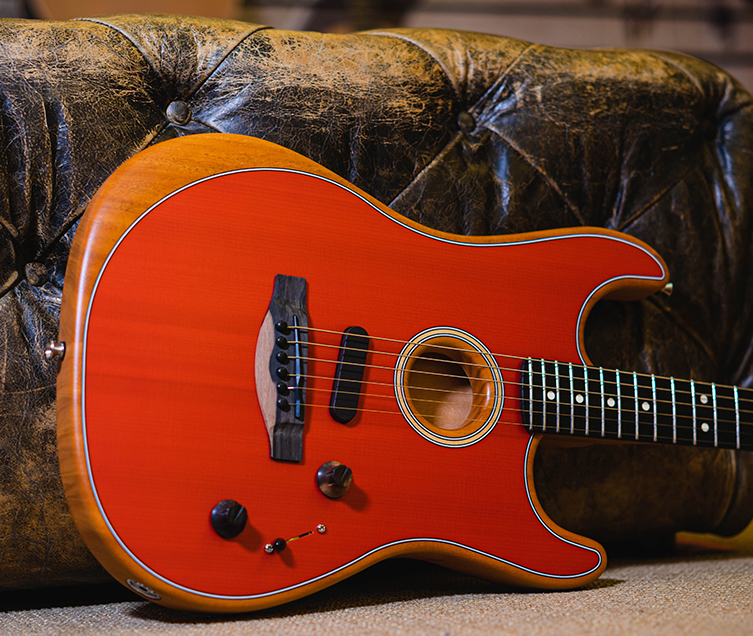
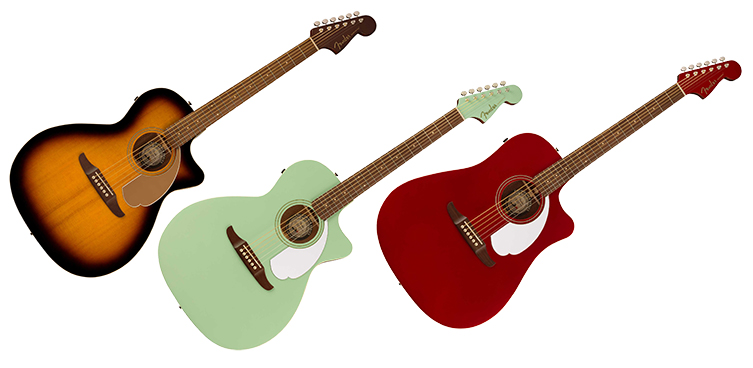
Aside from Acoustasonics, Fender have also successfully relaunched those free-spirited acoustic models from the 60s. Back and available to buy are the Malibu, Newporter, Redondo and all of the rest, built with modern quality control - they’ve lost the screwed-on pickguards! - but including the Strat headstock and cool surf-inspired finishes. Additionally, there’ve been a few artist signature models offered in recent years too, from people like Tim Armstrong, Joe Strummer and Dick Dale.
Innovation and Value
From beginner to intermediate, and for experienced players looking for a fun guitar to take around with them, Fender is a great choice. As I mentioned earlier in the article, I don’t believe that Fender have ever seen their acoustic guitars as direct competition for the high-end builders. They seem to operate much more significantly in the lower rungs of the market, where emerging players (and those on a budget) are looking for the right instrument for them.
Fender certainly stand out in the acoustic world, whether that’s due to their iconoclastic electric guitar headstocks, or because of their gamechanging Acoustasonic ranges. What’s obvious is that the company’s flair for innovation and individuality is as strong with their acoustics as with the rest of their instruments and creations.
Click to View our Fender Acoustic Guitars