Fender are responsible for the most famous bass guitars in the world. With a few notable exceptions, the bass universe revolves around models released by Fender in the 1950s and 60s. They got so much right at an early point, that it has since been mostly a game of refining and redeveloping those classics.
Fender make a wide selection of bass guitars these days, across a number of ranges.Today, I’ll share with you all of the major models, and the ranges that you can find them in today. Whether you are looking for a reissue of a historical instrument, or perhaps something more contemporary, if it’s a Fender bass, it’ll be in here!
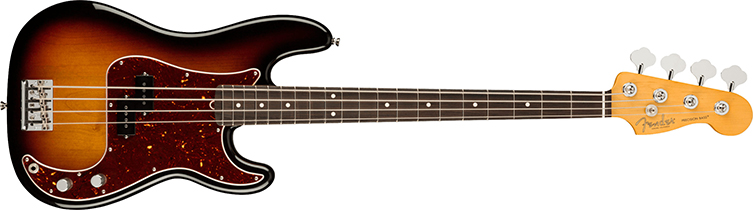
Fender Precision Bass
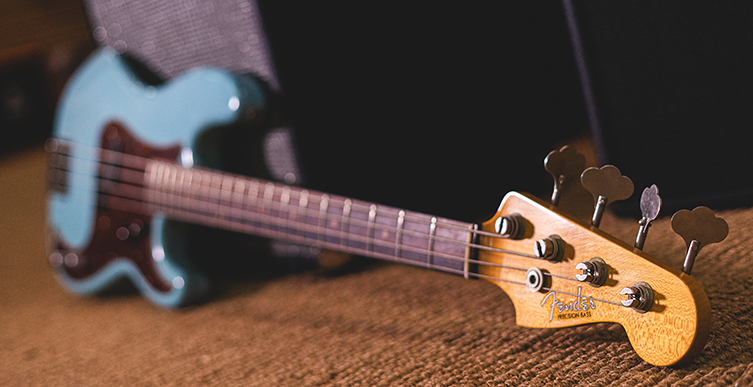
The Fender Precision bass - or P-bass for short - was the world’s first mass produced bass guitar. First released in 1951, it remains the world’s number one choice, thanks to a powerful sound that can be used in all genres of music. Key to this iconic sound is the split-coil pickup, designed by Leo Fender to try to illuminate background hum. The resulting sound has appeared on something like 60% of ALL studio recordings! Let that sink in for a second…
The Precision bass is available in many varieties these days, but it will almost definitely always retain that famous silhouette, bolten-on neck and split coil pickup.
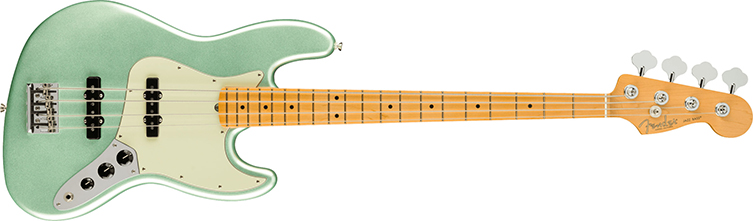
Fender Jazz Bass
The Jazz bass is Fender’s other main bass creation and was intended as a replacement model for the Precision bass. The Jazz bass debuted in 1960 as a fancier looking, more versatile option with two pickups, a metal control panel and a new offset body shape. Of course, it didn’t take over from the P-Bass at all, as both instruments have a relatively different feel and sound.
Generally speaking, the Jazz bass has a thinner neck and a slightly less aggressive sound. Each of its two single coil pickups has its own volume control, allowing the player to blend combinations of pickups to get their own sound.
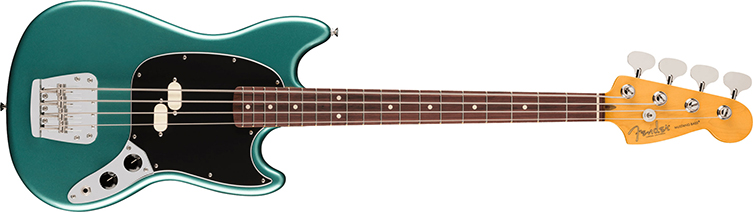
Fender Mustang Bass
The Fender Mustang bass is a short scale model. This means that the scale length (the length of playable string from bridge to nut) is shorter than usual. In this case, the Mustang bass has a scale length of 30”, which is a full 4 inches shorter than the standard 34” scale used by the Jazz bass and Precision bass.
Historically, the Mustang bass was introduced as a student model, indicated by that short scale. The idea was that it would be easier to start off on, and then bassists would graduate to a full-sized bass later on. This actually hasn’t been how it has panned out though: the Mustang has proven to be a popular instrument with lots of professional musicians who simply enjoy the slinky, easier feel.
Fender Jaguar Bass
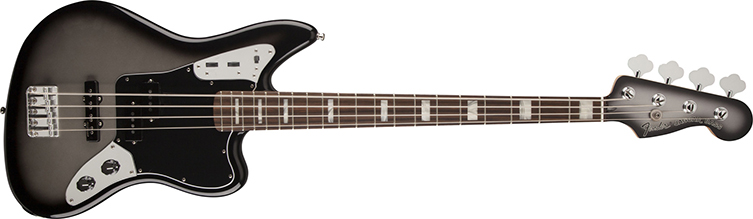
The Fender Jaguar Bass is an offset bass which, as you might expect, ties in strongly to the Jaguar guitar design. Despite this, it’s actually not a vintage model at all! The Jaguar bass only came to market in early 2006 after offsets in general became more popular. In its original iteration, it had two single coil pickups like a Jazz bass and indeed sounded pretty much the same, until players started getting into the complex switching system. It wouldn't be a Jaguar without that, after all!
Since its inception, the Jaguar bass has been made available in a number of different configurations and styles, including a number of artist models with split-coil and even active pickups, depending on the model.
Other Fender Basses
In addition to those famous Fender bass designs, some other models have appeared over the years. Here is a brief look at some of those…
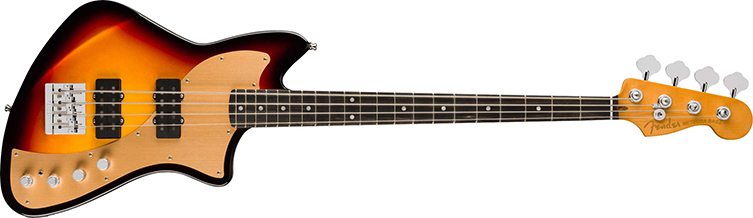
Meteora: a relatively new addition to the catalogue, the Meteora is a retro-futuristic offset design that is quite unlike the rest of the Fender catalogue, whilst still keeping the Fender ‘house style’ largely intact. The Meteora is available as an electric guitar too.
Bass VI: debate rages on as to whether the Bass VI is a bass or some form of baritone guitar. Fender call it a bass, and so I shall too, but it really is its own special thing. The Bass VI is kind of like an extended Jaguar, with similar pickups and switching. You can hear it prominently in The Cure’s music, as well as the Cocteau Twins and even Beatles albums like Let It Be and the White Album.
Fender Coronado Bass: We’re moving into rare territory now. The Coronado bass was a sister-model to the Coronado guitar, a 1960s semi-acoustic Fender with a bolt-on neck. The bass version is even rarer than the guitar model, and there is a very dedicated fanbase for them! Fender have occasionally reissued the Coronado bass, often with slightly different pickups and features.
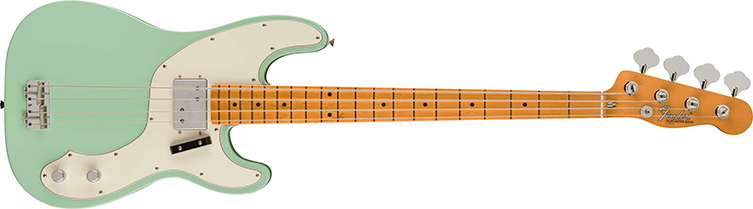
Fender Telecaster Bass: This is an interesting one. It’s actually a pretty clear reissue of the original P-Bass design from 1951. I guess the reason it is attached to the Telecaster is because the original P-Bass was fairly heavily inspired by the original Telecaster in the first place!
The Telecaster bass moved into a slightly more individual design in the 70s, when the pickguard changed shape and a humbucker was used instead of a single coil pickup. The Telecaster bass has been reissued numerous times through both Fender and Squier channels, and remains a bit of a cult favourite.
The Fender Bass Ranges
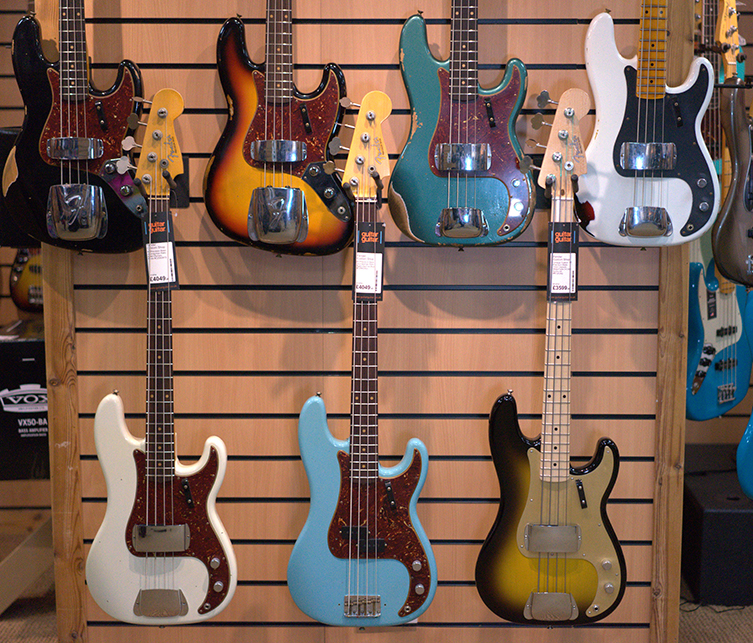
So, those are the main Fender bass designs. In terms of the ranges they belong in, well, that’s when it all gets a bit convoluted. What I’ll do with you today is outline each of the major ranges, and how they differ from one another. You can take it for granted that every range will contain a Precision bass and Jazz bass model. Other bass models are less guaranteed, due to simple popularity and market demands.
Fender USA Ranges
American Pro II: the flagship range, a more contemporary set of instruments but still holding onto the expected Fender style and approach. You will find P-bass, J-bass and 5 string versions of both in here.
American Pro Classic: Half way between the American Pro II and American Vintage II ranges lies this one. In short, the guitars have a great ‘period’ look, and have new low-output Coastline pickups for a vintage tone, but also have more modern appointments, too. Fingerboards are flatter than vintage examples, and frets are larger, for example. The range currently houses a P-bass, a Jazz-bass and a Mustang bass.
American Vintage II: more specifically retro, this range aims to offer authentic period-correct specs and details For instance, there are two P-bass models: one 1954 model, which is the ‘tele’ style model, and a more familiar 1960 model with the split coil pickup. All finishes refer to colours from the period, as do hardware and decal choices. A 1966 Jazz bass is also available, in left and right-handed models.
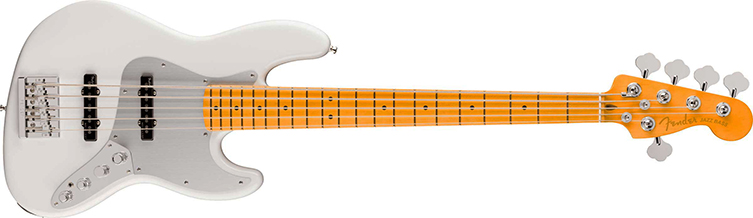
American Ultra II: Much more contemporary in their specifications, Fender Ultra II basses add things like noiseless pickups and compound radius fingerboards to ensure a modern feel and sound. Finishes are bolder, and pickguards are anodized for a striking look. The P-Bass, J-bass, 5 string J-bass and Meteora bass are all included.
Fender Mexico Ranges
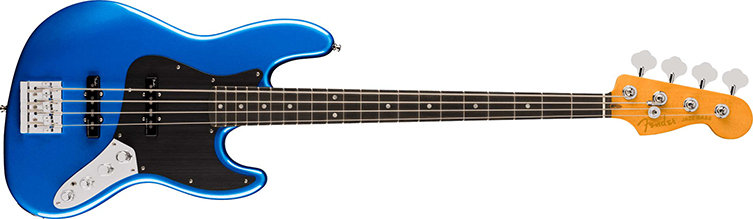
Vintera II: The word ‘Vintera’ is made up from ‘vintage’ and ‘era’, which pretty much explains the range. They are higher range Mexican made Fenders that recreate historic models in terms of design, spec and colours. There’s a good number of instruments available as of March 2026:
- Vintera II 50s P-bass
- Vintera II 60s P-bass
- Vintera II 60s J-bass
- Vintera II 60s Bass VI
- Vintera II 70s Telecaster bass
- Vintera II 70s Competition Mustang Bass
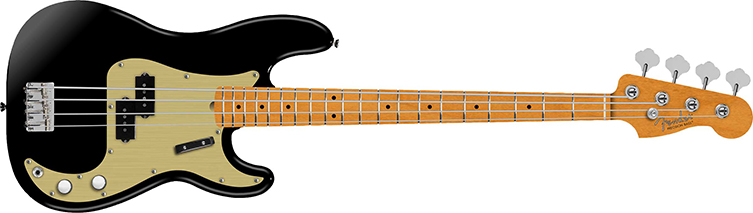
Player II: great value mid-range Mexican basses that are not specifically retro or vintage-themed at all. They are basses for now, if you like, and there’s a lot of colour choice. Each model has a modern C neck, alnico pickups and pickup options that reflect popular player preferences over any notion of historicity. You currently get a P-bass, J-bass and Mustang (with PJ pickup configuration), alongside limited edition models that come and go.
Player II Modified: As above but with active electronics, different colours and 5 string models. Precision and Jazz basses only here.
Indonesian, Japanese and Squier Basses
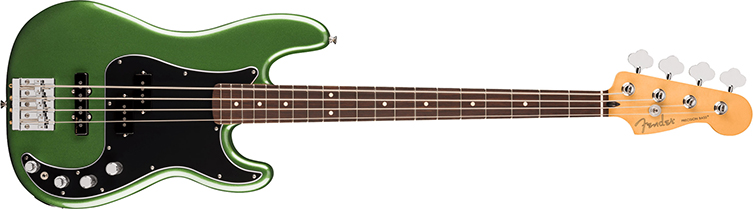
The Fender Standard Range is made in Indonesia, and represents the most affordable way to own a bass with ‘Fender’ written on the headstock. As you might expect, the choices are between Precision and Jazz models, in a number of colours with different pickguards to match.
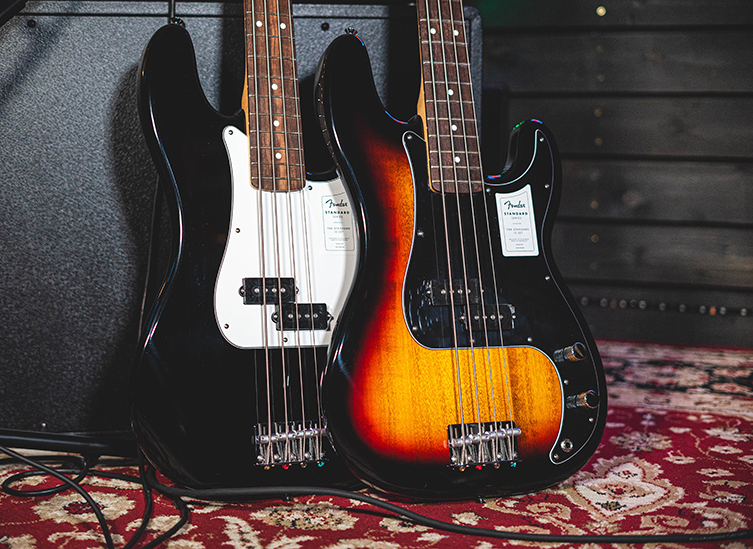
Fender Japan make some very cool basses, including the current Hybrid II models, but nothing is particularly set in stone in terms of ranges, so there isn’t anything specific for me to tell you apart from this: Japanese Fender stuff is uniformly excellent, and is well worth paying attention to if you come across one! We stock as much as possible, so keep an eye out for frequent limited edition models. Fender Japan basses have their own feel, if you ask me, so I recommend comparing one to a similar Mexican or American model to see how they compare.
Squier make a lot of adventurous and interesting bass guitars. They have actually led the way on authentic vintage recreations, offering up some seriously cool, well-informed basses that pay a lot of respect to vintage Fender originals. Fender of course own Squier, so they are officially licensed replicas in many ways.
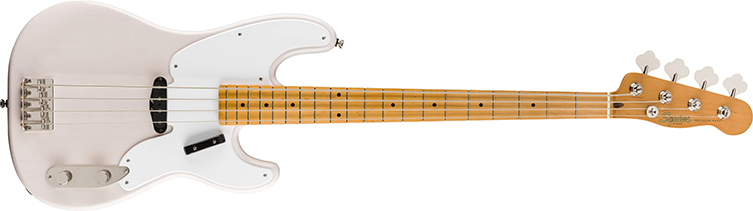
On top of that, Squier also offer very affordable ‘regular’ versions of P-bass, J-bass and other models through their Affinity subbrand, and great beginner models in their Sonic series, so check these out if you want a slice of Fender-themed bass action for very little outlay.
The Original Bass Brand
Fender dominate the bass scene. They always have done, and it’s because their early designs are super-cool, comfy to play and awesome sounding. They are by no means the only choice out there - we carry some fantastic basses that owe precious little to the Fender blueprint - but the fact remains that most bassists want at least one Fender model in their lives. Whether you go for a USA, Mexican, Indonesian or Squier model, you’ll be buying into one of the greatest bass guitar lineages in history.