Slash is one guitar hero that almost everybody in the world recognises. The top hat and shades alone make for an instantly iconic image, and his raw, bluesy guitar licks make him a prized player for all rock lovers. He’s the real deal: a star who is committed to playing his hard-rocking style across the world with megaband Guns ‘n’ Roses, and with his own solo career.
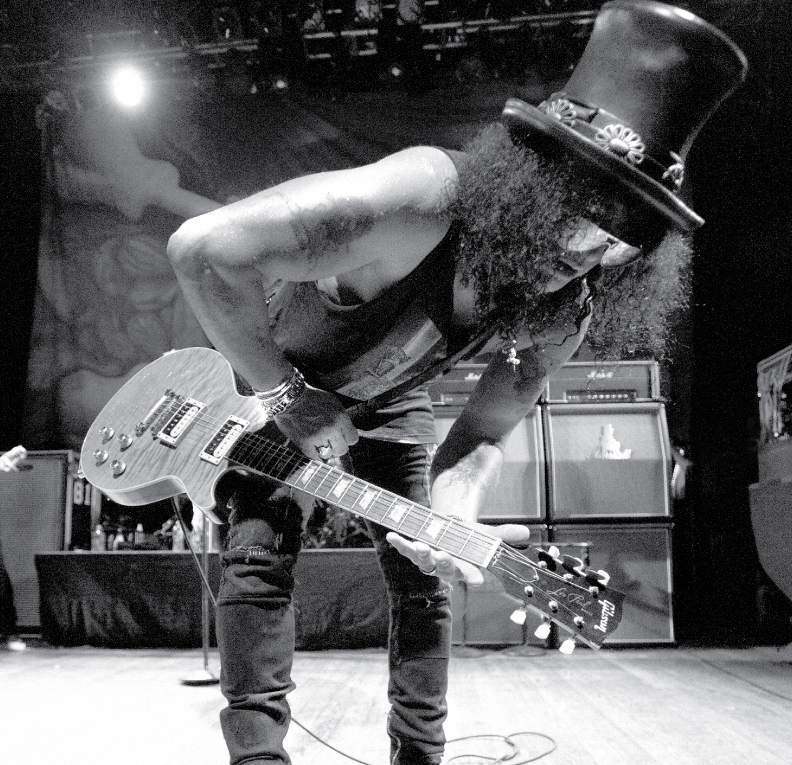
There isn’t a guitarist who wouldn’t mind sounding like Slash. He has a great tone, a feel to die for and great taste to boot. So today, I’ll look at some ways in which you can cop some of that. Through an inspection of his guitar gear and also checking out some techniques, I’ll hopefully help you on your way to become a little more like Slash in your own guitar playing.
Slash’s Guitars
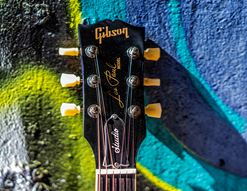
If there’s one thing that Slash loves more than fancy headgear, it’s a good Gibson Les Paul. Since he exploded onto the 80s Los Angeles hair metal scene, he has never been far from Gibson’s finest creation. Now, let’s get this one out of the way: yes, the honeyburst Les Paul Standard played by Slash on seminal G’n’R record Appetite For Destruction was indeed a copy, not an original Gibson. Why? Well, it seems that none of the guitars he owned at the time sounded very good in the studio, so he needed something better. He was broke and simply couldn’t afford a Gibson, so his manager found him a decent replica to use instead.
Later on, he began acquiring genuine Gibson Les Pauls and is now synonymous with them.
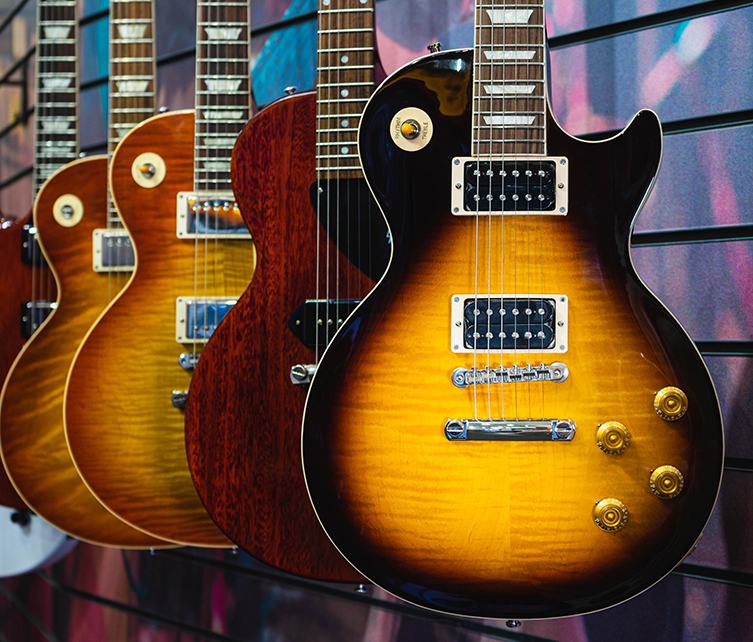
Indeed, Slash is not only an endorsee but a Gibson brand ambassador, and there are multiple Slash signature Les Pauls available. So, my first recommendation would be to check out his own signature Les Pauls, for obvious reasons: these are made to his personal preferences, and bear his specific design input and final approval.
However, that’s not to say that you can’t get great Slash guitar tones from other instruments. Of course, Gibson and Epiphone guitars are great choices, particularly solid body models such as the various Les Paul models (Slash often plays a Custom as well as his favourite Standard models) and also SGs. Slash doesn’t play SGs but that doesn’t mean that you can’t! The sound is certainly similar enough to work.
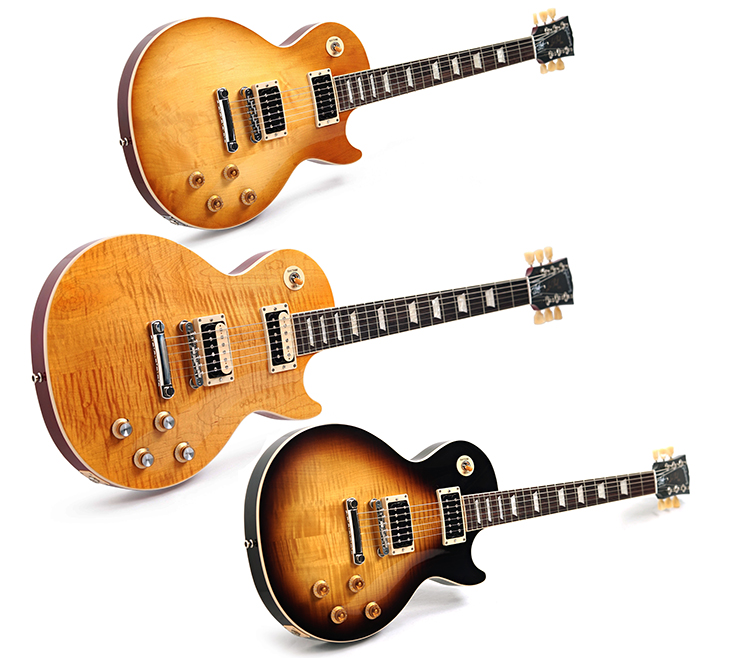
Any models based on a vintage Gibson (such as a 1959 Les Paul Standard) is ideal, since that’s his own preference when speccing custom guitars.
More broadly, guitars with mahogany bodies and relatively medium output pickups will get you what you need. You don’t want the pickups too hot or you risk losing that classic bite that’s part of Slash’s signature tone. Indeed, Slash has both signature Seymour Duncan pickups that you can buy, and signature Gibson pickups included in his signature guitars.
How to Sound Like Slash: the Gear
Okay, so I’ve covered the fact that a nice vintage-style Les Paul guitar - or similar - is the starting point for Slash’s sound. What next? Well, for more detail, check out my Slash Gift Guide blog for info on his pick, string and pedal choices, but I’ll summarise those here in just a second. Before that, a word on his amps…
Slash is famed for using Marshall stacks, and in particular, 1987 Silver Jubilee heads, which are very similar to the JCM800 model. So, we’re talking proper tube tone, and a very ‘rock’ sound, though not overtly heavy in terms of ‘metal’ levels of gain. There’s tons of distortion - don’t get me wrong - but it’s of a more classic persuasion. ‘Warm and biting’ is the flavour you’re aiming for. What you don’t want is the super-saturated Dual Rectifier sort of sound. It’s a great sound, but it’s not Slash.
So, you can hunt around for an old Jubilee head or JCM800, but here’s my advice for you: every single modelling device out there worth its salt will have an excellent rendition of a JCM800 inside it. Why? Because it’s one of the most popular and well-used tones in rock music, that’s why! It’s classic stuff, it sounds great in almost all applications and that’s probably why Slash has stuck with it for so long. A good Gibson into a good Marshall is a recipe for success night after night. Get it on your Helix, Quad Cortex or whatever else you may have.
If you don’t have such a device, I recommend the Universal Audio UAFX Lion 68 pedal. Even though it’s emulating a Marshall ‘Plexi’ amp, there is enough tonal variety and gain here to easily get you into Slash territory, and very realistically too.
For the rest of Slash’s gear, have a look at this list below, noting that Slash uses relatively heavy strings for a lead guitarist, and likes a pretty heavy pick, too. All of these elements combine to make a significant difference, and a specific feel.
Slash’s Guitar Gear
- Gibson Slash Les Paul Standard
- Marshall JCM800 or Silver Jubilee Head into a 4x12 cabinet
- Dunlop Slash Wah SW-95
- Ernie Ball Power Slinky 11-48 strings
- Dunlop Tortex ‘purple’ 1.14mm
- Top hat and mirrored aviator shades
How to Play Like Slash
So that’s what you need, gear-wise, to get into Slash’s guitar universe. But what can you do to actually gain a little bit of his guitar style? Here are some suggestions to apply in your own playing…
Learn chordal arpeggios instead of scales: listen to the Sweet Child O’Mine riff, or the intro to Fall To Pieces by Velvet Revolver. What you’re hearing is lead melodies created from chordal arpeggios. All I mean by that is that Slash has checked out how chords form across the strings and used that info to create riffs. Chords are almost always going to be more notes than the few we typically use as guitar players, so finding where those notes lie on the guitar neck allows for some exciting riffs. Following typical scale patterns will not give you the same results, so check out arpeggios in particular.
Stick to blues scale and minor scale for solos: he’s a tasteful guy, but he does tend to stay in the ‘boxes’, as it were. A good understanding of the blues scale in all of its positions - and particularly how those positions link together - will have you on the road to fluid Slash-style soloing.
Focus on Bends and Vibrato: the key to expression here for Slash-style playing is on getting those bends accurate and using a wide vibrato. Practise your bends so that they hit their destination pitch correctly: leaving your bends flat is a real rookie mistake, and you’ll not hear Slash doing that! For vibrato, a wide ‘up and down’ vibrato is what’s required, as opposed to the more classical guitar ‘sideways’ vibrato. I’d say to go easy with the vibrato since less is often more, but Slash doesn’t go easy: neither should you!
Choppy, rhythmic double stops: when riff writing, take a leaf out of Slash’s playbook and get into using double stops. A double stop is simply two notes that are played simultaneously, and with guitars, they are often notes on adjacent strings, played on the same fret. For example, if you play the 5th fret of the A and D strings (which you can do with one finger), you’ll have a cool G double stop sound, like a G power chord only without the root note. Build heavy, aggressive riffs with this technique and you’ll have some very Slash-sounding music!
Tune to Eb: try tuning down one half step to Eb. Slash does this and it not only makes those 11 gauge strings a little easier under your fingers, but it also makes a surprising difference to how heavy your guitar sounds. One half step isn’t much, but you’ll notice it!
Use Your Illusion
So, there you have it: you know what gear to use, and you’ve now got a handful of techniques to try out. How did you get on with finding a top hat? Don’t overlook this detail, it’s all important!
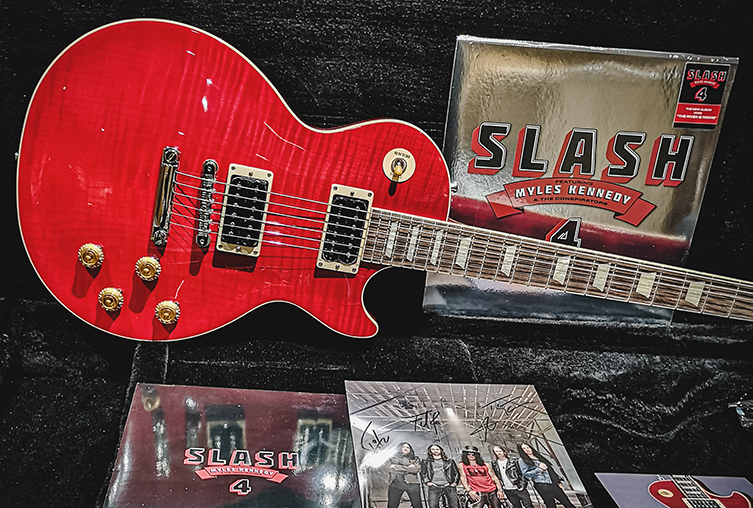
Click to View our Slash Guitars and Equipment