Taylor are the future of acoustic guitars. A lofty statement indeed, but I can back that up with a fair amount of detail for you, if you’re interested? And if you love acoustic guitars, then I’m thinking you’ll already be half-minded to agree with me, right?
Whichever way you feel about it, there’s no denying that Taylor have contributed a significant amount to the current world of the acoustic guitar. I’m going to dive into that a little with you today, so get yourself comfy!
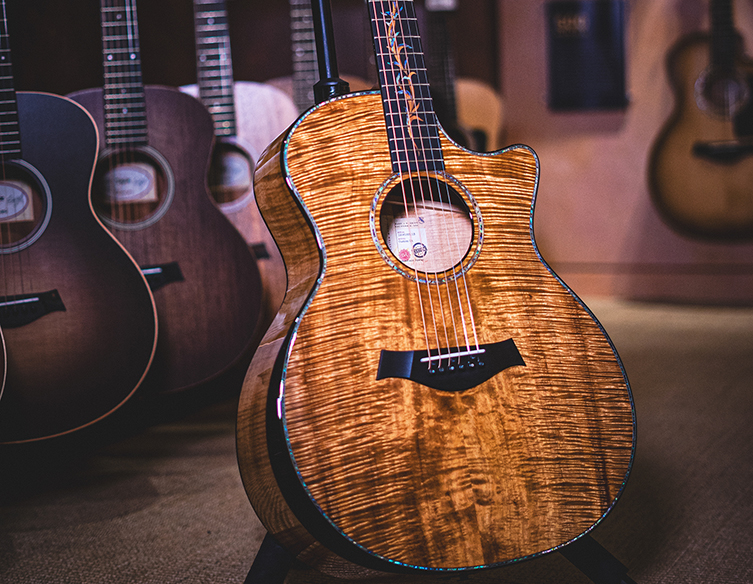
Innovation
In the world of acoustic guitars, the great majority of builders look to the golden age of the 1930s and basically copy what they find. This is understandable to a degree, since these ‘Pre War’ guitars are routinely held up as examples of the best guitars ever.
It’s understandable, but we need forward movement and improvements over century-old designs too. The world’s a different place now, and Taylor understand this. We guitarists all scrutinise, modify and adjust out guitars more than players from the 1930s. At the heart of the Taylor brand lie some pretty significant innovations. Here’s a few…
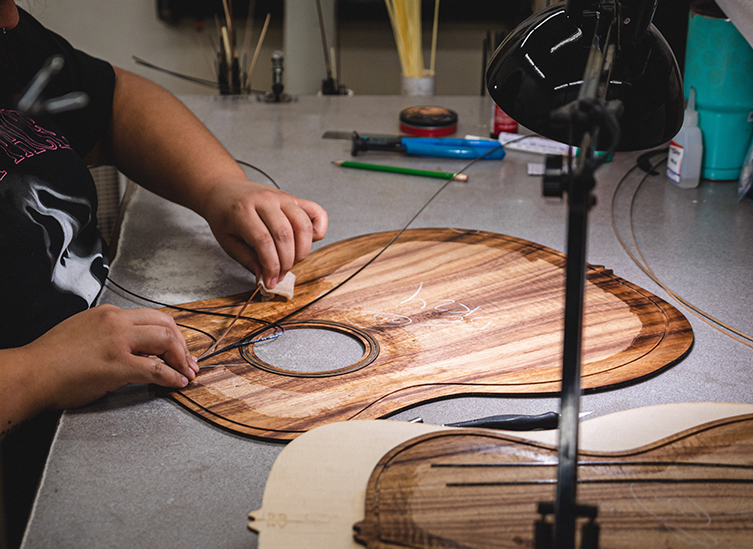
Bracing: Taylor do occasionally use standard X bracing, but they are more likely to use their own developments, such as V-class and C-Class bracing. In short, these bracing designs don’t just help with tone, sustain and projection: they actually make the guitar’s notes more pitch-accurate!
Neck Join: the newly announced Action Control Neck is a big step forwards. In addition to offering greater tonal transfer thanks to a longer neck tenon, the Action Control Neck allows for extremely straightforward neck angle adjustments. Altering the action, and compensating for different string gauges is a simple affair, thanks to this innovation.
Expression System and Claria: Taylor essentially threw down the gauntlet when they developed the original Expression System. A pickup unit that for once actually replicated the sound of the guitar rather than a rough summation, the Expression System and revised ES2 system broke the mould for acoustic pickups. Blending body-mounted contact mics, Taylor got to the root of a guitar’s tone and character.
The New Claria pickup takes these innovations and effectively simplifies them, making great ‘plugged in’ tone more immediate and less time-consuming. Even that consideration shows that this is a brand for performers!
Grand Auditorium shape: it’s easy to forget, but the whole Grand Auditorium body shape didn’t exist before Taylor made it. Slightly smaller and definitely more curvy than a dreadnought, the Grand Auditorium nevertheless projects sound like a much bigger instrument, and retains a strong low end response. In many ways, it’s the ideal acoustic guitar body shape. No wonder it’s Taylor’s number one style!
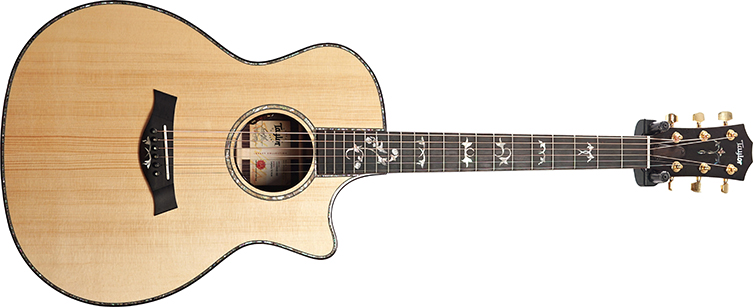
Sustainability
Sustainability is one of those terms that no guitar builder can really ignore. We live in a world of finite, exhaustable materials, and it’s not just shortsighted folly to ignore that; it’s commercial suicide. The guitar building community has a very real responsibility to make sure that forests prosper, that timbers are logged responsibly and that wood gets used if it is useful! Waste is not an option!
Taylor seem to have been well-informed on this attitude for a while:
Crelicam Premises in Cameroon: Ebony isn’t always purely black in hue; there are frequently streaks of blonder colour through it. In the past, wood that looked like this was jettisoned, seen as unusable. Taylor disagreed, and in fact went as far as buying and staffing a wood mill and processing facility in Yaounde, Cameroon (Central Africa) called Crelicam. Now, we talk about ‘Crelicam ebony’, and the streaks of caramel and blonde are seen as beautifully distinctive. Bravo.
Urban Ash: Lots of wood throughout the US has been reclaimed by Taylor and used for creating guitar parts. This is wood in what we’d call ‘municipal areas’, and it’s timber that is no longer being effectively used: old parks, government buildings, that sort of thing. There’s some great wood there (old railway sleepers?!) and the Urban Ash program seeks to repurpose that wood.
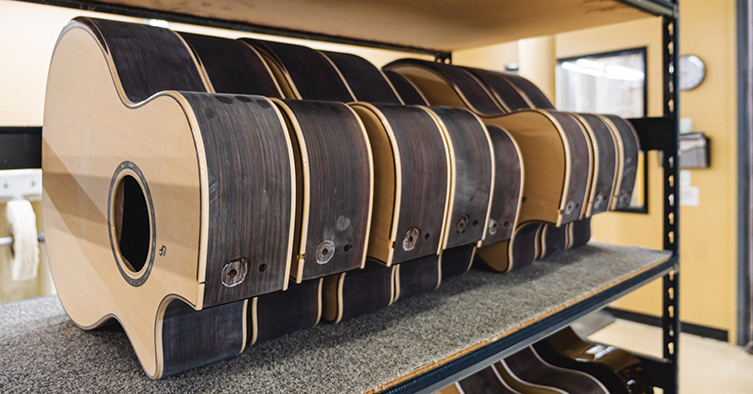
Sinker Wood: When trees are logged and processed at sawmills throughout the US, one traditional method for getting them from A to B is to simply float them downstream on river currents. Indeed, this is partly why so many sawmills are located on rivers!
Inevitably, the odd log will disappear under the river current and never reach its destination. Decades and decades later, people like Taylor will fish out these logs, dry them out and start building guitars! What they’ve found is that the nutrients in the riverbed significantly change the tonal response of such woods. ‘Sinker Redwood’ is a modern classic for just such a reason.
This, and all of these methods of wood reclamation tell a tale of responsibility, and of a passion for making something great.
Forward Thinking Vision
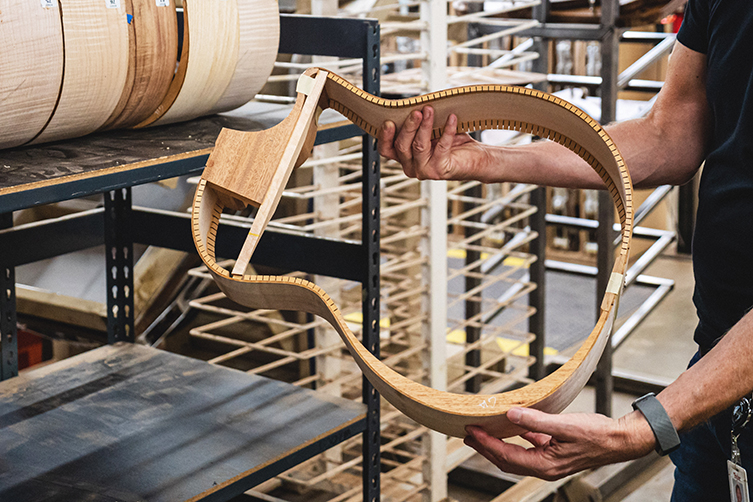
Taylor’s whole ethos has been one of forward momentum. They have been around since the 70s, but they don’t tend to release reissues of early guitar models, as other brands do. They have the Gold Label, which is an innovative future/past hybrid range, but they tend to keep their faces pointed forward, toward further innovation, improvement and better dialled-in detail.
They are a guitar brand for today, seeing the world for what it is and thinking of ways to make that world a little bit better through careful planning, dedicated building, and a little bit of ingenuity.
Click to View our Taylor Guitars