Does your guitar go out of tune quite a lot? Does it drive you mad? Have you tried everything to fix whatever the problem might be, only for the tuning to keep continually slipping?
Back in the day, you’d have to just learn to live with it, but times have moved on!
Today, I think it’s time we looked at the game-changing and somewhat mysterious Evertune bridge!
What is an Evertune Bridge?
An Evertune Bridge is an entirely new approach to the subject of tuning. Previous bridges like the Floyd Rose have worked by locking the strings firmly at two points - the bridge itself and the nut - and they actually work extremely well, but for some, there’s still a little too much slippage, or they just don’t want that type of tremolo on their guitar.
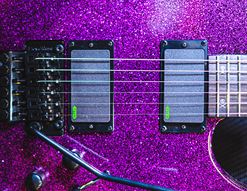
The Evertune bridge - which isn’t a tremolo, by the way - is still all-mechanical like the Floyd Rose, so we aren’t looking at a ‘Gibson Robot’ situation here. The Evertune operates in an entirely different way to anything we’ve seen on a guitar before: it’s a mixture of physics, springs and levers, moving and working in real time to provide constant tension on each individual string.
The Evertune bridge is a replacement for whichever bridge is currently on your guitar, and seems to be able to work on most electrics, from Strats to Les Pauls and every point in between. Routing is required for this bridge, though, so do bear that in mind. Plenty of guitars are now coming fitted with Evertune bridges though, so it may be an idea to invest in an instrument already fitted with one, though retro-fitting is certainly an option.
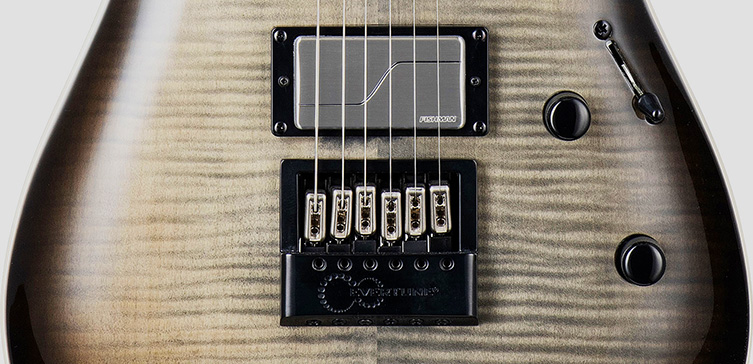
What Does the Evertune Bridge Do?
The Evertune bridge basically uses springs to provide a counterweight to the tension of the guitar strings. This is hardly unusual in itself, since that’s what all Stratocaster bridges do. Where the Evertune differs is in the fact that each string has its own corresponding spring, working independently from the others to keep that particular string in tune indefinitely. Once tuned and set up, the player can enjoy an instrument that stays in tune always, even if the tuning pegs get knocked, and even (impressively) if heat and humidity alter the guitar in other ways: a real plus for touring musicians!
The Evertune bridge allows you to forget about tuning, basically, and focus all your attention on playing. It supports all types of playing techniques, from vibrato to big wide bends, so there aren’t any compromises required on that front.
How Do I Use the Evertune Bridge?
So, the Evertune bridge strings through the body, just like a Strat or a Telecaster. Once the strings are on, you tune the guitar up, set the string height and the intonation in the appropriate places of the bridge with an allen key and you should be good to go!
Well, nearly. There’s talk of ‘zones’ when it comes to Evertune bridges, so here’s what that means. There are three zones that you come across when tuning up a string. Each zone continues from the previous one, and they each have a function:
- Zone 1: basically tuning up as normal, the guitar will behave normally. Turn the tuning pegs as you always do, and you can hear the string’s pitch increasing.
- Zone 2: an important zone. You’ll notice that the string’s pitch will not alter after a while, even when you keep turning the tuning peg. This is zone 2 and it’ll remain that way for maybe a dozen turns of the peg. This is where to set the guitar if you want absolutely rock-solid tuning that won’t change at all, even when bending strings and using vibrato techniques.
- Zone 3: if you keep turning the guitar’s tuning pegs, you’ll eventually hear the pitch rising again (as you’d expect to hear normally) which means you’re out of zone 2 and into zone 3.
Artists like Devin Townsend set their evertune-equipped guitars to be in zone 2, but just on the cusp of zone 3. This allows the best of both worlds: incredibly solid tuning and intonation but with the ability to bend strings and use vibrato.
Will the Evertune Bridge Affect My Sound or My Playing?
Like any other major modification to your guitar, the Evertune will affect your guitar playing experience. Without trying to sound facetious, you’ll always sound perfectly in tune, which is something! But yes, there are some things worth bearing in mind.
Firstly, the routing required will affect the value of your guitar and potentially the level of sustain you can achieve. I’ve not noticed any sustain issues personally, but any modification that removes a significant amount of wood can potentially rob some sustain with it.
The unit is spring-based, and that in itself changes the sound somewhat. You may notice a subtle difference in tone, and you may not, but hardtail users who switch to Evertune are likely to experience a slightly different sound.
Away from the guitar itself, you may need to alter your right hand playing techniques a little, just to accommodate this new device that sits at your wrist! Some players notice that moving their right hand forward just a smidgen works wonders for getting that palm mute sweet spot, so yes, you may need to change up your playing a little. But really, is that not the same when you switch guitars anyway? Les Pauls are played with the right hand in a different position to, say, a Telecaster anyway!
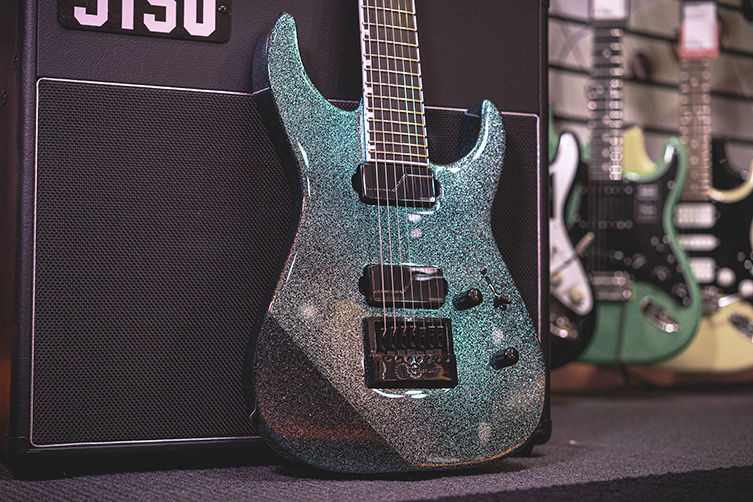
Some Evertune-Equipped Guitars
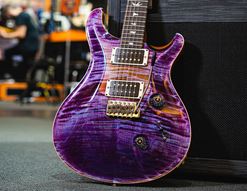
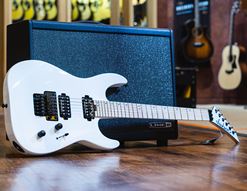
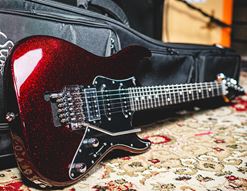
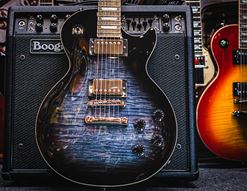
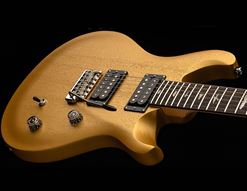
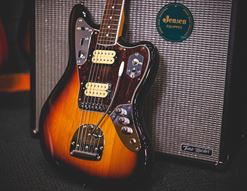
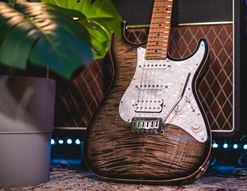
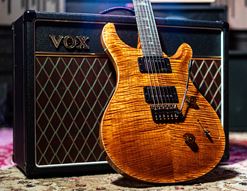
Lastly, here are some excellent examples of guitars we have in stock - at time of writing - that come equipped with an Evertune bridge. So far, it’s true to say that most factory-fitted Evertunes are on some pretty ‘rock’ looking guitars, but that’s because it’s the modern prog, metal and djent movements who have been quickest to adopt the device. I don’t think it'll be too long before we see them on many other types of guitar: certainly, Evertune do make models for most guitars, including full-on Tele bridge plates with the Evertune incorporated!
A Milestone in Guitar Technology
The Evertune bridge is one of those inventions that has changed the face (literally) of guitar playing. No longer must musicians and producers compromise on having perfectly tuned instruments. Not only that, touring guitarists can just pick up their guitar and play, safe in the knowledge that every string and every position on the fingerboard will be perfectly in tune.